
Recovering from people pleasing usually starts with a hard realization. The habit is not just about being “nice.” For many readers, it is tied to anxiety, guilt, conflict avoidance, approval seeking, codependency, or a long practice of putting other people’s comfort ahead of one’s own needs. That is why the best books for people pleasing recovery are not all doing the same job. Some are practical self-help books, some are more directly tied to codependency, and some are better for readers who want a spiritual or step-by-step recovery framework.
If you are trying to change this pattern, the most useful books are the ones that help you notice the behavior, understand what keeps it in place, and practice new responses without shame. The recommendations below are chosen with that in mind. They lean toward books that are readable, grounded, and genuinely useful for people who want to stop over-accommodating others and start making clearer choices for themselves.
Quick Answer
If you want the strongest books for people pleasing recovery, start with Are You Mad at Me?, The Codependency Recovery Workbook, Please Yourself, Stop People Pleasing without the Guilt, and Why Does Everybody Hate Me?. Together, they cover the main angles readers usually need: identifying approval-seeking, working through codependency, managing guilt, and understanding rejection sensitivity.
Comparison Table
| Book | Best For | Why It Stands Out |
|---|---|---|
| Are You Mad at Me?: How to Stop Focusing on What Others Think and Start Living for You | Readers who feel anxious when someone seems disappointed, critical, or emotionally distant. | Among the books on this list, this is one of the most directly targeted to the emotional loop behind people pleasing. It is especially useful for readers who know their problem is not simply being generous, but feeling responsible for how… |
| The Codependency Recovery Workbook: How to Create Healthy Relationships, Stop People Pleasing and Overcome the Fear of Abandonment | Readers who want a practical workbook and recognize that their people pleasing shows up most strongly in intimate or family relationships. | Many people pleasing books focus narrowly on assertiveness. This one is more useful for readers whose difficulty is tied to codependency patterns in close relationships. That makes it a strong bridge between self-help and recovery work,… |
| Please Yourself: How to Stop People-Pleasing and Transform the Way You Live | Beginners who want an accessible introduction to changing people pleasing patterns without jumping straight into a workbook or a more clinical text. | Some readers want a book that is practical but not overly clinical. This is the kind of recommendation that works well for that middle ground. It is direct enough to be useful, but accessible enough for readers who are just starting to… |
| Stop People Pleasing without the Guilt: A step by step guide to overcome guilt, feel better and become the best version of yourself | Readers who know what they should do but keep backing down because guilt, not confusion, is the main obstacle. | A lot of people pleasing advice ignores the emotional cost of saying no. This title makes guilt the main subject, which is valuable because guilt is often the exact barrier that prevents change. It is a good choice for readers who do not… |
| Why Does Everybody Hate Me?: Living and Loving with Rejection Sensitivity Dysphoria | Readers who recognize that their need to please is closely tied to rejection fear, social anxiety, or emotional overreaction to interpersonal tension. | Not every people pleasing problem is the same. Some readers are not primarily driven by habit or politeness, but by a powerful fear response to rejection. That makes this book valuable, because it addresses the underlying emotional… |
| Recover Your Soul: A Spiritual Journey of Healing from Addiction, Codependency, and People-Pleasing | Readers who want a spiritually grounded book and are comfortable with recovery language that goes beyond symptom management. | The strongest reason to include it is that some readers do not want a purely psychological lens. They want a book that treats people pleasing as part of a deeper healing process, and this one offers that perspective without pretending the… |
| The 12 Step Journal: Using the Tools of the Program, One Day at a Time, for Recovery and Serenity | Readers already engaged in a recovery program who want a day-by-day tool to support healthier boundaries and self-awareness. | Compared with standalone advice books, this one gives readers a rhythm. For people who already know the concepts but struggle to live them consistently, a daily format can make a real difference. It is especially useful as a companion… |
How We Chose These Recommendations
This list emphasizes books that help with the real mechanics of people pleasing recovery, not just the language of self-improvement. That means looking for books that explain why the pattern persists, how it connects to codependency or rejection sensitivity, and what readers can actually practice in daily life. We also favored books that are easy to apply, respectful in tone, and useful for readers who may already feel stuck or ashamed.
Because this is a psychology-adjacent topic, the strongest recommendations are the ones that feel clinically informed or behaviorally grounded, even when they are written for general readers. We also included a limited number of spiritual or recovery-oriented books for readers who want that kind of framework. Each book here serves a distinct purpose, so the list gives you options rather than repeating the same advice in different packaging.
Recommended Books
Are You Mad at Me?: How to Stop Focusing on What Others Think and Start Living for You
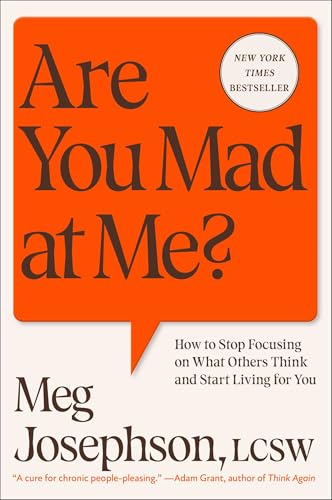
Overview: This book is built around one of the clearest hallmarks of people pleasing: scanning constantly for signs that other people are upset, disappointed, or withdrawing approval. It focuses on the mental habits that keep readers stuck in self-monitoring, second-guessing, and overexplaining, then offers a path toward a steadier and less reactive way of living.
Why it stands out: Among the books on this list, this is one of the most directly targeted to the emotional loop behind people pleasing. It is especially useful for readers who know their problem is not simply being generous, but feeling responsible for how others feel about them. That distinction matters, and the book stays close to it.
Strengths:
- Focuses on approval-seeking and fear of disapproval
- Readable for readers who want practical insight without dense jargon
- Addresses the inner commentary that keeps people pleasing alive
Best for: Readers who feel anxious when someone seems disappointed, critical, or emotionally distant.
Potential limitations: Readers looking for a highly clinical or research-heavy treatment of the subject may want something more workbook-based or theory-driven.
View price, available formats, and reader reviews.
The Codependency Recovery Workbook: How to Create Healthy Relationships, Stop People Pleasing and Overcome the Fear of Abandonment

Overview: This workbook treats people pleasing as part of a broader relationship pattern, especially when fear of abandonment, overfunctioning, and emotional over-responsibility are involved. Its workbook format makes it a natural choice for readers who learn best by doing rather than by reading theory alone.
Why it stands out: Many people pleasing books focus narrowly on assertiveness. This one is more useful for readers whose difficulty is tied to codependency patterns in close relationships. That makes it a strong bridge between self-help and recovery work, especially when the behavior feels deeply ingrained.
Strengths:
- Connects people pleasing to codependency and abandonment fears
- Workbook structure encourages reflection and self-assessment
- Useful for readers who need a hands-on recovery format
Best for: Readers who want a practical workbook and recognize that their people pleasing shows up most strongly in intimate or family relationships.
Potential limitations: The workbook format may feel more structured than some readers want, and the codependency focus may be broader than those seeking a simple boundary-setting guide.
View price, available formats, and reader reviews.
Please Yourself: How to Stop People-Pleasing and Transform the Way You Live

Overview: This book offers a broader self-help approach to shifting from approval-seeking toward a more self-directed life. Rather than staying confined to one narrow symptom, it looks at how people pleasing can shape decisions, relationships, and self-worth, then helps readers begin making choices that reflect their own needs.
Why it stands out: Some readers want a book that is practical but not overly clinical. This is the kind of recommendation that works well for that middle ground. It is direct enough to be useful, but accessible enough for readers who are just starting to question the pattern and do not yet know whether they are dealing with codependency, anxiety, or simple habit.
Strengths:
- Broad enough to fit many everyday people pleasing situations
- Readable and approachable for self-study
- Helps readers think about identity, not just behavior
Best for: Beginners who want an accessible introduction to changing people pleasing patterns without jumping straight into a workbook or a more clinical text.
Potential limitations: Readers looking for deeper psychological explanation or a more evidence-centered framework may want to pair it with a more specialized title.
View price, available formats, and reader reviews.
Stop People Pleasing without the Guilt: A step by step guide to overcome guilt, feel better and become the best version of yourself

Overview: Guilt is often the mechanism that pulls people back into the same old pattern. This book is centered on that problem and offers a step-by-step structure for readers who want a straightforward plan rather than a conceptual overview. The emphasis is on moving through guilt without immediately collapsing into over-apologizing or overgiving.
Why it stands out: A lot of people pleasing advice ignores the emotional cost of saying no. This title makes guilt the main subject, which is valuable because guilt is often the exact barrier that prevents change. It is a good choice for readers who do not need a theory lesson, only a workable path forward.
Strengths:
- Focused specifically on guilt, one of the hardest parts of recovery
- Step-by-step structure supports gradual change
- Practical tone makes it easy to start immediately
Best for: Readers who know what they should do but keep backing down because guilt, not confusion, is the main obstacle.
Potential limitations: The style is likely to appeal more to readers who want simple, direct guidance than to those who prefer a deeper psychological or therapeutic framework.
View price, available formats, and reader reviews.
Why Does Everybody Hate Me?: Living and Loving with Rejection Sensitivity Dysphoria

Overview: This book is especially relevant for readers whose people pleasing is rooted in intense sensitivity to rejection, criticism, or perceived disapproval. It focuses on the emotional experience behind those reactions and helps readers understand why even small interpersonal cues can feel disproportionately painful.
Why it stands out: Not every people pleasing problem is the same. Some readers are not primarily driven by habit or politeness, but by a powerful fear response to rejection. That makes this book valuable, because it addresses the underlying emotional sensitivity rather than just the visible behavior.
Strengths:
- Explains the rejection sensitivity that can fuel people pleasing
- Helpful for readers who feel intensely affected by criticism
- Offers a more specific lens than general self-help books
Best for: Readers who recognize that their need to please is closely tied to rejection fear, social anxiety, or emotional overreaction to interpersonal tension.
Potential limitations: The topic is narrower than the broader books on this list, so it works best when rejection sensitivity is a central part of the problem.
View price, available formats, and reader reviews.
Recover Your Soul: A Spiritual Journey of Healing from Addiction, Codependency, and People-Pleasing

Overview: This book approaches people pleasing recovery through spirituality and recovery language, connecting it to addiction and codependency rather than treating it only as a behavioral habit. For readers who value faith, inner healing, or a more reflective recovery journey, that framing can be a better fit than standard self-help.
Why it stands out: The strongest reason to include it is that some readers do not want a purely psychological lens. They want a book that treats people pleasing as part of a deeper healing process, and this one offers that perspective without pretending the struggle is simple.
Strengths:
- Spiritual approach for readers who want meaning-centered recovery
- Connects people pleasing with codependency and addiction recovery
- Useful for reflective readers who prefer personal healing language
Best for: Readers who want a spiritually grounded book and are comfortable with recovery language that goes beyond symptom management.
Potential limitations: Readers who want evidence-based psychology or a secular framework may prefer the more clinically oriented titles on this list.
View price, available formats, and reader reviews.
The 12 Step Journal: Using the Tools of the Program, One Day at a Time, for Recovery and Serenity

Overview: This daily journal is designed for readers working a 12-step recovery program and wanting a structured way to use the tools of recovery every day. While it is not a direct people pleasing book in the usual self-help sense, it belongs here because people pleasing often overlaps with codependency and recovery work, especially when daily accountability matters.
Why it stands out: Compared with standalone advice books, this one gives readers a rhythm. For people who already know the concepts but struggle to live them consistently, a daily format can make a real difference. It is especially useful as a companion rather than a primary introduction.
Strengths:
- Daily structure supports consistency and reflection
- Fits 12-step and recovery-oriented routines
- Practical companion for readers who need repetition, not more theory
Best for: Readers already engaged in a recovery program who want a day-by-day tool to support healthier boundaries and self-awareness.
Potential limitations: This is more of a guided recovery companion than a general people pleasing book, so it makes the most sense for readers already familiar with 12-step language.
View price, available formats, and reader reviews.
Who This List Is Best For
This list is best for readers who suspect their people pleasing is more than simple kindness. It will help beginners who want a clear starting point, as well as readers who already recognize patterns of codependency, fear of rejection, or chronic guilt. It also suits people who prefer self-study, workbook exercises, or recovery-oriented reading.
Professionals, students, and lifelong learners may also find the list useful as a practical overview of different ways this topic is treated in self-help and recovery writing. If you want a book that matches your specific pattern, rather than a broad motivational approach, these recommendations give you several distinct entry points.
Final Thoughts
If your main challenge is constant worry about what others think, start with Are You Mad at Me?. If the problem feels tied to relationships, abandonment, or codependency, The Codependency Recovery Workbook is the more focused choice. If you want something broader and easier to ease into, Please Yourself is a sensible place to begin.
For readers whose biggest obstacle is guilt, Stop People Pleasing without the Guilt keeps the focus narrow and practical. And if rejection sensitivity is at the center of the pattern, Why Does Everybody Hate Me? offers a more specific explanation than most general self-help books. The remaining titles are strongest for readers who want spiritual recovery or 12-step support.
FAQ
Which book is best for beginners?
Please Yourself is the easiest starting point for many beginners because it introduces the topic in broad, accessible terms without asking the reader to already understand codependency language.
Which book is most practical?
The Codependency Recovery Workbook is the most hands-on choice for readers who want exercises and structured reflection.
Which book is best if guilt is my biggest problem?
Stop People Pleasing without the Guilt is the clearest fit because it centers the emotional barrier that keeps many people stuck.
Which book is best if I fear rejection more than conflict?
Why Does Everybody Hate Me? is the strongest match when the main issue is intense sensitivity to criticism, disapproval, or perceived rejection.
Can I work on people pleasing through self-study?
Yes, many readers can make meaningful progress through self-study, especially with a book that matches their pattern. That said, if people pleasing is tied to trauma, severe anxiety, or persistent relationship distress, a book is best used alongside professional support rather than as a substitute for it.
Which book should I read first if I am not sure what kind of people pleasing I have?
Start with Are You Mad at Me? if approval-seeking is the main concern, or Please Yourself if you want a broader introduction before narrowing down your next step.