People searching for the best books about introductory psychology usually want one of two things. They want a clear way into the field, or they want a reliable refresher that covers the main ideas without turning the subject into a dry textbook exercise. The challenge is that “introductory psychology” can mean very different things depending on the reader. Some people need a genuine textbook-style foundation. Others want a more accessible overview of how psychological ideas show up in daily life, human behavior, or mental health conversations.
The books below were chosen with that range in mind. A few are built for structured study, while others offer a broader and more readable entry point into psychology and related brain science. Together, they give beginners, students, and curious general readers a strong place to start.
Quick Answer
If you want the strongest books about introductory psychology, start with Psych 101 for a quick survey of core concepts, CLEP® Introductory Psychology Book + Online for exam-focused study, Seven And A Half Lessons About The Brain for a concise scientific overview of how the brain shapes behavior, The Molecule of More for a readable bridge into motivation and reward, and Getting Past Your Past if you want an accessible introduction to therapy-informed psychological self-understanding.
Comparison Table
| Book | Best For | Why It Stands Out |
|---|---|---|
| Psych 101 | Quick orientation to core psychology topics | Broad, easy-entry coverage of major concepts, terms, and basic facts |
| CLEP® Introductory Psychology Book + Online | Students preparing for a CLEP-style assessment or structured review | Focused review format that supports efficient study and self-testing |
| Seven And A Half Lessons About The Brain | Readers who want a concise brain-based foundation | Scientific and highly accessible, with a clear emphasis on modern brain understanding |
| The Molecule of More | Readers interested in motivation, reward, and behavior | Connects psychology and neuroscience in a readable, idea-driven way |
| Getting Past Your Past | Readers interested in therapy-informed psychological self-understanding | Offers a practical, clinically informed introduction to how experiences shape responses |
How We Chose These Recommendations
The goal was not to assemble the longest list possible. It was to choose books that genuinely help readers get oriented in introductory psychology, depending on how they want to learn. Some readers need a study aid with clear structure and review material. Others benefit more from an accessible science book that explains behavior, the brain, and motivation without relying on jargon.
We prioritized books with practical educational value, clear purpose, and a strong fit for beginners. In a subject like psychology, that also means favoring books that are grounded in recognized psychological or scientific approaches rather than loose self-help claims. The result is a list that serves students, lifelong learners, and curious readers without blurring the line between introductory psychology and unrelated popular psychology.
Recommended Books
Psych 101: Psychology Facts, Basics, Statistics, Tests, and More! (Adams 101 Series)

Overview: Psych 101 offers a broad, compact introduction to psychology’s main ideas, from basic concepts and terminology to statistics, tests, and core facts. It is not trying to replace a full academic text. Instead, it gives new readers a manageable way to become familiar with the field’s vocabulary and major topics.
Why it stands out: For readers who feel overwhelmed by dense textbooks, this is one of the most approachable starting points on the list. It works well as a first pass through introductory psychology because it lowers the barrier to entry without abandoning the subject’s academic foundation. That makes it useful for self-learners, students at the beginning of a course, and anyone who wants a quick conceptual map before moving to a deeper text.
Strengths:
- Broad coverage of foundational psychology topics
- Friendly entry point for first-time readers
- Useful as a reference for terms, facts, and exam review
Best for: Beginners who want an accessible overview before committing to a heavier textbook.
Potential limitations: Readers looking for substantial theory, research depth, or a full academic treatment will want something more comprehensive.
View price, available formats, and reader reviews.
CLEP® Introductory Psychology Book + Online (CLEP Test Preparation)
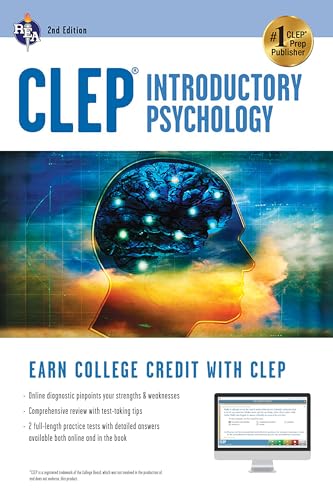
Overview: This book is built for structured review of introductory psychology with test preparation in mind. It focuses on the material most likely to matter for an assessment, which makes it especially practical for learners who need organization, recall practice, and targeted study rather than a sprawling introduction.
Why it stands out: Among introductory psychology books, this is the clearest choice for readers with a concrete academic goal. It does not try to be a general-interest psychology book. Its value comes from being focused, efficient, and aligned with exam preparation. That specificity makes it a strong fit for students who want to turn broad psychology concepts into usable test knowledge.
Strengths:
- Designed around review and retention
- Helpful for self-directed study schedules
- Good fit for readers preparing for a CLEP-style exam
Best for: Students who need a targeted way to study introductory psychology for credit or placement.
Potential limitations: It is narrower than a general psychology book and is less appealing if you want a narrative or conceptual overview.
View price, available formats, and reader reviews.
Seven And A Half Lessons About The Brain: A Scientific Guide to Understanding your Brain

Overview: This concise book gives readers a scientific introduction to the brain and the way it shapes thought, perception, and behavior. It is not a textbook in the classic sense, but it offers a clear, modern entry point into the biological side of psychology.
Why it stands out: Introductory psychology is easier to understand when readers can connect basic ideas to the brain. That is where this book earns its place. It bridges psychology and neuroscience in a way that is readable without becoming simplistic. For readers who want to understand the mind through the brain rather than through broad classroom survey, it adds depth without requiring advanced background knowledge.
Strengths:
- Scientific but accessible tone
- Strong for readers interested in brain-behavior relationships
- Concise enough to finish without feeling like a course text
Best for: Curious readers who want a brain-centered introduction to psychology’s scientific side.
Potential limitations: It is narrower than a full intro psychology book and focuses more on the brain than on the discipline as a whole.
View price, available formats, and reader reviews.
The Molecule of More: How a Single Chemical in Your Brain Drives Love, Sex, and Creativity–and Will Determine the Fate of the Human Race

Overview: The Molecule of More explores how dopamine influences motivation, anticipation, reward-seeking, and some of the most recognizable patterns in human behavior. It gives readers a focused, idea-rich way to think about psychology through a specific neurochemical lens.
Why it stands out: For readers who want introductory psychology to feel immediately relevant to everyday life, this book is a strong pick. It explains a major mechanism behind human drive and desire without requiring a background in formal psychology. Compared with broader introductions, it is more targeted and more conceptually memorable, which makes it useful for readers who learn best through a single organizing idea.
Strengths:
- Readable explanation of motivation and reward
- Connects brain chemistry to everyday behavior
- Useful companion to a broader intro psychology book
Best for: Readers who want a practical introduction to one of psychology’s most important behavioral systems.
Potential limitations: It is not a general psychology survey and should be read as a focused companion rather than a full overview.
View price, available formats, and reader reviews.
Getting Past Your Past: Take Control of Your Life with Self-Help Techniques from EMDR Therapy

Overview: This book introduces readers to a therapy-informed way of understanding how past experiences can shape present emotions, reactions, and habits. Drawing from EMDR-based techniques, it speaks to the psychological process of recognizing patterns and learning how they affect daily life.
Why it stands out: Many introductory psychology lists stay focused on classroom topics and miss the reader who wants a clinically informed but understandable book about how psychology shows up in personal life. This one fills that gap. It is especially helpful for readers who want a psychologically grounded introduction to coping, self-awareness, and emotional patterning without drifting into abstract theory.
Strengths:
- Accessible introduction to therapy-informed psychological ideas
- Practical for readers interested in emotional patterns and recovery
- Written with a clear clinical orientation
Best for: Readers who want introductory psychology with a therapeutic and self-understanding angle.
Potential limitations: It is more specialized than a general introduction and is best for readers interested in applied psychology rather than broad survey learning.
View price, available formats, and reader reviews.
Who This List Is Best For
This list is best for:
- Students who need a structured introduction to psychology concepts
- Complete beginners who want a readable first step into the subject
- Self-learners who prefer a mix of broad overview and focused follow-up reading
- Lifelong learners interested in brain science, motivation, and behavior
- Readers with an academic goal who want study-oriented material rather than pop psychology
Final Thoughts
If your main goal is a broad first look at the field, start with Psych 101. If you need structured exam preparation, CLEP® Introductory Psychology Book + Online is the most directly useful choice. If you want psychology explained through the brain, Seven And A Half Lessons About The Brain is the most concise and scientific option.
If your interest is more about motivation, behavior, and everyday decision-making, The Molecule of More gives you a focused and memorable angle. If you want a clinically informed book that connects psychology to personal patterns and self-understanding, Getting Past Your Past is the better fit. The right choice depends less on popularity than on how you want to learn introductory psychology.
FAQ
Which book is best for beginners?
Psych 101 is the easiest general starting point because it offers a broad, approachable overview of major psychology topics without requiring prior study.
Which book is best for exam preparation?
CLEP® Introductory Psychology Book + Online is the most practical choice for readers who need organized review and test-focused study material.
Which book is easiest to read?
Seven And A Half Lessons About The Brain is one of the most accessible options if you want a short scientific book rather than a full textbook.
Which book offers the best long-term value?
For many readers, Psych 101 offers the best mix of breadth and ease of use. It is useful as an introduction, a refresher, and a reference point.
Can I learn introductory psychology through self-study?
Yes. A combination of Psych 101 and CLEP® Introductory Psychology Book + Online gives self-learners both conceptual overview and structured review.
Which book should I read first if I want a psychology book that feels practical?
Start with Psych 101 if you want the broadest foundation, or The Molecule of More if you want a more focused look at behavior, motivation, and brain chemistry.