
Autistic adults often run into the same frustrating gap: there are plenty of books about autism, but far fewer that feel directly useful for adult life. The best autism workbooks for adults do more than explain a diagnosis. They help with self-understanding, burnout, sensory overload, executive functioning, relationships, and self-advocacy in ways that can be used on an ordinary day. Some are reflective and identity-centered. Others are more skills-based and practical. A few overlap with ADHD or broader neurodivergence, which can be useful for readers with more than one set of challenges.
If you are trying to choose well, the main question is not just which workbook mentions autism, but which one actually fits your current need. Some readers want a gentle starting point. Others want a structured recovery plan for burnout. Still others want help navigating work, social life, or emotion regulation. The books below were selected with those differences in mind.
Quick Answer
If you want the strongest autism workbooks for adults, start with The Autistic Burnout Workbook, I Am Autistic: A Workbook, and The Neurodivergence Skills Workbook for Autism and ADHD. For a broader practical focus, also consider Adult Autism Successful Living and The Complete Neurodivergent Mind Workbook.
Comparison Table
| Book | Best For | Why It Stands Out |
|---|---|---|
| The Autistic Burnout Workbook: Your Guide to Your Personal Recovery Plan (Self-Care for Autistic People) | Autistic adults who feel depleted, shut down, or caught in a cycle of overextension. | Among the best autism workbooks for adults, this is one of the most directly targeted. The value here is not breadth but precision. Readers who are exhausted, overstimulated, or trying to recover from a long period of masking and overload will find a workbook that speaks to the problem they are actually dealing with. That makes it more immediately useful than broader self-help books that only touch burnout in passing. |
| I Am Autistic: A Workbook: Sensory Tools, Practical Advice, and Interactive Journaling for Understanding Life with Autism (By Someone Diagnosed with It) | Adults who want a workbook that blends self-awareness with practical sensory support. | What makes this recommendation especially useful is its balance of personal perspective and everyday practicality. Some workbooks are heavy on explanation but light on usable tools. Others are packed with strategies but offer little space for self-understanding. This one sits in the middle in a way many adults will appreciate, particularly readers who want to connect sensory needs, identity, and daily coping. |
| The Neurodivergence Skills Workbook for Autism and ADHD: Cultivate Self-Compassion, Live Authentically, and Be Your Own Advocate (The Social Justice Handbook Series) | Adults who want an affirming workbook that supports self-advocacy and everyday functioning. | The strongest reason to consider this book is its tone. It is affirming without becoming vague, and practical without reducing neurodivergent life to productivity advice. For adults who want an identity-respecting workbook, this is one of the clearest choices on the list. It also works well for readers who are exploring the overlap between autism and ADHD, which is common in real life and often overlooked in more general books. |
| Adult Autism Successful Living: Your guide to make friends, keep strong relationships, feel confident at work & enjoy social events while being your authentic self | Adults who want practical support for relationships, social events, and workplace confidence. | Compared with more introspective workbooks, this one is more outward-facing. It is useful for readers who already understand that they are autistic and now want help navigating real settings with less confusion and stress. The book earns its place because it addresses concrete adult situations rather than staying at the level of general self-awareness. |
| The Complete Neurodivergent Mind Workbook – DBT, CBT, & ACT for Emotional Regulation: Science-Based Skills to Reduce Sensory Overload, Master Executive Function, & Prevent Burnout (Inner Growth) | Adults who want practical, skills-oriented help with emotional regulation and overwhelm. | For readers who want a workbook with a more structured therapeutic feel, this is one of the better fits on the list. It does not replace treatment, but it can complement therapy or self-guided learning by organizing multiple evidence-based approaches in one place. That makes it especially appealing for adults who want a toolkit rather than a reflective journal. |
| Adults with Autism Spectrum Disorder: Understanding Your Diagnosis, Finding the Best Resources and Support Team for Emotional Regulation, Self-Advocacy, and Obtaining Employment | Newly diagnosed adults or readers building a support plan around work and emotional regulation. | Some autism workbooks are introspective, while others are purely skills-based. This one is notably practical in a different way, because it frames adult autism through the lens of support systems and life planning. It is a strong pick for readers who want to move from “What does this diagnosis mean?” to “What do I do next?” |
| The Best Activity Book for Adults with Autism | Adults who want a simpler, less demanding workbook experience. | Not every adult wants a workbook that feels clinical or intense. This recommendation belongs on the list because it fills the gap for readers who want something more approachable, especially if they are newly exploring autism-related resources or prefer short, manageable activities. It is less comprehensive than the stronger skills books, but it serves a different purpose. |
How We Chose These Recommendations
For this list, the priority was usefulness for autistic adults, not just books that happen to mention autism in the title. The strongest selections are the ones that address real adult concerns such as burnout, sensory regulation, communication, self-advocacy, emotional skills, and day-to-day functioning. That means the list includes a mix of identity-affirming workbooks and more structured skills-based resources.
We also looked for books that serve distinct purposes. A good workbook for autism should help the reader do something specific, whether that is understanding themselves better, building coping strategies, or navigating work and relationships with more confidence. Books that were too general, too narrowly child-focused, or too far removed from adult needs were left out. The result is a list meant to give readers meaningful choices rather than repetitive options.
Recommended Books
The Autistic Burnout Workbook: Your Guide to Your Personal Recovery Plan (Self-Care for Autistic People)

Overview: This workbook focuses on autistic burnout, a subject that is often recognized by autistic adults long before it is clearly named. It offers a recovery-oriented approach with space for reflection, planning, and self-care. Rather than treating burnout as a generic stress problem, it centers the specific experience of depletion, shutdown, and reduced capacity that many autistic adults describe.
Why it stands out: Among the best autism workbooks for adults, this is one of the most directly targeted. The value here is not breadth but precision. Readers who are exhausted, overstimulated, or trying to recover from a long period of masking and overload will find a workbook that speaks to the problem they are actually dealing with. That makes it more immediately useful than broader self-help books that only touch burnout in passing.
Strengths:
- Centers autistic burnout instead of treating it as a generic wellness issue
- Useful for reflection, pacing, and recovery planning
- Practical for adults who need a structured way to slow down and reassess
Best for: Autistic adults who feel depleted, shut down, or caught in a cycle of overextension.
Potential limitations: Readers looking for a broad overview of autism in adulthood may find it too specialized, since its main focus is burnout recovery.
View price, available formats, and reader reviews.
I Am Autistic: A Workbook: Sensory Tools, Practical Advice, and Interactive Journaling for Understanding Life with Autism (By Someone Diagnosed with It)

Overview: This workbook combines sensory strategies, practical advice, and interactive journaling to help adults make sense of life on the spectrum. It is designed to support self-reflection while also giving readers tools they can try in real situations. The lived-experience framing makes it especially approachable for adults who want guidance that feels grounded in ordinary autistic experience.
Why it stands out: What makes this recommendation especially useful is its balance of personal perspective and everyday practicality. Some workbooks are heavy on explanation but light on usable tools. Others are packed with strategies but offer little space for self-understanding. This one sits in the middle in a way many adults will appreciate, particularly readers who want to connect sensory needs, identity, and daily coping.
Strengths:
- Includes sensory tools and journaling prompts
- Accessible for readers who want a more personal, reflective style
- Helpful for connecting diagnosis to everyday experience
Best for: Adults who want a workbook that blends self-awareness with practical sensory support.
Potential limitations: Readers looking for a highly clinical or research-heavy approach may prefer a more structured skills workbook.
View price, available formats, and reader reviews.
The Neurodivergence Skills Workbook for Autism and ADHD: Cultivate Self-Compassion, Live Authentically, and Be Your Own Advocate (The Social Justice Handbook Series)

Overview: This workbook is built around self-compassion, authentic living, and self-advocacy for people navigating autism and ADHD. It is especially relevant for adults who do not want a deficit-based frame. Instead of telling readers to normalize themselves, it emphasizes understanding needs, communicating clearly, and building a more workable life.
Why it stands out: The strongest reason to consider this book is its tone. It is affirming without becoming vague, and practical without reducing neurodivergent life to productivity advice. For adults who want an identity-respecting workbook, this is one of the clearest choices on the list. It also works well for readers who are exploring the overlap between autism and ADHD, which is common in real life and often overlooked in more general books.
Strengths:
- Centers self-compassion and self-advocacy
- Relevant for adults with both autism and ADHD traits
- Balances reflective work with concrete personal development
Best for: Adults who want an affirming workbook that supports self-advocacy and everyday functioning.
Potential limitations: Readers wanting a narrow focus on one specific challenge, such as burnout or employment, may prefer a more specialized workbook.
View price, available formats, and reader reviews.
Adult Autism Successful Living: Your guide to make friends, keep strong relationships, feel confident at work & enjoy social events while being your authentic self

Overview: This workbook takes a very practical angle on adult autism, with attention to friendships, relationships, work confidence, and social events. It is aimed at everyday functioning, which is exactly where many adults want the most help. The emphasis on authenticity matters too, since masking and social exhaustion are common concerns for many readers.
Why it stands out: Compared with more introspective workbooks, this one is more outward-facing. It is useful for readers who already understand that they are autistic and now want help navigating real settings with less confusion and stress. The book earns its place because it addresses concrete adult situations rather than staying at the level of general self-awareness.
Strengths:
- Focused on friendships, work, and social confidence
- Practical for real-world adult situations
- Useful for readers who want actionable social guidance
Best for: Adults who want practical support for relationships, social events, and workplace confidence.
Potential limitations: Readers looking for deeper emotional processing or burnout recovery may want a more therapeutic workbook alongside it.
View price, available formats, and reader reviews.
The Complete Neurodivergent Mind Workbook – DBT, CBT, & ACT for Emotional Regulation: Science-Based Skills to Reduce Sensory Overload, Master Executive Function, & Prevent Burnout (Inner Growth)
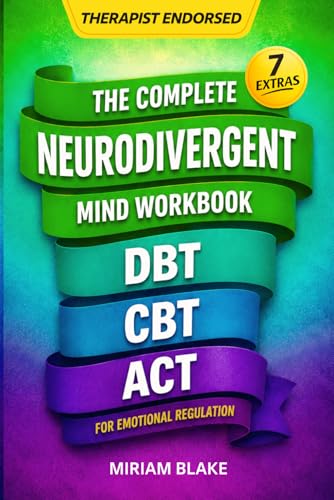
Overview: This workbook uses DBT, CBT, and ACT tools to address emotional regulation, sensory overload, executive function, and burnout. It is broader than a single-topic autism workbook, but that is part of its usefulness for adults who want structured coping skills. The focus is clearly skills-based, with an emphasis on applying evidence-informed methods to neurodivergent life.
Why it stands out: For readers who want a workbook with a more structured therapeutic feel, this is one of the better fits on the list. It does not replace treatment, but it can complement therapy or self-guided learning by organizing multiple evidence-based approaches in one place. That makes it especially appealing for adults who want a toolkit rather than a reflective journal.
Strengths:
- Combines DBT, CBT, and ACT in one workbook
- Good for readers who like structured coping frameworks
- Addresses sensory overload, executive function, and burnout together
Best for: Adults who want practical, skills-oriented help with emotional regulation and overwhelm.
Potential limitations: The clinical style may feel dense for readers who prefer a softer, more conversational workbook.
View price, available formats, and reader reviews.
Adults with Autism Spectrum Disorder: Understanding Your Diagnosis, Finding the Best Resources and Support Team for Emotional Regulation, Self-Advocacy, and Obtaining Employment

Overview: This book focuses on understanding a diagnosis and building support around emotional regulation, self-advocacy, and employment. That combination makes it especially useful for adults who are still putting the pieces together after a late diagnosis or who need help translating diagnosis into action. It has a practical orientation that leans toward resources and next steps.
Why it stands out: Some autism workbooks are introspective, while others are purely skills-based. This one is notably practical in a different way, because it frames adult autism through the lens of support systems and life planning. It is a strong pick for readers who want to move from “What does this diagnosis mean?” to “What do I do next?”
Strengths:
- Helpful for post-diagnosis orientation
- Addresses resources, support teams, and employment
- Useful for readers who want concrete next steps
Best for: Newly diagnosed adults or readers building a support plan around work and emotional regulation.
Potential limitations: It is more practical than deeply reflective, so it may not satisfy readers looking for extensive journaling or identity work.
View price, available formats, and reader reviews.
The Best Activity Book for Adults with Autism

Overview: This activity book offers a lighter, more accessible entry point than many autism workbooks for adults. It is a useful choice for readers who want structured engagement without committing to a heavy or emotionally demanding text. In a category that often skews serious and therapeutic, that lower-pressure format has real value.
Why it stands out: Not every adult wants a workbook that feels clinical or intense. This recommendation belongs on the list because it fills the gap for readers who want something more approachable, especially if they are newly exploring autism-related resources or prefer short, manageable activities. It is less comprehensive than the stronger skills books, but it serves a different purpose.
Strengths:
- Accessible and low-pressure
- Good for light engagement and gradual entry into workbook use
- Can feel less overwhelming than denser self-help titles
Best for: Adults who want a simpler, less demanding workbook experience.
Potential limitations: Readers seeking serious depth on burnout, self-advocacy, or emotional regulation will need a more substantial title.
View price, available formats, and reader reviews.
Who This List Is Best For
This list is best for autistic adults who want practical help, not abstract discussion. It should also be useful for newly diagnosed readers, late-diagnosed adults, people recovering from burnout, and anyone looking for a more affirming way to understand neurodivergent life. Professionals, therapists, and support people may also find these workbooks useful when looking for patient-friendly resources.
Final Thoughts
If you are dealing with burnout, start with The Autistic Burnout Workbook. If you want a more reflective and sensory-focused entry point, I Am Autistic: A Workbook is a strong choice. If your main goal is self-advocacy and identity-affirming support, The Neurodivergence Skills Workbook for Autism and ADHD is the most balanced option.
For readers who want help with relationships, work, and social confidence, Adult Autism Successful Living is especially practical. If you prefer a more structured coping-skills approach, The Complete Neurodivergent Mind Workbook gives you the most method-driven framework. The best autism workbook for adults is the one that matches your current need, not the one that tries to do everything at once.
FAQ
Which book is best for beginners?
I Am Autistic: A Workbook and The Best Activity Book for Adults with Autism are the easiest entry points. One is more reflective, while the other is lighter and less demanding.
Which book is best for autistic burnout?
The Autistic Burnout Workbook is the clearest choice because it focuses directly on recovery, pacing, and burnout-related self-care.
Which workbook is most practical for everyday adult life?
Adult Autism Successful Living is the most directly focused on friendships, work, and social situations.
Which book is best for self-advocacy and self-compassion?
The Neurodivergence Skills Workbook for Autism and ADHD is the strongest fit if you want an affirming workbook that supports both self-understanding and advocacy.
Can I use these workbooks without therapy?
Yes, many readers use autism workbooks on their own, especially for reflection, planning, and skill-building. That said, workbooks are not a substitute for diagnosis, treatment, or professional support when those are needed.
Which book offers the most long-term value?
The Complete Neurodivergent Mind Workbook offers broad, reusable coping frameworks, while The Neurodivergence Skills Workbook for Autism and ADHD is especially valuable if you want a more identity-centered reference you can revisit over time.




