
Finding the best books about intelligence is trickier than it sounds, because “intelligence” can mean very different things depending on the question you want answered. Some readers want the science behind IQ, memory, problem-solving, and brain development. Others are looking for emotional intelligence, practical judgment, or a broader view of human capabilities that goes beyond test scores. A good reading list should reflect those differences instead of treating intelligence as a single idea.
The books below were chosen for readers who want a serious, useful introduction to intelligence from the perspectives of psychology, neuroscience, education, and applied self-understanding. Some are classic works that shaped the conversation. Others are more focused, offering a practical angle on emotions, decision-making, or even how we think about intelligence in the age of AI. Together, they give you a balanced way to explore the topic without getting stuck in hype or oversimplification.
Quick Answer
If you want the clearest entry point into intelligence, start with Emotional Intelligence: Why It Can Matter More Than IQ. It gives you a useful foundation in why intelligence is multidimensional and how different kinds of capability show up in decisions and work. Choose Emotional Intelligence 2.0 when you want a more applied or contrasting approach, and use The Other Intelligence when you want to extend the idea into a different context.
This list is designed for readers interested in IQ, emotional intelligence, financial judgment, and emerging forms of capability. The recommendations are intentionally varied: some explain the underlying research, some offer exercises, and some are strongest as narrative or leadership case studies. That variety makes it easier to choose a book that matches your current question rather than buying the longest list.
Comparison Table
| Book | Best For | Why It Stands Out |
|---|---|---|
| Emotional Intelligence: Why It Can Matter More Than IQ | General readers, students, and anyone who wants a foundational overview of emotional intelligence within the larger intelligence conversation. | Among books about intelligence, this remains the most recognizable starting point for readers who want a broad, psychologically informed introduction. Its value is not that it replaces cognitive science, but that it reframes intelligence… |
| Emotional Intelligence 2.0 | Readers who want a hands-on book about emotional intelligence, especially for professional development or personal growth. | Compared with more expansive books on intelligence, this one is especially useful for readers who want something they can apply quickly. It belongs on this list because emotional intelligence is not only an idea to understand, it is also… |
| The Other Intelligence | Readers who want to move beyond IQ and explore a wider view of intelligence and effectiveness. | The strongest reason to include this book is its emphasis on the limits of IQ-centered thinking. Many books about intelligence stay stuck on measurement, but this one shifts the conversation toward how people actually grow, adapt, and… |
| Co-Intelligence: Living and Working with AI | Professionals, managers, and curious readers who want to understand intelligence in the context of AI. | Intelligence is no longer only a psychology question. For many readers in 2026, it also includes the practical challenge of working with AI responsibly and intelligently. This book earns its place because it updates the conversation in a… |
| The Light Eaters | Curious readers who want a broader scientific challenge to conventional ideas about intelligence. | A list of the best books about intelligence should not limit itself to human minds. This book adds a valuable scientific and philosophical dimension by showing how the concept of intelligence can be examined outside the usual psychology… |
| Financial Intelligence, Revised Edition | Managers, business owners, and professionals who want smarter financial decision-making. | Not every intelligence book should be about psychology in the narrow sense. This one is valuable because it shows how intelligence shows up in decision-making, especially when the numbers matter. For managers, entrepreneurs, and… |
| Positive Intelligence | Readers interested in performance psychology, leadership, and personal effectiveness. | Compared with broader intelligence books, this one is more concerned with how people sabotage their own thinking and how they can improve focus and resilience. That makes it especially appealing to readers who want practical help in… |
| 2084 and the AI Revolution | Readers who want a contemporary, big-picture look at intelligence in the age of AI. | Readers who want books about intelligence often end up wanting a future-facing book about AI, and this one fits that need well. It earns a place here because it gives the list a more critical, forward-looking perspective. That matters for… |
How We Chose These Recommendations
This list focuses on books that help readers understand intelligence in meaningful ways, not just books that use the word in their titles. That means prioritizing long-term usefulness, clear ideas, and strong fit for the topic. In psychology-related reading, we favored books with lasting influence, practical value, or a credible explanatory framework over titles that rely mainly on motivational language.
We also looked for variety. Intelligence is not just about IQ, so the list includes books on emotional intelligence, broader human capabilities, professional judgment, and the evolving relationship between people and AI. That mix helps readers choose based on their actual goal, whether they want theory, self-improvement, workplace application, or a wider scientific perspective.
Recommended Books
Emotional Intelligence: Why It Can Matter More Than IQ
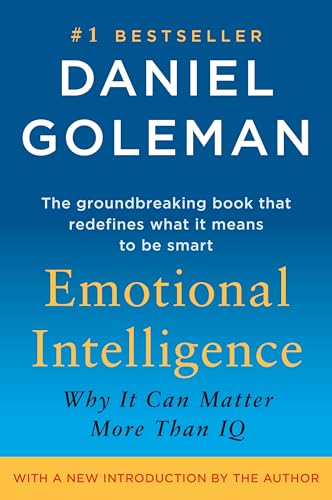
Overview: This is the book that brought emotional intelligence into mainstream conversation for many general readers. It explains why emotional awareness, self-regulation, empathy, and social skill matter in real life, often as much as raw reasoning ability. Rather than treating intelligence as a fixed number, it asks readers to think about the capacities that shape relationships, work, and decision-making.
Why it stands out: Among books about intelligence, this remains the most recognizable starting point for readers who want a broad, psychologically informed introduction. Its value is not that it replaces cognitive science, but that it reframes intelligence in a way that many readers immediately recognize in everyday life. For that reason, it belongs on any serious list of books about intelligence, especially for readers who want to understand intelligence as more than a test score.
Strengths:
- Accessible introduction to emotional intelligence and its real-world relevance
- Broad perspective on cognition, behavior, and interpersonal functioning
- Helpful for readers who want a landmark book in the field
Best for: General readers, students, and anyone who wants a foundational overview of emotional intelligence within the larger intelligence conversation.
Potential limitations: Readers looking for the newest research synthesis or a highly technical treatment of neuroscience may want a more specialized companion book.
View price, available formats, and reader reviews.
Emotional Intelligence 2.0

Overview: Written for readers who want practical application rather than broad theory, this book focuses on strengthening emotional intelligence through concrete skills and self-assessment. It is organized around everyday competencies such as recognizing emotional triggers, managing reactions, and improving interpersonal effectiveness. The emphasis is on practice, not just concept.
Why it stands out: Compared with more expansive books on intelligence, this one is especially useful for readers who want something they can apply quickly. It belongs on this list because emotional intelligence is not only an idea to understand, it is also a skill set to develop. That makes it a strong choice for professionals and self-directed readers who want a focused, usable framework.
Strengths:
- Practical and easy to use in daily life
- Clear emphasis on skills rather than abstraction
- Well suited to workplace and communication goals
Best for: Readers who want a hands-on book about emotional intelligence, especially for professional development or personal growth.
Potential limitations: It is more applied than analytical, so readers seeking a deeper theoretical or research-heavy treatment may want additional context.
View price, available formats, and reader reviews.
The Other Intelligence

Overview: This book focuses on forms of intelligence that IQ alone cannot capture, linking them to becoming a more effective and self-aware person. That makes it a useful counterbalance to narrow thinking about intelligence as a single measurable trait. Readers interested in human potential, character, and broader cognitive strengths will find a more expansive view here.
Why it stands out: The strongest reason to include this book is its emphasis on the limits of IQ-centered thinking. Many books about intelligence stay stuck on measurement, but this one shifts the conversation toward how people actually grow, adapt, and function in complex situations. It fills an important space for readers who want a broader, more reflective take on intelligence without moving away from practical life.
Strengths:
- Broadens the idea of intelligence beyond testing
- Useful for readers interested in self-development and mindset
- Offers an accessible bridge between psychology and personal growth
Best for: Readers who want to move beyond IQ and explore a wider view of intelligence and effectiveness.
Potential limitations: Readers looking for a highly technical neuroscience book may find it more reflective than academic.
View price, available formats, and reader reviews.
Co-Intelligence: Living and Working with AI

Overview: This book looks at intelligence through the lens of artificial intelligence and the changing relationship between human judgment and machine systems. It is especially relevant for readers who want to understand how AI affects thinking, work, creativity, and decision-making. Rather than treating intelligence as purely human, it asks what it means to think alongside powerful tools.
Why it stands out: Intelligence is no longer only a psychology question. For many readers in 2026, it also includes the practical challenge of working with AI responsibly and intelligently. This book earns its place because it updates the conversation in a way that older psychology books do not. It is not a substitute for classic cognitive science, but it is a useful modern complement.
Strengths:
- Timely perspective on human and machine intelligence
- Useful for professionals navigating AI in real work settings
- Connects big ideas to practical decision-making
Best for: Professionals, managers, and curious readers who want to understand intelligence in the context of AI.
Potential limitations: Readers wanting a traditional psychology or neuroscience treatment of intelligence should treat this as a related modern angle, not a foundational cognitive science text.
View price, available formats, and reader reviews.
The Light Eaters

Overview: This book explores the surprising question of plant intelligence and what it can teach us about life, perception, and adaptation. It is less about human IQ than about expanding the definition of intelligence itself. Readers with a science-first curiosity will appreciate how it pushes the boundaries of what counts as intelligent behavior in the natural world.
Why it stands out: A list of the best books about intelligence should not limit itself to human minds. This book adds a valuable scientific and philosophical dimension by showing how the concept of intelligence can be examined outside the usual psychology framework. That makes it especially useful for readers who enjoy popular science that still raises serious questions.
Strengths:
- Expands the definition of intelligence beyond humans
- Engaging for readers who enjoy science writing with a deeper idea behind it
- Offers a fresh perspective on cognition and adaptation
Best for: Curious readers who want a broader scientific challenge to conventional ideas about intelligence.
Potential limitations: It is not a psychology textbook, so readers seeking a direct study of IQ, memory, or emotional intelligence should pair it with another title on this list.
View price, available formats, and reader reviews.
Financial Intelligence, Revised Edition

Overview: This book is about making sense of financial numbers, but its place on a list about intelligence is well earned because it turns abstract knowledge into practical judgment. It teaches readers how to read financial information with greater clarity, which is a real-world form of intelligence many people need but rarely study directly. The focus is managerial and applied rather than academic.
Why it stands out: Not every intelligence book should be about psychology in the narrow sense. This one is valuable because it shows how intelligence shows up in decision-making, especially when the numbers matter. For managers, entrepreneurs, and professionals, financial intelligence can be just as important as verbal or emotional skill.
Strengths:
- Highly practical for business and management settings
- Explains financial concepts in accessible language
- Helps readers improve judgment, not just technical vocabulary
Best for: Managers, business owners, and professionals who want smarter financial decision-making.
Potential limitations: This is a specialized workplace book, so it will not satisfy readers looking for a broad theory of intelligence.
View price, available formats, and reader reviews.
Positive Intelligence

Overview: This book focuses on the mental habits that interfere with performance and the mindset shifts that support stronger results. It blends self-management, emotional discipline, and workplace effectiveness into a single framework. For readers who want to think about intelligence in terms of mental fitness and execution, it offers a clear applied angle.
Why it stands out: Compared with broader intelligence books, this one is more concerned with how people sabotage their own thinking and how they can improve focus and resilience. That makes it especially appealing to readers who want practical help in performance settings. It is not the most academic choice on the list, but it has a distinct role for readers who want an action-oriented framework.
Strengths:
- Practical focus on habits, mindset, and execution
- Relevant to leadership and professional performance
- Easy to connect to everyday work challenges
Best for: Readers interested in performance psychology, leadership, and personal effectiveness.
Potential limitations: It is more coaching-oriented than research-heavy, so readers seeking a strictly scientific treatment of intelligence may prefer the more psychology-centered books on this list.
View price, available formats, and reader reviews.
2084 and the AI Revolution

Overview: This book examines artificial intelligence and how it shapes our future, making it relevant to readers who want to understand intelligence as a social and technological issue. The focus is not just on what AI can do, but on what its rise means for human thinking, institutions, and everyday life. It broadens the topic beyond psychology into a wider cultural and strategic discussion.
Why it stands out: Readers who want books about intelligence often end up wanting a future-facing book about AI, and this one fits that need well. It earns a place here because it gives the list a more critical, forward-looking perspective. That matters for readers who want to think seriously about how machine intelligence changes what human intelligence needs to do.
Strengths:
- Connects intelligence to AI and the future of work
- Useful for readers interested in technology and society
- Offers a broader context for modern intelligence debates
Best for: Readers who want a contemporary, big-picture look at intelligence in the age of AI.
Potential limitations: This is more of a future-oriented analysis than a foundational book on psychology or neuroscience.
View price, available formats, and reader reviews.
Who This List Is Best For
These recommendations are a good fit for readers interested in IQ, emotional intelligence, financial judgment, and emerging forms of capability. They are especially useful if you want to understand intelligence with more nuance than a short checklist, quote, or social-media summary can provide.
- Readers who want a clear conceptual foundation before choosing a technique.
- People who prefer to compare research, practical exercises, and real-world examples.
- Professionals, students, or caregivers who need language they can apply in a real conversation or decision.
Use the Best For and Why It Stands Out columns together. A book can be excellent yet still be the wrong starting point if its depth, tone, or intended reader does not match your goal.
Final Thoughts
The strongest choice for intelligence depends on what you need to do next. Begin with Emotional Intelligence: Why It Can Matter More Than IQ if you need a foundation, move to Emotional Intelligence 2.0 if you need a practical change, and consider The Other Intelligence if you need a broader or more challenging perspective. The comparison table is meant to shorten that decision, not pretend that one book works for every reader.
A useful reading plan is simple: select one book, write down the question you want it to answer, and apply one idea before moving to another recommendation. For this topic, define the kind of intelligence you want to develop before choosing a book or measuring progress. a single score or fashionable label cannot capture a person’s full capacity or context.
FAQ
Which book should I read first for intelligence?
Start with Emotional Intelligence: Why It Can Matter More Than IQ if you want the clearest foundation. If your immediate need is action rather than background, compare it with Emotional Intelligence 2.0 and choose the one whose exercises, examples, or audience match your situation.
How do I choose between a research-based book and a workbook?
Choose the research-oriented option when you need context and a better mental model. Choose the workbook or practical guide when you already understand the problem and need repetition, prompts, or a structured plan. The table’s Best For column is the fastest way to make that distinction.
What is a practical way to use books about intelligence?
Do not read the whole list at once. Pick one recommendation, define the behavior or decision you want to improve, and test a small idea from the book for seven days. For this topic, define the kind of intelligence you want to develop before choosing a book or measuring progress.
Are these recommendations suitable for self-study?
Yes, for education and structured reflection. Take notes in your own words, mark claims you want to verify, and discuss difficult ideas with a trusted person or qualified professional when appropriate.
Do I need to read every book on the list?
No. One well-matched book that changes what you notice or do is more valuable than collecting several recommendations without applying any of them.