
Dopamine has become a shorthand for everything from motivation to distraction, but the science is more specific and far more interesting than the social-media version. If you want to understand why habits stick, why constant stimulation can leave you feeling flat, or how dopamine connects with reward, compulsion, eating, sleep, and attention, the best books on the topic do not all serve the same purpose. Some explain the neuroscience clearly. Some focus on behavior change and recovery. Others are better for parents, clinicians, or readers who want a practical way to think about everyday habits without drifting into oversimplified “dopamine detox” claims.
The books below were chosen for readers who want reliable, useful guidance rather than hype. A few are grounded in clinical experience. Others approach dopamine through behavioral psychology, addiction, or brain health. Together, they offer a more complete and more realistic picture of how dopamine actually works in daily life.
Quick Answer
If you want the best books about dopamine, start with Dopamine Nation for a clear, clinically informed look at reward, overconsumption, and balance; Diet, Drugs, and Dopamine for the link between dopamine and eating behavior; Dopamine Kids for a parent-focused look at screens, food, and family habits; The Dopamine Connection for a broader brain-health approach; and Your Brain Electric if you want a wider view of neurotransmitters, not just dopamine alone.
Comparison Table
| Book | Best For | Why It Stands Out |
|---|---|---|
| Dopamine Nation: Finding Balance in the Age of Indulgence | General readers, students of behavioral psychology, and anyone trying to understand the relationship between dopamine, overindulgence, and self-control. | Among the best books about dopamine, this is the one most readers can use as a foundation. It is not a technical neuroscience text, and it does not try to be a simplistic self-help manual either. Instead, it gives a grounded account of… |
| Diet, Drugs, and Dopamine: The New Science of Achieving a Healthy Weight | Readers interested in appetite, food reward, and the behavioral side of weight management. | Many dopamine books stay at the level of general motivation or phone addiction. This one earns a place because it narrows in on eating behavior, which is where reward science becomes especially relevant for many readers. It is a better… |
| Dopamine Kids: A Science-Based Plan to Rewire Your Child’s Brain and Take Back Your Family in the Age of Screens and Ultraprocessed Foods | Parents and caregivers who want to understand dopamine in the context of modern childhood. | For parents, this is more actionable than a general neuroscience book and more thoughtful than a quick-hit parenting trend title. Its value is in how it frames dopamine as part of a broader environment problem, not a moral failure in a… |
| The Dopamine Connection: Maximize Your Potential With Sleep, Nutrition, and Brain Health | Readers who want a general wellness-oriented look at dopamine and brain function. | The strongest reason to include it is the broader context it provides. Some dopamine books focus only on cravings or addiction, but many readers are actually trying to understand why they feel low-energy, unfocused, or mentally drained.… |
| Your Brain Electric: Everything you need to know about optimising neurotransmitters including serotonin, dopamine and noradrenaline | Curious general readers and students who want a broader introduction to neurotransmitters. | For readers who want to understand dopamine in context, this is one of the more useful options on the list. It is less narrow than a single-topic dopamine book and more helpful than content that treats the brain like a simple chemical… |
| The Dopamine Reset: How to Break Phone Addiction, Build Atomic Habits, and Regain Focus, Motivation & Joy in a Distracted World | Readers looking for a practical attention and phone-habit book. | Compared with the more clinical books on this list, this one is much more practical and immediate. It belongs here because many readers searching for dopamine books are really looking for help with compulsive checking, scattered… |
| The Dopamine Reset Workbook: The 30-Day Neural Focus Blueprint, Break Digital Addiction, Master Somatic Focus Tools, and Reclaim Your Attention | Readers who want an interactive, action-based way to work on digital distraction and focus. | The workbook format gives it a different role from the rest of the list. Readers who already understand the basic dopamine conversation and want a more hands-on tool may find this more useful than a standard narrative book. It is… |
How We Chose These Recommendations
This list favors books that help readers understand dopamine in a way that is actually useful, whether the goal is education, behavior change, family life, or broader brain health. We prioritized books with clear practical value, recognizable relevance to psychology or neuroscience, and a focus that goes beyond buzzwords. Books that reduce dopamine to a slogan, or that lean heavily on vague productivity promises, were not given priority over stronger, more grounded options.
The result is a list with real range. Some books explain the science. Some connect dopamine to compulsive behavior, addiction, or eating. Others are aimed at parents or readers trying to rebuild attention in a highly stimulating environment. That mix matters because the best book for one reader may be the wrong starting point for another.
Recommended Books
Dopamine Nation: Finding Balance in the Age of Indulgence

Overview: Anna Lembke, a psychiatrist, uses clinical experience and accessible science to explain how reward-seeking behavior can become self-defeating when stimulation is constant and easily available. The book looks at addiction, compulsion, pleasure, pain, and the push-pull of modern life, then connects those ideas to the dopamine system in a way most general readers can follow.
Why it stands out: Among the best books about dopamine, this is the one most readers can use as a foundation. It is not a technical neuroscience text, and it does not try to be a simplistic self-help manual either. Instead, it gives a grounded account of why too much comfort, novelty, and immediate reward can leave people feeling less satisfied over time. That balance between science and clinical perspective is what makes it valuable.
Strengths:
- Clear explanation of reward, pleasure, and compulsion
- Written by a practicing psychiatrist with real clinical context
- Useful for readers interested in addiction and everyday habit patterns
Best for: General readers, students of behavioral psychology, and anyone trying to understand the relationship between dopamine, overindulgence, and self-control.
Potential limitations: Readers wanting a deeply technical neuroscience book may find it more interpretive than academic.
View price, available formats, and reader reviews.
Diet, Drugs, and Dopamine: The New Science of Achieving a Healthy Weight
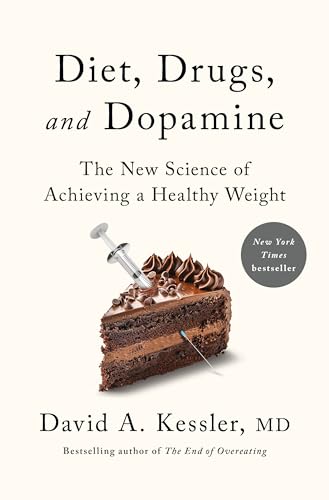
Overview: This book focuses on one of the most practical questions in dopamine-related behavior: why eating can become so driven by reward, habit, and craving. It looks at the new science of weight regulation through the lens of the brain’s reward circuitry, with special attention to the way food, appetite, and reinforcement interact.
Why it stands out: Many dopamine books stay at the level of general motivation or phone addiction. This one earns a place because it narrows in on eating behavior, which is where reward science becomes especially relevant for many readers. It is a better fit than broad self-help titles for anyone who wants to understand how dopamine intersects with overeating, cravings, and long-term weight challenges.
Strengths:
- Targets the specific overlap between dopamine and eating behavior
- Useful for readers who want a science-informed angle on weight management
- Connects neuroscience to an everyday problem many people recognize
Best for: Readers interested in appetite, food reward, and the behavioral side of weight management.
Potential limitations: The scope is narrower than broader brain or addiction books, so it is less useful if you want a general dopamine introduction.
View price, available formats, and reader reviews.
Dopamine Kids: A Science-Based Plan to Rewire Your Child’s Brain and Take Back Your Family in the Age of Screens and Ultraprocessed Foods

Overview: This book applies dopamine science to family life, especially the twin pressures many parents face now: screens and highly engineered food. It is aimed at helping caregivers understand how repeated reward loops shape children’s behavior, attention, and cravings, then translate that understanding into changes at home.
Why it stands out: For parents, this is more actionable than a general neuroscience book and more thoughtful than a quick-hit parenting trend title. Its value is in how it frames dopamine as part of a broader environment problem, not a moral failure in a child. That makes it useful for families trying to build better routines without resorting to shame or unrealistic rules.
Strengths:
- Parent-focused and practical
- Connects screen use, food, and reward-seeking behavior
- Offers a behavior-change lens rather than a blame-based one
Best for: Parents and caregivers who want to understand dopamine in the context of modern childhood.
Potential limitations: The book is highly targeted, so readers without children may prefer a broader introduction first.
View price, available formats, and reader reviews.
The Dopamine Connection: Maximize Your Potential With Sleep, Nutrition, and Brain Health

Overview: This title approaches dopamine through everyday biological supports such as sleep, nutrition, and general brain health. Rather than isolating dopamine as a stand-alone concept, it treats it as part of a larger system that affects energy, motivation, and cognitive performance.
Why it stands out: The strongest reason to include it is the broader context it provides. Some dopamine books focus only on cravings or addiction, but many readers are actually trying to understand why they feel low-energy, unfocused, or mentally drained. This book fits that need better than a narrow habit book because it links neurotransmitters to basic health variables that affect daily functioning.
Strengths:
- Broadens the discussion beyond motivation alone
- Useful for readers interested in brain health and lifestyle factors
- Accessible entry point for non-specialists
Best for: Readers who want a general wellness-oriented look at dopamine and brain function.
Potential limitations: The scope is relatively broad, so it may not satisfy readers who want a deeper clinical or academic treatment.
View price, available formats, and reader reviews.
Your Brain Electric: Everything you need to know about optimising neurotransmitters including serotonin, dopamine and noradrenaline

Overview: This book gives readers a broader look at neurotransmitters, with dopamine placed alongside serotonin and noradrenaline. That broader frame is useful because it discourages the common mistake of treating dopamine as the answer to every question about mood, energy, or motivation.
Why it stands out: For readers who want to understand dopamine in context, this is one of the more useful options on the list. It is less narrow than a single-topic dopamine book and more helpful than content that treats the brain like a simple chemical checklist. The result is a better conceptual map for anyone learning the basics of behavioral psychology or brain chemistry.
Strengths:
- Puts dopamine in a wider neurotransmitter framework
- Helps readers avoid oversimplified brain-chemistry explanations
- Useful as a bridge between beginner and intermediate reading
Best for: Curious general readers and students who want a broader introduction to neurotransmitters.
Potential limitations: Because it covers several neurotransmitters, it is less focused than books centered specifically on dopamine.
View price, available formats, and reader reviews.
The Dopamine Reset: How to Break Phone Addiction, Build Atomic Habits, and Regain Focus, Motivation & Joy in a Distracted World

Overview: This book is aimed at readers who want a more direct, behavioral approach to digital distraction and attention problems. It focuses on phone use, habit change, and rebuilding focus through structured action rather than theory alone.
Why it stands out: Compared with the more clinical books on this list, this one is much more practical and immediate. It belongs here because many readers searching for dopamine books are really looking for help with compulsive checking, scattered attention, and low follow-through. This book addresses that real-world use case clearly, even if its focus is narrower and more self-help oriented than the better-known neuroscience titles.
Strengths:
- Action-oriented and easy to apply
- Focused on digital distraction and habit repair
- Useful for readers who want a concrete reset plan
Best for: Readers looking for a practical attention and phone-habit book.
Potential limitations: It is more of a practical reset guide than a deep scientific explanation of dopamine.
View price, available formats, and reader reviews.
The Dopamine Reset Workbook: The 30-Day Neural Focus Blueprint, Break Digital Addiction, Master Somatic Focus Tools, and Reclaim Your Attention

Overview: This workbook format turns the attention-reset idea into a 30-day guided process. Instead of presenting dopamine as a concept to study, it translates the topic into structured exercises designed to support focus, reduce digital overuse, and build a new routine.
Why it stands out: The workbook format gives it a different role from the rest of the list. Readers who already understand the basic dopamine conversation and want a more hands-on tool may find this more useful than a standard narrative book. It is especially relevant for people who learn by doing and want a structured companion rather than a long explanation.
Strengths:
- Highly practical, step-by-step format
- Good for readers who want accountability and structure
- Turns attention habits into a 30-day process
Best for: Readers who want an interactive, action-based way to work on digital distraction and focus.
Potential limitations: As a workbook, it is less suited to readers looking for a deeper scientific or clinical treatment of dopamine.
View price, available formats, and reader reviews.
Who This List Is Best For
This list is best for readers who want a serious but accessible understanding of dopamine and behavior. Complete beginners will get the most from Dopamine Nation or Your Brain Electric. Parents will find Dopamine Kids the most directly useful. Readers focused on eating behavior or weight will benefit most from Diet, Drugs, and Dopamine. If your main concern is distraction, phone use, or rebuilding focus, the two reset books are the most action-oriented choices.
Final Thoughts
If you want the best all-around starting point, choose Dopamine Nation. If your interest is more specific, match the book to the problem you actually want to solve. For food and weight, start with Diet, Drugs, and Dopamine. For parenting, choose Dopamine Kids. For broader brain health, try The Dopamine Connection or Your Brain Electric. For practical attention work, the two reset titles are the most direct options.
The strongest approach is to begin with the book that fits your goal, not the one with the flashiest promise. Dopamine is a real and important part of human behavior, but the best books on the subject are the ones that treat it with enough nuance to be genuinely helpful.
FAQ
Which book is best for beginners?
Dopamine Nation is the best general starting point for most readers. It explains the topic clearly without requiring a background in neuroscience.
Which book is easiest to read?
Diet, Drugs, and Dopamine and The Dopamine Reset are among the most approachable options because they focus on practical problems rather than theory-heavy explanation.
Which book is best for parents?
Dopamine Kids is the most directly relevant choice for parents who want to understand screens, food reward, and behavior in children.
Which book is most useful for understanding overeating or weight?
Diet, Drugs, and Dopamine is the strongest fit because it focuses specifically on appetite, reward, and healthy weight.
Can I learn about dopamine through self-study?
Yes. These books are suitable for self-study, especially if your goal is to understand behavior and habit patterns. If you are dealing with a mental health condition or addiction, reading can be helpful, but it should not replace professional care when that is needed.
Which book should I read first if I want the broadest understanding?
Start with Dopamine Nation. It offers the strongest overall introduction to dopamine, reward, and modern overstimulation.




