
The Happiness Project turns an enormous question into a year of manageable experiments. Gretchen Rubin studies habits, relationships, work, possessions, energy, and attention, asking what might change if happiness were treated as a practice rather than a personality trait. The project is appealing because it is concrete, but its deeper value comes from showing that a happier life is usually built from repeated choices that are small enough to notice. Readers comparing books like The Happiness Project will find that the most useful match depends on which part of the seed book created the strongest attachment: its voice, argument, setting, characters, problem, or promise of change.
The strongest books like The Happiness Project should offer more than cheerful advice. They need to examine habits, relationships, gratitude, meaning, stress, time, or the evidence behind well-being practices. Each recommendation below shares at least two or three major qualities with Rubin’s project while bringing a different voice, research base, cultural lens, or challenge to the idea that happiness can be designed.
Happiness Becomes More Useful When It Leaves the Abstract
Choose The How of Happiness for positive-psychology research, The Happiness Advantage for work and performance, or 10% Happier for skeptical meditation. The Book of Joy explores compassion, Stumbling on Happiness examines prediction, and Flourish, The Art of Happiness, The Four Agreements, and Year of Yes offer different paths through well-being, meaning, and behavior change.
At-a-Glance Comparison
| Book | Best for | Major qualities shared with The Happiness Project |
|---|---|---|
| The How of Happiness | Readers who want research-based activities that can support well-being | Positive psychology, intentional activities, gratitude, relationships, goals, adaptation, and the conditions that support sustainable happiness |
| The Happiness Advantage | Readers who want to connect positive emotion with work and performance | Positive emotion, resilience, optimism, productivity, social connection, work culture, and success understood as more than a prerequisite for happiness |
| 10% Happier | Readers who want a skeptical memoir about meditation and attention | Meditation, skepticism, stress, attention, ego, emotional regulation, and changing one’s relationship with thought |
| The Book of Joy | Readers who want compassion, perspective, and resilient joy | Joy, compassion, suffering, gratitude, friendship, spiritual practice, and the possibility of happiness alongside loss |
| Stumbling on Happiness | Readers who want to understand why people mispredict future happiness | Affective forecasting, memory, imagination, adaptation, decision-making, uncertainty, and the mind’s unreliable picture of the future |
| Flourish | Readers who want a broader model of well-being than happiness alone | Positive emotion, engagement, relationships, meaning, accomplishment, resilience, measurement, and human flourishing |
| The Four Agreements | Readers who want a compact set of personal rules for peace and attention | Personal beliefs, assumptions, speech, self-judgment, responsibility, emotional freedom, and changing everyday interpretation |
| The Art of Happiness | Readers who want compassion and realistic perspective on well-being | Compassion, relationships, suffering, perspective, emotional practice, and happiness without demanding constant pleasure |
| Year of Yes | Readers who want a memoir about deliberate openness and personal change | Fear, opportunity, relationships, self-knowledge, saying yes, boundaries, identity, and changing a life through chosen experiments |
What Makes a Strong Happiness Project Companion?
Each book needed to connect happiness with choices, habits, relationships, attention, values, or measurable well-being. I avoided recommendations that treat positive emotion as the only outcome. A good companion should leave room for grief, inequality, illness, caregiving, meaningful struggle, and the fact that not every unhappy feeling is a problem to eliminate.
The 9 Recommended Books
The How of Happiness

Overview: Sonja Lyubomirsky reviews research on happiness and identifies activities such as gratitude, kindness, social connection, and goal pursuit that may help when they fit a person’s circumstances and habits.
Why it belongs on this list: The connection is strongest through positive psychology, intentional activities, gratitude, relationships, goals, adaptation, and the conditions that support sustainable happiness. The How of Happiness approaches the seed’s concerns from a different angle, adding its own evidence, examples, and limits instead of repeating a familiar list of advice. It is especially useful for readers who want research-based activities that can support well-being because it makes the underlying choice more visible: what to protect, what to question, and what may not be under personal control.
Reading experience: This is the strongest research companion because it separates broad findings from the individual activity that might suit a particular reader. Like Rubin, Lyubomirsky treats happiness as partly changeable while acknowledging adaptation and personal differences.
Best for: Readers who want research-based activities that can support well-being.
Keep in mind: Research-informed and practical, with activities that should be chosen rather than applied mechanically.
What to notice: The most useful thing to watch in The How of Happiness is how positive psychology, intentional activities, gratitude, relationships, goals, adaptation, and the conditions that support sustainable happiness moves from an attractive idea into a question about ordinary decisions. The book earns its place beside the seed because it gives readers who want research-based activities that can support well-being a different emotional and intellectual texture. Notice which examples carry the argument, where the author admits a limit, and which ideas remain useful after the initial enthusiasm fades.
View available editions and reader reviews.
The Happiness Advantage

Overview: Shawn Achor argues that positive habits and social support can influence attention, resilience, creativity, and performance. Stories from workplaces and schools connect happiness with how people approach challenge.
Why it belongs on this list: The connection is strongest through positive emotion, resilience, optimism, productivity, social connection, work culture, and success understood as more than a prerequisite for happiness. The Happiness Advantage approaches the seed’s concerns from a different angle, adding its own evidence, examples, and limits instead of repeating a familiar list of advice. It is especially useful for readers who want to connect positive emotion with work and performance because it makes the underlying choice more visible: what to protect, what to question, and what may not be under personal control.
Reading experience: The book adds an organizational dimension to the seed’s personal experiments. It asks what happens when a happier orientation is supported by teams and systems rather than left entirely to individual discipline.
Best for: Readers who want to connect positive emotion with work and performance.
Keep in mind: Energetic and workplace-focused, with persuasive examples that should be balanced against job security, workload, and power.
What to notice: The right reading pace for The Happiness Advantage depends on what the reader needs from readers who want to connect positive emotion with work and performance. Its discussion of positive emotion, resilience, optimism, productivity, social connection, work culture, and success understood as more than a prerequisite for happiness is clear enough to revisit, but it also benefits from pausing over examples and disagreements. Give the author room to make a case before deciding whether the ideas fit your work, health, relationships, and available freedom.
View available editions and reader reviews.
10% Happier

Overview: Dan Harris recounts how anxiety, ambition, and a public mistake led him toward meditation. The memoir follows his resistance, instruction, practice, and gradual realization that attention can be trained without requiring a mystical personality.
Why it belongs on this list: The connection is strongest through meditation, skepticism, stress, attention, ego, emotional regulation, and changing one’s relationship with thought. 10% Happier approaches the seed’s concerns from a different angle, adding its own evidence, examples, and limits instead of repeating a familiar list of advice. It is especially useful for readers who want a skeptical memoir about meditation and attention because it makes the underlying choice more visible: what to protect, what to question, and what may not be under personal control.
Reading experience: This is a useful contrast to more cheerful happiness advice. Harris treats well-being as less about manufacturing good feelings and more about observing the mind before it turns every experience into a crisis or a performance.
Best for: Readers who want a skeptical memoir about meditation and attention.
Keep in mind: Funny, personal, and accessible, with a practical introduction to meditation rather than a complete contemplative tradition.
What to notice: Read 10% Happier as a companion rather than a replacement. Its treatment of meditation, skepticism, stress, attention, ego, emotional regulation, and changing one’s relationship with thought will feel familiar at first, but its evidence, vocabulary, and assumptions lead somewhere different. The contrast is valuable: it shows what the seed explains especially well and what this recommendation adds about context, trade-offs, relationships, or the cost of turning a good idea into a private obligation.
View available editions and reader reviews.
The Book of Joy

Overview: The Dalai Lama and Desmond Tutu discuss joy, adversity, compassion, forgiveness, gratitude, and connection in a series of conversations shaped by personal and historical suffering.
Why it belongs on this list: The connection is strongest through joy, compassion, suffering, gratitude, friendship, spiritual practice, and the possibility of happiness alongside loss. The Book of Joy approaches the seed’s concerns from a different angle, adding its own evidence, examples, and limits instead of repeating a familiar list of advice. It is especially useful for readers who want compassion, perspective, and resilient joy because it makes the underlying choice more visible: what to protect, what to question, and what may not be under personal control.
Reading experience: The book widens the happiness project beyond self-management. It argues that joy can be relational and ethical, not merely the result of optimizing one’s mood, while still offering practices that bring attention back to daily life.
Best for: Readers who want compassion, perspective, and resilient joy.
Keep in mind: Warm, conversational, and spiritually grounded, with a strong emphasis on compassion and shared humanity.
What to notice: The most useful thing to watch in The Book of Joy is how joy, compassion, suffering, gratitude, friendship, spiritual practice, and the possibility of happiness alongside loss moves from an attractive idea into a question about ordinary decisions. The book earns its place beside the seed because it gives readers who want compassion, perspective, and resilient joy a different emotional and intellectual texture. Notice which examples carry the argument, where the author admits a limit, and which ideas remain useful after the initial enthusiasm fades.
View available editions and reader reviews.
Stumbling on Happiness

Overview: Daniel Gilbert examines how people imagine future emotions and why memory, attention, and assumptions distort predictions. The book uses psychology and humor to challenge the confidence with which people plan around anticipated happiness.
Why it belongs on this list: The connection is strongest through affective forecasting, memory, imagination, adaptation, decision-making, uncertainty, and the mind’s unreliable picture of the future. Stumbling on Happiness approaches the seed’s concerns from a different angle, adding its own evidence, examples, and limits instead of repeating a familiar list of advice. It is especially useful for readers who want to understand why people mispredict future happiness because it makes the underlying choice more visible: what to protect, what to question, and what may not be under personal control.
Reading experience: This is an important skeptical companion. A project built around better choices needs to know that the mind is not a reliable forecasting machine, and that happiness may arrive through details a person failed to imagine.
Best for: Readers who want to understand why people mispredict future happiness.
Keep in mind: Witty, research-driven, and conceptually playful, with less direct advice than Rubin’s experiment-based approach.
What to notice: A strong reason to include Stumbling on Happiness is that affective forecasting, memory, imagination, adaptation, decision-making, uncertainty, and the mind’s unreliable picture of the future are treated as lived conditions, not just slogans. The book is most rewarding when readers compare its account of readers who want to understand why people mispredict future happiness with their own circumstances. Some of its suggestions will be immediately usable; others are better read as questions that expose what a productivity or personal-growth promise leaves out.
View available editions and reader reviews.
Flourish

Overview: Martin Seligman develops a PERMA model that treats well-being as involving positive emotion, engagement, relationships, meaning, and accomplishment rather than a single happiness score.
Why it belongs on this list: The connection is strongest through positive emotion, engagement, relationships, meaning, accomplishment, resilience, measurement, and human flourishing. Flourish approaches the seed’s concerns from a different angle, adding its own evidence, examples, and limits instead of repeating a familiar list of advice. It is especially useful for readers who want a broader model of well-being than happiness alone because it makes the underlying choice more visible: what to protect, what to question, and what may not be under personal control.
Reading experience: The book gives the happiness project a broader vocabulary. It helps readers notice that a life can be meaningful during a difficult period, or accomplished without being joyful, and that a good plan should account for more than mood.
Best for: Readers who want a broader model of well-being than happiness alone.
Keep in mind: Model-driven and research-oriented, though positive psychology concepts should not be used to rank or judge people’s lives simplistically.
What to notice: The right reading pace for Flourish depends on what the reader needs from readers who want a broader model of well-being than happiness alone. Its discussion of positive emotion, engagement, relationships, meaning, accomplishment, resilience, measurement, and human flourishing is clear enough to revisit, but it also benefits from pausing over examples and disagreements. Give the author room to make a case before deciding whether the ideas fit your work, health, relationships, and available freedom.
View available editions and reader reviews.
The Four Agreements

Overview: Don Miguel Ruiz presents four agreements about speaking carefully, not taking others’ actions personally, avoiding assumptions, and doing one’s best. The book uses Toltec-inspired spiritual language to frame ordinary choices.
Why it belongs on this list: The connection is strongest through personal beliefs, assumptions, speech, self-judgment, responsibility, emotional freedom, and changing everyday interpretation. The Four Agreements approaches the seed’s concerns from a different angle, adding its own evidence, examples, and limits instead of repeating a familiar list of advice. It is especially useful for readers who want a compact set of personal rules for peace and attention because it makes the underlying choice more visible: what to protect, what to question, and what may not be under personal control.
Reading experience: Like a monthly happiness experiment, the agreements are memorable rules that can change how a person moves through relationships and self-talk. They are less research-based and more aphoristic, but they offer a simple lens for testing reactivity.
Best for: Readers who want a compact set of personal rules for peace and attention.
Keep in mind: Brief and spiritual, with ideas that are useful as reflection prompts but not universal solutions to conflict or trauma.
What to notice: Readers may arrive at The Four Agreements because of personal beliefs, assumptions, speech, self-judgment, responsibility, emotional freedom, and changing everyday interpretation, yet its lasting value lies in the complications attached to that promise. The book asks what happens when a desirable change meets fatigue, unequal resources, competing duties, or an imperfect environment. That makes it a genuine next read: related enough to satisfy the original interest, but independent enough to widen it.
View available editions and reader reviews.
The Art of Happiness
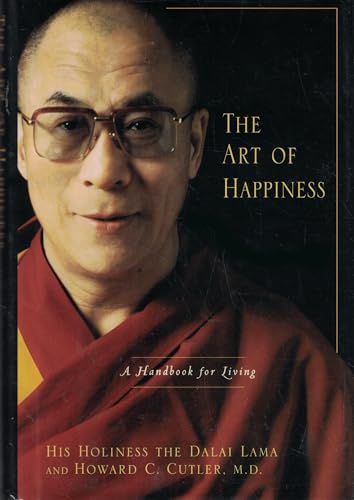
Overview: The Dalai Lama and Howard Cutler discuss happiness as a trainable orientation shaped by compassion, realistic expectations, relationships, and how a person responds to difficulty.
Why it belongs on this list: The connection is strongest through compassion, relationships, suffering, perspective, emotional practice, and happiness without demanding constant pleasure. The Art of Happiness approaches the seed’s concerns from a different angle, adding its own evidence, examples, and limits instead of repeating a familiar list of advice. It is especially useful for readers who want compassion and realistic perspective on well-being because it makes the underlying choice more visible: what to protect, what to question, and what may not be under personal control.
Reading experience: The book complements Rubin’s practical experiments with a more relational and spiritual understanding of well-being. It makes happiness less about controlling circumstances and more about building a mind that can remain connected during them.
Best for: Readers who want compassion and realistic perspective on well-being.
Keep in mind: Gentle, conversational, and contemplative, with practical reflection rather than a strict program.
What to notice: The most useful thing to watch in The Art of Happiness is how compassion, relationships, suffering, perspective, emotional practice, and happiness without demanding constant pleasure moves from an attractive idea into a question about ordinary decisions. The book earns its place beside the seed because it gives readers who want compassion and realistic perspective on well-being a different emotional and intellectual texture. Notice which examples carry the argument, where the author admits a limit, and which ideas remain useful after the initial enthusiasm fades.
View available editions and reader reviews.
Year of Yes

Overview: Shonda Rhimes describes a year in which she deliberately accepted invitations and opportunities that fear had taught her to avoid. The memoir explores work, family, health, self-image, and the difference between openness and abandoning boundaries.
Why it belongs on this list: The connection is strongest through fear, opportunity, relationships, self-knowledge, saying yes, boundaries, identity, and changing a life through chosen experiments. Year of Yes approaches the seed’s concerns from a different angle, adding its own evidence, examples, and limits instead of repeating a familiar list of advice. It is especially useful for readers who want a memoir about deliberate openness and personal change because it makes the underlying choice more visible: what to protect, what to question, and what may not be under personal control.
Reading experience: This is the most narrative companion to Rubin’s project. Rather than testing a list of habits, Rhimes tests a behavioral rule and discovers where it expands life and where discernment is still necessary.
Best for: Readers who want a memoir about deliberate openness and personal change.
Keep in mind: Personal, funny, and candid, with a memoir structure rather than a general research model.
What to notice: Read Year of Yes as a companion rather than a replacement. Its treatment of fear, opportunity, relationships, self-knowledge, saying yes, boundaries, identity, and changing a life through chosen experiments will feel familiar at first, but its evidence, vocabulary, and assumptions lead somewhere different. The contrast is valuable: it shows what the seed explains especially well and what this recommendation adds about context, trade-offs, relationships, or the cost of turning a good idea into a private obligation.
View available editions and reader reviews.
Choose by Research, Work, Relationships, or Daily Experiments
Start with The How of Happiness for research-backed activities, or The Happiness Advantage for the relationship between positive emotion and work. 10% Happier is best for skeptical meditation; The Book of Joy for compassion and perspective; and Flourish for a broader well-being model. Choose Stumbling on Happiness for the psychology of prediction, The Art of Happiness for compassion, The Four Agreements for personal rules, and Year of Yes for a memoir about deliberate openness.
Who This List Is Best For
This list is for readers who enjoy reflective nonfiction, small behavior experiments, positive psychology, memoir, mindfulness, and the practical question of how an ordinary week might feel better. Some books are research-heavy and others are spiritual or personal. Use them to generate experiments, not to blame yourself for sadness or treat happiness as a permanent performance target.
FAQ
What is the closest book to The Happiness Project?
The How of Happiness is the closest in its focus on practical activities and research. The Happiness Advantage is best when the reader wants to connect well-being with work and performance.
Which book has the most scientific research?
The How of Happiness and Flourish are the most explicitly grounded in positive-psychology research. Stumbling on Happiness offers a more cognitive and skeptical account of why people mispredict what will make them happy.
Which book is best for meditation?
10% Happier is a good skeptical memoir about beginning meditation, while The Art of Happiness and The Book of Joy approach meditation through compassion and Buddhist practice.
Can a happiness project become another form of pressure?
Yes. If every unhappy day becomes evidence of failure, the project has become another performance. Choose practices that create support and meaning, and allow grief, fatigue, and difficult circumstances to remain real.
Which book focuses most on relationships?
The Book of Joy and The Art of Happiness emphasize compassion and connection. Rubin’s own project also treats marriage, family, friendship, and everyday generosity as central rather than optional extras.
A Happier Life Still Contains Difficult Days
The Happiness Project works because it gives joy a calendar, a notebook, and a series of small decisions. The companion books expand the project into science, work, relationships, meditation, compassion, and meaning. Their shared lesson is not that a person can control every feeling. It is that attention can be practiced, and the shape of a life is partly determined by what gets repeated.