
The Miracle Morning packages personal growth into a repeatable beginning. Its SAVERS routine—silence, affirmations, visualization, exercise, reading, and scribing—appeals to readers who want the day to contain something chosen before messages and obligations take over. The best question is not whether everyone should wake at the same hour. It is which practices create energy, clarity, and direction without stealing the sleep or flexibility a real life requires. Readers comparing books like The Miracle Morning will find that the most useful match depends on which part of the seed book created the strongest attachment: its voice, argument, setting, characters, problem, or promise of change.
The strongest books like The Miracle Morning should offer a clear relationship between routine and outcome. They may focus on habits, attention, planning, exercise, meditation, reading, or the design of a day, but each must acknowledge chronotype, shift work, disability, caregiving, sleep, and unequal control over time. The recommendations below share several practical qualities with the seed while differing in evidence and tone.
The First Hour Is Not Magic; It Is a Protected Choice
Choose The 5 AM Club for a similarly structured early start, Atomic Habits for behavior design, or Deep Work for protected attention. Make Your Bed offers a smaller ritual, The One Thing a priority system, and Getting Things Done, The Power of Habit, The Daily Stoic, and Make Time add planning, automaticity, reflection, and energy management.
At-a-Glance Comparison
| Book | Best for | Major qualities shared with The Miracle Morning |
|---|---|---|
| The 5 AM Club | Readers who want a highly structured early-morning practice | Early rising, ritual, exercise, reflection, learning, planning, and using the first part of the day deliberately |
| Atomic Habits | Readers who want a routine designed around cues and environment | Cues, friction, identity, repetition, environment, small actions, and making a desired routine easier to begin |
| Deep Work | Readers who want morning focus to produce demanding work | Concentration, distraction, scheduling, ritual, digital boundaries, attention, and high-value cognitive work |
| Make Your Bed | Readers who want one small ritual as a foundation for a difficult day | Small routines, discipline, resilience, leadership, responsibility, preparation, and beginning with an action within one’s control |
| The One Thing | Readers who want a single priority instead of a crowded morning checklist | Priority, focus, trade-offs, goal alignment, sequencing, distraction, and protecting the action that matters most |
| Getting Things Done | Readers who want to clear mental clutter before choosing the day | Open loops, capture, organization, next actions, review, planning, and separating memory from a trusted external system |
| The Power of Habit | Readers who want to understand why a morning routine becomes automatic | Habit loops, cues, rewards, routine design, willpower, behavior change, and replacing patterns rather than relying on enthusiasm |
| The Daily Stoic | Readers who want a short reflective practice at the start of the day | Daily reading, Stoic reflection, control, preparation, impermanence, judgment, and responding deliberately to events |
| Make Time | Readers who want flexible daily experiments rather than one rigid schedule | Daily highlight, energy, distraction, attention, small experiments, flexible planning, and designing a day around what matters |
What Makes a Strong Miracle Morning Companion?
Each book had to address the design of a day: a morning ritual, a repeatable habit, focused work, planning, reflection, energy, or a deliberate response to distraction. I rejected routines that treat early rising as proof of character. A useful companion helps readers choose practices that fit their bodies, responsibilities, and actual goals.
The 9 Recommended Books
The 5 AM Club

Overview: Robin Sharma presents a productivity philosophy built around an early morning routine combining movement, reflection, learning, and planning. The book uses a fable-like story to make the schedule memorable.
Why it belongs on this list: The connection is strongest through early rising, ritual, exercise, reflection, learning, planning, and using the first part of the day deliberately. The 5 AM Club approaches the seed’s concerns from a different angle, adding its own evidence, examples, and limits instead of repeating a familiar list of advice. It is especially useful for readers who want a highly structured early-morning practice because it makes the underlying choice more visible: what to protect, what to question, and what may not be under personal control.
Reading experience: This is the most direct stylistic match, with the same enthusiasm for a protected morning and a sequence of personal-growth practices. It is more prescriptive and story-driven, so readers should keep the useful structure and discard the idea that one hour fits every life.
Best for: Readers who want a highly structured early-morning practice.
Keep in mind: Inspirational and rigidly scheduled, with advice that must be adapted to sleep, work shifts, and health.
What to notice: The right reading pace for The 5 AM Club depends on what the reader needs from readers who want a highly structured early-morning practice. Its discussion of early rising, ritual, exercise, reflection, learning, planning, and using the first part of the day deliberately is clear enough to revisit, but it also benefits from pausing over examples and disagreements. Give the author room to make a case before deciding whether the ideas fit your work, health, relationships, and available freedom.
View available editions and reader reviews.
Atomic Habits

Overview: James Clear explains how habits form and how small changes in environment can make repetition more reliable. He emphasizes designing the first step so that action does not depend on a heroic mood.
Why it belongs on this list: The connection is strongest through cues, friction, identity, repetition, environment, small actions, and making a desired routine easier to begin. Atomic Habits approaches the seed’s concerns from a different angle, adding its own evidence, examples, and limits instead of repeating a familiar list of advice. It is especially useful for readers who want a routine designed around cues and environment because it makes the underlying choice more visible: what to protect, what to question, and what may not be under personal control.
Reading experience: The book helps repair the Miracle Morning when a full routine feels impossible. Instead of treating the SAVERS as a package, readers can build one cue and one practice, then expand only when the behavior is stable.
Best for: Readers who want a routine designed around cues and environment.
Keep in mind: Systematic and practical, but not a cure for sleep debt, chronic illness, or an overscheduled life.
What to notice: The right reading pace for Atomic Habits depends on what the reader needs from readers who want a routine designed around cues and environment. Its discussion of cues, friction, identity, repetition, environment, small actions, and making a desired routine easier to begin is clear enough to revisit, but it also benefits from pausing over examples and disagreements. Give the author room to make a case before deciding whether the ideas fit your work, health, relationships, and available freedom.
View available editions and reader reviews.
Deep Work
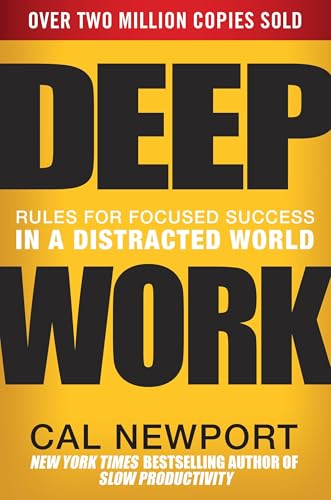
Overview: Cal Newport argues that deep concentration is increasingly valuable and increasingly rare. He describes rituals, time blocks, shutdown practices, and rules for reducing digital interruption.
Why it belongs on this list: The connection is strongest through concentration, distraction, scheduling, ritual, digital boundaries, attention, and high-value cognitive work. Deep Work approaches the seed’s concerns from a different angle, adding its own evidence, examples, and limits instead of repeating a familiar list of advice. It is especially useful for readers who want morning focus to produce demanding work because it makes the underlying choice more visible: what to protect, what to question, and what may not be under personal control.
Reading experience: The connection is the protected beginning. Deep Work is less about holistic self-improvement and more about making a chosen block produce meaningful cognitive output, which suits readers whose morning routine exists to support a craft or project.
Best for: Readers who want morning focus to produce demanding work.
Keep in mind: Prescriptive and work-centered, with recommendations that need adaptation for collaborative, care, or always-on roles.
What to notice: Readers may arrive at Deep Work because of concentration, distraction, scheduling, ritual, digital boundaries, attention, and high-value cognitive work, yet its lasting value lies in the complications attached to that promise. The book asks what happens when a desirable change meets fatigue, unequal resources, competing duties, or an imperfect environment. That makes it a genuine next read: related enough to satisfy the original interest, but independent enough to widen it.
View available editions and reader reviews.
Make Your Bed
Overview: William McRaven uses lessons from Navy SEAL training to describe how small acts of order, teamwork, courage, and persistence can shape a day and a life.
Why it belongs on this list: The connection is strongest through small routines, discipline, resilience, leadership, responsibility, preparation, and beginning with an action within one’s control. Make Your Bed approaches the seed’s concerns from a different angle, adding its own evidence, examples, and limits instead of repeating a familiar list of advice. It is especially useful for readers who want one small ritual as a foundation for a difficult day because it makes the underlying choice more visible: what to protect, what to question, and what may not be under personal control.
Reading experience: This is the simplest companion. It keeps the Miracle Morning’s belief in a deliberate start but removes the expectation of a full stack of practices, making it useful when a reader has little time or energy.
Best for: Readers who want one small ritual as a foundation for a difficult day.
Keep in mind: Brief and motivational, with military lessons that require adaptation to civilian life and personal circumstances.
What to notice: The right reading pace for Make Your Bed depends on what the reader needs from readers who want one small ritual as a foundation for a difficult day. Its discussion of small routines, discipline, resilience, leadership, responsibility, preparation, and beginning with an action within one’s control is clear enough to revisit, but it also benefits from pausing over examples and disagreements. Give the author room to make a case before deciding whether the ideas fit your work, health, relationships, and available freedom.
View available editions and reader reviews.
The One Thing

Overview: Gary Keller and Jay Papasan argue that extraordinary results often come from identifying the most important action and organizing other commitments around it. The book uses questions and planning tools to reduce scattered effort.
Why it belongs on this list: The connection is strongest through priority, focus, trade-offs, goal alignment, sequencing, distraction, and protecting the action that matters most. The One Thing approaches the seed’s concerns from a different angle, adding its own evidence, examples, and limits instead of repeating a familiar list of advice. It is especially useful for readers who want a single priority instead of a crowded morning checklist because it makes the underlying choice more visible: what to protect, what to question, and what may not be under personal control.
Reading experience: It offers a useful correction to routine accumulation. Instead of asking how many practices can fit before breakfast, it asks which one action would make the rest of the day more effective or meaningful.
Best for: Readers who want a single priority instead of a crowded morning checklist.
Keep in mind: Clear and motivational, though its single-focus language can understate care work, multiple obligations, and legitimate competing priorities.
What to notice: The right reading pace for The One Thing depends on what the reader needs from readers who want a single priority instead of a crowded morning checklist. Its discussion of priority, focus, trade-offs, goal alignment, sequencing, distraction, and protecting the action that matters most is clear enough to revisit, but it also benefits from pausing over examples and disagreements. Give the author room to make a case before deciding whether the ideas fit your work, health, relationships, and available freedom.
View available editions and reader reviews.
Getting Things Done

Overview: David Allen presents a workflow for capturing commitments, clarifying the next physical action, organizing projects, and reviewing them so the mind does not have to hold every unfinished task.
Why it belongs on this list: The connection is strongest through open loops, capture, organization, next actions, review, planning, and separating memory from a trusted external system. Getting Things Done approaches the seed’s concerns from a different angle, adding its own evidence, examples, and limits instead of repeating a familiar list of advice. It is especially useful for readers who want to clear mental clutter before choosing the day because it makes the underlying choice more visible: what to protect, what to question, and what may not be under personal control.
Reading experience: A morning routine often fails because it is asked to solve an overloaded mind. This book creates the external system that lets a reader use a quiet hour for choosing and doing rather than remembering everything that might go wrong.
Best for: Readers who want to clear mental clutter before choosing the day.
Keep in mind: Detailed and process-oriented, with a learning curve and a stronger focus on workflow than emotion or meaning.
What to notice: Readers may arrive at Getting Things Done because of open loops, capture, organization, next actions, review, planning, and separating memory from a trusted external system, yet its lasting value lies in the complications attached to that promise. The book asks what happens when a desirable change meets fatigue, unequal resources, competing duties, or an imperfect environment. That makes it a genuine next read: related enough to satisfy the original interest, but independent enough to widen it.
View available editions and reader reviews.
The Power of Habit

Overview: Charles Duhigg explains how cues, routines, and rewards create automatic behavior and how identifying the underlying reward can help change a pattern.
Why it belongs on this list: The connection is strongest through habit loops, cues, rewards, routine design, willpower, behavior change, and replacing patterns rather than relying on enthusiasm. The Power of Habit approaches the seed’s concerns from a different angle, adding its own evidence, examples, and limits instead of repeating a familiar list of advice. It is especially useful for readers who want to understand why a morning routine becomes automatic because it makes the underlying choice more visible: what to protect, what to question, and what may not be under personal control.
Reading experience: The book supplies a science-oriented explanation for why a morning ritual can feel difficult at first and effortless later. It is helpful when a reader wants to redesign the cue or reward rather than simply promise to try harder.
Best for: Readers who want to understand why a morning routine becomes automatic.
Keep in mind: Story-driven popular science, with a simpler loop model than the full complexity of human behavior.
What to notice: The right reading pace for The Power of Habit depends on what the reader needs from readers who want to understand why a morning routine becomes automatic. Its discussion of habit loops, cues, rewards, routine design, willpower, behavior change, and replacing patterns rather than relying on enthusiasm is clear enough to revisit, but it also benefits from pausing over examples and disagreements. Give the author room to make a case before deciding whether the ideas fit your work, health, relationships, and available freedom.
View available editions and reader reviews.
The Daily Stoic

Overview: Short selections from Stoic writers are paired with daily reflections about control, preparation, desire, and the difference between an event and the judgment attached to it.
Why it belongs on this list: The connection is strongest through daily reading, stoic reflection, control, preparation, impermanence, judgment, and responding deliberately to events. The Daily Stoic approaches the seed’s concerns from a different angle, adding its own evidence, examples, and limits instead of repeating a familiar list of advice. It is especially useful for readers who want a short reflective practice at the start of the day because it makes the underlying choice more visible: what to protect, what to question, and what may not be under personal control.
Reading experience: It can replace or complement the reading and writing portions of a morning routine. The practice is small, repeatable, and less dependent on a motivational narrative than a larger personal-growth program.
Best for: Readers who want a short reflective practice at the start of the day.
Keep in mind: Compact and repetitive by design; acceptance should not be used to dismiss injustice or emotional needs.
What to notice: The most useful thing to watch in The Daily Stoic is how daily reading, stoic reflection, control, preparation, impermanence, judgment, and responding deliberately to events moves from an attractive idea into a question about ordinary decisions. The book earns its place beside the seed because it gives readers who want a short reflective practice at the start of the day a different emotional and intellectual texture. Notice which examples carry the argument, where the author admits a limit, and which ideas remain useful after the initial enthusiasm fades.
View available editions and reader reviews.
Make Time

Overview: Jake Knapp and John Zeratsky offer a collection of tactics for choosing a daily highlight, managing energy, reducing distraction, and testing small changes to make time for what matters.
Why it belongs on this list: The connection is strongest through daily highlight, energy, distraction, attention, small experiments, flexible planning, and designing a day around what matters. Make Time approaches the seed’s concerns from a different angle, adding its own evidence, examples, and limits instead of repeating a familiar list of advice. It is especially useful for readers who want flexible daily experiments rather than one rigid schedule because it makes the underlying choice more visible: what to protect, what to question, and what may not be under personal control.
Reading experience: This is the most adaptable companion. It preserves the seed’s experimental spirit but rejects the idea that every morning needs the same structure, allowing readers to choose a practice that fits the day they actually have.
Best for: Readers who want flexible daily experiments rather than one rigid schedule.
Keep in mind: Practical and modular, with many tactics that should be tested selectively rather than collected as another overwhelming list.
What to notice: Readers may arrive at Make Time because of daily highlight, energy, distraction, attention, small experiments, flexible planning, and designing a day around what matters, yet its lasting value lies in the complications attached to that promise. The book asks what happens when a desirable change meets fatigue, unequal resources, competing duties, or an imperfect environment. That makes it a genuine next read: related enough to satisfy the original interest, but independent enough to widen it.
View available editions and reader reviews.
Choose by Routine, Focus, Planning, or Energy
Start with Atomic Habits when the routine keeps collapsing, or Deep Work when the protected hour should produce demanding work. Make Your Bed is the simplest entry; The 5 AM Club the most prescriptive. Choose The One Thing for priority, Getting Things Done for open loops, The Power of Habit for behavior science, The Daily Stoic for reflection, and Make Time for flexible daily experiments.
Who This List Is Best For
This list is for readers who enjoy routines, productivity, morning reflection, focus, and small systems that make intentions visible. Several books are highly prescriptive. Adapt them to sleep, health, work shifts, caregiving, neurodivergence, and access to uninterrupted time; the point of a routine is to support life rather than become another source of guilt.
FAQ
What is the closest book to The Miracle Morning?
The 5 AM Club has the closest early-morning structure. Atomic Habits is the better companion when the issue is not knowing what to do, but making a routine repeat under ordinary conditions.
Do I have to wake up at 5 a.m.?
No. The practices matter more than the clock time, and sleep is essential. Shift workers, parents, people with health conditions, and people with different chronotypes may need a different schedule.
Which book helps make routines stick?
Atomic Habits explains cues, environment, friction, and identity. The Power of Habit adds a behavioral account of loops and rewards.
Which recommendation is best for focus?
Deep Work is the clearest choice for protecting concentrated attention. Make Time offers more flexible daily tactics for readers whose schedule changes often.
What if mornings are already full of responsibilities?
Use a smaller ritual: one page, a short walk, a written priority, or a few quiet minutes. Make Your Bed and Atomic Habits are more adaptable than a full six-part routine, and a routine should never require sacrificing necessary sleep or care.
A Good Morning Routine Should Give the Day More Life
The Miracle Morning is most useful when the routine is treated as a menu rather than a moral law. The companion books show how a day can begin through quiet, movement, focus, planning, reading, or a single meaningful action. The best routine is not the one that looks most impressive. It is the one a person can repeat without borrowing energy from tomorrow.