
Internal Family Systems (IFS) therapy starts from an idea that often surprises people: the mind is not a single, unified voice but a collection of different “parts” that can carry distinct emotions, beliefs, and protective roles. Understanding that idea is one thing. Learning how it works in practice is another. Some readers want an accessible introduction for personal growth, while others are looking for a clinically grounded explanation of the model.
The books below reflect those different goals. Some provide practical guidance for self-exploration, while others examine IFS as a therapeutic framework used by mental health professionals. Together, they offer a balanced starting point for anyone interested in understanding or applying the Internal Family Systems approach.
Quick Answer
If you want the best books for IFS therapy, start with Self-Therapy for a clear self-study path, Move Toward for a simpler and more approachable introduction, and Internal Family Systems Therapy for a more clinical understanding of the model. We All Have Parts is a strong visual guide for trauma-informed readers, and You Are the One You’ve Been Waiting For is the best choice if you want to apply IFS to relationships.
Comparison Table
| Book | Best For | Why It Stands Out |
|---|---|---|
| Self-Therapy: A Step-by-Step Guide to Creating Wholeness Using IFS, A Cutting-Edge Psychotherapy, 3rd Edition | A focused audience for this recommendation | Adds a distinct perspective to the list |
| Move Toward: A Simplified IFS Therapy Tool to Welcome All Parts of You | A focused audience for this recommendation | Adds a distinct perspective to the list |
| Internal Family Systems Therapy | A focused audience for this recommendation | Adds a distinct perspective to the list |
| We All Have Parts: An Illustrated Guide to Healing Trauma with Internal Family Systems | A focused audience for this recommendation | Adds a distinct perspective to the list |
| You Are the One You’ve Been Waiting For: Applying Internal Family Systems to Intimate Relationships | A focused audience for this recommendation | Adds a distinct perspective to the list |
| Altogether You: Experiencing personal and spiritual transformation with Internal Family Systems therapy | A focused audience for this recommendation | Adds a distinct perspective to the list |
| Listening When Parts Speak: A Practical Guide to Healing with Internal Family Systems Therapy and Ancestor Wisdom | A focused audience for this recommendation | Adds a distinct perspective to the list |
How We Chose These Recommendations
These recommendations were selected for practical usefulness, lasting value, and clarity of explanation. For a topic like IFS therapy, that matters more than variety for its own sake. Readers need books that either teach the model well, support self-study responsibly, or show how IFS can be applied in a specific setting such as trauma work or relationships.
The list also aims to balance accessibility with depth. Some books are designed for beginners. Others are better suited to clinicians, advanced students, or readers who already understand the basics and want to go further. When a book takes a narrower approach, that focus is treated as a strength rather than a drawback, as long as it serves a real reader need.
Most importantly, every title here earns its place by contributing something distinct. No book is included just because it mentions IFS. Each one answers a different version of the same question: how do you understand Internal Family Systems therapy well enough to use it thoughtfully?
Recommended Books
Self-Therapy: A Step-by-Step Guide to Creating Wholeness Using IFS, A Cutting-Edge Psychotherapy, 3rd Edition

Overview: Self-Therapy is one of the most practical introductions to Internal Family Systems for readers who want to explore the model on their own. It walks through the basic concepts of parts, protectors, exiles, and Self with a strong emphasis on process. The book is especially helpful for people who want a guided structure rather than a purely theoretical explanation.
Why it stands out: Among books on IFS therapy, this is the clearest self-study option. It translates the model into manageable steps without flattening it into generic self-help. Readers who want to understand how to actually work with their parts, not just talk about them, will find the format especially useful. It also serves as a bridge between personal exploration and therapy-informed language.
Strengths:
- Step-by-step presentation of core IFS concepts
- Useful for independent readers who want structure
- Balances accessibility with enough depth to be meaningful
Best for: Beginners, self-help readers, and people who want a hands-on introduction to IFS therapy.
Potential limitations: Readers looking for a highly clinical or research-focused text will want a different book. This is more of a practical guide than an academic one.
View price, available formats, and reader reviews.
Move Toward: A Simplified IFS Therapy Tool to Welcome All Parts of You
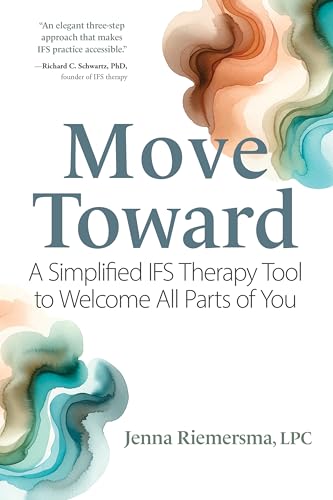
Overview: Move Toward offers a simplified entry into Internal Family Systems work. It is designed to make the model feel less intimidating, which is useful for readers who are just beginning to explore parts work or who want a gentler companion to a more demanding IFS text. The focus on welcoming all parts of the self keeps the approach practical and emotionally accessible.
Why it stands out: Compared with longer or more technical books on IFS therapy, this one is easier to pick up and use quickly. That makes it a strong choice for readers who want a concise introduction without feeling overwhelmed by terminology or theory. It fills an important role on this list because not every reader is ready for a full clinical text, and not every introduction needs to be exhaustive to be valuable.
Strengths:
- Clear and approachable language
- Good for readers who want a simpler overview of parts work
- Encourages a compassionate, welcoming stance toward inner experience
Best for: Newcomers, readers who feel overwhelmed by therapy jargon, and people who want a shorter, more accessible IFS book.
Potential limitations: Readers wanting deeper theory or more clinical detail will likely outgrow it quickly.
View price, available formats, and reader reviews.
Internal Family Systems Therapy

Overview: This is the most clearly clinical title on the list and the one most likely to help therapists, students, and advanced readers who want a serious understanding of the model. It presents Internal Family Systems as a therapeutic framework rather than a self-help concept, making it useful for readers who need to understand the structure, logic, and professional application of the approach.
Why it stands out: For readers who want to study IFS therapy at a deeper level, this book provides the kind of professional grounding that shorter popular books cannot. It deserves a place here because it addresses the needs of clinicians and graduate-level readers directly. If your goal is to understand how IFS fits into psychotherapy practice, this is one of the strongest options.
Strengths:
- More rigorous and theory-oriented than most introductory books
- Well suited to clinical learning and professional reference
- Helpful for readers who want to understand how the model works in practice
Best for: Therapists, counseling students, and readers seeking an academic or clinical IFS text.
Potential limitations: The style is more technical than beginner-friendly. Readers looking for a conversational or self-guided workbook will probably prefer a different title.
View price, available formats, and reader reviews.
We All Have Parts: An Illustrated Guide to Healing Trauma with Internal Family Systems

Overview: We All Have Parts uses an illustrated format to make Internal Family Systems easier to understand, especially for readers who learn best visually. The book focuses on healing trauma through IFS and presents the core ideas in a way that is approachable without being simplistic. That combination makes it especially helpful for readers who want emotional clarity and conceptual clarity at the same time.
Why it stands out: Illustration can make a big difference when a subject involves inner states, protective parts, and trauma language. This book earns its place because it translates a sometimes abstract therapy model into a format that is easier to absorb and revisit. It is a smart choice for readers who want an introductory IFS book that feels less dense than a professional manual but more focused than a general wellness book.
Strengths:
- Visual presentation supports understanding and recall
- Trauma-informed without becoming overly technical
- Accessible for readers who want a gentler entry point into IFS
Best for: Visual learners, trauma-informed readers, and anyone who wants an approachable introduction to IFS therapy.
Potential limitations: Readers looking for a highly detailed clinical discussion will need a more advanced text.
View price, available formats, and reader reviews.
You Are the One You’ve Been Waiting For: Applying Internal Family Systems to Intimate Relationships
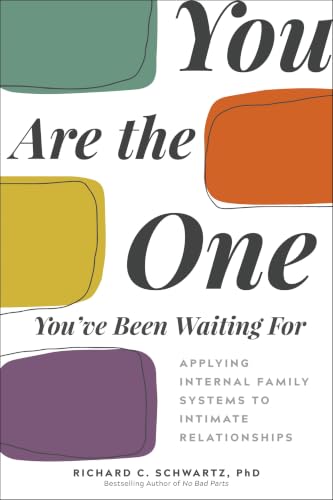
Overview: This book applies Internal Family Systems to romantic partnership and close relationships. Instead of treating IFS as only an inward-looking practice, it shows how parts work changes conflict, attachment, defensiveness, and emotional reactivity between people. That makes it especially relevant for readers who already understand the basics and want to see how the model works in everyday relational life.
Why it stands out: Relationship-focused IFS books are relatively rare, and this one fills that gap well. It belongs on this list because it gives the reader a specific use case rather than another general overview of the model. For people who want to use IFS therapy ideas to improve intimacy, communication, and emotional repair, this is one of the most directly useful choices.
Strengths:
- Focused specifically on intimate relationships
- Useful for understanding reactivity and attachment patterns
- Connects inner work with real-world relational change
Best for: Couples, relationship-focused readers, and people who want to apply IFS to conflict and connection.
Potential limitations: Readers looking for a broad introduction to IFS will find the scope narrower than other books on this list.
View price, available formats, and reader reviews.
Altogether You: Experiencing personal and spiritual transformation with Internal Family Systems therapy

Overview: Altogether You explores Internal Family Systems through the lens of personal and spiritual transformation. It is aimed at readers who want IFS to support deeper self-understanding, not just symptom management. The book brings a reflective tone to the model while still staying anchored in the language of therapy and inner healing.
Why it stands out: Among books for IFS therapy, this one is especially useful for readers who want the work to connect with meaning, identity, and spiritual growth. That is a different need from clinical training or simple self-help. Its value lies in how it expands the practical reach of IFS without losing the model’s emphasis on compassion and internal dialogue.
Strengths:
- Blends psychological and spiritual dimensions of healing
- Readable for non-clinicians who want depth
- Good option for reflective personal work
Best for: Readers interested in spiritual growth, personal healing, and a more reflective approach to IFS.
Potential limitations: People who want a strictly clinical or evidence-centered book may prefer other titles on this list.
View price, available formats, and reader reviews.
Listening When Parts Speak: A Practical Guide to Healing with Internal Family Systems Therapy and Ancestor Wisdom

Overview: This practical guide pairs Internal Family Systems therapy with ancestor wisdom, giving readers a culturally and spiritually informed way to think about healing. It is less formal than a professional manual and more reflective than a basic introduction, which makes it a good fit for readers who want IFS connected to lived experience, lineage, and relational healing.
Why it stands out: The distinct contribution here is perspective. Many IFS books focus almost entirely on technique or theory. This one broadens the conversation by linking parts work to ancestral and generational healing. That makes it especially valuable for readers who want a book that feels grounded in identity, story, and practice rather than only in therapy language.
Strengths:
- Practical but emotionally nuanced
- Connects IFS with ancestral and intergenerational themes
- Offers a different voice from more conventional therapy books
Best for: Readers interested in healing that includes family systems, ancestry, and cultural context.
Potential limitations: The blend of therapy and ancestral wisdom may not suit readers who want a narrowly clinical IFS text.
View price, available formats, and reader reviews.
Who This List Is Best For
This list is best for readers who want to understand Internal Family Systems at a meaningful level, whether that means self-study, professional learning, or applying the model to relationships and personal growth.
- Complete beginners who want a gentle introduction should start with Move Toward or We All Have Parts.
- Readers who want a structured self-help path will get the most from Self-Therapy.
- Therapists, counselors, and students should begin with Internal Family Systems Therapy.
- People focused on relationships will find the most direct value in You Are the One You’ve Been Waiting For.
- Readers interested in spiritual or reflective healing may prefer Altogether You or Listening When Parts Speak.
Final Thoughts
If your priority is a practical introduction you can use on your own, start with Self-Therapy. If you want something simpler and less demanding, Move Toward is the easiest place to begin. For clinicians and advanced students, Internal Family Systems Therapy is the strongest professional anchor.
If your goal is more specific, the choice becomes clearer. For relationships, choose You Are the One You’ve Been Waiting For. For visual learning and trauma awareness, We All Have Parts is the best fit. For readers drawn to reflection, meaning, and spiritual growth, Altogether You and Listening When Parts Speak offer a broader lens on the work.
FAQ
Which book is best for beginners?
Move Toward is the easiest entry point, while Self-Therapy is the best choice if you want a more structured beginner path.
Which book is best for therapists or counseling students?
Internal Family Systems Therapy is the most clinically oriented option and the best fit for professional readers.
Which book is easiest to read?
Move Toward and We All Have Parts are the most approachable. The illustrated format of We All Have Parts may be especially helpful if you prefer visual learning.
Which book is best for using IFS in relationships?
You Are the One You’ve Been Waiting For is the most directly focused book on intimate relationships and parts work.
Can I learn IFS therapy through self-study?
Yes. Self-Therapy is the strongest self-study option on this list because it gives readers a clear process to follow at home.
Which book offers the most long-term value?
For most readers, Self-Therapy offers the best long-term value because it works both as an introduction and as a book you can return to while practicing the model.