
People usually look for books on Stoic thinking when they want something practical, not abstract. They may be dealing with stress, difficult decisions, frustration, or a general sense that they need a steadier way to respond to life. The best books for Stoic thinking do more than explain ancient philosophy. They help readers build judgment, emotional discipline, and a calmer approach to what cannot be controlled.
Different books serve different readers. Some are best for daily reflection, some for first-time students of Stoicism, and others for readers who want a more direct link to the classical sources. The list below focuses on books that actually help you think in a Stoic way, not just books that mention Stoicism in passing.
Quick Answer
If you want the best books for Stoic thinking, start with The Daily Stoic, Meditations, How to Be a Stoic, How to Think Like a Roman Emperor, and A Handbook for New Stoics. Together, they cover daily practice, classical Stoic writing, modern interpretation, leadership under pressure, and structured self-training.
Comparison Table
| Book | Best For | Why It Stands Out |
|---|---|---|
| The Daily Stoic | Readers who want a short daily Stoic practice | Highly usable format with one meditation for each day of the year |
| Meditations | Readers who want direct access to classical Stoic thought | The foundational text for personal Stoic reflection |
| How to Be a Stoic | Beginners who want a clear modern introduction | Bridges ancient philosophy and everyday life without sounding simplified |
| How to Think Like a Roman Emperor | Readers interested in resilience, leadership, and mental discipline | Uses Marcus Aurelius as a practical model for handling adversity |
| A Handbook for New Stoics | Readers who want a guided practice with exercises | Week-by-week structure makes Stoic thinking easier to apply consistently |
How We Chose These Recommendations
This list was built around usefulness first. Stoic thinking is easiest to learn through books that combine clear ideas with real application, so the strongest selections here are the ones that help readers practice, not just understand, the philosophy.
We favored books with lasting reputations, strong educational value, and a clear fit for readers who want a steadier mindset. That means a mix of primary Stoic source material, respected modern introductions, and books that translate Stoic principles into habits, reflection, and decision-making. We also avoided filling the list with books that cover nearly the same ground in the same way.
Recommended Books
The Daily Stoic

Overview: The Daily Stoic offers 366 short meditations organized for daily reading, each built around a Stoic idea that can be carried into ordinary life. Rather than presenting Stoicism as a theory to master all at once, it turns the philosophy into a repeatable habit of reflection. That makes it especially useful for readers who want Stoic thinking to become part of their routine.
Why it stands out: Among modern Stoicism books, this is one of the most accessible and practical. Its format lowers the barrier to entry, which matters for people who want consistent exposure without taking on a dense philosophical text. It works well as a first Stoic book, but it also remains useful for experienced readers who want a daily anchor.
Strengths:
- Easy to use in short, regular reading sessions
- Introduces Stoic ideas in a way that feels practical rather than abstract
- Useful for reflection, journaling, or morning reading
Best for: Beginners, busy readers, and anyone who wants Stoic thinking in a daily format.
Potential limitations: The bite-sized structure is helpful, but readers who want sustained philosophical argument will need a fuller companion text.
View price, available formats, and reader reviews.
Marcus Aurelius – Meditations: Adapted for the Contemporary Reader (Greek & Roman Stoic Philosophy)

Overview: Marcus Aurelius’s Meditations remains the most direct window into Stoic thinking from within the tradition itself. This contemporary-reader edition makes the text more approachable for modern readers while preserving the central themes: self-command, duty, impermanence, and the need to respond well to difficulty. It is not a textbook about Stoicism. It is Stoic thinking in personal, unfinished form.
Why it stands out: If you want to understand how Stoicism sounds when used as a private discipline, this belongs near the top of the list. Its value lies in authenticity. Readers encounter a Roman emperor reasoning with himself about character, mortality, and resilience. That makes it different from modern guides that explain Stoicism from the outside.
Strengths:
- Primary-source Stoic material
- Deeply focused on self-mastery and perspective
- Useful for reflection, not just information
Best for: Readers who want the classic source behind much of modern Stoic thought.
Potential limitations: The format is reflective and fragmentary, so it can feel less structured than a modern guide.
View price, available formats, and reader reviews.
How to Be a Stoic: Using Ancient Philosophy to Live a Modern Life

Overview: How to Be a Stoic gives readers a clear introduction to Stoicism through modern examples, personal reflection, and the core ideas of the philosophy. It is especially good at explaining how Stoic thought applies to ordinary life, where the challenge is less about abstract wisdom and more about emotional steadiness, judgment, and choosing what deserves attention.
Why it stands out: Compared with more devotional or quote-based Stoic books, this one does a better job of teaching the framework behind the practice. It helps readers understand not just what Stoics believed, but how those beliefs shape a way of thinking. That makes it one of the strongest picks for beginners who want context, not just inspiration.
Strengths:
- Clear modern explanation of Stoic ideas
- Good balance between philosophy and application
- Accessible without becoming overly simplified
Best for: New readers, self-study, and anyone who wants a thoughtful introduction to Stoic thinking.
Potential limitations: Readers looking for a strictly classical text may prefer one of the original Stoic works instead.
View price, available formats, and reader reviews.
How to Think Like a Roman Emperor
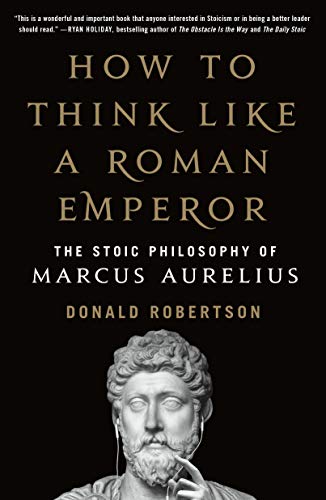
Overview: This book uses Marcus Aurelius as a model for applying Stoic principles under pressure. Rather than treating Stoicism as a historical subject, it focuses on the mental habits that help people stay steady when life becomes difficult. The result is a practical guide to resilience, discipline, and perspective, especially for readers interested in leadership or responsibility.
Why it stands out: Some Stoic books emphasize personal calm. This one emphasizes character under strain. That makes it especially useful for readers who want Stoicism to inform how they make decisions, lead others, or respond when things go wrong. It is one of the better options for translating philosophy into action without losing the seriousness of the tradition.
Strengths:
- Strong focus on resilience and self-command
- Connects Stoic ideas to leadership and daily conduct
- Readable without feeling shallow
Best for: Professionals, managers, and readers who want Stoic thinking for high-pressure situations.
Potential limitations: Readers wanting a broad survey of Stoicism may find it more focused on Marcus Aurelius than on the wider school.
View price, available formats, and reader reviews.
A Handbook for New Stoics: How to Thrive in a World Out of Your Control―52 Week-by-Week Lessons

Overview: A Handbook for New Stoics turns Stoic thinking into a yearlong training plan. Each week focuses on a specific lesson or exercise, which gives readers a practical path instead of a passive overview. The book is built for people who learn best by doing and who want Stoicism to become a lived habit rather than a theory they read once and set aside.
Why it stands out: Among beginner-friendly Stoic books, this is one of the most structured. It is especially helpful for readers who know the basics but struggle with consistency. The weekly format creates accountability and makes it easier to connect Stoic principles with real situations, which is where many readers need the most help.
Strengths:
- Structured, step-by-step approach
- Encourages practice rather than passive reading
- Helpful for building long-term Stoic habits
Best for: Readers who want exercises, reflection prompts, and a guided path into Stoic thinking.
Potential limitations: The format requires commitment, so it is less suitable for readers who only want a quick overview.
View price, available formats, and reader reviews.
The Obstacle is the Way Expanded 10th Anniversary Edition: The Timeless Art of Turning Trials into Triumph

Overview: The Obstacle is the Way applies Stoic ideas to adversity, setbacks, and hard problems. It translates the philosophy into a modern framework for action, showing how pressure, delay, and failure can be approached with discipline rather than panic. Readers looking for Stoicism as a way to handle obstacles in real life will find this especially direct.
Why it stands out: This is one of the clearest books for readers who want Stoic thinking without a heavy philosophical setup. It narrows the focus to one essential Stoic idea: your response matters more than the difficulty itself. That makes it a strong choice for people who need practical reinforcement more than historical background.
Strengths:
- Very practical and situation-oriented
- Strong focus on resilience during adversity
- Useful for readers who prefer a direct, action-based style
Best for: Readers facing setbacks, career pressure, or difficult transitions.
Potential limitations: It is more of an applied Stoic framework than a broad introduction to the whole philosophy.
View price, available formats, and reader reviews.
Breakfast with Seneca: A Stoic Guide to the Art of Living

Overview: Breakfast with Seneca presents Stoic thinking through the voice and example of Seneca, making the philosophy feel lived in rather than merely theoretical. The book is especially useful for readers who want to understand Stoicism as a guide to character, time, attention, and daily conduct. It pairs well with the classic texts because it offers interpretation without drifting too far from the source tradition.
Why it stands out: Seneca often speaks to practical concerns in a more accessible way than some other ancient Stoic writers, and this book makes good use of that quality. It belongs on this list because it helps readers see how Stoic ideas apply to everyday behavior, not just moments of crisis. For many people, that is the missing step between reading about Stoicism and actually using it.
Strengths:
- Readable approach to a major Stoic thinker
- Useful for everyday reflection and self-management
- Balances historical grounding with modern relevance
Best for: Readers who want a thoughtful companion to the classical Stoic tradition.
Potential limitations: It is more interpretive than a direct primary text, so readers seeking pure source material may want to pair it with Meditations or Seneca’s original writings.
View price, available formats, and reader reviews.
Right Thing, Right Now: Good Values. Good Character. Good Deeds. (The Stoic Virtues Series)

Overview: Right Thing, Right Now focuses on virtue, character, and action, which are central to Stoic thinking. Rather than emphasizing endurance alone, it brings attention to doing the right thing in the present moment. That makes it a useful addition for readers who want Stoicism tied more closely to ethics and conduct than to resilience alone.
Why it stands out: Many popular Stoic books lean heavily on toughness or emotional control. This one broadens the picture by returning to the moral core of the philosophy. Readers who want Stoicism to shape not just their reactions but also their values will find this perspective helpful. It adds balance to a list that otherwise could tilt too far toward coping strategies.
Strengths:
- Emphasizes virtue and character
- Helpful for readers interested in ethical Stoicism
- Extends Stoic thinking beyond stress management
Best for: Readers who want the moral side of Stoicism, not just the resilience side.
Potential limitations: Readers seeking a beginner-friendly overview may find it narrower in focus than broader introductions.
View price, available formats, and reader reviews.
Who This List Is Best For
This list is best for readers who want Stoic thinking they can actually use. That includes complete beginners, people who want a daily practice, professionals dealing with pressure, students of philosophy, and readers who prefer to learn from classical source material.
It is also a strong fit for anyone who wants Stoicism to feel practical rather than theoretical. If you are looking for calm, discipline, perspective, and a better response to difficulty, these books give you different ways to get there.
Final Thoughts
If you want the most accessible place to begin, start with The Daily Stoic or How to Be a Stoic. If you want the original voice of Stoicism, go to Meditations. If your goal is more practical, especially under pressure, How to Think Like a Roman Emperor and The Obstacle is the Way are stronger starting points. And if you want a structured path with exercises, A Handbook for New Stoics is the most guided option here.
The right choice depends on how you want to learn. Some readers need a classical text. Others need a daily reminder. Others need a book that turns Stoic thinking into a habit. The best book is the one that matches the way you actually read and reflect.
FAQ
Which book is best for beginners?
How to Be a Stoic is the best all-around beginner choice if you want a clear introduction. If you prefer a daily format, The Daily Stoic is easier to pick up and use immediately.
Which book is easiest to read?
The Daily Stoic is the most approachable because it is organized into short readings. The Obstacle is the Way is also very readable if you want a more direct, practical style.
Which book offers the most practical advice?
The Obstacle is the Way is the most directly practical for handling setbacks and pressure. A Handbook for New Stoics is best if you want practical exercises over time.
Which book is closest to the original Stoic tradition?
Meditations is the strongest direct link to classical Stoic thought in this list. It gives you the philosophy in its own voice rather than a modern explanation of it.
Can I learn Stoic thinking through self-study?
Yes. These books are well suited to self-study because they cover different learning styles. The Daily Stoic supports habits, How to Be a Stoic explains the basics, and A Handbook for New Stoics gives you a structured path.
Which book should I read first if I want long-term value?
Start with Meditations if you want a foundational text, or How to Be a Stoic if you want a clearer on-ramp. For long-term daily use, The Daily Stoic is the most sustainable option.




