
Leading without formal authority is a different skill from managing from the top. You may need to influence peers, align cross-functional teams, earn trust quickly, and move work forward when nobody reports to you. That is why readers search for the best books for leading without authority. They are usually trying to solve a practical problem: how to create momentum, cooperation, and accountability without relying on title or hierarchy.
The right book depends on your situation. Some readers need a framework for influence. Others need help navigating complex teams, difficult colleagues, or organizational politics. A few books focus on broad leadership judgment, which is useful when the challenge is less about persuasion and more about exercising responsibility in ambiguous settings. The list below is built for those different needs, not just for the phrase in the search box.
Quick Answer
If you want the best books for leading without authority, start with Influence Without Authority, Leading Without Authority: How the New Power of Co-Elevation Can Break Down Silos, Transform Teams, and Reinvent Collaboration, and The Art of Quiet Influence: Timeless Wisdom for Leading Without Authority. For readers who want a broader and more demanding treatment of leadership itself, Leadership Without Easy Answers is especially valuable. If your work depends on collaboration in modern teams, The People First Project Manager: Essential Soft Skills for Maximum Impact and Competing in the New World of Work: How Radical Adaptability Separates the Best from the Rest round out the list well.
Comparison Table
| Book | Best For | Why It Stands Out |
|---|---|---|
| Influence Without Authority | Readers who need practical influence skills in cross-functional settings | A focused, respected guide to getting work done when you cannot rely on hierarchy |
| Leading Without Authority: How the New Power of Co-Elevation Can Break Down Silos, Transform Teams, and Reinvent Collaboration | Leaders and contributors working across silos | Targets collaboration directly and gives the topic a modern team-based frame |
| The Art of Quiet Influence: Timeless Wisdom for Leading Without Authority | People who prefer a steadier, less performative style of leadership | Useful for readers who want influence without posturing or excessive self-promotion |
| Leadership Without Easy Answers | Readers who want deeper leadership judgment, not just tactics | Offers a more serious, reflective view of leadership in messy realities |
| The People First Project Manager: Essential Soft Skills for Maximum Impact | Project managers and team leads who need influence through relationships | Puts soft skills at the center of getting work done across teams |
| Competing in the New World of Work: How Radical Adaptability Separates the Best from the Rest | Professionals adapting to fluid, fast-changing workplaces | Connects influence to adaptability, which is often what authority-less leadership really requires |
How We Chose These Recommendations
These books were selected for usefulness, editorial quality, and long-term relevance. The common thread is not simply “leadership” in the abstract, but the practical challenge of moving people, decisions, and projects forward when formal power is limited. That means the strongest picks here are books that offer usable frameworks, realistic advice, and a clear fit for readers working across teams, functions, or organizations.
We also looked for range. Some books are tightly focused on influence and collaboration. Others address the broader judgment and adaptability that make authority-less leadership possible in the first place. Together, they give readers meaningful choices based on their role, experience level, and the kind of resistance they face at work.
Recommended Books
Influence Without Authority

Overview: This book focuses on one of the central realities of modern work: much of what matters gets done through people who do not report to you. It addresses how to build credibility, shape decisions, and gain cooperation when your success depends on peers, stakeholders, and other teams. The emphasis is practical rather than theoretical, which makes it especially useful for professionals who need to influence in real organizational settings.
Why it stands out: Among the books on this topic, this is one of the cleanest and most direct treatments of influence without hierarchy. It does not drift into broad motivational leadership language. Instead, it stays close to the problem readers are trying to solve, which is how to make progress when authority is limited and relationships matter more than command.
Strengths:
- Highly focused on influence in matrixed and cross-functional environments
- Useful for readers who want practical, workplace-ready advice
- Good fit for managers, individual contributors, and project-based roles
Best for: Professionals who need a straightforward guide to influencing peers, stakeholders, or colleagues without formal power.
Potential limitations: Readers looking for a more reflective or philosophical treatment of leadership may find it more tactical than they want.
View price, available formats, and reader reviews.
Leading Without Authority: How the New Power of Co-Elevation Can Break Down Silos, Transform Teams, and Reinvent Collaboration

Overview: This book approaches authority-less leadership through the lens of collaboration. Its focus on co-elevation and breaking down silos makes it especially relevant to readers who work in environments where no single person controls the outcome. It addresses how teams can move together rather than wait for top-down direction, which is a common challenge in modern organizations.
Why it stands out: The strongest reason to recommend it is its direct fit with team-based leadership problems. Where some books frame influence as a personal skill, this one places it inside the larger challenge of collaboration across functions and boundaries. That makes it particularly useful for readers who need to lead among peers rather than above them.
Strengths:
- Strong match for cross-functional and matrixed work
- Addresses silo-breaking and shared ownership
- Useful for readers trying to change team culture, not just individual behavior
Best for: Team leads, project leaders, and collaborators who need to create alignment across groups without relying on formal authority.
Potential limitations: Readers wanting a classic general leadership book may find its collaborative focus narrower than expected.
View price, available formats, and reader reviews.
The Art of Quiet Influence: Timeless Wisdom for Leading Without Authority
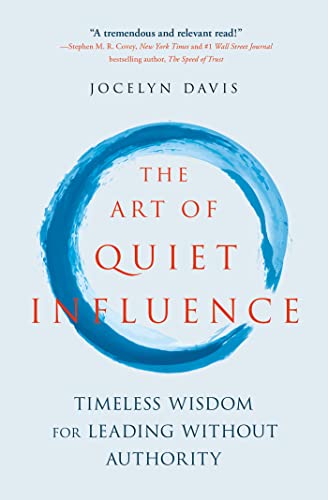
Overview: This book is geared toward readers who want to lead effectively without leaning on forceful presence or constant self-promotion. It focuses on a quieter style of influence, drawing on enduring principles rather than trendy management language. That makes it a good choice for professionals who want to earn trust, shape decisions, and guide others in a more measured way.
Why it stands out: A lot of leadership books assume a visible, outspoken style. This one is more useful for readers whose credibility comes from steadiness, judgment, and consistency. It helps redefine influence as something built patiently through trust and good judgment, which is often exactly what authority-less leadership requires.
Strengths:
- Well suited to introverts and reserved communicators
- Emphasizes trust, credibility, and subtle influence
- Useful for readers who want a calmer, more sustainable leadership approach
Best for: Readers who prefer a low-ego style of leadership and want to influence without being the loudest voice in the room.
Potential limitations: Those looking for highly structured step-by-step tactics may want something more operational.
View price, available formats, and reader reviews.
Leadership Without Easy Answers

Overview: This is a more demanding, reflective book about what leadership looks like when problems are complex and no one has complete control. Rather than offering simple formulas, it asks readers to think carefully about judgment, responsibility, and how leaders navigate uncertainty. For people trying to lead without authority, that broader perspective is valuable because influence often depends on more than interpersonal technique.
Why it stands out: Compared with books that focus mostly on influence tactics, this one gives readers a deeper understanding of leadership under pressure and ambiguity. It is especially helpful when the challenge is not only persuading others, but making sound decisions in situations where authority is limited and the right answer is not obvious.
Strengths:
- Offers serious, long-form thinking about leadership
- Useful for readers who want more than quick tips
- Strong choice for managers, students, and reflective professionals
Best for: Readers who want to understand leadership as a judgment discipline, not just a communication skill.
Potential limitations: The style is more academic and less immediately tactical than some other books on this list.
View price, available formats, and reader reviews.
The People First Project Manager: Essential Soft Skills for Maximum Impact

Overview: Project managers often have responsibility without full authority, so a book centered on people skills is an especially good fit for this topic. This one focuses on the interpersonal side of getting work done, including communication, trust, and influence across stakeholders. That makes it especially relevant for readers who need to keep projects moving when they cannot simply issue directives.
Why it stands out: Many project management books lean heavily on process. The value here is the focus on soft skills as the real engine of coordination. That gives the book a practical edge for readers whose problems are less about scheduling tools and more about aligning people who do not report to them.
Strengths:
- Directly addresses influence in project environments
- Prioritizes communication and relationship management
- Especially relevant for cross-functional leaders
Best for: Project managers, program managers, and team coordinators who need to lead through trust and collaboration.
Potential limitations: Readers outside project work may find the focus narrower than broader leadership titles.
View price, available formats, and reader reviews.
Competing in the New World of Work: How Radical Adaptability Separates the Best from the Rest

Overview: This book is less about influence tactics and more about the kind of adaptability that makes authority-less leadership possible in unstable workplaces. It looks at how people and teams compete when expectations shift quickly and formal structures matter less than responsiveness. For readers who work in changing environments, that perspective is highly relevant.
Why it stands out: The book earns its place because leading without authority is often really about adapting faster than the system around you. It helps readers think about agility, resilience, and execution in workplaces where clarity is limited and collaboration must happen across boundaries.
Strengths:
- Strong fit for modern, fast-changing work environments
- Connects adaptability to leadership effectiveness
- Useful for professionals facing ambiguity and change
Best for: Readers who want to lead well in fluid organizations where influence depends on responsiveness and credibility.
Potential limitations: It is broader than a pure influence manual, so readers seeking a narrow how-to guide may want to pair it with a more tactical title.
View price, available formats, and reader reviews.
Who This List Is Best For
This list is best for professionals who need to influence people they do not manage directly. That includes project managers, team leads, product managers, consultants, coordinators, and individual contributors in matrixed organizations. It is also useful for readers who are stepping into leadership before they have formal authority, or who want to improve how they work across departments.
Beginners can start with the most practical influence books. More experienced readers may get more from the books on leadership judgment, quiet influence, and adaptability. If your challenge is collaboration, trust, or getting traction without a title, these are the books on the list most likely to help.
Final Thoughts
If your main goal is practical influence, start with Influence Without Authority. If your challenge is cross-functional collaboration, Leading Without Authority: How the New Power of Co-Elevation Can Break Down Silos, Transform Teams, and Reinvent Collaboration is the best fit. If you lead more quietly or want a steadier style of influence, The Art of Quiet Influence is the clearest match.
If your work is defined by complexity and ambiguity, choose Leadership Without Easy Answers. For readers in project-driven roles, The People First Project Manager gives the most directly relevant guidance. And if your workplace is changing fast, Competing in the New World of Work adds a useful layer of adaptability to the conversation.
FAQ
Which book is best for beginners?
Influence Without Authority is the best starting point for most beginners because it is focused, practical, and centered on the exact challenge of influencing without formal power.
Which book is easiest to apply at work?
The People First Project Manager: Essential Soft Skills for Maximum Impact is especially actionable for people working on teams, since it connects influence to communication and relationships.
Which book offers the broadest leadership perspective?
Leadership Without Easy Answers offers the broadest view of leadership, especially for readers who want to think more deeply about judgment and responsibility.
Which book is best for introverts or quieter personalities?
The Art of Quiet Influence is the strongest fit for readers who prefer a more understated, trust-based style of leadership.
Can I learn to lead without authority through self-study?
Yes. These books are well suited to self-study because they focus on practical habits, communication, and collaboration. The most useful approach is to read one tactical book first, then add a broader title once you have the basics.
Which book should I read first if I work across departments?
Start with Leading Without Authority: How the New Power of Co-Elevation Can Break Down Silos, Transform Teams, and Reinvent Collaboration if your main challenge is coordination across teams. It is the most directly aligned with cross-functional collaboration.