
People usually search for books on people pleasing after they have noticed the same pattern in different parts of life. Saying yes too quickly. Feeling anxious when someone is disappointed. Replaying conversations afterward and wondering whether they were too blunt, too needy, or not helpful enough. The right book can make that pattern easier to understand, but the best choice depends on what is driving it. Some readers need practical boundary scripts. Others want a deeper look at guilt, approval-seeking, or fear of conflict. A few want a more personal, faith-based perspective. The books below cover those different needs without repeating the same advice in slightly different language.
Quick Answer
If you want the clearest entry point into people pleasing, start with The Disease To Please: Curing the People-Pleasing Syndrome. It gives you a useful foundation in fear of conflict, guilt, self-abandonment, boundaries, and values-based communication. Choose The Book of No: 365 Ways to Say it and Mean it―and Stop People-Pleasing Forever (Updated Edition) when you want a more applied or contrasting approach, and use Not Nice: Stop People Pleasing, Staying Silent, & Feeling Guilty… And Start Speaking Up, Saying No, Asking Boldly, And Unapologetically Being Yourself when you want to extend the idea into a different context.
This list is designed for readers learning boundaries, assertiveness, and how to stop organizing life around approval. The recommendations are intentionally varied: some explain the underlying research, some offer exercises, and some are strongest as narrative or leadership case studies. That variety makes it easier to choose a book that matches your current question rather than buying the longest list.
How We Chose These Recommendations
These books were chosen for usefulness first. The list includes titles that address people pleasing from different angles, including psychology, boundary setting, emotional patterns, sensitivity, and faith. That matters because people pleasing is not a single problem with a single fix. Some readers need a straightforward introduction to the syndrome itself. Others need concrete language for saying no. Others are less worried about tactics and more concerned with the deeper habit of tying self-worth to other people’s reactions.
The strongest books here are the ones that have earned a lasting place in this conversation because they solve real problems for real readers. A good book on people pleasing should help the reader notice the pattern, understand what keeps it going, and practice a different response. Titles that only repeat the same advice without adding a distinct angle did not make the cut.
Recommended Books
The Disease To Please: Curing the People-Pleasing Syndrome

Overview: Harriet B. Braiker’s book is one of the more established titles on people pleasing, and it still earns attention because it treats the problem as a real behavioral pattern rather than a vague personality flaw. The book examines how approval-seeking, guilt, fear of disapproval, and over-responsibility can shape a person’s choices. It is direct without being simplistic, which makes it useful for readers who want to understand why they keep sacrificing their own needs.
Why it stands out: Compared with more modern books that lean heavily on slogans, this one has a grounded, clinical tone that many readers find clarifying. It gives people pleasing a name and a structure, which can be a relief for anyone who has spent years assuming the problem is just being “too nice.”
Strengths:
- Explains the psychology behind approval-seeking in a clear way
- Useful for readers who want context before they try behavior changes
- Stays focused on the core pattern rather than diluting the topic
Best for: Readers who want a classic, no-nonsense starting point on people pleasing.
Potential limitations: The style is more straightforward and traditional than some newer self-help books, so it may feel a little less conversational.
View price, available formats, and reader reviews.
The Book of No: 365 Ways to Say it and Mean it―and Stop People-Pleasing Forever (Updated Edition)

Overview: For readers whose biggest problem is not understanding people pleasing but actually resisting it in the moment, this book is especially useful. Its structure is practical and narrow in a good way. Instead of offering broad theory, it gives readers a wide range of ways to decline requests, protect time, and hold boundaries without overexplaining themselves. That makes it easy to dip into when a specific situation comes up.
Why it stands out: Many books on this topic spend a lot of time helping readers identify the pattern. This one is more of a field guide for changing the behavior. It is a strong choice for people who already know they struggle with saying yes too quickly and want help finding workable language.
Strengths:
- Highly practical and easy to use in everyday situations
- Helpful for boundary setting, especially with family, friends, and coworkers
- Format makes it easy to return to repeatedly
Best for: Readers who need concrete help saying no without spiraling into guilt.
Potential limitations: It is more of a practical companion than a deep psychological exploration.
View price, available formats, and reader reviews.
Not Nice: Stop People Pleasing, Staying Silent, & Feeling Guilty… And Start Speaking Up, Saying No, Asking Boldly, And Unapologetically Being Yourself

Overview: This book speaks directly to the emotional habits that keep people pleasing in place. It focuses on silence, guilt, hesitation, and the difficulty of asking for what you need. Readers who know they are too quick to smooth things over or avoid tension will recognize the terrain immediately. The tone is more forceful than some other books in this area, which is part of its appeal.
Why it stands out: The strongest reason to include it is its emphasis on action. It does not just ask readers to understand why they are accommodating others. It pushes them to speak up, ask directly, and tolerate the discomfort that can come with being less agreeable. That makes it a strong fit for readers who need momentum, not just insight.
Strengths:
- Direct, motivating approach for readers stuck in silence
- Useful for practicing assertiveness in real relationships
- Focuses on guilt and self-silencing, two common parts of the problem
Best for: Readers who want a more assertive, action-oriented book on people pleasing.
Potential limitations: The style is stronger and more confrontational than some readers will prefer.
View price, available formats, and reader reviews.
Are You Mad at Me?: How to Stop Focusing on What Others Think and Start Living for You
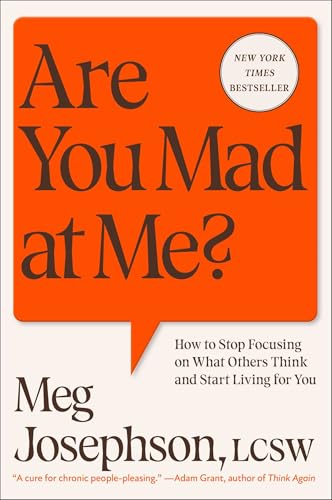
Overview: This book is well suited to readers whose people pleasing is driven by constant monitoring of other people’s moods, tone, and approval. Instead of treating the issue as simple politeness, it looks at the habit of organizing your life around what others may be thinking. That makes it especially relevant for people who feel nervous after conversations or who default to reassurance-seeking.
Why it stands out: A lot of books on boundary setting focus on what to say. This one is especially valuable for the inner experience behind the behavior. It is helpful for readers who need to break the cycle of overthinking other people’s reactions before they can make different choices.
Strengths:
- Targets fear of disapproval in a very direct way
- Useful for readers who overinterpret other people’s reactions
- Connects people pleasing with self-trust and emotional freedom
Best for: Readers who are constantly wondering whether other people are upset with them.
Potential limitations: Readers looking for a highly tactical boundary script book may want something more procedural.
View price, available formats, and reader reviews.
How to Stop Breaking Your Own Heart: Stop People-Pleasing, Set Boundaries and Heal from Self-Sabotage. THE SUNDAY TIMES BESTSELLER

Overview: This book approaches people pleasing as part of a larger pattern of self-sabotage and emotional self-abandonment. That broader frame is useful for readers who have already recognized the boundary problem but suspect something deeper is going on underneath it. The book’s appeal lies in connecting everyday choices to long-term habits of putting yourself last.
Why it stands out: Where some books stay narrowly focused on saying no, this one helps readers understand why they keep breaking their own boundaries in the first place. It is a strong recommendation for people who want emotional insight alongside practical change, especially if the pattern shows up in relationships.
Strengths:
- Broadens the discussion beyond simple people-pleasing habits
- Helpful for readers who want to understand self-sabotage and boundaries together
- Balances emotional reflection with practical change
Best for: Readers who suspect their people pleasing is tied to deeper relationship patterns.
Potential limitations: It is more reflective than some readers may want if they are looking for fast, script-based help.
View price, available formats, and reader reviews.
Please Yourself: How to Stop People-Pleasing and Transform the Way You Live

Overview: This book takes a broader view of people pleasing as a way of living, not just a collection of awkward social habits. It is a good fit for readers who sense that saying yes too often has affected more than their calendar. It can influence identity, decisions, relationships, and even the kinds of opportunities people feel allowed to pursue. The book speaks to that larger cost.
Why it stands out: Among the books on this list, it is one of the better choices for readers who want to rethink the role approval has played in shaping their life. It is less about quick fixes and more about changing the way you measure what matters.
Strengths:
- Addresses people pleasing as a whole-life pattern
- Useful for readers who want a broader shift in mindset
- Supports long-term change rather than only short-term coping
Best for: Readers who want to rethink the larger habits behind approval-seeking.
Potential limitations: The more expansive approach may feel less immediately actionable than a boundary-focused workbook-style book.
View price, available formats, and reader reviews.
The Highly Sensitive Person’s Guide to Stop People-Pleasing: Finally, Put Yourself First, Set Boundaries with Confidence, and Release the Negativity in Saying NO!

Overview: Readers who feel things intensely often experience people pleasing more sharply, because conflict, rejection, and guilt can land harder. This book is tailored to that reality. It treats sensitivity as part of the challenge and focuses on putting yourself first without feeling like you are being cruel or selfish. That makes it a thoughtful choice for readers who have long assumed they simply need to toughen up.
Why it stands out: The value here is specificity. Rather than speaking to everyone in the same general way, it addresses how sensitivity can shape guilt, boundaries, and the fear of disappointing others. That makes the advice more relevant for a reader who has not responded well to harder-edged self-help books.
Strengths:
- Tailored to emotionally sensitive readers
- Helpful for readers who feel guilt and conflict very intensely
- Focuses on confidence without dismissing sensitivity
Best for: Highly sensitive readers who want a gentler, more tailored approach to boundaries.
Potential limitations: Readers who do not identify as highly sensitive may prefer a broader book on the topic.
View price, available formats, and reader reviews.
People Pleaser: Breaking Free from the Burden of Imaginary Expectations

Overview: This book brings a faith-centered perspective to people pleasing and approval-seeking. It focuses on identity, self-worth, and the pressure of living under what the book frames as imaginary expectations. Readers who want their personal growth connected to spiritual grounding will find that orientation helpful and coherent.
Why it stands out: Not every reader wants a secular framework for this subject. This recommendation earns its place because it addresses the problem through belief, identity, and dependence on God, which gives it a distinct value for faith-based readers who want encouragement that aligns with their worldview.
Strengths:
- Faith-centered approach to approval, identity, and worth
- Helpful for readers who want spiritual encouragement alongside self-reflection
- Personal and relatable rather than clinical in tone
Best for: Readers who want a Christian perspective on breaking free from people pleasing.
Potential limitations: The book is best suited to readers comfortable with an explicitly faith-based approach.
View price, available formats, and reader reviews.
Comparison Table
| Book | Best For | Why It Stands Out |
|---|---|---|
| The Disease To Please: Curing the People-Pleasing Syndrome | Readers who want a classic, no-nonsense starting point on people pleasing. | Compared with more modern books that lean heavily on slogans, this one has a grounded, clinical tone that many readers find clarifying. It gives people pleasing a name and a structure, which can be a relief for anyone who has spent years… |
| The Book of No: 365 Ways to Say it and Mean it―and Stop People-Pleasing Forever (Updated Edition) | Readers who need concrete help saying no without spiraling into guilt. | Many books on this topic spend a lot of time helping readers identify the pattern. This one is more of a field guide for changing the behavior. It is a strong choice for people who already know they struggle with saying yes too quickly… |
| Not Nice: Stop People Pleasing, Staying Silent, & Feeling Guilty… And Start Speaking Up, Saying No, Asking Boldly, And Unapologetically Being Yourself | Readers who want a more assertive, action-oriented book on people pleasing. | The strongest reason to include it is its emphasis on action. It does not just ask readers to understand why they are accommodating others. It pushes them to speak up, ask directly, and tolerate the discomfort that can come with being… |
| Are You Mad at Me?: How to Stop Focusing on What Others Think and Start Living for You | Readers who are constantly wondering whether other people are upset with them. | A lot of books on boundary setting focus on what to say. This one is especially valuable for the inner experience behind the behavior. It is helpful for readers who need to break the cycle of overthinking other people’s reactions before… |
| How to Stop Breaking Your Own Heart: Stop People-Pleasing, Set Boundaries and Heal from Self-Sabotage. THE SUNDAY TIMES BESTSELLER | Readers who suspect their people pleasing is tied to deeper relationship patterns. | Where some books stay narrowly focused on saying no, this one helps readers understand why they keep breaking their own boundaries in the first place. It is a strong recommendation for people who want emotional insight alongside practical… |
| Please Yourself: How to Stop People-Pleasing and Transform the Way You Live | Readers who want to rethink the larger habits behind approval-seeking. | Among the books on this list, it is one of the better choices for readers who want to rethink the role approval has played in shaping their life. It is less about quick fixes and more about changing the way you measure what matters. |
| The Highly Sensitive Person’s Guide to Stop People-Pleasing: Finally, Put Yourself First, Set Boundaries with Confidence, and Release the Negativity in Saying NO! | Highly sensitive readers who want a gentler, more tailored approach to boundaries. | The value here is specificity. Rather than speaking to everyone in the same general way, it addresses how sensitivity can shape guilt, boundaries, and the fear of disappointing others. That makes the advice more relevant for a reader who… |
| People Pleaser: Breaking Free from the Burden of Imaginary Expectations | Readers who want a Christian perspective on breaking free from people pleasing. | Not every reader wants a secular framework for this subject. This recommendation earns its place because it addresses the problem through belief, identity, and dependence on God, which gives it a distinct value for faith-based readers who… |
Who This List Is Best For
These recommendations are a good fit for readers learning boundaries, assertiveness, and how to stop organizing life around approval. They are especially useful if you want to understand people pleasing with more nuance than a short checklist, quote, or social-media summary can provide.
- Readers who want a clear conceptual foundation before choosing a technique.
- People who prefer to compare research, practical exercises, and real-world examples.
- Professionals, students, or caregivers who need language they can apply in a real conversation or decision.
Use the Best For and Why It Stands Out columns together. A book can be excellent yet still be the wrong starting point if its depth, tone, or intended reader does not match your goal.
Final Thoughts
The strongest choice for people pleasing depends on what you need to do next. Begin with The Disease To Please: Curing the People-Pleasing Syndrome if you need a foundation, move to The Book of No: 365 Ways to Say it and Mean it―and Stop People-Pleasing Forever (Updated Edition) if you need a practical change, and consider Not Nice: Stop People Pleasing, Staying Silent, & Feeling Guilty… And Start Speaking Up, Saying No, Asking Boldly, And Unapologetically Being Yourself if you need a broader or more challenging perspective. The comparison table is meant to shorten that decision, not pretend that one book works for every reader.
A useful reading plan is simple: select one book, write down the question you want it to answer, and apply one idea before moving to another recommendation. For this topic, practice one small honest no and notice what you feared would happen versus what actually happened. boundaries are not punishment, and safety may require support when people react aggressively. Books can support reflection and skills practice, but they are not a substitute for qualified professional care when symptoms are severe, persistent, or unsafe.
FAQ
Which book should I read first for people pleasing?
Start with The Disease To Please: Curing the People-Pleasing Syndrome if you want the clearest foundation. If your immediate need is action rather than background, compare it with The Book of No: 365 Ways to Say it and Mean it―and Stop People-Pleasing Forever (Updated Edition) and choose the one whose exercises, examples, or audience match your situation.
How do I choose between a research-based book and a workbook?
Choose the research-oriented option when you need context and a better mental model. Choose the workbook or practical guide when you already understand the problem and need repetition, prompts, or a structured plan. The table’s Best For column is the fastest way to make that distinction.
What is a practical way to use books about people pleasing?
Do not read the whole list at once. Pick one recommendation, define the behavior or decision you want to improve, and test a small idea from the book for seven days. For this topic, practice one small honest no and notice what you feared would happen versus what actually happened.
Are these recommendations suitable for self-study?
Yes, for education and structured reflection. Take notes in your own words, mark claims you want to verify, and discuss difficult ideas with a trusted person or qualified professional when appropriate. Books can support reflection and skills practice, but they are not a substitute for qualified professional care when symptoms are severe, persistent, or unsafe.
Do I need to read every book on the list?
No. One well-matched book that changes what you notice or do is more valuable than collecting several recommendations without applying any of them.