
When work starts to feel flat, unfocused, or harder to start than it should, motivation is usually not the real problem. More often, people need a better system, a clearer mindset, or a more practical way to handle distraction, leadership pressure, and burnout. The best books for work motivation do different jobs. Some help you think more constructively. Some improve your habits. Others sharpen your focus or help you lead with more confidence.
If you are looking for books that can actually change how you approach your day, the strongest choices are the ones below. They are not all the same kind of motivation book, and that is the point. A good list should give you options for different working styles, different challenges, and different levels of experience.
Quick Answer
If you want the best books for work motivation, start with The Happiness Advantage, Deep Work, The Power of Habit, Dare to Lead, and Scrum. Together, they cover mindset, focus, habit-building, leadership, and practical productivity. For readers who want motivation that leads to real day-to-day change, those are the strongest places to begin.
Comparison Table
| Book | Best For | Why It Stands Out |
|---|---|---|
| The Happiness Advantage | Readers who want a more constructive mindset at work | Connects positive psychology to everyday performance in a practical, grounded way |
| Deep Work | Professionals battling distraction | Offers a clear case for focus as a source of better results and stronger motivation |
| The Power of Habit | Anyone who needs motivation to become more consistent | Makes behavior change feel manageable by explaining how habits actually work |
| Dare to Lead | Managers and emerging leaders | Shows how courage and trust shape better leadership and better work energy |
| Scrum | Readers who want a structure for getting more done | Focuses on work rhythm, accountability, and momentum rather than abstract inspiration |
| Motivational Interviewing | Coaches, counselors, managers, and helpers | Teaches a disciplined method for helping others change without pushing too hard |
| God Does His Best Work with Empty | Readers who want encouragement through faith | Approaches motivation through spiritual renewal rather than productivity tactics |
| The Little Black Book of Workout Motivation | People whose work motivation is tied to fitness discipline | Targets consistency through direct, no-frills encouragement for training habits |
How We Chose These Recommendations
These books were selected for the different ways they help people stay motivated at work. Some address mindset and resilience. Others focus on habit formation, concentration, leadership, or disciplined execution. That matters because work motivation is rarely a single problem. For one reader, the issue is distraction. For another, it is inconsistency. For someone else, it is the challenge of leading a team or getting through a season of low energy.
Priority went to books with lasting relevance, clear usefulness, and strong reputations in their respective areas. The goal was not to collect every popular title related to motivation. The goal was to choose books that genuinely help readers work with more clarity, steadiness, and purpose.
Recommended Books
The Happiness Advantage: How a Positive Brain Fuels Success in Work and Life

Overview: Shawn Achor argues that people tend to think success leads to happiness, when in many cases the reverse is more useful at work. The book combines positive psychology with practical ways to improve outlook, energy, and performance. Rather than offering generic optimism, it focuses on habits and mental habits that make work feel more manageable and more productive.
Why it stands out: For readers who want motivation without the usual motivational clichés, this is one of the strongest starting points. It treats mindset as a performance factor, not just a feel-good topic. That makes it especially useful for employees, team members, and managers who want to show up with more consistency and less mental drag.
Strengths:
- Connects psychology to everyday work behavior
- Readable and practical without being oversimplified
- Useful for boosting confidence, resilience, and engagement
Best for: Readers who want a better mental framework for work, especially during stressful or discouraging periods.
Potential limitations: The psychology-heavy framing may feel familiar to readers who already know the positive psychology genre well.
View price, available formats, and reader reviews.
Deep Work: Rules for Focused Success in a Distracted World
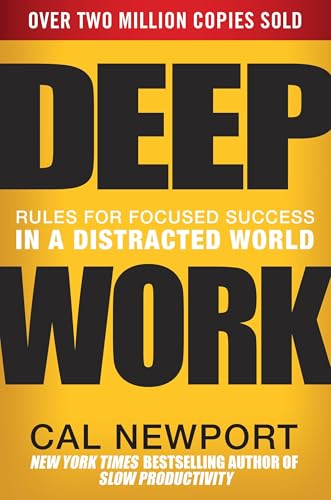
Overview: Cal Newport makes a strong case that focused, uninterrupted work is one of the most valuable skills in modern professional life. The book explains why distraction is so costly and gives readers a framework for building concentration into their schedules. It is especially helpful for people whose motivation drops when their workday feels fragmented.
Why it stands out: Among the best books for work motivation, this one is especially good for readers who do not need more inspiration so much as fewer interruptions. Its strength is that it reframes motivation as the result of disciplined attention. That is a useful distinction for knowledge workers, writers, analysts, and anyone whose best work requires sustained concentration.
Strengths:
- Provides a clear philosophy of focused work
- Especially relevant in distraction-heavy jobs
- Offers practical structure rather than vague encouragement
Best for: Professionals who need to protect their attention and convert focus into better output.
Potential limitations: Readers looking for emotional encouragement or broad career advice may find it more strategic than inspiring.
View price, available formats, and reader reviews.
The Power of Habit: Why We Do What We Do in Life and Business

Overview: Charles Duhigg explains how habits form, how they can be changed, and why small routines often determine bigger results at work. The book moves between research and real-world examples, showing how motivation becomes easier when behavior is automated in useful ways. It is less about feeling inspired for a day and more about building a system you can repeat.
Why it stands out: A lot of work motivation problems come down to inconsistency. This book addresses that directly. Compared with books that focus on mindset alone, it gives readers a more durable way to create momentum. If you keep starting over, this is one of the most practical choices on the list.
Strengths:
- Explains habit loops in an accessible way
- Helpful for building repeatable work routines
- Balances research with readable examples
Best for: Readers who want to build better work habits, improve follow-through, and reduce dependence on willpower.
Potential limitations: The book is broader than workplace motivation alone, so some readers may need to translate the ideas into their own job context.
View price, available formats, and reader reviews.
Dare to Lead: Brave Work. Tough Conversations. Whole Hearts.

Overview: Brené Brown focuses on the emotional side of leadership, including courage, trust, accountability, and difficult conversations. The book is aimed at people who lead teams or influence others, but it also helps individual contributors who want to work with more confidence and less hesitation. It treats motivation as something that grows when people feel safe enough to speak honestly and take responsibility.
Why it stands out: Many work motivation books focus on getting more output from yourself. This one is especially valuable for readers whose work motivation is affected by team dynamics, fear of conflict, or leadership pressure. It is one of the best choices for managers because it connects inner steadiness with practical leadership behavior.
Strengths:
- Strong on trust, communication, and accountability
- Useful for both managers and future leaders
- Grounds motivation in relationships, not just personal drive
Best for: Managers, team leads, and professionals who need to lead with more confidence and emotional clarity.
Potential limitations: Readers who want a purely tactical productivity book may find the emotional and interpersonal emphasis broader than expected.
View price, available formats, and reader reviews.
Scrum: The Art of Doing Twice the Work in Half the Time

Overview: This book presents a management framework built around short cycles, measurable progress, and frequent feedback. It is useful for people who feel stuck in long, vague to-do lists and need a way to turn motivation into motion. The structure matters here. Instead of asking readers to simply try harder, it encourages them to work in a more focused and accountable rhythm.
Why it stands out: The strongest reason to recommend Scrum is that it treats motivation as something you can support with process. That makes it different from most books on the topic. Readers who are project-heavy, deadline-driven, or overwhelmed by too much to do often benefit from a system that makes progress visible.
Strengths:
- Emphasizes measurable progress
- Helpful for teams and solo workers alike
- Turns motivation into a workflow problem you can solve
Best for: People who need better structure, clearer priorities, and more momentum in complex work.
Potential limitations: Readers expecting a traditional self-help approach may find the framework-oriented style more businesslike than inspirational.
View price, available formats, and reader reviews.
Motivational Interviewing: Helping People Change and Grow (Applications of Motivational Interviewing Series)

Overview: This is a more specialized book, but it earns its place because it is one of the most respected approaches for helping people change behavior without triggering resistance. It is especially relevant for counselors, coaches, supervisors, healthcare workers, and managers who need to support change in others. The book is methodical and professional, with a strong emphasis on listening and guiding rather than pushing.
Why it stands out: Most work motivation books are written for the individual reader. This one is different because it helps you understand how to motivate other people responsibly. That makes it valuable in settings where encouragement alone is not enough. If your work depends on influencing change, this book provides a disciplined framework rather than generic advice.
Strengths:
- Highly practical for helping others change
- Useful in professional settings that involve coaching or supervision
- Based on a clear, evidence-informed method
Best for: Professionals who work directly with behavior change, client motivation, or employee development.
Potential limitations: The book is more technical than most titles on this list and is better suited to readers who want a professional method than a general motivation read.
View price, available formats, and reader reviews.
God Does His Best Work with Empty

Overview: This is a faith-centered book for readers who want encouragement that speaks to exhaustion, discouragement, and emotional depletion. Rather than treating motivation as a productivity problem, it approaches it as something rooted in spiritual renewal and surrender. That makes it a distinct choice for readers whose work struggles are tied to burnout or a need for deeper perspective.
Why it stands out: Not every reader wants a business-style answer to work motivation. For readers who draw strength from faith, this book offers a different kind of support. It belongs on the list because it speaks to the inner emptiness that can make work feel harder than it should, and it does so in a way that is personal rather than corporate.
Strengths:
- Encouraging tone for spiritually minded readers
- Useful for seasons of depletion or discouragement
- Offers perspective rather than productivity pressure
Best for: Readers looking for faith-based encouragement around work, purpose, and resilience.
Potential limitations: Its focus is devotional and spiritual, so it is not a fit for readers who want a secular motivation book or a practical work system.
View price, available formats, and reader reviews.
The Little Black Book of Workout Motivation (The Bigger Leaner Stronger Series)

Overview: This short book is aimed at keeping people consistent with training, but it earns a place here because fitness discipline often carries over into work discipline. It focuses on motivation in a blunt, straightforward way, which can help readers who respond better to direct encouragement than to reflective self-help. The scope is narrow, but for the right reader that narrowness is the point.
Why it stands out: Compared with broader productivity books, this one is for readers who want a more immediate, no-frills push. It is not the most comprehensive title on this list, but it can be useful for people who use physical training as a source of structure, confidence, and follow-through in the rest of life, including work.
Strengths:
- Short and direct
- Useful for readers motivated by training discipline
- Can reinforce consistency through routine
Best for: Readers who want motivation tied to fitness habits and personal discipline.
Potential limitations: The focus is much narrower than the other recommendations, so it is best seen as a supplement rather than a full workplace motivation book.
View price, available formats, and reader reviews.
Who This List Is Best For
This list is best for people who want motivation that leads to real behavior change at work, not just a temporary boost. It will be especially helpful for:
- Professionals who feel distracted or mentally scattered
- Managers and team leaders who need better communication and confidence
- People who struggle with consistency and follow-through
- Readers looking for a more thoughtful approach to productivity
- Faith-based readers who want encouragement that fits their values
- Coaches, counselors, and helpers who need to support motivation in others
Final Thoughts
If your main challenge is distraction, start with Deep Work. If you need a better mindset for hard days, The Happiness Advantage is the strongest place to begin. If your issue is consistency, The Power of Habit will likely help the most. For leaders, Dare to Lead is the most relevant choice. And if you want a more structured system for getting work done, Scrum is a smart pick.
The rest of the list fills in important gaps. Motivational Interviewing is the most specialized option, but it is excellent for professionals who help others change. God Does His Best Work with Empty serves readers who want faith-based encouragement. The Little Black Book of Workout Motivation is the narrowest recommendation, but it can be useful for readers who draw work discipline from fitness discipline.
The right book depends on what is weakening your motivation in the first place. Once you identify that, the best choice becomes much clearer.
FAQ
Which book is best for beginners?
The Happiness Advantage is one of the easiest starting points because it is accessible, practical, and focused on improving everyday work mindset without requiring a lot of background knowledge.
Which book is best for staying focused at work?
Deep Work is the strongest choice for focus. It directly addresses distraction and gives readers a clear framework for protecting concentration.
Which book is most practical for building better habits?
The Power of Habit is the best fit if you want to build routines that support motivation over time rather than rely on short bursts of energy.
Which book should managers read first?
Dare to Lead is the most relevant for managers because it connects motivation with trust, accountability, and the quality of team relationships.
Which book is best for people who want a system, not inspiration?
Scrum is the best choice for readers who want a more structured, work-focused approach to momentum and accountability.
Which recommendation offers the best long-term value?
The Power of Habit and Deep Work both offer lasting value because their ideas can be applied repeatedly across different jobs and career stages.