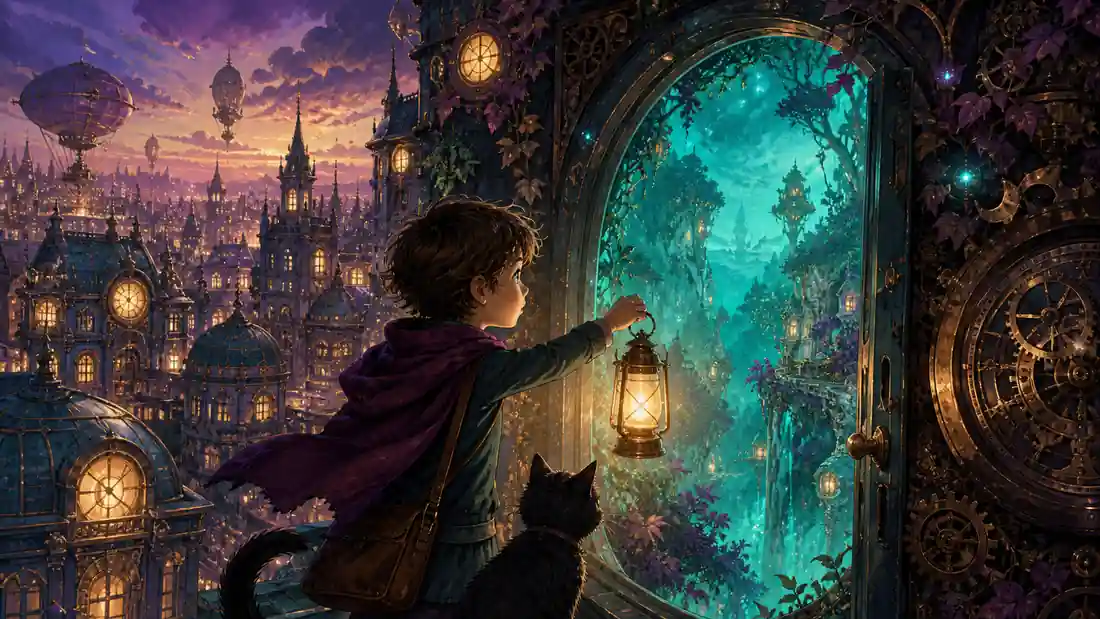
Nevermoor: The Trials of Morrigan Crow begins with a child told that she is cursed, unwanted, and destined to die before she can choose a future. Morrigan’s rescue into a magical city does not erase that history; it gives her a place where strange talent, friendship, and courage can be recognized. The novel’s charm comes from its balance of whimsy and ache: the world is extravagant, but belonging remains the most important magic. Readers comparing books like Nevermoor will find that the most useful match depends on which part of the seed book created the strongest attachment: its voice, argument, setting, characters, problem, or promise of change.
The strongest books like Nevermoor should share more than a young protagonist and a magical setting. They need trials, an eccentric or hidden institution, a child whose identity has been defined by rejection, a found family, humor, and a world that rewards curiosity. The recommendations below include magical schools, secret societies, quests, and portal-like worlds, but each shares at least two or three of Townsend’s specific qualities of age, tone, pacing, character, and wonder.
The Child Who Is Rejected May Still Belong Somewhere
Continue with Wundersmith and Hollowpox for Morrigan’s story. Amari and the Night Brothers offers magical trials and a hidden world; The Mysterious Benedict Society unusual children solving dangerous tests; and The School for Good and Evil, Harry Potter and the Sorcerer’s Stone, A Wrinkle in Time, The Phantom Tollbooth, and Howl’s Moving Castle bring different balances of school, friendship, humor, and strange-world adventure.
At-a-Glance Comparison
| Book | Best for | Major qualities shared with Nevermoor |
|---|---|---|
| Wundersmith | Readers who want the direct continuation of Morrigan Crow’s magical education | Nevermoor, magical school, hidden talent, found family, trials, friendship, political danger, and a child learning what power means |
| Hollowpox | Readers who want the series to become more public, dangerous, and political | Magical society, prejudice, hidden identity, illness, friendship, public danger, and a young protagonist caught between belonging and fear |
| Amari and the Night Brothers | Readers who want magical trials, a hidden world, and a determined outsider | Hidden magical bureau, school-like trials, missing sibling, prejudice, secret talent, friendship, and a young heroine fighting an official story |
| The Mysterious Benedict Society | Readers who want unusual children solving dangerous tests together | Unusual protagonists, secret institution, tests, codes, teamwork, found family, hidden threat, and strengths that emerge through cooperation |
| The School for Good and Evil | Readers who want a school that assigns identity through stories and categories | Magical school, friendship, identity, chosen roles, trials, fairy-tale logic, rivalry, and questioning the categories adults impose on children |
| Harry Potter and the Sorcerer’s Stone | Readers who want a classic magical school and found-family beginning | Hidden magical world, school, outsider child, friendship, eccentric mentors, magical lessons, prejudice, and an old threat returning |
| A Wrinkle in Time | Readers who want a strange family quest across worlds | Young protagonists, hidden talent, cosmic danger, family separation, eccentric guides, friendship, and a journey through unfamiliar worlds |
| The Phantom Tollbooth | Readers who want wordplay, whimsical landscapes, and a child learning curiosity | Portal-like journey, language puzzles, eccentric companions, whimsical settings, boredom, curiosity, and growth through attention |
| Howl’s Moving Castle | Readers who want eccentric magic, a reluctant heroine, and a strange found household | Fairy-tale transformation, eccentric wizard, moving house, reluctant heroine, magical bargains, humor, found family, and identity beyond appearance |
What Makes a Strong Nevermoor Companion?
Each book needed to share at least two or three major qualities: middle-grade or crossover accessibility, a young protagonist entering a hidden world, trials or tests, an eccentric community, found family, a secret talent, and a balance of danger with humor or wonder. I considered illustrations or visual imagination, series structure, pacing, and how much emotional darkness sits beneath the adventure.
The 9 Recommended Books
Wundersmith
Overview: Morrigan begins Wundrous Arts at the Wundrous Society and discovers that her rare talent places her under unusual scrutiny. Classes, friendships, secrets, and a growing threat challenge the belonging she has only recently found.
Why it belongs on this list: The shared qualities are nevermoor, magical school, hidden talent, found family, trials, friendship, political danger, and a child learning what power means. Wundersmith offers a neighboring reading experience through its characters, setting, tone, pacing, and treatment of consequence. The match is strongest for readers who want the direct continuation of morrigan crow’s magical education, although its emotional register and narrative structure may be quieter, stranger, or more expansive than the seed.
Reading experience: This is the direct next read because it preserves the seed’s cast, city, humor, and emotional movement while making Morrigan’s identity more complicated. The school becomes both a place of belonging and an institution with rules she does not yet understand.
Best for: Readers who want the direct continuation of Morrigan Crow’s magical education.
Keep in mind: More school-centered and politically tense, with new magical abilities, friendship dynamics, and a larger threat.
What to notice: The strongest connection between Wundersmith and the seed is found in nevermoor, magical school, hidden talent, found family, trials, friendship, political danger, and a child learning what power means, but the reading experience is deliberately different. Its tone, narrative distance, and treatment of consequence create another route into the same broad pleasure. Readers should let the book establish its own rhythm before judging it against the original.
View available editions and reader reviews.
Hollowpox
Overview: A mysterious illness spreads through Nevermoor, and suspicion turns against Wunimals and other outsiders. Morrigan must navigate public fear, magical investigation, friendship, and the pressure of becoming a symbol.
Why it belongs on this list: The shared qualities are magical society, prejudice, hidden identity, illness, friendship, public danger, and a young protagonist caught between belonging and fear. Hollowpox offers a neighboring reading experience through its characters, setting, tone, pacing, and treatment of consequence. The match is strongest for readers who want the series to become more public, dangerous, and political, although its emotional register and narrative structure may be quieter, stranger, or more expansive than the seed.
Reading experience: The book widens the seed’s critique of institutions. What looked like a school problem becomes a question about the world that school protects, giving the series a more political and historical dimension.
Best for: Readers who want the series to become more public, dangerous, and political.
Keep in mind: Darker and more socially pointed, with illness, prejudice, public panic, and stronger series-level stakes.
What to notice: Readers may begin Hollowpox for magical society, prejudice, hidden identity, illness, friendship, public danger, and a young protagonist caught between belonging and fear, then stay for the way the book complicates that attraction. The most revealing moments are often not the loudest ones: a change in loyalty, a detail of place, a silence between characters, or a choice that alters the meaning of an earlier scene. Those details give this recommendation a life beyond the seed title.
View available editions and reader reviews.
Amari and the Night Brothers
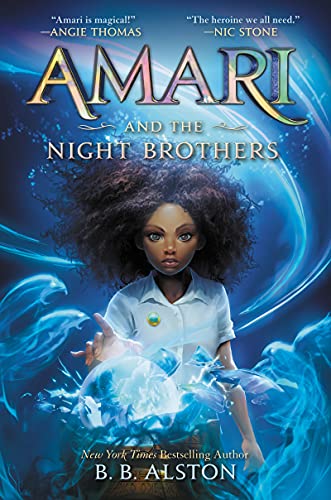
Overview: Amari’s brother disappears, and she discovers a supernatural Bureau where she must pass trials while being treated as suspicious because of her abilities and family history.
Why it belongs on this list: The shared qualities are hidden magical bureau, school-like trials, missing sibling, prejudice, secret talent, friendship, and a young heroine fighting an official story. Amari and the Night Brothers offers a neighboring reading experience through its characters, setting, tone, pacing, and treatment of consequence. The match is strongest for readers who want magical trials, a hidden world, and a determined outsider, although its emotional register and narrative structure may be quieter, stranger, or more expansive than the seed.
Reading experience: This is one of the closest emotional matches: a child enters a hidden world, finds that belonging is conditional, and must use persistence and friendship to challenge prejudice. The tone is more mystery-adventure and the institutions more explicitly procedural.
Best for: Readers who want magical trials, a hidden world, and a determined outsider.
Keep in mind: Fast, accessible, and quest-driven, with magical tests, school-like training, friendship, and a strong family mystery.
What to notice: Choose Amari and the Night Brothers when the reader wants readers who want magical trials, a hidden world, and a determined outsider but is open to a different tone and pace. Its shared qualities create a bridge to the seed, while its characters, setting, and structure make the journey distinct. The contrast can be as satisfying as the resemblance, especially for readers who want a familiar tension presented through new social or emotional circumstances.
View available editions and reader reviews.
The Mysterious Benedict Society

Overview: Four gifted children are recruited through a series of tests to investigate a mysterious institution. Their different ways of thinking become essential as they uncover a plan that adults have failed to stop.
Why it belongs on this list: The shared qualities are unusual protagonists, secret institution, tests, codes, teamwork, found family, hidden threat, and strengths that emerge through cooperation. The Mysterious Benedict Society offers a neighboring reading experience through its characters, setting, tone, pacing, and treatment of consequence. The match is strongest for readers who want unusual children solving dangerous tests together, although its emotional register and narrative structure may be quieter, stranger, or more expansive than the seed.
Reading experience: Like Morrigan, the children are initially defined by what makes them unusual, but the story turns difference into a cooperative strength. It is less magical and more puzzle-driven, with warmth and eccentricity carrying the danger.
Best for: Readers who want unusual children solving dangerous tests together.
Keep in mind: Clever, warm, and middle-grade, with tests, secret messages, humor, and a strong found-family arc.
What to notice: The strongest connection between The Mysterious Benedict Society and the seed is found in unusual protagonists, secret institution, tests, codes, teamwork, found family, hidden threat, and strengths that emerge through cooperation, but the reading experience is deliberately different. Its tone, narrative distance, and treatment of consequence create another route into the same broad pleasure. Readers should let the book establish its own rhythm before judging it against the original.
View available editions and reader reviews.
The School for Good and Evil

Overview: Sophie and Agatha are taken to a school where children are trained to become heroes or villains. Their friendship challenges the school’s assumptions about appearance, goodness, and destiny.
Why it belongs on this list: The shared qualities are magical school, friendship, identity, chosen roles, trials, fairy-tale logic, rivalry, and questioning the categories adults impose on children. The School for Good and Evil offers a neighboring reading experience through its characters, setting, tone, pacing, and treatment of consequence. The match is strongest for readers who want a school that assigns identity through stories and categories, although its emotional register and narrative structure may be quieter, stranger, or more expansive than the seed.
Reading experience: The book shares Nevermoor’s interest in institutions that tell children who they are before they understand themselves. It is more satirical and fairy-tale-based, with a friendship at the center of a world built from moral categories.
Best for: Readers who want a school that assigns identity through stories and categories.
Keep in mind: Fast, theatrical, and visually imaginative, with school competition, fairy-tale reversals, and a more exaggerated tone.
What to notice: Choose The School for Good and Evil when the reader wants readers who want a school that assigns identity through stories and categories but is open to a different tone and pace. Its shared qualities create a bridge to the seed, while its characters, setting, and structure make the journey distinct. The contrast can be as satisfying as the resemblance, especially for readers who want a familiar tension presented through new social or emotional circumstances.
View available editions and reader reviews.
Harry Potter and the Sorcerer’s Stone

Overview: Harry discovers that he is part of a magical world and begins school at Hogwarts, where friendship, classes, sport, mysteries, and an inherited conflict shape his first year.
Why it belongs on this list: The shared qualities are hidden magical world, school, outsider child, friendship, eccentric mentors, magical lessons, prejudice, and an old threat returning. Harry Potter and the Sorcerer’s Stone offers a neighboring reading experience through its characters, setting, tone, pacing, and treatment of consequence. The match is strongest for readers who want a classic magical school and found-family beginning, although its emotional register and narrative structure may be quieter, stranger, or more expansive than the seed.
Reading experience: The connection is the emotional relief of entering a hidden institution that has room for a child who felt misplaced at home. Hogwarts is safer and more nostalgic than Nevermoor’s world, but the school also carries prejudice, secrets, and danger beneath the wonder.
Best for: Readers who want a classic magical school and found-family beginning.
Keep in mind: Accessible, episodic, and warm, with school routines, friendship, humor, and a growing mystery.
What to notice: In Harry Potter and the Sorcerer’s Stone, hidden magical world, school, outsider child, friendship, eccentric mentors, magical lessons, prejudice, and an old threat returning are part of the story’s emotional architecture. Notice how the characters move through the setting, how quickly the plot reveals its information, and whether the book offers closure or leaves room for unease. Those choices explain why it belongs on this list more clearly than a surface genre label would.
View available editions and reader reviews.
A Wrinkle in Time
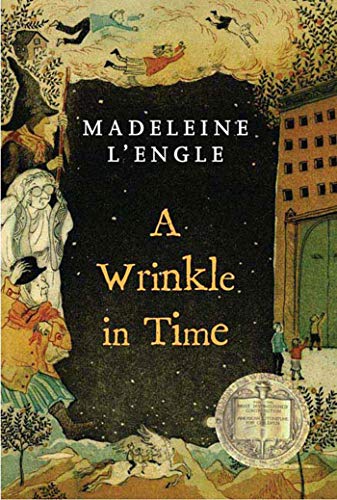
Overview: Meg Murry travels with her brother and Calvin to search for her missing father across planets and dimensions. The journey combines science, love, courage, and the challenge of resisting a world that demands sameness.
Why it belongs on this list: The shared qualities are young protagonists, hidden talent, cosmic danger, family separation, eccentric guides, friendship, and a journey through unfamiliar worlds. A Wrinkle in Time offers a neighboring reading experience through its characters, setting, tone, pacing, and treatment of consequence. The match is strongest for readers who want a strange family quest across worlds, although its emotional register and narrative structure may be quieter, stranger, or more expansive than the seed.
Reading experience: The book is more cosmic and philosophical than Nevermoor, but it shares the child-centered movement from exclusion toward belonging and the use of eccentric companions to make a larger world possible.
Best for: Readers who want a strange family quest across worlds.
Keep in mind: Short, strange, and emotionally powerful, with science-fantasy imagery, family stakes, and a strong moral conflict.
What to notice: In A Wrinkle in Time, young protagonists, hidden talent, cosmic danger, family separation, eccentric guides, friendship, and a journey through unfamiliar worlds are part of the story’s emotional architecture. Notice how the characters move through the setting, how quickly the plot reveals its information, and whether the book offers closure or leaves room for unease. Those choices explain why it belongs on this list more clearly than a surface genre label would.
View available editions and reader reviews.
The Phantom Tollbooth

Overview: Milo enters a strange kingdom through a tollbooth and travels through places shaped by words, arguments, numbers, and absurd rules. The journey changes his relationship with curiosity and the ordinary world.
Why it belongs on this list: The shared qualities are portal-like journey, language puzzles, eccentric companions, whimsical settings, boredom, curiosity, and growth through attention. The Phantom Tollbooth offers a neighboring reading experience through its characters, setting, tone, pacing, and treatment of consequence. The match is strongest for readers who want wordplay, whimsical landscapes, and a child learning curiosity, although its emotional register and narrative structure may be quieter, stranger, or more expansive than the seed.
Reading experience: The shared appeal is the pleasure of a world in which language and imagination alter the landscape. It is less concerned with belonging and more with intellectual awakening, but both books invite young readers into a place that treats strangeness as a source of adventure.
Best for: Readers who want wordplay, whimsical landscapes, and a child learning curiosity.
Keep in mind: Playful, language-rich, and episodic, with jokes and ideas that reward reading aloud or rereading.
What to notice: The strongest connection between The Phantom Tollbooth and the seed is found in portal-like journey, language puzzles, eccentric companions, whimsical settings, boredom, curiosity, and growth through attention, but the reading experience is deliberately different. Its tone, narrative distance, and treatment of consequence create another route into the same broad pleasure. Readers should let the book establish its own rhythm before judging it against the original.
View available editions and reader reviews.
Howl’s Moving Castle

Overview: Sophie is cursed to look old and enters the moving castle of the vain wizard Howl. The household’s strange routines, bargains, and magical dangers gradually reveal a more complicated story about identity and care.
Why it belongs on this list: The shared qualities are fairy-tale transformation, eccentric wizard, moving house, reluctant heroine, magical bargains, humor, found family, and identity beyond appearance. Howl’s Moving Castle offers a neighboring reading experience through its characters, setting, tone, pacing, and treatment of consequence. The match is strongest for readers who want eccentric magic, a reluctant heroine, and a strange found household, although its emotional register and narrative structure may be quieter, stranger, or more expansive than the seed.
Reading experience: The connection is the combination of whimsy and emotional seriousness. Jones is more romantic and fairy-tale-like, with an older heroine and a domestic magical setting, but both books find belonging in a household that looks absurd from the outside.
Best for: Readers who want eccentric magic, a reluctant heroine, and a strange found household.
Keep in mind: Witty, inventive, and warm, with shifting identities, a mobile setting, and a strong eccentric ensemble.
What to notice: What matters most in Howl’s Moving Castle is the way fairy-tale transformation, eccentric wizard, moving house, reluctant heroine, magical bargains, humor, found family, and identity beyond appearance shapes the characters’ lives and the world around them. The resemblance to the seed is not limited to a premise. Pay attention to voice, pacing, setting, and the small choices that reveal how this book imagines danger, loyalty, or belonging.
View available editions and reader reviews.
Choose by Trials, Found Family, School, or Whimsical World
Start with Wundersmith and Hollowpox for the direct series path. Amari and the Night Brothers is closest in magical trials and hidden institutions; The Mysterious Benedict Society in unusual children and tests. Choose Harry Potter or The School for Good and Evil for school-centered fantasy, A Wrinkle in Time for cosmic adventure, The Phantom Tollbooth for wordplay, and Howl’s Moving Castle for eccentric magic and a more romantic fairy-tale tone.
Who This List Is Best For
This list is for middle-grade readers, families, and adults who enjoy imaginative worlds, found family, eccentric mentors, magical competitions, and stories about children who are told they do not fit. The books vary in darkness and reading complexity. Expect danger, grief, bullying, prejudice, monsters, and family separation alongside humor, friendship, and wonder.
FAQ
What is the closest book to Nevermoor?
Amari and the Night Brothers is the closest for a child entering a hidden magical world and facing institutional trials. The Mysterious Benedict Society is the strongest match for unusual children, tests, friendship, and solving problems together.
Which books continue Morrigan Crow’s story?
Wundersmith and Hollowpox continue the Nevermoor series. They deepen Morrigan’s magical identity, friendships, school life, and the political danger around the city.
Which recommendation is best for younger readers?
The Phantom Tollbooth, The Mysterious Benedict Society, Harry Potter and the Sorcerer’s Stone, and Amari and the Night Brothers are accessible starting points, though each includes danger or frightening scenes.
Which books have magical trials or schools?
Amari and the Night Brothers, Harry Potter, and The School for Good and Evil use schools or formal tests. The Mysterious Benedict Society makes testing and secret training central without using traditional magic.
Which recommendation has the most wordplay and whimsy?
The Phantom Tollbooth is the most language-driven and playful. Howl’s Moving Castle offers eccentric magic and humor, while Nevermoor itself balances whimsical world-building with the emotional seriousness of rejection and belonging.
A Strange Child Needs a World Large Enough to Recognize Them
Nevermoor understands that the fantasy of a hidden world is not only about magic. It is about the relief of finding people who read your difference as possibility rather than proof of failure. The companion books preserve that emotional movement through trials, schools, quests, puzzles, and friendships. Their worlds differ, but each offers a child a chance to become more than the story assigned at home.