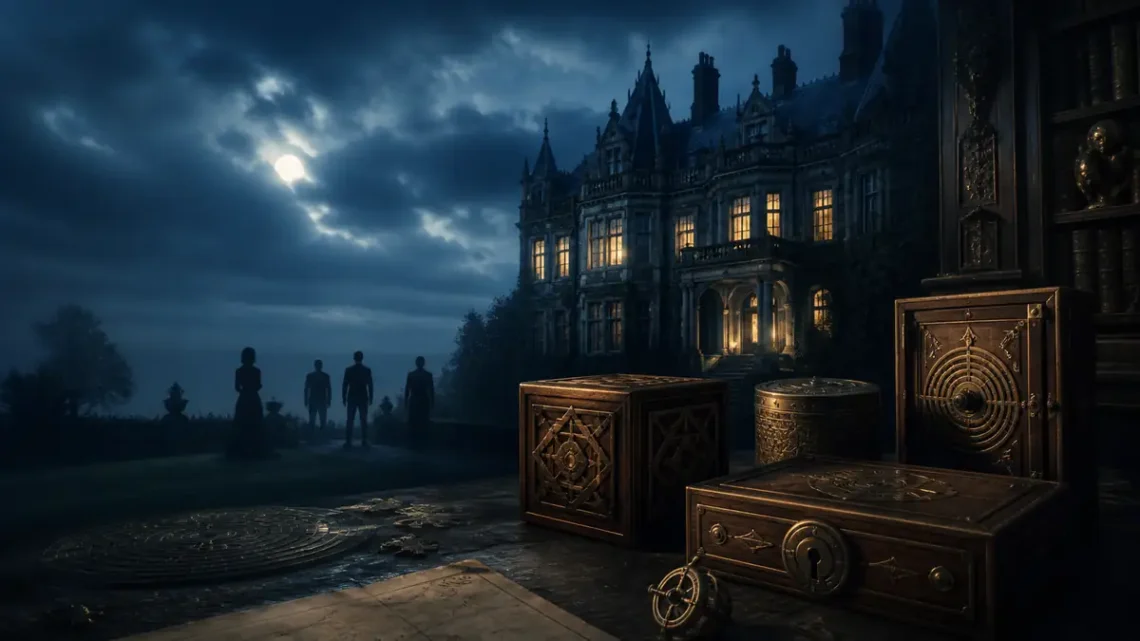
The Inheritance Games turns sudden wealth into a test of interpretation. Avery Grambs inherits an enormous fortune from a man she never met, then moves into a house where every corridor, message, and member of the Hawthorne family seems to be part of a game. The suspense comes from more than discovering who deserves the money. It comes from watching Avery decide whether clues reveal the truth or merely direct her toward another performance. Readers comparing books like The Inheritance Games will find that the most useful match depends on which part of the seed book created the strongest attachment: its voice, argument, setting, characters, problem, or promise of change.
A convincing companion should share the seed’s combination of puzzle clues, wealthy or powerful families, restricted spaces, rival agendas, and young characters whose emotional choices complicate the mystery. A vague “teen thriller” is not enough. These books include inheritance contests, secret societies, school investigations, locked-room structures, and family archives, but each gives the reader a different balance of romance, danger, humor, or psychological pressure.
The Fortune Is a Puzzle, but the Family Is the Danger
Read The Hawthorne Legacy and The Final Gambit for the direct series continuation. The Westing Game is the classic inheritance puzzle; Truly Devious brings a cold case to an elite school; and A Good Girl’s Guide to Murder follows a student whose research changes a supposedly settled murder. The Mysterious Benedict Society, A Study in Charlotte, The Naturals, and The Grandest Game offer different versions of clever young people under pressure.
At-a-Glance Comparison
| Book | Best for | Major qualities shared with The Inheritance Games |
|---|---|---|
| The Hawthorne Legacy | Readers who want the direct continuation and more Hawthorne riddles | Inheritance puzzles, a wealthy secretive family, hidden rooms, rival brothers, romantic tension, and a young outsider learning the house’s rules |
| The Final Gambit | Readers who want the series’ most concentrated lethal competition | Inheritance games, a large estate, family secrets, timed clues, rival heirs, romance, and a threat that turns the puzzle personal |
| The Grandest Game | Readers who want a new competition set in the Hawthorne world | A high-stakes game, wealthy participants, hidden motives, puzzles, social performance, romance, and a house filled with secrets |
| The Westing Game | Readers who want the classic inheritance puzzle and a compact ensemble mystery | A mysterious fortune, rival heirs, coded instructions, a strange house, family performance, and a game in which motives keep shifting |
| Truly Devious | Readers who want a boarding-school cold case and modern clue investigation | An elite school, an old double disappearance, secret archives, a clever young investigator, hidden identities, and present-day danger |
| A Good Girl’s Guide to Murder | Readers who want a student-led investigation with evidence and escalating danger | A young investigator, a supposedly solved murder, research files, secret relationships, community reputation, and revelations that make the past dangerous |
| The Mysterious Benedict Society | Readers who want a warmer ensemble puzzle with secret institutions | Gifted children, coded tests, a secretive organization, an eccentric benefactor, hidden messages, friendship, and a dangerous adult plan |
| A Study in Charlotte | Readers who want a sharp detective partnership and literary family legacies | Young heirs to a famous legacy, a school setting, murder clues, suspicion between allies, inherited reputation, and intellectual rivalry |
| The Naturals | Readers who want profiling, secretive young teams, and darker criminal stakes | Gifted young investigators, an elite program, concealed family trauma, profiling, serial crime, rivalry, and a dangerous institutional patron |
What Makes a Good Inheritance Games Read-Alike?
Every choice had to share at least three major qualities: an active puzzle, a privileged or secretive institution, a young protagonist who is underestimated or newly admitted, family or social performance, and revelations that change how earlier clues should be read. I also separated cozy puzzle energy from darker crime. The notes identify whether a book leans toward romance, school mystery, ensemble humor, procedural investigation, or lethal family competition.
The 9 Recommended Books
The Hawthorne Legacy
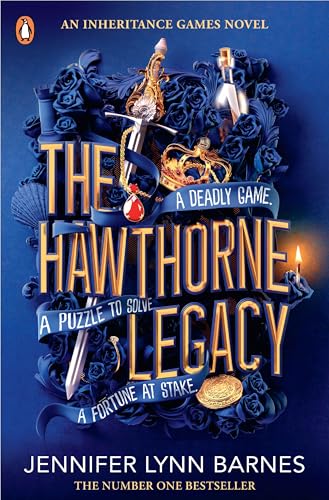
Overview: Avery is still living inside the Hawthorne estate, but the first will has not answered the questions surrounding Tobias Hawthorne’s choice. New clues and an old enemy pull the family into another game, and the house’s history becomes as important as the money.
Why it belongs on this list: The overlap comes from inheritance puzzles, a wealthy secretive family, hidden rooms, rival brothers, romantic tension, and a young outsider learning the house’s rules. The Hawthorne Legacy belongs beside the seed because it creates comparable pressure through character, setting, withheld information, and escalating consequence. It is not a duplicate: the investigation may be more domestic, more procedural, more violent, or more psychologically intimate, but the reader is still asked to keep revising what seems safe and what seems true.
Reading experience: This is the obvious next read because it preserves Avery’s viewpoint, the family ensemble, the romantic uncertainty, and the pleasure of treating architecture as evidence. The mystery is more deeply tied to Hawthorne history, so readers who liked the first book’s family secrets will find the emotional stakes intensified rather than reset.
Best for: Readers who want the direct continuation and more Hawthorne riddles.
Keep in mind: Fast, glossy, and clue-heavy, with more direct continuation than reinvention. The shifting alliances among the brothers keep the romance and puzzle threads moving together.
What to notice: The pleasure of The Hawthorne Legacy lies in the way inheritance puzzles, a wealthy secretive family, hidden rooms, rival brothers, romantic tension, and a young outsider learning the house’s rules becomes part of the suspense rather than decoration around it. Watch how the book controls information, shifts the reader’s trust, and turns apparently ordinary details into pressure. Its version of readers who want the direct continuation and more hawthorne riddles may be darker, slower, or more intimate than the seed, but that difference is exactly what makes the comparison useful.
View available editions and reader reviews.
The Final Gambit
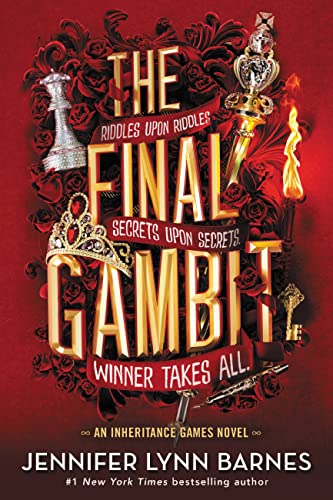
Overview: Avery is close to receiving the Hawthorne fortune, but a new game forces her and the brothers to face an adversary who knows the family’s history and wants revenge. The house becomes a timed contest in which every alliance has a cost.
Why it belongs on this list: The overlap comes from inheritance games, a large estate, family secrets, timed clues, rival heirs, romance, and a threat that turns the puzzle personal. The Final Gambit belongs beside the seed because it creates comparable pressure through character, setting, withheld information, and escalating consequence. It is not a duplicate: the investigation may be more domestic, more procedural, more violent, or more psychologically intimate, but the reader is still asked to keep revising what seems safe and what seems true.
Reading experience: The book belongs here as the series’ most direct contest structure. It gives readers the riddles, secret passages, and family friction they expect while making Avery’s decision about whom to trust more urgent than the fortune itself.
Best for: Readers who want the series’ most concentrated lethal competition.
Keep in mind: Compact, dramatic, and designed for rapid reading. It rewards readers who remember earlier relationships and clues, so reading the first two books is important.
What to notice: Read The Final Gambit for its handling of inheritance games, a large estate, family secrets, timed clues, rival heirs, romance, and a threat that turns the puzzle personal: the clues, reversals, and emotional costs are connected rather than placed in separate compartments. Notice who gets to tell the story, whose account is doubted, and how the setting limits escape. The book belongs here because it shares the seed’s suspense engine while giving the reader a different kind of uncertainty to inhabit.
View available editions and reader reviews.
The Grandest Game

Overview: Seven players gather for a competition built around the Hawthorne legacy, each with a reason to win and a personal history they would rather conceal. The prize is substantial, but the game is designed to expose relationships and rivalries as much as intelligence.
Why it belongs on this list: The overlap comes from a high-stakes game, wealthy participants, hidden motives, puzzles, social performance, romance, and a house filled with secrets. The Grandest Game belongs beside the seed because it creates comparable pressure through character, setting, withheld information, and escalating consequence. It is not a duplicate: the investigation may be more domestic, more procedural, more violent, or more psychologically intimate, but the reader is still asked to keep revising what seems safe and what seems true.
Reading experience: This is the closest newer companion because the game itself remains a social machine. Like Avery’s experience, every player must read clues and people at the same time, and the wealthy setting creates an atmosphere where privilege does not remove danger—it gives danger more elaborate disguises.
Best for: Readers who want a new competition set in the Hawthorne world.
Keep in mind: Ensemble-driven, stylish, and more competition-centered than the original trilogy. It works best for readers who enjoy several suspicious players rather than one outsider at the center of every scene.
What to notice: A good companion thriller does not merely add another shocking reveal. In The Grandest Game, a high-stakes game, wealthy participants, hidden motives, puzzles, social performance, romance, and a house filled with secrets shape the character’s choices and the pace of discovery. The book’s strongest match with the seed is readers who want a new competition set in the hawthorne world, but its voice, moral temperature, and treatment of evidence may be very different. Read it for that change in pressure, not only for the final explanation.
View available editions and reader reviews.
The Westing Game

Overview: Sixteen people are named as potential heirs to an eccentric millionaire’s fortune, but they must pair up and solve a series of clues before anyone can claim it. The participants appear to be strangers, yet the game gradually reveals connections among their pasts and identities.
Why it belongs on this list: The overlap comes from a mysterious fortune, rival heirs, coded instructions, a strange house, family performance, and a game in which motives keep shifting. The Westing Game belongs beside the seed because it creates comparable pressure through character, setting, withheld information, and escalating consequence. It is not a duplicate: the investigation may be more domestic, more procedural, more violent, or more psychologically intimate, but the reader is still asked to keep revising what seems safe and what seems true.
Reading experience: This is the cleanest ancestor of the inheritance-game structure. It is shorter, funnier, and less romantic than Barnes’s novel, but it shares the pleasure of mapping relationships, mistrusting appearances, and realizing that a puzzle may be designed to change the players rather than simply award a prize.
Best for: Readers who want the classic inheritance puzzle and a compact ensemble mystery.
Keep in mind: Clever, brisk, and accessible, with a large cast and a playful tone. The solution is more classic puzzle than contemporary thriller.
What to notice: Read The Westing Game for its handling of a mysterious fortune, rival heirs, coded instructions, a strange house, family performance, and a game in which motives keep shifting: the clues, reversals, and emotional costs are connected rather than placed in separate compartments. Notice who gets to tell the story, whose account is doubted, and how the setting limits escape. The book belongs here because it shares the seed’s suspense engine while giving the reader a different kind of uncertainty to inhabit.
View available editions and reader reviews.
Truly Devious

Overview: Stevie Bell arrives at Ellingham Academy determined to solve a famous kidnapping and murder from the school’s past. Her research into the cold case is interrupted when a new death suggests that the old mystery may not be finished with the living students.
Why it belongs on this list: The overlap comes from an elite school, an old double disappearance, secret archives, a clever young investigator, hidden identities, and present-day danger. Truly Devious belongs beside the seed because it creates comparable pressure through character, setting, withheld information, and escalating consequence. It is not a duplicate: the investigation may be more domestic, more procedural, more violent, or more psychologically intimate, but the reader is still asked to keep revising what seems safe and what seems true.
Reading experience: Both novels place a sharp young outsider inside an institution wealthy enough to preserve its secrets. The school replaces the Hawthorne mansion, and the old case replaces the inheritance, but the reading pleasure is similar: archives, buildings, social codes, and attractive people who may know more than they admit.
Best for: Readers who want a boarding-school cold case and modern clue investigation.
Keep in mind: Atmospheric and divided between past and present, with a slower investigative pace and a stronger school-community feel. The trilogy rewards continued reading.
What to notice: The best reason to choose Truly Devious is the particular atmosphere it builds around an elite school, an old double disappearance, secret archives, a clever young investigator, hidden identities, and present-day danger. Its suspense may come from pursuit, domestic unease, institutional power, or a mystery that keeps changing shape. Readers who enjoy readers who want a boarding-school cold case and modern clue investigation should also pay attention to the pauses between major turns, because the quiet scenes often reveal what the characters are trying not to know.
View available editions and reader reviews.
A Good Girl’s Guide to Murder
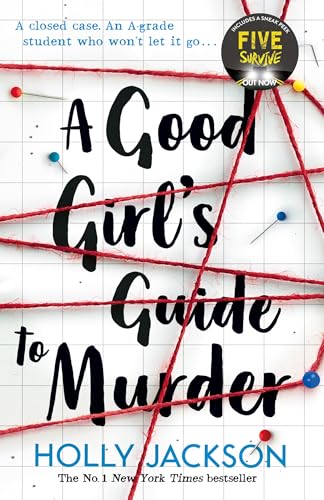
Overview: Pip chooses a closed murder case for her school project because she does not believe the accused teenager was guilty. Interviews, messages, maps, and local memories lead her toward a more complicated account, and the investigation begins to threaten people who wanted the town to move on.
Why it belongs on this list: The overlap comes from a young investigator, a supposedly solved murder, research files, secret relationships, community reputation, and revelations that make the past dangerous. A Good Girl’s Guide to Murder belongs beside the seed because it creates comparable pressure through character, setting, withheld information, and escalating consequence. It is not a duplicate: the investigation may be more domestic, more procedural, more violent, or more psychologically intimate, but the reader is still asked to keep revising what seems safe and what seems true.
Reading experience: The overlap is the young protagonist who treats an official story as a puzzle rather than a fact. Jackson is more procedural and morally urgent than Barnes, with less mansion glamour and more attention to evidence, community pressure, and the consequences of asking the next question.
Best for: Readers who want a student-led investigation with evidence and escalating danger.
Keep in mind: Fast, document-rich, and increasingly tense. The early research has a school-project texture before the danger becomes personal.
What to notice: Readers who loved the seed may recognize a young investigator, a supposedly solved murder, research files, secret relationships, community reputation, and revelations that make the past dangerous in A Good Girl’s Guide to Murder, but the book does not simply repeat the same trick. It changes the point of view, the scale of danger, or the relationship between private life and public consequence. That shift gives the recommendation a clear identity and makes it suitable for a different reading mood within the same thriller territory.
View available editions and reader reviews.
The Mysterious Benedict Society

Overview: Four children who have passed a series of unusual tests are recruited by Mr. Benedict to infiltrate an institution run by a man who controls people through messages broadcast into their minds. Their different skills matter, but so do cooperation, trust, and the ability to recognize manipulation.
Why it belongs on this list: The overlap comes from gifted children, coded tests, a secretive organization, an eccentric benefactor, hidden messages, friendship, and a dangerous adult plan. The Mysterious Benedict Society belongs beside the seed because it creates comparable pressure through character, setting, withheld information, and escalating consequence. It is not a duplicate: the investigation may be more domestic, more procedural, more violent, or more psychologically intimate, but the reader is still asked to keep revising what seems safe and what seems true.
Reading experience: The mansion and inheritance are replaced by a hidden school-like institution, yet the core pleasure remains: clever children enter an adult system, read clues others overlook, and discover that the public story hides a coercive purpose. This is the most hopeful and least romantic option on the list.
Best for: Readers who want a warmer ensemble puzzle with secret institutions.
Keep in mind: Playful, puzzle-rich, and middle-grade accessible, with riddles, disguises, teamwork, and escalating danger.
What to notice: Read The Mysterious Benedict Society for its handling of gifted children, coded tests, a secretive organization, an eccentric benefactor, hidden messages, friendship, and a dangerous adult plan: the clues, reversals, and emotional costs are connected rather than placed in separate compartments. Notice who gets to tell the story, whose account is doubted, and how the setting limits escape. The book belongs here because it shares the seed’s suspense engine while giving the reader a different kind of uncertainty to inhabit.
View available editions and reader reviews.
A Study in Charlotte
Overview: Jamie Watson meets Charlotte Holmes at an American boarding school and quickly becomes entangled in a murder designed to implicate her. Their families’ detective history shapes every interaction, making trust difficult even as the two students need one another to survive the case.
Why it belongs on this list: The overlap comes from young heirs to a famous legacy, a school setting, murder clues, suspicion between allies, inherited reputation, and intellectual rivalry. A Study in Charlotte belongs beside the seed because it creates comparable pressure through character, setting, withheld information, and escalating consequence. It is not a duplicate: the investigation may be more domestic, more procedural, more violent, or more psychologically intimate, but the reader is still asked to keep revising what seems safe and what seems true.
Reading experience: The family legacy is not financial but still functions like a house full of rules and expectations. Like Avery, Jamie enters a world where reputation precedes the person, while Charlotte and Avery both learn that intelligence can protect someone and make them a target at the same time.
Best for: Readers who want a sharp detective partnership and literary family legacies.
Keep in mind: Witty, tense, and more character-driven than the Hawthorne puzzles. The mystery is darker and the relationship more guarded, with a literary echo of Sherlock Holmes.
What to notice: The pleasure of A Study in Charlotte lies in the way young heirs to a famous legacy, a school setting, murder clues, suspicion between allies, inherited reputation, and intellectual rivalry becomes part of the suspense rather than decoration around it. Watch how the book controls information, shifts the reader’s trust, and turns apparently ordinary details into pressure. Its version of readers who want a sharp detective partnership and literary family legacies may be darker, slower, or more intimate than the seed, but that difference is exactly what makes the comparison useful.
View available editions and reader reviews.
The Naturals

Overview: Cassie joins a secret FBI program for teenagers with unusual abilities in reading people, patterns, and crime scenes. The other Naturals have their own histories and rivalries, and a serial killer’s attention makes the program’s promise of protection feel uncertain.
Why it belongs on this list: The overlap comes from gifted young investigators, an elite program, concealed family trauma, profiling, serial crime, rivalry, and a dangerous institutional patron. The Naturals belongs beside the seed because it creates comparable pressure through character, setting, withheld information, and escalating consequence. It is not a duplicate: the investigation may be more domestic, more procedural, more violent, or more psychologically intimate, but the reader is still asked to keep revising what seems safe and what seems true.
Reading experience: This is a darker, crime-centered counterpart to the Hawthorne games. The team reads psychological clues instead of architectural riddles, but both books place intelligent young people inside a powerful institution where adults have motives of their own and personal history is never safely private.
Best for: Readers who want profiling, secretive young teams, and darker criminal stakes.
Keep in mind: Propulsive, ensemble-driven, and suspenseful, with profiling scenes and interpersonal tension. It is more violent and procedural than Barnes’s glossy family mystery.
What to notice: A good companion thriller does not merely add another shocking reveal. In The Naturals, gifted young investigators, an elite program, concealed family trauma, profiling, serial crime, rivalry, and a dangerous institutional patron shape the character’s choices and the pace of discovery. The book’s strongest match with the seed is readers who want profiling, secretive young teams, and darker criminal stakes, but its voice, moral temperature, and treatment of evidence may be very different. Read it for that change in pressure, not only for the final explanation.
View available editions and reader reviews.
Choose by Family Secrets, School Mystery, or Puzzle Design
Start with The Hawthorne Legacy for more Avery and the Hawthorne riddles. Choose The Westing Game for a compact classic, Truly Devious for an atmospheric boarding school, or A Good Girl’s Guide to Murder for a research-driven investigation. The Mysterious Benedict Society is the warmest ensemble choice, The Naturals the most crime-focused, A Study in Charlotte the most literary detective pairing, and The Grandest Game the closest new competition built from the Hawthorne world.
Who This List Is Best For
This list is for teen and adult readers who enjoy clue trails, secret rooms, inheritance disputes, clever narrators, rival friendships, and romantic tension around a central mystery. Several books include murder, grief, violence, abuse, or coercive family dynamics. Readers looking for the lightest entry should begin with The Mysterious Benedict Society or The Westing Game; readers wanting sharper danger should choose The Naturals or A Good Girl’s Guide to Murder.
FAQ
What should I read after The Inheritance Games?
The Hawthorne Legacy is the direct next book, followed by The Final Gambit. If you want a separate story with the same mix of clues and elite secrets, try Truly Devious or The Westing Game.
Which book has the closest inheritance puzzle?
The Westing Game is the classic comparison, with heirs gathered around a fortune and forced to solve a mystery. The Grandest Game offers a newer competition connected to the Hawthorne universe.
Which recommendation has the most romance?
The Hawthorne books keep romantic tension central. A Study in Charlotte offers a more restrained, complicated bond between its two detectives, while Truly Devious threads romance through a longer school mystery.
Are these books suitable for younger teens?
The Westing Game and The Mysterious Benedict Society are the gentlest starting points. A Good Girl’s Guide to Murder, The Naturals, and the darker family mysteries include murder, violence, or emotionally intense material.
Which book is best for clue-solving rather than family drama?
Truly Devious and A Good Girl’s Guide to Murder put research, evidence, and competing explanations at the center. The Inheritance Games itself remains more theatrical, architectural, and family-driven.
A Good Puzzle Makes Everyone Suspect
The fun of The Inheritance Games lies in never allowing wealth, charm, or family loyalty to settle the question of motive. The best companions do the same. They invite readers to map a house, a school, a family tree, or a case file, then interrupt that map with a new fact about who has been watching, lying, grieving, or playing a longer game.