
If you are searching for books like Never Split the Difference, you are probably looking for more than clever phrases or a dramatic closing tactic. Chris Voss’s book is memorable because it treats negotiation as a conversation shaped by emotion, information, leverage, and perceived safety. The best companion books add the pieces that a single tactical framework cannot cover: preparation, principled agreement, difficult relationships, boundaries, persuasion, and the ability to adapt when the plan changes.
This guide brings together nine complementary negotiation books. Some are better for preparation and deal economics; others focus on emotional complexity, internal conflict, decision psychology, or the discipline of saying no. Read the list as a set of different tools for different negotiation problems, not as nine competing scripts.
Quick Answer
Short answer: Start with Getting to Yes for principled negotiation, Negotiation Genius for analytical preparation, or Difficult Conversations when the relationship and identity stakes are high. Crucial Conversations helps teams speak honestly under pressure, while The Power of a Positive No and Start with No are useful when the real problem is unwanted concessions. Add Influence to understand decision psychology and Bargaining for Advantage for an all-purpose planning framework.
Comparison Table
| Book | Best for | Why it stands out |
|---|---|---|
| Getting to Yes: Negotiating Agreement Without Giving In | Readers who want a foundational negotiation framework that protects both the relationship and the substance of the deal | It shifts negotiation away from positional conflict and toward interests, options, objective criteria, and a realistic alternative to agreement. |
| Difficult Conversations: How to Discuss What Matters Most | Managers, partners, and professionals who need to address conflict without making the relationship or the issue worse | It explains why difficult conversations contain a facts story, a feelings story, and an identity story—and why ignoring any of them creates resistance. |
| Negotiation Genius: How to Overcome Obstacles and Achieve Brilliant Results at the Bargaining Table and Beyond | Business professionals who need a rigorous preparation system for important negotiations | It combines behavioral insight with analytical preparation, helping readers understand alternatives, reservation values, trade-offs, and the economics of a deal. |
| Crucial Conversations Tools for Talking When Stakes Are High | Teams and leaders who need to speak candidly when opinions differ, emotions rise, and the consequences matter | It offers practical tools for restoring psychological safety so that people can share information instead of defending themselves. |
| The Power of a Positive No: Save The Deal Save The Relationship—and Still Say No | Professionals who need to reject a demand without damaging trust or giving away too much | William Ury provides language for saying no to the proposal while saying yes to the relationship, the underlying interest, or a better alternative. |
| Start with No…The Negotiating Tools That the Pros Don’t Want You to Know | Salespeople and buyers who need to slow down pressure, clarify control, and avoid premature commitments | Jim Camp argues that a well-timed no can reduce pressure and create space for a more honest discussion of fit, decision authority, and next steps. |
| Influence: The Psychology of Persuasion | Negotiators who want to understand why people agree, resist, or feel committed to a prior decision | Robert Cialdini explains recurring principles of influence such as reciprocity, commitment, social proof, authority, liking, scarcity, and unity. |
| The Art of Negotiation: How to Improvise Agreement in a Chaotic World | Readers who want to understand negotiation as a strategic, social, and adaptive process rather than a fixed script | Michael Wheeler emphasizes flexibility, improvisation, and the ability to adapt when the conversation moves beyond the original plan. |
| Bargaining for Advantage: Negotiation Strategies for Reasonable People | Professionals who want a balanced, practical negotiation system for everyday and high-value agreements | G. Richard Shell combines preparation, bargaining style, ethics, and communication into a method that is both analytical and usable. |
How We Chose These Recommendations
We selected books that solve different parts of the negotiation problem rather than repeating the same advice about mirroring, calibrated questions, or tactical empathy. The final nine cover principled agreements, emotional conflict, preparation, high-stakes dialogue, boundaries, qualification, persuasion, improvisation, and bargaining strategy.
We also looked for books that remain useful when the negotiation is not a one-time transaction. A manager negotiating expectations with an employee, a buyer discussing terms with a supplier, and a founder raising capital may all need different tools. The strongest recommendation is the one that matches the source of difficulty: missing preparation, emotional defensiveness, unclear boundaries, weak alternatives, or a failure to understand what the other side actually values.
Recommended Books
Getting to Yes: Negotiating Agreement Without Giving In

Overview: Getting to Yes is one of the clearest companions to Never Split the Difference because it explains the structure behind a fair, durable agreement. Fisher, Ury, and Patton encourage readers to separate people from problems, focus on interests rather than stated positions, create options for mutual gain, and use independent standards where possible. The approach is calmer and more collaborative than Voss’s tactical style, which makes it valuable when the relationship matters and the parties need a process they can repeat without turning every conversation into a contest.
Why it stands out: It shifts negotiation away from positional conflict and toward interests, options, objective criteria, and a realistic alternative to agreement.
Strengths:
- Clear foundation for principled negotiation
- Useful for interests, options, and objective standards
- Transfers well across business and personal conversations
Best for: Readers who want a foundational negotiation framework that protects both the relationship and the substance of the deal.
Potential limitations: Its collaborative language can feel incomplete in highly adversarial situations or when the other side is not engaging in good faith.
Reading angle: Before the next negotiation, write down your position, the other side’s likely interests, and the objective criteria that could make the conversation more constructive.
View price, available formats, and reader reviews.
Difficult Conversations: How to Discuss What Matters Most

Overview: Many negotiations fail before price, scope, or terms are even discussed because the parties are protecting dignity, competence, belonging, or trust. Difficult Conversations helps readers notice those layers. The book’s distinction between the “what happened” conversation, the feelings conversation, and the identity conversation adds emotional intelligence to the tactical tools in Never Split the Difference. It is particularly useful when the negotiation is internal, ongoing, or tied to a relationship that cannot simply be walked away from.
Why it stands out: It explains why difficult conversations contain a facts story, a feelings story, and an identity story—and why ignoring any of them creates resistance.
Strengths:
- Strong framework for emotional and relational complexity
- Useful for feedback, conflict, and workplace tension
- Encourages curiosity instead of blame
Best for: Managers, partners, and professionals who need to address conflict without making the relationship or the issue worse.
Potential limitations: It is not a tactical playbook for every commercial negotiation, so readers may need to pair it with more concrete preparation for price, leverage, and alternatives.
Reading angle: Write the three stories you are bringing into a difficult conversation, then identify one assumption you can test rather than present as a fact.
View price, available formats, and reader reviews.
Negotiation Genius: How to Overcome Obstacles and Achieve Brilliant Results at the Bargaining Table and Beyond
Overview: Negotiation Genius adds a more analytical counterweight to Never Split the Difference. Deepak Malhotra and Max Bazerman emphasize preparation, the zone of possible agreement, alternatives, anchoring, information, and the difference between creating value and claiming value. The book is a strong fit for sales, procurement, partnerships, hiring, and executive negotiations where improvisation is not enough. It encourages readers to identify what they can trade, what they must protect, and what evidence would change the bargaining range.
Why it stands out: It combines behavioral insight with analytical preparation, helping readers understand alternatives, reservation values, trade-offs, and the economics of a deal.
Strengths:
- Excellent preparation and analysis framework
- Useful for business and high-stakes deals
- Balances value creation with value claiming
Best for: Business professionals who need a rigorous preparation system for important negotiations.
Potential limitations: Its analytical detail takes time to apply, and not every everyday conversation needs a full deal model.
Reading angle: Prepare a negotiation worksheet with your alternatives, walk-away point, likely interests, possible trades, and the information you still need.
View price, available formats, and reader reviews.
Crucial Conversations Tools for Talking When Stakes Are High

Overview: Never Split the Difference teaches a negotiator to listen for what is not being said; Crucial Conversations shows how to make it safer for important information to be said at all. The book focuses on dialogue under pressure, including noticing silence and violence, creating mutual purpose, and separating facts from stories. Its value is highest in internal negotiations, performance discussions, project conflicts, and cross-functional decisions where the parties will keep working together after the immediate issue is settled.
Why it stands out: It offers practical tools for restoring psychological safety so that people can share information instead of defending themselves.
Strengths:
- Practical tools for tense conversations
- Useful for leadership and team conflict
- Connects candor with psychological safety
Best for: Teams and leaders who need to speak candidly when opinions differ, emotions rise, and the consequences matter.
Potential limitations: The terminology can feel formulaic if used as a script; the tools work better when they support genuine curiosity and accountability.
Reading angle: When a conversation becomes defensive, pause and name the shared outcome you still want before returning to the disputed facts.
View price, available formats, and reader reviews.
The Power of a Positive No: Save The Deal Save The Relationship—and Still Say No
Overview: A negotiator who cannot say no clearly often creates bad agreements, hidden resentment, or repeated concessions. The Power of a Positive No builds a simple three-part structure: start with a clear yes to your interests, state a respectful no to the request, and offer a constructive yes to a workable path forward. That complements Never Split the Difference by adding a boundary-setting framework for moments when empathy and rapport must lead to a firm limit rather than another concession.
Why it stands out: William Ury provides language for saying no to the proposal while saying yes to the relationship, the underlying interest, or a better alternative.
Strengths:
- Useful structure for respectful refusal
- Protects boundaries without unnecessary aggression
- Relevant to pricing, scope, workload, and personal relationships
Best for: Professionals who need to reject a demand without damaging trust or giving away too much.
Potential limitations: A positive no cannot remove real power differences or make an unacceptable demand safe; preparation and consequences still matter.
Reading angle: Draft one sentence for the interest you are protecting, one clear no, and one alternative you can genuinely support.
View price, available formats, and reader reviews.
Start with No…The Negotiating Tools That the Pros Don’t Want You to Know
Overview: Start with No offers a different emotional posture from the traditional desire to get to yes quickly. Camp’s approach emphasizes decision, control, mission, and the use of questions that let the other side feel safe saying no. That makes it a useful contrast with Never Split the Difference: both books value calibrated questions and emotional steadiness, but Camp places more emphasis on protecting the negotiator from neediness and from pursuing a deal that does not meet the mission.
Why it stands out: Jim Camp argues that a well-timed no can reduce pressure and create space for a more honest discussion of fit, decision authority, and next steps.
Strengths:
- Helpful for reducing pressure and neediness
- Useful in sales and qualification
- Encourages clarity about fit and authority
Best for: Salespeople and buyers who need to slow down pressure, clarify control, and avoid premature commitments.
Potential limitations: The title and tone can sound adversarial; readers should preserve the discipline around boundaries without treating every buyer as an opponent.
Reading angle: Identify the condition that would make the deal a poor fit, then ask a question that allows both parties to discover that condition early.
View price, available formats, and reader reviews.
Influence: The Psychology of Persuasion
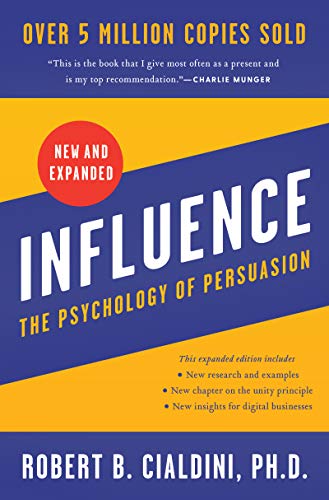
Overview: Never Split the Difference is rich in conversation tactics; Influence gives readers a broader view of the psychological shortcuts that shape decisions before and during a negotiation. Cialdini’s principles help explain why a concession can create pressure to reciprocate, why an early commitment can narrow later choices, and why perceived authority or scarcity changes judgment. Used responsibly, the book helps negotiators design clearer choices and notice when a tactic is affecting them. It should be read as an ethical guide to transparency as much as a guide to persuasion.
Why it stands out: Robert Cialdini explains recurring principles of influence such as reciprocity, commitment, social proof, authority, liking, scarcity, and unity.
Strengths:
- Strong overview of social influence principles
- Useful for sales, marketing, leadership, and negotiation
- Helps readers recognize pressure on both sides of a deal
Best for: Negotiators who want to understand why people agree, resist, or feel committed to a prior decision.
Potential limitations: Influence principles are not magic buttons and can become manipulative when separated from truth, consent, and a real customer benefit.
Reading angle: Before using a persuasive element, write down the evidence that supports it and the customer interest it serves; remove any pressure that depends on confusion.
View price, available formats, and reader reviews.
The Art of Negotiation: How to Improvise Agreement in a Chaotic World
Overview: No negotiation follows a script perfectly. The Art of Negotiation explores how skilled negotiators prepare thoroughly while remaining flexible enough to respond to new information, changing coalitions, and unexpected openings. It complements the tactical detail of Never Split the Difference with a wider view of negotiation as an evolving interaction. The book is helpful for complex partnerships, diplomacy, leadership, and commercial situations where the best agreement may emerge through several rounds rather than one decisive conversation.
Why it stands out: Michael Wheeler emphasizes flexibility, improvisation, and the ability to adapt when the conversation moves beyond the original plan.
Strengths:
- Encourages preparation without rigidity
- Useful for complex and changing negotiations
- Shows how adaptation and creativity affect outcomes
Best for: Readers who want to understand negotiation as a strategic, social, and adaptive process rather than a fixed script.
Potential limitations: Its broad examples can feel less immediately procedural than a checklist-based negotiation manual.
Reading angle: Prepare your preferred plan and your minimum acceptable outcome, then list three questions that would help you adapt if new information changes the negotiation.
View price, available formats, and reader reviews.
Bargaining for Advantage: Negotiation Strategies for Reasonable People
Overview: Bargaining for Advantage is a strong all-purpose addition for readers who want a systematic negotiation process without choosing between hard bargaining and relationship-first advice. Shell covers preparation, bargaining styles, power, information, fairness, and the role of personality. The book helps translate the insights of Never Split the Difference into a broader workflow: understand the situation, prepare the alternatives, decide how to communicate, and evaluate the agreement after the conversation rather than judging success only by the final number.
Why it stands out: G. Richard Shell combines preparation, bargaining style, ethics, and communication into a method that is both analytical and usable.
Strengths:
- Balanced approach to power and relationships
- Useful for preparation and self-awareness
- Works across business and personal negotiations
Best for: Professionals who want a balanced, practical negotiation system for everyday and high-value agreements.
Potential limitations: Its breadth means readers may need to select the tools most relevant to their situation rather than apply every concept at once.
Reading angle: After your next negotiation, review not only the outcome but also the process: preparation quality, information gained, relationship impact, and whether the agreement is sustainable.
View price, available formats, and reader reviews.
How to Use These Books Together
Begin with preparation before reaching for tactics. Use Negotiation Genius or Bargaining for Advantage to define your alternatives, priorities, reservation point, possible trades, and information gaps. Then use Getting to Yes to separate positions from interests and to design options that create value rather than treating every negotiation as a fixed pie.
When the conversation becomes emotionally or relationally difficult, move to Difficult Conversations or Crucial Conversations. If the issue is a demand you cannot accept, The Power of a Positive No can help you protect the relationship while making the boundary clear. Use Never Split the Difference, Start with No, and The Art of Negotiation as adaptive tools: listen carefully, slow down pressure, and stay flexible when new information changes the path.
Who This List Is Best For
This list is for salespeople, founders, managers, buyers, consultants, recruiters, account leaders, lawyers, and anyone who regularly negotiates price, scope, responsibility, time, access, or expectations. It is especially useful for professionals who want to become more prepared and emotionally steady rather than simply more aggressive.
It is also relevant to personal conversations, but no negotiation framework removes the need for consent, honesty, safety, or respect. A deal that wins the moment but damages trust, creates hidden obligations, or ignores a serious power imbalance is not a strong outcome.
Final Thoughts
Never Split the Difference is a compelling reminder that negotiation happens between human beings, not abstract positions. These companion books widen that insight. Good negotiation requires an alternative, a clear interest, a realistic boundary, a way to create value, and the flexibility to revise your view as the conversation reveals more.
The goal is not to make every conversation feel like a tactical performance. It is to make important agreements clearer, more informed, and more sustainable. Choose the book that matches your recurring problem, practice one behavior in a real conversation, and evaluate the result by both the agreement and the relationship it leaves behind.
FAQ
What should I read after Never Split the Difference?
Getting to Yes is the strongest general follow-up because it adds a principled framework for interests, options, and objective standards. Choose Negotiation Genius instead if your main gap is preparation and deal analysis.
Which book is best for difficult workplace conversations?
Difficult Conversations is the best fit when the issue involves feelings, identity, blame, or an ongoing relationship. Crucial Conversations is a useful companion when the stakes are high and the team needs to restore safety for honest dialogue.
How can I stop making unnecessary concessions?
Start with a stronger alternative and a clearer boundary. Negotiation Genius helps with preparation, while The Power of a Positive No and Start with No offer language and structure for refusing requests without becoming needlessly hostile.
Is Getting to Yes too soft for business negotiation?
No. Its focus on interests, options, standards, and alternatives can make a negotiation more rigorous, not less. It becomes incomplete only when readers ignore power, timing, emotion, or the possibility that the other side is not negotiating in good faith.
Which book is best for sales negotiations?
Never Split the Difference, Negotiation Genius, and Start with No are strong choices for sales. Use the first for listening and emotional dynamics, the second for preparation and deal economics, and the third for qualification and avoiding neediness.
How do I use negotiation tactics ethically?
Use them to understand concerns, reduce confusion, and create a better-fit agreement—not to hide material facts or pressure someone into a decision they do not understand. Transparency, consent, and a real customer benefit should remain the boundary for persuasion.