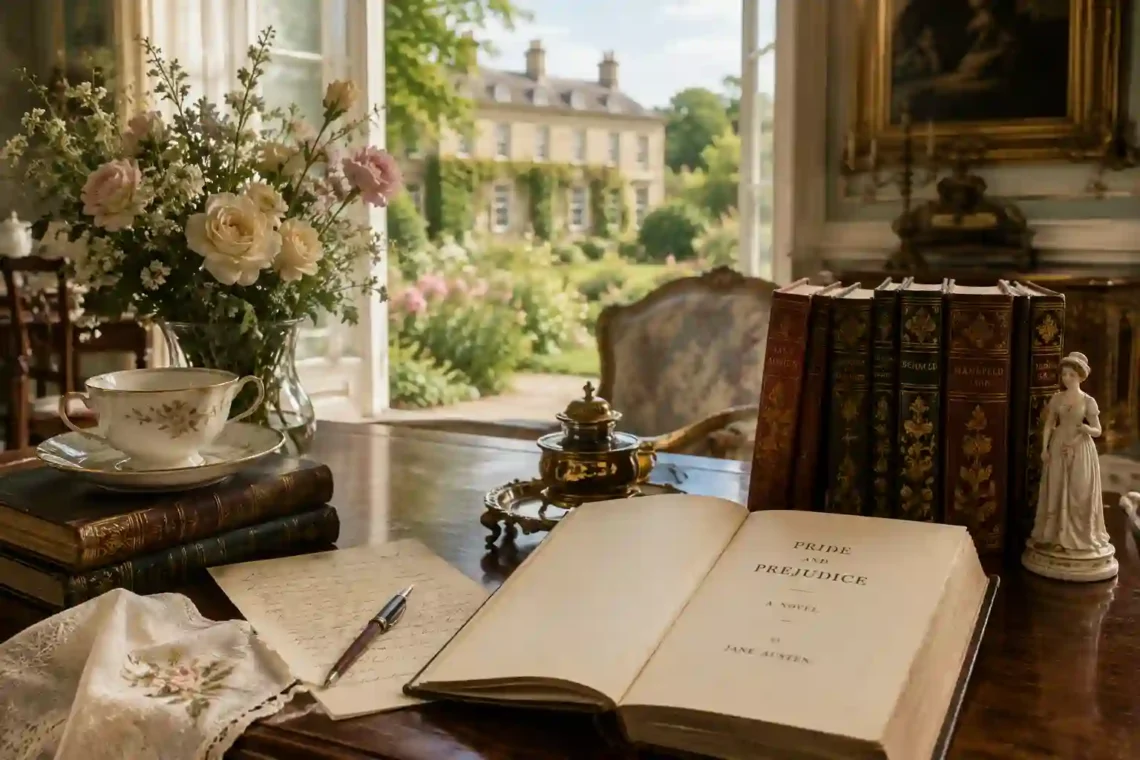
Pride and Prejudice is a romance, but its pleasures are not confined to the question of whether Elizabeth Bennet and Mr. Darcy will marry. Austen makes a dance, a dinner, a walk, or a badly judged sentence carry the weight of a social negotiation. Elizabeth’s wit protects her independence, yet it also exposes how quickly a clever observer can mistake a first impression for a complete truth.
The best books like Pride and Prejudice therefore need more than a historical setting and a central couple. They should give readers lively social observation, a heroine or hero with a distinct intelligence, obstacles created by money or reputation, and a relationship that changes through conversation and self-knowledge. The nine choices below range from Austen’s own novels to Gothic, Victorian, and twentieth-century companions.
The Pleasure Is in the Conversation
For the closest Austen-to-Austen follow-up, choose Emma or Sense and Sensibility. Persuasion is quieter and more mature, while North and South adds industrial class conflict to the slow-changing romance. Choose Jane Eyre for a more Gothic and inward heroine, Middlemarch for a wider social canvas, or The Age of Innocence for polished manners turning into emotional confinement.
At-a-Glance Comparison
| Book | Best for | Major qualities shared with Pride and Prejudice |
|---|---|---|
| Sense and Sensibility | Readers who want Austen’s family comedy and two contrasting sisters | Witty social observation, courtship shaped by money, sisterly loyalty, emotional misjudgment, and a heroine learning when feeling needs steadiness |
| Emma | Readers who want matchmaking, comedy, and a heroine who must outgrow her own certainty | A socially confident heroine, mistaken judgments, village gossip, marriage expectations, ironic narration, and romance built through self-knowledge |
| Persuasion | Readers who want a quieter romance of regret, maturity, and second chances | Marriage pressure, family vanity, a self-possessed heroine, social reputation, changed first impressions, and love revised by experience |
| North and South | Readers who want debate, industrial class conflict, and a formidable slow-burn couple | A principled heroine, clashing social worlds, arguments that become attraction, economic inequality, and romance shaped by moral reconsideration |
| Jane Eyre | Readers who want a fiercer heroine, Gothic secrets, and moral independence | A witty female narrator, unequal marriage prospects, social restriction, emotional self-respect, and a love story tested by hidden history |
| Middlemarch | Readers who want a large community, marriage realism, and many kinds of mistaken judgment | Social observation, courtship and marriage, money and status, intelligent women with limited choices, and characters revised by experience |
| The Tenant of Wildfell Hall | Readers who want a bold woman leaving an abusive marriage | Female independence, reputation, marriage as a legal and social trap, withheld history, and a heroine who controls her own moral choices |
| The Age of Innocence | Readers who want elegant manners hiding severe emotional confinement | Marriage as social performance, reputation, family influence, forbidden attraction, ironic social narration, and a protagonist awakening to the rules around him |
| A Room with a View | Readers who want a shorter Edwardian romance about freedom and social convention | A young woman managed by polite society, a conflict between approved and authentic love, comic social types, travel, and personal awakening |
What Makes a Good Pride and Prejudice Read-Alike?
The selections were chosen for specific overlaps: witty or socially alert narration, courtship shaped by status and money, characters whose first judgments change, and a romance or marriage plot that tests personal independence. I also separated tone and scale. Some books are comic and compact; others are more serious, more Gothic, or more interested in the whole community than in one couple.
The 9 Recommended Books
Sense and Sensibility

Overview: After their father’s death, Elinor and Marianne Dashwood lose the financial security they assumed would protect the family. Elinor manages disappointment through restraint, while Marianne treats sincerity as a moral duty and falls passionately for a man whose circumstances are less simple than they appear. Their different responses to love let Austen examine both the comfort and the cost of self-command.
Why it belongs on this list: This is the most natural companion to Pride and Prejudice because Austen again makes romantic misunderstanding inseparable from inheritance, housing, reputation, and family obligation. Elizabeth’s quick wit becomes Elinor’s practical judgment and Marianne’s dramatic sincerity; the pleasures come from watching each woman discover the limits of her preferred way of reading people.
Reading experience: The tone is comic but more openly sentimental than Pride and Prejudice. The story moves among drawing rooms, country houses, letters, and visits, with emotional reversals arriving through overheard information and carefully managed disclosure.
Best for: Readers who want Austen’s family comedy and two contrasting sisters.
Keep in mind: Illness, financial insecurity, grief, broken engagements, and a major age and power imbalance appear.
View available editions and reader reviews.
Emma
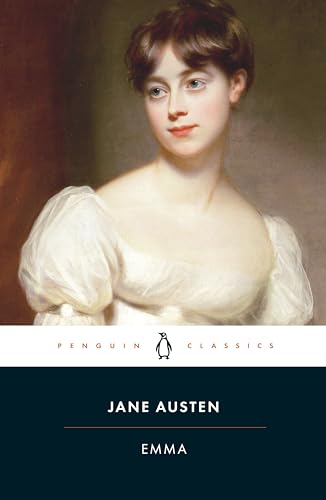
Overview: Emma Woodhouse is wealthy, clever, and convinced she understands the romantic possibilities around her. Because she has no need to marry for money, she treats matchmaking as a form of entertainment and moral improvement. Her confidence becomes comic and occasionally cruel when she mistakes her own preferences for other people’s feelings.
Why it belongs on this list: Emma resembles Elizabeth in intelligence and verbal energy, but Austen makes Emma’s privilege more visible. Both women notice social detail and resist being managed; Emma must additionally confront how money, rank, and confidence let her act without seeing the consequences for less protected neighbors. The romantic plot is therefore also an education in attention.
Reading experience: The pace is buoyant, the village setting is tightly observed, and the comedy depends on readers seeing more than Emma does. It is less travel-oriented and less dramatic than Pride and Prejudice, but its social choreography is even more concentrated.
Best for: Readers who want matchmaking, comedy, and a heroine who must outgrow her own certainty.
Keep in mind: Class prejudice, embarrassment, manipulative matchmaking, illness, and a significant age difference are part of the story.
View available editions and reader reviews.
Persuasion

Overview: Anne Elliot once ended her engagement to Captain Wentworth because an older friend persuaded her that his uncertain prospects made the match unwise. Years later, the decision still shapes her life, while her family remains absorbed in rank, appearance, and the management of a diminished fortune. A reunion forces Anne to live beside the past without knowing whether it can become a future.
Why it belongs on this list: Like Elizabeth, Anne must separate genuine judgment from the loud opinions of family and acquaintances. The romance is less combative and more reflective: instead of two proud people learning to see each other, it follows two people who already know the cost of allowing society to speak too loudly.
Reading experience: The prose is more inward and the emotional movement more gradual. Coastal towns, naval families, walks, letters, and visits create a world that feels less enclosed by country-house comedy and more open to mobility and earned experience.
Best for: Readers who want a quieter romance of regret, maturity, and second chances.
Keep in mind: Regret, financial decline, family selfishness, and the limited choices available to unmarried women are central.
View available editions and reader reviews.
North and South

Overview: Margaret Hale leaves a comfortable southern home for Milton, an industrial northern town whose smoke, mills, strikes, and crowded streets challenge her assumptions about progress and gentility. John Thornton, a mill owner, is initially as proud of his business judgment as Margaret is of her moral perceptions. Their disagreements about labor, responsibility, and class gradually become a form of reluctant intimacy.
Why it belongs on this list: Margaret and Elizabeth share alertness, independence, and a willingness to answer powerful men plainly. Gaskell enlarges the Austen pattern by making the economy itself part of the courtship: Margaret must learn that sympathy without practical knowledge can be incomplete, while Thornton must see workers as people rather than only as market forces.
Reading experience: The romance is slower and more argumentative than Austen’s, with strikes, illness, factory visits, and family crises giving the plot greater social weight. The dialogue remains lively, but the setting is smoky, industrial, and materially harsher.
Best for: Readers who want debate, industrial class conflict, and a formidable slow-burn couple.
Keep in mind: Poverty, illness, labor conflict, death, and strong class prejudice appear throughout.
View available editions and reader reviews.
Jane Eyre

Overview: Jane grows from an abused orphan into a governess determined to earn a life she can respect. At Thornfield Hall she meets Edward Rochester, whose intelligence and secrecy attract her, but the house contains a history that makes romance impossible on the terms he proposes. Jane’s love matters precisely because she refuses to purchase it with her conscience.
Why it belongs on this list: Jane is less socially playful than Elizabeth, yet both heroines insist that feeling does not erase equality. They speak back to men with more power, notice the hypocrisy of rank, and demand a relationship in which the mind and moral agency of a woman count. The Gothic architecture makes the emotional stakes literal.
Reading experience: The first-person voice is intense, lyrical, and much more dramatic. Fire, storms, locked rooms, childhood deprivation, and spiritual language replace Austen’s drawing-room comedy, so this is a good choice when the heroine’s inner life matters more than social banter.
Best for: Readers who want a fiercer heroine, Gothic secrets, and moral independence.
Keep in mind: Child abuse, colonial attitudes, attempted bigamy, confinement, fire, and religious coercion require context.
View available editions and reader reviews.
Middlemarch

Overview: George Eliot follows several lives in the provincial town of Middlemarch: Dorothea Brooke’s desire for meaningful work, Tertius Lydgate’s medical ambition, Rosamond Vincy’s social expectations, and the town’s shifting political and financial interests. No relationship exists in isolation; every marriage is connected to family money, professional reputation, and local gossip.
Why it belongs on this list: Where Pride and Prejudice concentrates its energy around the Bennet sisters, Middlemarch shows the same questions spreading through an entire social network. Dorothea shares Elizabeth’s intelligence and moral independence, but Eliot gives her a larger, more serious world in which good intentions cannot by themselves overcome bad institutions or incompatible marriages.
Reading experience: The pace is patient, the cast is broad, and the narrator frequently steps back to interpret motives. It rewards readers who enjoy following several emotional and social arcs rather than waiting for one central couple.
Best for: Readers who want a large community, marriage realism, and many kinds of mistaken judgment.
Keep in mind: Unhappy marriage, financial pressure, illness, grief, and restrictive gender expectations shape the novel.
View available editions and reader reviews.
The Tenant of Wildfell Hall

Overview: A mysterious widow, Helen Graham, arrives at Wildfell Hall with her young son and refuses to participate in the local gossip economy. Her paintings and guarded behavior invite speculation until her diary reveals the marriage she escaped and the principles that made her leave. The novel shifts between a male observer’s letters and Helen’s own account, allowing her voice to correct the assumptions surrounding her.
Why it belongs on this list: This is a darker, more direct cousin to Austen’s marriage plots. Like Elizabeth, Helen insists that respect matters more than social approval, but Brontë asks what happens when a woman cannot simply refuse an unsuitable proposal because she is already legally trapped inside one.
Reading experience: The frame narrative creates mystery before the diary opens into a long, urgent confession. It is less playful than Austen and more openly reformist, with domestic detail carrying the force of a social argument.
Best for: Readers who want a bold woman leaving an abusive marriage.
Keep in mind: Alcoholism, emotional abuse, marital coercion, child endangerment, and social hypocrisy are central.
View available editions and reader reviews.
The Age of Innocence

Overview: Newland Archer is engaged to the conventionally acceptable May Welland when May’s cousin, Countess Ellen Olenska, returns to New York after leaving a disastrous marriage. Newland believes himself more sophisticated than his society, yet he discovers that its rituals, silences, and small acts of exclusion are stronger than private intention.
Why it belongs on this list: Wharton turns the social comedy of marriage into a study of emotional policing. Newland has some of Darcy’s awareness of rank but less courage than Elizabeth, and Ellen’s independence reveals how little freedom a polished society grants a woman who refuses to perform its version of innocence.
Reading experience: The prose is elegant, observant, and quietly merciless. There is less overt banter than in Austen, but objects, invitations, opera boxes, and seating arrangements communicate as much as dialogue does.
Best for: Readers who want elegant manners hiding severe emotional confinement.
Keep in mind: Divorce stigma, coercive marriage, infidelity, and emotional repression are important themes.
View available editions and reader reviews.
A Room with a View

Overview: Lucy Honeychurch travels to Florence under the supervision of her cousin Charlotte, who believes proper young women should remain protected from emotional and physical risk. Lucy’s encounters with the unconventional Emerson family awaken desires and questions that her English social circle would prefer to keep unspoken. Returning home does not make the earlier experience disappear.
Why it belongs on this list: Lucy shares Elizabeth’s alertness but begins with less confidence in trusting her own perception. Like Austen, Forster uses visits, conversations, marriage plans, and comic relatives to show how society polices desire; the Italian setting gives Lucy a literal and emotional view beyond the rooms assigned to her.
Reading experience: The novel is compact, bright, and gently comic, with a clear contrast between open-air Florence and carefully supervised English drawing rooms. Romance and social satire remain balanced rather than becoming Gothic or tragic.
Best for: Readers who want a shorter Edwardian romance about freedom and social convention.
Keep in mind: Class snobbery, sexual repression, and the legacy of Victorian gender expectations are present.
View available editions and reader reviews.
Choose Your Next Social World
Readers who want banter and matchmaking should begin with Emma or Sense and Sensibility. Persuasion suits readers ready for regret, restraint, and second chances. Move to North and South for class debate and industrial towns, to Jane Eyre for moral independence and Gothic secrecy, or to The Age of Innocence for a society where etiquette itself becomes the antagonist.
Who This List Is Best For
This list is for readers who enjoy classic romance with strong social texture, students comparing women writers, book clubs discussing marriage and class, and anyone who wants a heroine with a mind as active as her love story. The books differ in intensity: several contain illness, coercive marriage, abuse, or colonial and class prejudice.
FAQ
What is the closest book to Pride and Prejudice?
Emma is the closest in wit, matchmaking, social comedy, and a heroine whose confidence outruns her judgment. Sense and Sensibility is the best alternative if you want family pressure and romantic misunderstanding with two contrasting sisters.
Which recommendation has the strongest slow-burn romance?
North and South, Persuasion, and Jane Eyre all delay emotional resolution, but they do so differently. Gaskell builds attraction through argument and class difference; Austen builds it through regret; Brontë adds moral danger and Gothic secrecy.
Which books are funniest?
Emma and Sense and Sensibility offer the most sustained comedy of manners. The Age of Innocence is more quietly ironic, with the narrator exposing the rules of New York society even when the characters cannot.
Are these books suitable for readers new to classics?
Start with Persuasion or North and South if you want a clear emotional through-line. Middlemarch is rewarding but broader and slower, while Villette-style inwardness is better saved for readers who enjoy psychological narration.
Why include books that are not Regency romances?
The shared qualities are social judgment, constrained choice, class or reputation, and relationships that require characters to rethink themselves. The Victorian and twentieth-century choices show how the same tension changes when the setting, economic system, or expected role of women changes.
A Better Match Begins with Better Judgment
Austen’s great joke is that intelligence does not make a person immune to error. Elizabeth must revise her opinion without surrendering her independence; Darcy must change without turning into a flatter version of himself. The books here preserve that satisfying combination of attraction, argument, social pressure, and self-correction. Choose the one whose setting or tone appeals most, then give its characters time to be wrong before asking them to become wise.