
Critical thinking is one of those skills people usually want for a very practical reason. They may be sorting through bad arguments at work, trying to make clearer decisions, or simply wanting to slow down before jumping to conclusions. The best books on the subject do not all teach the same thing. Some focus on logic and fallacies. Others examine the habits that distort judgment. A few are better suited to beginners who want a clear framework, while others reward readers who want a more rigorous, analytical approach.
That is why the right best books for critical thinking depends on what you want to improve first. If you want to question assumptions, sharpen reasoning, and make better decisions, the books below offer different routes to the same goal, and each earns its place for a specific kind of reader.
Quick Answer
If you want the strongest starting points, begin with Think Again for a broad, readable look at rethinking and intellectual flexibility, Thinking, Fast and Slow for a deeper understanding of how judgment really works, and Critical Thinking (The MIT Press Essential Knowledge series) for a concise, serious overview of the field. For a more practical, skills-first approach, The Miniature Guide to Critical Thinking Concepts and Tools is especially useful, while Critical Thinking, Logic & Problem Solving offers a more hands-on path for readers who want straightforward application.
Comparison Table
| Book | Best For | Why It Stands Out |
|---|---|---|
| Think Again: The Power of Knowing What You Don’t Know | Readers who want a broad, approachable book that improves how they question assumptions and update their views. | Among the best books for critical thinking, this one is especially helpful for readers who need a practical, modern introduction to rethinking. It is broader than a logic manual and more readable than many academic treatments. The book… |
| Thinking, Fast and Slow | Readers who want a practical, focused resource on judgment, bias, and decision-making. | This recommendation adds a distinct framework instead of repeating a generic introduction. It helps readers move from recognizing the issue to understanding the patterns, choices, or skills involved in judgment, bias, and decision-making. |
| Critical Thinking (The MIT Press Essential Knowledge series) | Readers who want a dependable overview without committing to a long, sprawling book. | For readers who want a compact but serious foundation, this is one of the cleanest choices available. It is less expansive than Thinking, Fast and Slow and less conversational than Think Again, but it offers a tighter, more academic… |
| The Miniature Guide to Critical Thinking Concepts and Tools (Thinker’s Guide Library) | Students, educators, and readers who want a compact framework for improving reasoning step by step. | Some critical thinking books explain the subject at a high level. This one gets closer to the mechanics. It is particularly valuable for readers who want a framework they can apply when evaluating arguments, discussing ideas, or analyzing… |
| Critical Thinking, Logic & Problem Solving: The Complete Guide to Superior Thinking, Systematic Problem Solving, Making Outstanding Decisions, and Uncover Logical Fallacies Like a Pro | Beginners who want a broad, application-focused guide to critical thinking. | Compared with the more established titles on this list, this book is more explicitly hands-on. That makes it a good choice for readers who want one resource that connects logic to decision-making without requiring a background in… |
| The Power of Critical Thinking | Readers who want a practical, focused resource on reasoning, evidence, and clear thinking. | This recommendation adds a distinct framework instead of repeating a generic introduction. It helps readers move from recognizing the issue to understanding the patterns, choices, or skills involved in reasoning, evidence, and clear… |
How We Chose These Recommendations
This list favors books that help readers do something concrete with critical thinking, not just define it. Some books are included because they explain the mental habits behind poor judgment. Others are here because they teach logic, argument analysis, or practical decision-making in a way readers can actually use. Together, they offer a range of styles and difficulty levels without drifting into superficial advice.
We also prioritized books with staying power. In a topic like this, clarity and credibility matter more than novelty. A strong critical thinking book should be useful to a beginner, but substantial enough to reward careful reading. That balance shaped the list.
Recommended Books
Think Again: The Power of Knowing What You Don’t Know

Overview: Adam Grant’s book is built around a deceptively simple idea: being intelligent is not the same as being right. It explores how people defend weak beliefs, resist changing their minds, and mistake confidence for accuracy. The emphasis is not on formal logic but on the habits of mind that make better thinking possible, including humility, curiosity, and the willingness to reconsider.
Why it stands out: Among the best books for critical thinking, this one is especially helpful for readers who need a practical, modern introduction to rethinking. It is broader than a logic manual and more readable than many academic treatments. The book works well because it addresses a common real-world problem: most poor decisions do not come from a lack of intelligence, but from overcommitment to first impressions.
Strengths:
- Accessible, engaging writing without losing substance
- Strong focus on intellectual humility and reconsideration
- Useful in both personal and professional settings
- Encourages better discussion, feedback, and decision-making
Best for: Readers who want a broad, approachable book that improves how they question assumptions and update their views.
Potential limitations: Readers looking for formal logic drills or a structured toolkit may find it more reflective than technical.
View price, available formats, and reader reviews.
Thinking, Fast and Slow
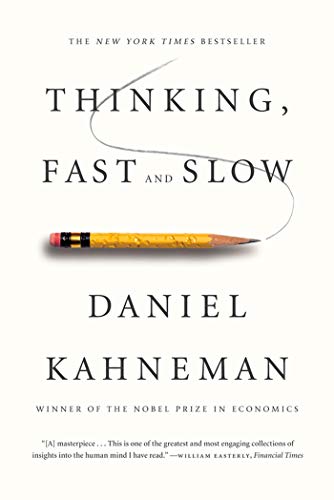
Overview: Thinking, Fast and Slow gives readers a clearer, more established way to explore judgment, bias, and decision-making. It is a stronger fit for this list because its main ideas connect directly to the practical questions readers bring to this topic.
Why it stands out: This recommendation adds a distinct framework instead of repeating a generic introduction. It helps readers move from recognizing the issue to understanding the patterns, choices, or skills involved in judgment, bias, and decision-making.
Strengths:
- Directly connected to judgment, bias, and decision-making
- Offers a clear framework readers can return to
- More focused than a general-purpose self-help choice
- Works well alongside the other recommendations on this list
Best for: Readers who want a practical, focused resource on judgment, bias, and decision-making.
Potential limitations: It works best as a focused resource for this topic, so readers may want to pair it with a broader foundational book.
View price, available formats, and reader reviews.
Critical Thinking (The MIT Press Essential Knowledge series)

Overview: This concise volume gives readers a structured introduction to the basic concepts behind critical thinking. Rather than overloading the reader with theory, it concentrates on how reasoning works, what counts as a good argument, and why logical mistakes matter. The MIT Press series format keeps the book focused and manageable.
Why it stands out: For readers who want a compact but serious foundation, this is one of the cleanest choices available. It is less expansive than Thinking, Fast and Slow and less conversational than Think Again, but it offers a tighter, more academic overview of the subject. That makes it especially useful for students, professionals, or any reader who wants a compact reference that still feels intellectually substantial.
Strengths:
- Short enough to finish without losing rigor
- Clear introduction to core critical thinking concepts
- Part of a respected educational series
- Useful as a foundation before moving to more specialized books
Best for: Readers who want a dependable overview without committing to a long, sprawling book.
Potential limitations: It is more compact and academic than some readers may want if they are looking for lots of examples or a very conversational style.
View price, available formats, and reader reviews.
The Miniature Guide to Critical Thinking Concepts and Tools (Thinker’s Guide Library)

Overview: This is a compact guide built around the basic tools of disciplined thinking. It focuses on concepts such as clarity, relevance, assumptions, evidence, and implications. The format is intentionally concise, but the material is structured in a way that supports repeated use, which makes it especially useful in educational or professional contexts.
Why it stands out: Some critical thinking books explain the subject at a high level. This one gets closer to the mechanics. It is particularly valuable for readers who want a framework they can apply when evaluating arguments, discussing ideas, or analyzing problems. The book does not try to be broad or flashy. Instead, it provides a practical set of tools that serious readers can return to again and again.
Strengths:
- Very focused treatment of core thinking skills
- Useful for classroom, workplace, or self-study settings
- Supports close reading and structured analysis
- Easy to revisit as a reference
Best for: Students, educators, and readers who want a compact framework for improving reasoning step by step.
Potential limitations: The brevity is useful, but some readers may want a fuller explanation or more narrative context.
View price, available formats, and reader reviews.
Critical Thinking, Logic & Problem Solving: The Complete Guide to Superior Thinking, Systematic Problem Solving, Making Outstanding Decisions, and Uncover Logical Fallacies Like a Pro

Overview: This book combines several closely related skills into one practical package: reasoning, logical fallacies, and problem solving. Its emphasis is on direct application, with the aim of helping readers think more systematically in everyday situations. The scope is broad, but the structure is aimed at readers who want a straightforward entry point rather than a theory-heavy treatment.
Why it stands out: Compared with the more established titles on this list, this book is more explicitly hands-on. That makes it a good choice for readers who want one resource that connects logic to decision-making without requiring a background in philosophy or psychology. It fills a useful middle ground between dense academic books and highly compressed intros to the subject.
Strengths:
- Combines logic, fallacies, and problem solving in one place
- Practical orientation for everyday decision-making
- Accessible for readers new to the subject
- Good choice for learning several related skills at once
Best for: Beginners who want a broad, application-focused guide to critical thinking.
Potential limitations: Readers seeking a classic, field-defining text may prefer one of the more established titles above.
View price, available formats, and reader reviews.
The Power of Critical Thinking

Overview: The Power of Critical Thinking gives readers a clearer, more established way to explore reasoning, evidence, and clear thinking. It is a stronger fit for this list because its main ideas connect directly to the practical questions readers bring to this topic.
Why it stands out: This recommendation adds a distinct framework instead of repeating a generic introduction. It helps readers move from recognizing the issue to understanding the patterns, choices, or skills involved in reasoning, evidence, and clear thinking.
Strengths:
- Directly connected to reasoning, evidence, and clear thinking
- Offers a clear framework readers can return to
- More focused than a general-purpose self-help choice
- Works well alongside the other recommendations on this list
Best for: Readers who want a practical, focused resource on reasoning, evidence, and clear thinking.
Potential limitations: It works best as a focused resource for this topic, so readers may want to pair it with a broader foundational book.
View price, available formats, and reader reviews.
Who This List Is Best For
This list is strongest for readers who want to improve reasoning in a practical way, not just collect abstract ideas. It will be especially useful for:
- Students who need a clearer framework for arguments and evidence
- Professionals who make decisions, evaluate information, or lead discussions
- Lifelong learners who want to understand bias and judgment more deeply
- Beginners who want a readable entry point without heavy jargon
- Self-directed readers who prefer books they can work through at their own pace
Final Thoughts
If you want the most readable and broadly useful place to start, choose Think Again. If your goal is to understand why people think the way they do, Thinking, Fast and Slow offers the deepest payoff. If you want a concise academic overview, Critical Thinking (The MIT Press Essential Knowledge series) is the cleanest fit. And if you prefer a practical framework you can keep returning to, The Miniature Guide to Critical Thinking Concepts and Tools is especially effective.
The right book depends on whether you want habits, theory, structure, or practice. That is the real difference between the best books for critical thinking. They do not all teach the subject the same way, and that is exactly why the strongest list gives you a few different ways in.
FAQ
Which book is best for beginners?
Think Again is the easiest broad starting point for most readers. It introduces the habit of questioning assumptions without feeling technical or overly academic.
Which book is the most practical?
Critical Thinking, Logic & Problem Solving is the most directly application-focused, while The Miniature Guide to Critical Thinking Concepts and Tools is the best compact framework for daily use.
Which book goes deepest into how thinking works?
Thinking, Fast and Slow offers the most detailed look at judgment, intuition, and cognitive bias.
Which book is shortest and easiest to finish?
Critical Thinking (The MIT Press Essential Knowledge series) is the most concise of the stronger recommendations here.
Can I learn critical thinking on my own from these books?
Yes. These books work well for self-study, especially if you read slowly and apply the ideas to real decisions, arguments, or problems in your own life.
Which book should I read first if I want a long-term foundation?
Start with Thinking, Fast and Slow if you want depth, or Think Again if you want something easier to read first and then move into more demanding material.




