
Self-esteem books are rarely about vanity. Most readers come to them because confidence has become fragile in some part of life: after criticism, after a relationship ends, after burnout, or after years of second-guessing themselves. The best books for self-esteem do more than offer encouragement. They help readers understand where self-doubt comes from and what to do about it in practical, repeatable ways.
That is why this list includes a mix of classic self-esteem psychology, cognitive tools, spiritual or reflective perspective, and more direct self-help. Some books focus on rebuilding beliefs. Others focus on quieting the inner critic or turning intention into daily behavior. The right choice depends on whether you want depth, accessibility, or a more structured path forward.
Quick Answer
If you want the clearest entry point into self-esteem, start with The Six Pillars of Self-Esteem: The Definitive Work on Self-Esteem by the Leading Pioneer in the Field. It gives you a useful foundation in the difference between self-esteem as a feeling and the deeper practices that create stable self-respect. Choose Self-Esteem: A Proven Program of Cognitive Techniques for Assessing, Improving, and Maintaining Your Self-Esteem when you want a more applied or contrasting approach, and use Worthy: How to Believe You Are Enough and Transform Your Life when you want to extend the idea into a different context.
This list is designed for readers working on self-worth, self-talk, confidence, and self-compassion. The recommendations are intentionally varied: some explain the underlying research, some offer exercises, and some are strongest as narrative or leadership case studies. That variety makes it easier to choose a book that matches your current question rather than buying the longest list.
Comparison Table
| Book | Best For | Why It Stands Out |
|---|---|---|
| The Six Pillars of Self-Esteem: The Definitive Work on Self-Esteem by the Leading Pioneer in the Field | Readers who want the classic, theory-driven book on self-esteem and are comfortable with a more reflective style. | For readers who want the most foundational self-esteem book on the shelf, this is still the reference point. It does not offer trendy shortcuts. Instead, it gives a disciplined way to think about self-respect, responsibility, and inner… |
| Self-Esteem: A Proven Program of Cognitive Techniques for Assessing, Improving, and Maintaining Your Self-Esteem | Readers who want a structured, skills-based approach and prefer a more clinical or therapeutic style. | Compared with broader self-help books, this one is unusually direct about process. It is not trying to be inspirational first. It is trying to be useful. That makes it a strong choice for readers who want to work through self-esteem… |
| Worthy: How to Believe You Are Enough and Transform Your Life | Readers who want a modern, personal book about believing they are enough and changing the habits that follow from that belief. | This is one of the best choices for readers whose self-esteem issues are tied to feeling “not enough” in daily life, relationships, or work. It sits between inspirational self-help and practical reflection. That combination makes it more… |
| Get Out of Your Head: Stopping the Spiral of Toxic Thoughts | Readers who need help interrupting negative thoughts before they snowball into self-doubt. | Many self-esteem books talk about worth in broad terms. This one narrows the focus to thought patterns, which makes it especially helpful for readers whose self-image is damaged by overthinking. It works well as a companion to more… |
| Unfu*k Yourself: Get Out of Your Head and into Your Life – The New York Times Bestselling Tough-Love Self-Help Guide to Stop Self-Sabotage and Boost Resilience | Readers who want a sharper, more confrontational style and are looking for a push out of passivity. | This is a strong recommendation for readers who do not want a tender or reflective tone. Some people build confidence better through blunt reminders than through introspection, and this book speaks to that reader directly. It is… |
| Don’t Believe Everything You Think (Expanded Edition): Why Your Thinking Is The Beginning & End Of Suffering | Readers who want a quieter, more philosophical book about self-esteem and mental suffering. | Compared with more conventional confidence books, this one is less about achievement and more about perspective. It works best for readers who need to loosen the grip of the inner critic rather than build performance habits. That makes it… |
| The Self-Confidence Workbook: A Guide to Overcoming Self-Doubt and Improving Self-Esteem | Readers who want a gentle, structured introduction to improving self-esteem. | Not every reader needs a classic theory book. Some need a practical, confidence-building starting place that does not assume a lot of background knowledge. This workbook-style approach fits that need well and is especially useful for… |
| The Self-Love Workbook: A Life-Changing Guide to Boost Self-Esteem, Recognize Your Worth and Find Genuine Happiness | Readers who want to build a healthier overall relationship with themselves, not just confidence in specific situations. | Where some self-esteem books focus on fixing negative thoughts, this one helps readers think about the larger relationship they have with themselves. That makes it a good choice for people who want a more holistic reset. It fits well for… |
How We Chose These Recommendations
The books here were selected for practical value, long-term usefulness, and clear relevance to the problem of low self-esteem. Rather than filling the list with books that merely mention confidence or self-worth, this selection favors titles that help readers do something useful with the problem: understand it, challenge it, or rebuild a more stable sense of self.
The list also tries to balance different needs. Some readers want a respected foundation book. Others want a more structured program, a workbook-style approach, or a book that speaks directly to overthinking and self-sabotage. Each recommendation earns its place by offering a distinct angle, not by repeating the same advice in a different package.
Recommended Books
The Six Pillars of Self-Esteem: The Definitive Work on Self-Esteem by the Leading Pioneer in the Field

Overview: Nathaniel Branden’s classic work treats self-esteem as something deeper than positive thinking. It explains the habits and inner standards that shape a stable sense of worth, then breaks them into six practical pillars. The book is serious in tone and grounded in a clear psychological framework, which is part of why it has remained relevant for so long.
Why it stands out: For readers who want the most foundational self-esteem book on the shelf, this is still the reference point. It does not offer trendy shortcuts. Instead, it gives a disciplined way to think about self-respect, responsibility, and inner integrity. That makes it especially valuable for readers who want more than motivation and are ready to work on the roots of self-esteem.
Strengths:
- Offers a durable framework rather than quick advice
- Connects self-esteem to everyday choices and habits
- Useful for readers who want depth and clarity
Best for: Readers who want the classic, theory-driven book on self-esteem and are comfortable with a more reflective style.
Potential limitations: The tone is more serious and philosophical than conversational, so readers looking for a light or fast-moving read may prefer a more accessible title.
View price, available formats, and reader reviews.
Self-Esteem: A Proven Program of Cognitive Techniques for Assessing, Improving, and Maintaining Your Self-Esteem

Overview: This book takes a more structured, cognitive-behavioral approach to self-esteem. Rather than focusing mainly on inspiration, it gives readers techniques for assessing negative beliefs, challenging them, and building healthier internal patterns. The emphasis is on method, which makes it especially useful for readers who like clear steps.
Why it stands out: Compared with broader self-help books, this one is unusually direct about process. It is not trying to be inspirational first. It is trying to be useful. That makes it a strong choice for readers who want to work through self-esteem issues in a practical, programmatic way and who respond well to tools they can actually apply.
Strengths:
- Concrete techniques instead of general encouragement
- Strong fit for readers who like cognitive tools
- Useful for ongoing maintenance, not just initial insight
Best for: Readers who want a structured, skills-based approach and prefer a more clinical or therapeutic style.
Potential limitations: The approach is more technical than many popular self-help books, so it may feel less approachable to readers who want a gentler starting point.
View price, available formats, and reader reviews.
Worthy: How to Believe You Are Enough and Transform Your Life

Overview: Jamie Kern Lima’s book addresses the gap between knowing you should feel worthy and actually believing it. The focus is on self-worth, internalized doubt, and the patterns that keep people from trusting themselves. It is written in an accessible, personal style that makes the subject feel immediate rather than abstract.
Why it stands out: This is one of the best choices for readers whose self-esteem issues are tied to feeling “not enough” in daily life, relationships, or work. It sits between inspirational self-help and practical reflection. That combination makes it more approachable than a classic psychology text, while still being more substantive than a generic confidence book.
Strengths:
- Focuses specifically on self-worth, not just confidence
- Readable and emotionally direct
- Helpful for readers who need encouragement without fluff
Best for: Readers who want a modern, personal book about believing they are enough and changing the habits that follow from that belief.
Potential limitations: Readers looking for a tightly academic or heavily research-based book may want something more structured.
View price, available formats, and reader reviews.
Get Out of Your Head: Stopping the Spiral of Toxic Thoughts

Overview: Jennie Allen’s book is aimed at the mental loops that often undermine self-esteem before a person even notices what is happening. It focuses on toxic thought patterns, rumination, and the spiral of self-defeating inner dialogue. The result is a book that speaks directly to readers who know their problem is not a lack of information, but a mind that keeps turning against them.
Why it stands out: Many self-esteem books talk about worth in broad terms. This one narrows the focus to thought patterns, which makes it especially helpful for readers whose self-image is damaged by overthinking. It works well as a companion to more foundational self-esteem books because it addresses the mental habits that often keep those ideas from sticking.
Strengths:
- Targets rumination and self-defeating thought loops
- Readable and focused on immediate mental habits
- Useful when self-esteem is closely tied to anxiety
Best for: Readers who need help interrupting negative thoughts before they snowball into self-doubt.
Potential limitations: Its emphasis is narrower than some broader self-esteem books, so it is best viewed as a targeted solution rather than a complete theory of self-worth.
View price, available formats, and reader reviews.
Unfu*k Yourself: Get Out of Your Head and into Your Life – The New York Times Bestselling Tough-Love Self-Help Guide to Stop Self-Sabotage and Boost Resilience
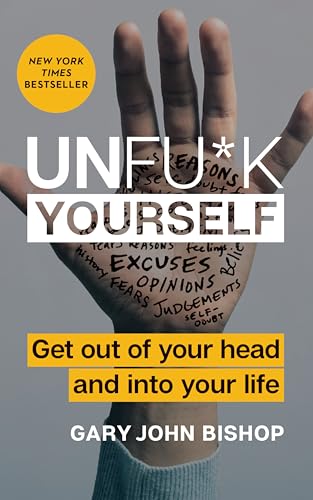
Overview: Gary John Bishop takes a blunt, action-oriented approach to the habits that keep people stuck. The book is less about gentle reassurance and more about interrupting self-sabotage, weak self-talk, and passive thinking. It pushes readers toward responsibility and movement, which gives it a very different energy from softer self-esteem books.
Why it stands out: This is a strong recommendation for readers who do not want a tender or reflective tone. Some people build confidence better through blunt reminders than through introspection, and this book speaks to that reader directly. It is especially effective for those who already understand their patterns and need a nudge toward action rather than more analysis.
Strengths:
- Direct, concise, and easy to keep moving through
- Focuses on self-sabotage and practical mindset shifts
- Good fit for readers who prefer tough love to reassurance
Best for: Readers who want a sharper, more confrontational style and are looking for a push out of passivity.
Potential limitations: The tone will not suit everyone. Readers who prefer warmth, nuance, or a more therapeutic voice may find it too blunt.
View price, available formats, and reader reviews.
Don’t Believe Everything You Think (Expanded Edition): Why Your Thinking Is The Beginning & End Of Suffering

Overview: Joseph Nguyen’s book centers on a simple but useful idea: not every thought deserves authority. For readers whose self-esteem has been worn down by constant self-judgment, that insight can be grounding. The book is concerned with the relationship between thought, suffering, and self-perception, and it offers a calmer, more contemplative way to step back from mental noise.
Why it stands out: Compared with more conventional confidence books, this one is less about achievement and more about perspective. It works best for readers who need to loosen the grip of the inner critic rather than build performance habits. That makes it a thoughtful complement to the more action-driven titles on this list.
Strengths:
- Helps readers question automatic self-judgments
- Offers a calmer, less forceful tone
- Useful for people who want a reflective perspective on thought patterns
Best for: Readers who want a quieter, more philosophical book about self-esteem and mental suffering.
Potential limitations: The style is more contemplative than practical, so readers who want exercises and step-by-step tools may need a more structured companion book.
View price, available formats, and reader reviews.
The Self-Confidence Workbook: A Guide to Overcoming Self-Doubt and Improving Self-Esteem

Overview: This is a straightforward guided book for readers who want a simple, supportive entry point into self-esteem work. The emphasis is on overcoming self-doubt and building confidence through manageable steps, which makes it approachable for beginners or anyone who feels overwhelmed by denser self-help books.
Why it stands out: Not every reader needs a classic theory book. Some need a practical, confidence-building starting place that does not assume a lot of background knowledge. This workbook-style approach fits that need well and is especially useful for readers who want their self-esteem reading to feel actionable from the first pages.
Strengths:
- Accessible for beginners
- Focuses on confidence and self-doubt in practical terms
- Easy to use as an entry point before moving to deeper books
Best for: Readers who want a gentle, structured introduction to improving self-esteem.
Potential limitations: Because it is designed to be accessible, it may not go as deep as the more established psychology-focused books on this list.
View price, available formats, and reader reviews.
The Self-Love Workbook: A Life-Changing Guide to Boost Self-Esteem, Recognize Your Worth and Find Genuine Happiness

Overview: This book takes a broader self-love approach, linking self-esteem to worth, happiness, and the way a person treats themselves over time. It is designed for readers who want more than confidence-building alone. The emphasis on recognizing your worth gives it a broader emotional scope than narrow performance-based self-help.
Why it stands out: Where some self-esteem books focus on fixing negative thoughts, this one helps readers think about the larger relationship they have with themselves. That makes it a good choice for people who want a more holistic reset. It fits well for readers who are ready to work on self-esteem as part of a wider personal growth process.
Strengths:
- Connects self-esteem with self-worth and self-care
- Broad enough to support different personal growth goals
- Helpful for readers who want a reflective, workbook-style book
Best for: Readers who want to build a healthier overall relationship with themselves, not just confidence in specific situations.
Potential limitations: The workbook format may feel more active than readers expecting a traditional narrative book, and some will prefer a more text-heavy approach.
View price, available formats, and reader reviews.
Who This List Is Best For
These recommendations are a good fit for readers working on self-worth, self-talk, confidence, and self-compassion. They are especially useful if you want to understand self-esteem with more nuance than a short checklist, quote, or social-media summary can provide.
- Readers who want a clear conceptual foundation before choosing a technique.
- People who prefer to compare research, practical exercises, and real-world examples.
- Professionals, students, or caregivers who need language they can apply in a real conversation or decision.
Use the Best For and Why It Stands Out columns together. A book can be excellent yet still be the wrong starting point if its depth, tone, or intended reader does not match your goal.
Final Thoughts
The strongest choice for self-esteem depends on what you need to do next. Begin with The Six Pillars of Self-Esteem: The Definitive Work on Self-Esteem by the Leading Pioneer in the Field if you need a foundation, move to Self-Esteem: A Proven Program of Cognitive Techniques for Assessing, Improving, and Maintaining Your Self-Esteem if you need a practical change, and consider Worthy: How to Believe You Are Enough and Transform Your Life if you need a broader or more challenging perspective. The comparison table is meant to shorten that decision, not pretend that one book works for every reader.
A useful reading plan is simple: select one book, write down the question you want it to answer, and apply one idea before moving to another recommendation. For this topic, notice where self-worth is being outsourced to approval, then choose one value-based action that does not depend on praise. confidence advice can become another performance demand if it ignores shame, context, or mental health. Books can support reflection and skills practice, but they are not a substitute for qualified professional care when symptoms are severe, persistent, or unsafe.
FAQ
Which book should I read first for self-esteem?
Start with The Six Pillars of Self-Esteem: The Definitive Work on Self-Esteem by the Leading Pioneer in the Field if you want the clearest foundation. If your immediate need is action rather than background, compare it with Self-Esteem: A Proven Program of Cognitive Techniques for Assessing, Improving, and Maintaining Your Self-Esteem and choose the one whose exercises, examples, or audience match your situation.
How do I choose between a research-based book and a workbook?
Choose the research-oriented option when you need context and a better mental model. Choose the workbook or practical guide when you already understand the problem and need repetition, prompts, or a structured plan. The table’s Best For column is the fastest way to make that distinction.
What is a practical way to use books about self-esteem?
Do not read the whole list at once. Pick one recommendation, define the behavior or decision you want to improve, and test a small idea from the book for seven days. For this topic, notice where self-worth is being outsourced to approval, then choose one value-based action that does not depend on praise.
Are these recommendations suitable for self-study?
Yes, for education and structured reflection. Take notes in your own words, mark claims you want to verify, and discuss difficult ideas with a trusted person or qualified professional when appropriate. Books can support reflection and skills practice, but they are not a substitute for qualified professional care when symptoms are severe, persistent, or unsafe.
Do I need to read every book on the list?
No. One well-matched book that changes what you notice or do is more valuable than collecting several recommendations without applying any of them.




