
Leadership is often discussed as if it were mainly a matter of charisma, confidence, or instinct. In practice, the harder part is psychological: how leaders handle ambiguity, respond to feedback, motivate people, make decisions under pressure, and shape trust in a group. That is why the best books about leadership psychology do more than offer inspiration. They help readers understand the mental habits behind effective leadership, and they show where popular leadership advice oversimplifies human behavior.
Some books in this area explain motivation and influence. Others focus on power, judgment, anxiety, or the mindset that supports growth over time. A few are more research-driven, while others are practical and accessible for managers, students, and professionals who need better tools for real-world leadership. The books below were chosen for that mix of insight, usefulness, and long-term value.
Quick Answer
If you want the strongest books about leadership psychology, start with Drive, Influence, Think Again, Managing Leadership Anxiety, and Mindset. For a broader view of power, motivation, and leadership behavior, add The Captain Class and The 48 Laws of Power.
Comparison Table
| Book | Best For | Why It Stands Out |
|---|---|---|
| Drive: The Surprising Truth About What Motivates Us | Managers, team leads, and readers who want a practical, accessible book about what drives people at work. | This is one of the clearest introductions to the psychology of motivation for managers and team leaders. It earns a place here because it gives readers a usable framework without drowning them in jargon, and it helps correct a common… |
| Influence, New and Expanded: The Essential Guide to the Psychology of Influence and Persuasion in Everyday Life | Leaders, managers, negotiators, and anyone who needs to understand how influence works in human interactions. | Few books have been as influential in the study of persuasion, and that matters for leadership because leaders are always influencing: in meetings, negotiations, hiring, conflict resolution, and change management. Compared with broader… |
| Think Again: The Power of Knowing What You Don’t Know | Leaders, students, and professionals who want to think more clearly under pressure and become more open to feedback. | Many leadership books emphasize confidence, but this one makes a strong case for intellectual humility, curiosity, and evidence-based thinking. That distinction matters. Leaders who cannot rethink themselves often create brittle teams,… |
| Managing Leadership Anxiety: Yours and Theirs | Managers, pastors, nonprofit leaders, and anyone whose leadership role regularly brings emotional pressure. | Leadership psychology is not only about influence and motivation. It is also about emotional regulation. That is where this book is unusually valuable. It addresses a topic many leadership books gloss over, namely, how leaders manage… |
| Mindset: The New Psychology of Success | New leaders, coaches, educators, and readers interested in the psychology of learning and development. | This remains one of the most useful psychology books for understanding how leadership behavior develops over time. It is less about tactical management and more about the mental framework that supports growth. Readers who want to lead… |
| The Captain Class: A New Theory of Leadership | Readers interested in team leadership, group culture, and the quieter psychology of influence. | Among leadership books, this one is especially good at challenging superficial ideas about what leadership looks like. It is not built around charisma or big speeches. Instead, it highlights the psychology of influence inside… |
| The 48 Laws of Power | Readers who want a realistic, sometimes unsettling view of organizational power and leadership behavior. | This is the most controversial recommendation on the list, but it earns inclusion because leadership psychology is not always clean or idealistic. People lead inside systems shaped by competition, status, and hidden incentives. Readers… |
How We Chose These Recommendations
The books on this list were selected for their usefulness to readers who want a serious understanding of leadership psychology, not just motivational language. That means prioritizing books that explain motivation, influence, judgment, emotional regulation, and power dynamics in ways that still hold up over time.
We also favored books that are widely respected, readable enough for motivated general readers, and meaningfully different from one another. Some are rooted in behavioral science. Others are more practical or organizational. Together, they give readers several credible ways to study how leadership actually works in human terms.
Recommended Books
Drive: The Surprising Truth About What Motivates Us

Overview: Daniel H. Pink examines motivation through the lens of psychology and behavioral science, focusing on autonomy, mastery, and purpose. For leaders, the value is not just understanding what motivates employees, but recognizing why traditional reward-and-punishment systems often produce shallow compliance rather than durable engagement.
Why it stands out: This is one of the clearest introductions to the psychology of motivation for managers and team leaders. It earns a place here because it gives readers a usable framework without drowning them in jargon, and it helps correct a common leadership mistake: assuming that bigger incentives always lead to better performance. That makes it especially useful for anyone who wants to build healthier team culture and more thoughtful management practices.
Strengths:
- Readable explanation of intrinsic motivation
- Strong fit for modern workplace leadership
- Useful for managers, coaches, and HR-minded readers
Best for: Managers, team leads, and readers who want a practical, accessible book about what drives people at work.
Potential limitations: Readers looking for a dense academic treatment of motivation will find it more interpretive than technical.
View price, available formats, and reader reviews.
Influence, New and Expanded: The Essential Guide to the Psychology of Influence and Persuasion in Everyday Life
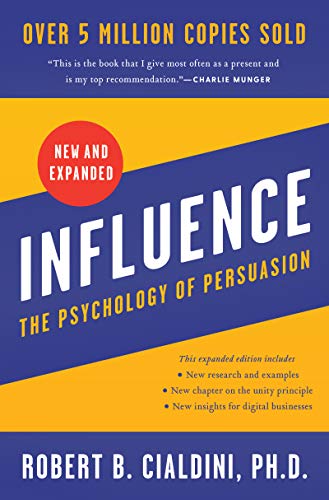
Overview: Robert Cialdini’s classic book explains the psychological principles that shape persuasion, compliance, and decision-making. Although it is often read as a marketing book, its deeper value for leadership is in showing how people respond to authority, reciprocity, scarcity, liking, commitment, and social proof.
Why it stands out: Few books have been as influential in the study of persuasion, and that matters for leadership because leaders are always influencing: in meetings, negotiations, hiring, conflict resolution, and change management. Compared with broader leadership books, this one gives readers a sharper understanding of the mechanisms underneath influence. It is especially useful for leaders who want to persuade ethically rather than rely on authority alone.
Strengths:
- Foundational framework for persuasion and compliance
- Highly applicable in workplace settings
- Helps readers recognize manipulative tactics as well as ethical influence
Best for: Leaders, managers, negotiators, and anyone who needs to understand how influence works in human interactions.
Potential limitations: The examples are broad and practical, so readers wanting an advanced research text may want something more academic afterward.
View price, available formats, and reader reviews.
Think Again: The Power of Knowing What You Don’t Know

Overview: Adam Grant explores how people revise beliefs, handle disagreement, and avoid becoming trapped by overconfidence. For leadership psychology, the book is especially relevant because good leaders do not only make decisions, they also need to unmake bad ones when new evidence appears.
Why it stands out: Many leadership books emphasize confidence, but this one makes a strong case for intellectual humility, curiosity, and evidence-based thinking. That distinction matters. Leaders who cannot rethink themselves often create brittle teams, discourage honest feedback, and defend weak decisions too long. This book is a strong choice for readers who want leadership development grounded in judgment, not just charisma.
Strengths:
- Excellent for improving decision quality
- Useful framework for handling disagreement productively
- Accessible without feeling simplistic
Best for: Leaders, students, and professionals who want to think more clearly under pressure and become more open to feedback.
Potential limitations: Readers looking for a step-by-step management manual may find it more conceptual than tactical.
View price, available formats, and reader reviews.
Managing Leadership Anxiety: Yours and Theirs

Overview: This book focuses on the emotional side of leadership, especially the anxiety that shows up in difficult conversations, conflict, and pressure-filled environments. It helps leaders notice how their own stress can spill into a team, and how anxiety can shape reactions, communication, and avoidance.
Why it stands out: Leadership psychology is not only about influence and motivation. It is also about emotional regulation. That is where this book is unusually valuable. It addresses a topic many leadership books gloss over, namely, how leaders manage themselves when uncertainty, tension, or criticism is in the room. Readers who want a more psychologically grounded view of leadership behavior will find this especially useful.
Strengths:
- Directly addresses stress and emotional reactivity in leadership
- Practical for real workplace conflict
- Useful for self-awareness and team dynamics
Best for: Managers, pastors, nonprofit leaders, and anyone whose leadership role regularly brings emotional pressure.
Potential limitations: The focus is narrow by design, so it works best as a targeted leadership book rather than a broad overview of management.
View price, available formats, and reader reviews.
Mindset: The New Psychology of Success

Overview: Carol S. Dweck’s book explains the difference between fixed and growth mindsets and shows how beliefs about ability shape learning, resilience, and performance. In leadership contexts, that matters because a leader’s mindset affects how they respond to mistakes, feedback, and the development of others.
Why it stands out: This remains one of the most useful psychology books for understanding how leadership behavior develops over time. It is less about tactical management and more about the mental framework that supports growth. Readers who want to lead better by becoming more coachable, adaptable, and development-oriented will get a lot from it. Among leadership psychology books, it stands out for helping readers think about capability as something cultivated rather than fixed.
Strengths:
- Clear explanation of growth-oriented thinking
- Strong relevance for coaching and talent development
- Useful for leaders, teachers, and mentors
Best for: New leaders, coaches, educators, and readers interested in the psychology of learning and development.
Potential limitations: Some examples are broad, so readers already familiar with the mindset idea may want a more specialized book next.
View price, available formats, and reader reviews.
The Captain Class: A New Theory of Leadership

Overview: Sam Walker looks at the leadership traits of exceptional team captains across sports and builds a case for a less glamorous but more durable model of leadership. Rather than spotlighting celebrity leaders, the book pays attention to consistency, accountability, and the social role of the person who stabilizes a group.
Why it stands out: Among leadership books, this one is especially good at challenging superficial ideas about what leadership looks like. It is not built around charisma or big speeches. Instead, it highlights the psychology of influence inside high-performing teams. That makes it valuable for readers who want to understand what keeps groups cohesive over time, particularly when the leader’s role is to set tone, enforce standards, and create trust.
Strengths:
- Fresh perspective on leadership through team dynamics
- Strong narrative style with a clear central argument
- Useful for readers who want to study leadership beyond business settings
Best for: Readers interested in team leadership, group culture, and the quieter psychology of influence.
Potential limitations: Because it draws heavily from sports, some workplace readers may need to translate its lessons more deliberately.
View price, available formats, and reader reviews.
The 48 Laws of Power

Overview: Robert Greene’s book is a sweeping, historical look at power, strategy, reputation, and self-protection. It is not a conventional leadership manual. Instead, it examines how people gain, maintain, and lose influence, often by studying examples from politics, courts, and history.
Why it stands out: This is the most controversial recommendation on the list, but it earns inclusion because leadership psychology is not always clean or idealistic. People lead inside systems shaped by competition, status, and hidden incentives. Readers who want to understand those dynamics, especially how power is perceived and defended, will find this book useful. It should be read critically, but it offers a perspective that more polished leadership books often avoid.
Strengths:
- Sharp analysis of power and status dynamics
- Historically wide-ranging examples
- Useful for defensive reading, not just ambition
Best for: Readers who want a realistic, sometimes unsettling view of organizational power and leadership behavior.
Potential limitations: The tone is darker and more cynical than most leadership books, so it is best approached with judgment rather than imitation.
View price, available formats, and reader reviews.
Who This List Is Best For
This list is best for readers who want leadership psychology explained through credible, practical books rather than vague inspiration. It will be especially useful for managers, aspiring leaders, students of organizational behavior, coaches, consultants, and professionals who need to understand motivation, influence, decision-making, and emotional self-management.
It also works well for readers who are trying to lead better in a workplace setting and want books that help them think more clearly about people, not just processes.
Final Thoughts
If your main goal is to understand what motivates people, start with Drive. If you want the psychology of persuasion and influence, begin with Influence. If your priority is better judgment, choose Think Again. For the emotional side of leadership, Managing Leadership Anxiety is the most targeted pick.
If you want a broader foundation, Mindset and The Captain Class give you a strong view of development, team culture, and leadership behavior over time. And if you want a harder-edged look at power, The 48 Laws of Power offers a useful counterpoint, provided you read it critically.
FAQ
Which book is best for beginners?
Drive is the easiest starting point for most readers. It is accessible, practical, and grounded in a clear psychological framework.
Which book is most useful for managers?
Managing Leadership Anxiety and Drive are especially useful for managers because they focus on real workplace behavior, stress, and motivation.
Which book offers the best long-term value?
Influence and Mindset tend to repay rereading because their ideas apply across many leadership situations, not just one role or industry.
Which book is best for understanding power dynamics?
The 48 Laws of Power is the strongest choice here, especially if you want a more realistic and historically informed view of power.
Can I learn leadership psychology through self-study?
Yes. These books are all suitable for self-study, especially if you are using them to build awareness, improve decision-making, or strengthen leadership habits. They are not a substitute for professional development, coaching, or therapy when those are needed, but they can be excellent learning tools.
Which book should I read first if I want to lead more effectively?
For most readers, Think Again is a strong first choice because better leadership starts with better judgment. If your main challenge is motivating others, begin with Drive instead.