
The One Thing is built around a question that interrupts busyness: what is the most important action I can take, and what becomes easier because I take it? The idea is simple, but its real demand is subtraction. Choosing a priority means accepting that other tasks will wait, remain imperfect, or be delegated. The book resonates with readers who do not need more ambition; they need a way to protect attention from constant competition. Readers comparing books like The One Thing will find that the most useful match depends on which part of the seed book created the strongest attachment: its voice, argument, setting, characters, problem, or promise of change.
The strongest books like The One Thing should address focus through priorities, time, environment, habits, attention, or meaningful trade-offs. Each recommendation below shares at least two or three major qualities with Keller and Papasan’s argument while adding a different model for deciding what matters, protecting deep work, clearing obligations, or accepting limits.
Focus Is a Choice About What Will Not Get Done
Choose Essentialism for deliberate exclusion, Deep Work for concentration, or Make Time for flexible daily experiments. Getting Things Done handles open loops, 168 Hours challenges assumptions about time, and Atomic Habits, Indistractable, Eat That Frog!, and The 4 Disciplines of Execution offer behavior, distraction, sequencing, and accountability systems.
At-a-Glance Comparison
| Book | Best for | Major qualities shared with The One Thing |
|---|---|---|
| Essentialism | Readers who want to choose fewer commitments deliberately | Trade-offs, priorities, boundaries, saying no, selective effort, focus, and designing life around what matters most |
| Deep Work | Readers who want a protected block for demanding concentration | Concentration, distraction, rituals, scheduling, digital boundaries, high-value work, and attention as a trainable skill |
| Getting Things Done | Readers who want to clear open loops before choosing a priority | Capture, clarify, next actions, organization, review, projects, mental space, and separating memory from a trusted system |
| Make Time | Readers who want flexible daily experiments around one highlight | Daily highlight, energy, distraction, attention, small experiments, flexible planning, and choosing what deserves the day’s best time |
| 168 Hours | Readers who want to rethink how a week is actually spent | Time accounting, work, relationships, sleep, priorities, attention, and challenging assumptions about what a week contains |
| Atomic Habits | Readers who want a priority to become repeatable behavior | Identity, cues, environment, friction, repetition, systems, and small actions that compound toward a larger goal |
| Indistractable | Readers who want to understand and manage distraction | Internal triggers, external interruptions, timeboxing, traction, attention, technology, and making intended action easier to protect |
| Eat That Frog! | Readers who want a short system for sequencing important tasks | Prioritization, procrastination, sequencing, action, planning, deadlines, and completing the most consequential task first |
| The 7 Habits of Highly Effective People | Readers who want a principle-centered system for priorities and responsibility | Priorities, values, proactivity, important work, relationships, renewal, responsibility, and aligning daily action with a larger principle |
How Were These One Thing Companions Chosen?
Each book needed a clear relationship to priority and attention. I looked for methods that help readers choose, sequence, protect, or review important work, along with honest treatment of trade-offs and limits. A productivity system is not useful if it turns every responsibility into a contest or hides the fact that some people have far less control over their time.
The 9 Recommended Books
Essentialism

Overview: Greg McKeown argues that essentialism means doing fewer things better rather than doing everything more efficiently. The book examines how social pressure and opportunity overload obscure the decision about what matters.
Why it belongs on this list: The connection is strongest through trade-offs, priorities, boundaries, saying no, selective effort, focus, and designing life around what matters most. Essentialism approaches the seed’s concerns from a different angle, adding its own evidence, examples, and limits instead of repeating a familiar list of advice. It is especially useful for readers who want to choose fewer commitments deliberately because it makes the underlying choice more visible: what to protect, what to question, and what may not be under personal control.
Reading experience: It is the closest conceptual companion because it makes subtraction the central skill. The One Thing asks for the most important action; Essentialism asks which commitments should never have been accepted in the first place.
Best for: Readers who want to choose fewer commitments deliberately.
Keep in mind: Practical and reflective, with a strong personal-choice emphasis that must be balanced against power and job constraints.
What to notice: A strong reason to include Essentialism is that trade-offs, priorities, boundaries, saying no, selective effort, focus, and designing life around what matters most are treated as lived conditions, not just slogans. The book is most rewarding when readers compare its account of readers who want to choose fewer commitments deliberately with their own circumstances. Some of its suggestions will be immediately usable; others are better read as questions that expose what a productivity or personal-growth promise leaves out.
View available editions and reader reviews.
Deep Work
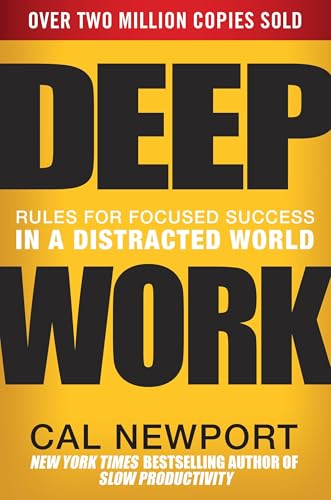
Overview: Cal Newport argues that focused work without distraction is increasingly valuable and increasingly rare. He describes rituals, time blocks, shutdown practices, and rules for reducing digital interruption.
Why it belongs on this list: The connection is strongest through concentration, distraction, rituals, scheduling, digital boundaries, high-value work, and attention as a trainable skill. Deep Work approaches the seed’s concerns from a different angle, adding its own evidence, examples, and limits instead of repeating a familiar list of advice. It is especially useful for readers who want a protected block for demanding concentration because it makes the underlying choice more visible: what to protect, what to question, and what may not be under personal control.
Reading experience: The book supplies the execution environment for a chosen one thing. It is less concerned with deciding the priority and more concerned with creating the depth needed to finish work that cannot be done through fragments of attention.
Best for: Readers who want a protected block for demanding concentration.
Keep in mind: Prescriptive and work-centered, with advice that needs adaptation for collaborative and care-focused roles.
What to notice: Readers may arrive at Deep Work because of concentration, distraction, rituals, scheduling, digital boundaries, high-value work, and attention as a trainable skill, yet its lasting value lies in the complications attached to that promise. The book asks what happens when a desirable change meets fatigue, unequal resources, competing duties, or an imperfect environment. That makes it a genuine next read: related enough to satisfy the original interest, but independent enough to widen it.
View available editions and reader reviews.
Getting Things Done

Overview: David Allen presents a workflow for capturing every commitment, clarifying the next action, organizing projects, and reviewing them so the mind is not forced to remember everything at once.
Why it belongs on this list: The connection is strongest through capture, clarify, next actions, organization, review, projects, mental space, and separating memory from a trusted system. Getting Things Done approaches the seed’s concerns from a different angle, adding its own evidence, examples, and limits instead of repeating a familiar list of advice. It is especially useful for readers who want to clear open loops before choosing a priority because it makes the underlying choice more visible: what to protect, what to question, and what may not be under personal control.
Reading experience: The book complements The One Thing by handling the many things that compete for attention. A priority is easier to protect when other obligations have a trusted place and a clear next action.
Best for: Readers who want to clear open loops before choosing a priority.
Keep in mind: Detailed and process-driven, with a learning curve and more attention to workflow than values.
What to notice: Readers may arrive at Getting Things Done because of capture, clarify, next actions, organization, review, projects, mental space, and separating memory from a trusted system, yet its lasting value lies in the complications attached to that promise. The book asks what happens when a desirable change meets fatigue, unequal resources, competing duties, or an imperfect environment. That makes it a genuine next read: related enough to satisfy the original interest, but independent enough to widen it.
View available editions and reader reviews.
Make Time

Overview: Jake Knapp and John Zeratsky offer tactics for selecting a daily highlight, managing energy, reducing distraction, and testing small changes to make time for meaningful work.
Why it belongs on this list: The connection is strongest through daily highlight, energy, distraction, attention, small experiments, flexible planning, and choosing what deserves the day’s best time. Make Time approaches the seed’s concerns from a different angle, adding its own evidence, examples, and limits instead of repeating a familiar list of advice. It is especially useful for readers who want flexible daily experiments around one highlight because it makes the underlying choice more visible: what to protect, what to question, and what may not be under personal control.
Reading experience: This is a lighter and more adaptable companion. It preserves the seed’s emphasis on one important focus but treats the method as an experiment that must fit changing energy, work, and personal life.
Best for: Readers who want flexible daily experiments around one highlight.
Keep in mind: Modular and practical, with many tactics that should be tested selectively rather than adopted all at once.
What to notice: Readers may arrive at Make Time because of daily highlight, energy, distraction, attention, small experiments, flexible planning, and choosing what deserves the day’s best time, yet its lasting value lies in the complications attached to that promise. The book asks what happens when a desirable change meets fatigue, unequal resources, competing duties, or an imperfect environment. That makes it a genuine next read: related enough to satisfy the original interest, but independent enough to widen it.
View available editions and reader reviews.
168 Hours
Overview: Laura Vanderkam argues that people have more usable time than they often assume when they examine the whole week rather than a single day. She tracks work, sleep, relationships, and personal priorities to expose hidden choices.
Why it belongs on this list: The connection is strongest through time accounting, work, relationships, sleep, priorities, attention, and challenging assumptions about what a week contains. 168 Hours approaches the seed’s concerns from a different angle, adding its own evidence, examples, and limits instead of repeating a familiar list of advice. It is especially useful for readers who want to rethink how a week is actually spent because it makes the underlying choice more visible: what to protect, what to question, and what may not be under personal control.
Reading experience: The book adds a broader time horizon to the seed’s daily focus. It can reveal whether the one thing is being protected across a week or repeatedly sacrificed to urgent but less important tasks.
Best for: Readers who want to rethink how a week is actually spent.
Keep in mind: Encouraging and data-oriented, with a strong emphasis on individual scheduling that may not fit every job or family structure.
What to notice: Readers may arrive at 168 Hours because of time accounting, work, relationships, sleep, priorities, attention, and challenging assumptions about what a week contains, yet its lasting value lies in the complications attached to that promise. The book asks what happens when a desirable change meets fatigue, unequal resources, competing duties, or an imperfect environment. That makes it a genuine next read: related enough to satisfy the original interest, but independent enough to widen it.
View available editions and reader reviews.
Atomic Habits

Overview: James Clear explains how behavior becomes easier when cues, environments, and rewards support it. The book connects repeated actions with identity and makes systems more visible than motivation alone.
Why it belongs on this list: The connection is strongest through identity, cues, environment, friction, repetition, systems, and small actions that compound toward a larger goal. Atomic Habits approaches the seed’s concerns from a different angle, adding its own evidence, examples, and limits instead of repeating a familiar list of advice. It is especially useful for readers who want a priority to become repeatable behavior because it makes the underlying choice more visible: what to protect, what to question, and what may not be under personal control.
Reading experience: The One Thing identifies the action; Atomic Habits helps make that action ordinary enough to repeat. It is especially useful when a reader knows the priority but keeps waiting for the ideal day to begin.
Best for: Readers who want a priority to become repeatable behavior.
Keep in mind: Practical and accessible, but habits cannot remove external barriers or create time that does not exist.
What to notice: The right reading pace for Atomic Habits depends on what the reader needs from readers who want a priority to become repeatable behavior. Its discussion of identity, cues, environment, friction, repetition, systems, and small actions that compound toward a larger goal is clear enough to revisit, but it also benefits from pausing over examples and disagreements. Give the author room to make a case before deciding whether the ideas fit your work, health, relationships, and available freedom.
View available editions and reader reviews.
Indistractable

Overview: Nir Eyal presents a framework for understanding distraction as action pulled away from intention by internal discomfort or external triggers. He discusses timeboxing, notifications, pacts, and planning.
Why it belongs on this list: The connection is strongest through internal triggers, external interruptions, timeboxing, traction, attention, technology, and making intended action easier to protect. Indistractable approaches the seed’s concerns from a different angle, adding its own evidence, examples, and limits instead of repeating a familiar list of advice. It is especially useful for readers who want to understand and manage distraction because it makes the underlying choice more visible: what to protect, what to question, and what may not be under personal control.
Reading experience: The book gives the seed’s question a defensive strategy. Choosing one thing is not enough when discomfort, messages, and poorly designed technology repeatedly pull attention elsewhere.
Best for: Readers who want to understand and manage distraction.
Keep in mind: Practical and technology-aware, with a strong emphasis on individual tools and planning.
What to notice: Readers may arrive at Indistractable because of internal triggers, external interruptions, timeboxing, traction, attention, technology, and making intended action easier to protect, yet its lasting value lies in the complications attached to that promise. The book asks what happens when a desirable change meets fatigue, unequal resources, competing duties, or an imperfect environment. That makes it a genuine next read: related enough to satisfy the original interest, but independent enough to widen it.
View available editions and reader reviews.
Eat That Frog!

Overview: Brian Tracy presents a concise productivity system built around identifying the most important task and doing it before less valuable work consumes the day.
Why it belongs on this list: The connection is strongest through prioritization, procrastination, sequencing, action, planning, deadlines, and completing the most consequential task first. Eat That Frog! approaches the seed’s concerns from a different angle, adding its own evidence, examples, and limits instead of repeating a familiar list of advice. It is especially useful for readers who want a short system for sequencing important tasks because it makes the underlying choice more visible: what to protect, what to question, and what may not be under personal control.
Reading experience: The book is a compact, more tactical cousin to The One Thing. It is useful when the priority is clear but avoidance keeps producing a long list of easier tasks.
Best for: Readers who want a short system for sequencing important tasks.
Keep in mind: Brief, direct, and motivational, with limited attention to complex project work or emotional and structural barriers.
What to notice: Readers may arrive at Eat That Frog! because of prioritization, procrastination, sequencing, action, planning, deadlines, and completing the most consequential task first, yet its lasting value lies in the complications attached to that promise. The book asks what happens when a desirable change meets fatigue, unequal resources, competing duties, or an imperfect environment. That makes it a genuine next read: related enough to satisfy the original interest, but independent enough to widen it.
View available editions and reader reviews.
The 7 Habits of Highly Effective People
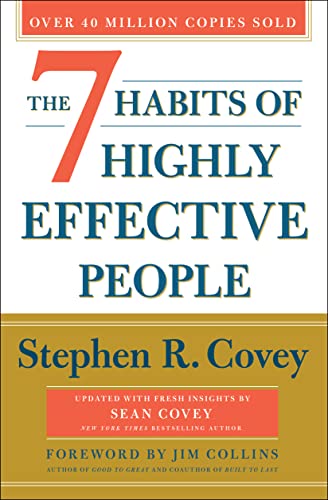
Overview: Stephen Covey presents a principle-centered approach to effectiveness built around responsibility, purpose, priorities, communication, cooperation, and renewal. The framework connects private habits with public relationships and long-term values.
Why it belongs on this list: The connection is strongest through priorities, values, proactivity, important work, relationships, renewal, responsibility, and aligning daily action with a larger principle. The 7 Habits of Highly Effective People approaches the seed’s concerns from a different angle, adding its own evidence, examples, and limits instead of repeating a familiar list of advice. It is especially useful for readers who want a principle-centered system for priorities and responsibility because it makes the underlying choice more visible: what to protect, what to question, and what may not be under personal control.
Reading experience: It gives the one-thing idea a wider ethical and relational frame. Focus is not only about output; it is also about deciding what deserves time, how commitments affect other people, and how renewal protects long-term effectiveness.
Best for: Readers who want a principle-centered system for priorities and responsibility.
Keep in mind: Structured and principle-driven, with a broad scope that goes beyond individual task management.
What to notice: Readers may arrive at The 7 Habits of Highly Effective People because of priorities, values, proactivity, important work, relationships, renewal, responsibility, and aligning daily action with a larger principle, yet its lasting value lies in the complications attached to that promise. The book asks what happens when a desirable change meets fatigue, unequal resources, competing duties, or an imperfect environment. That makes it a genuine next read: related enough to satisfy the original interest, but independent enough to widen it.
View available editions and reader reviews.
Choose by Priority, Focus, Workflow, or Flexible Time
Start with Essentialism if saying no is the hardest part, or Deep Work if distraction is the main problem. Getting Things Done clears the external system; Make Time offers flexible daily choices; and 168 Hours challenges how time is counted. Choose Atomic Habits for repeatability, Indistractable for attention, Eat That Frog! for sequencing, and The 4 Disciplines of Execution for team accountability.
Who This List Is Best For
This list is for knowledge workers, students, managers, founders, creatives, and anyone overwhelmed by competing priorities. The books differ in how much they emphasize individual control versus systems and constraints. Use the ideas to protect what matters, but do not turn productivity into a measure of worth or ignore care, health, rest, and collective responsibilities.
FAQ
What is the closest book to The One Thing?
Essentialism is the closest for choosing fewer priorities and making deliberate trade-offs. Deep Work is the best companion when the main problem is protecting concentration.
Which book helps with time management?
Getting Things Done focuses on organizing commitments, while 168 Hours offers a broader challenge to how people account for their weekly time. Make Time is the most flexible day-to-day option.
How do I choose my one thing?
Choose the action that makes the greatest number of other actions easier or unnecessary, then test it against real deadlines, values, and obligations. A single priority should clarify a season or block of work, not erase legitimate responsibilities.
Which book is best for distraction?
Indistractable focuses directly on internal and external triggers, while Deep Work offers a broader philosophy and ritual for protecting concentration.
Does focusing on one thing ignore multitasking realities?
Some work requires switching, care, and responsiveness. Use the idea as a way to identify the priority within a specific period, not as a claim that every job or life can be reduced to one task.
The Point of Focus Is a Better Life, Not a Fuller Calendar
The One Thing is strongest when its question produces clarity rather than obsession. The companion books show how to choose fewer commitments, create attention, process obligations, and accept the finite nature of time. The right system is the one that helps a person do the important work and remain available for the people and experiences that make the work worth doing.