
Rumination can feel productive while it is happening, which is part of what makes it so difficult. The mind keeps revisiting the same worry, regret, or “what if” scenario, and the loop can start to crowd out sleep, focus, and emotional recovery. Good books on rumination do more than tell you to think positively. They explain why the cycle starts, how attention gets stuck, and which evidence-based skills can help interrupt the pattern without denying real problems.
That is why the best books about rumination tend to fall into a few useful categories. Some focus on anxiety and obsessive thinking. Some teach mindfulness or cognitive-behavioral techniques. Others are better for readers who want a broader understanding of repetitive negative thought as a psychological process. A few are especially helpful when rumination overlaps with OCD, depression, or relationship doubt.
Quick Answer
If you want the clearest entry point into rumination, start with Can’t Stop Thinking: How to Let Go of Anxiety and Free Yourself from Obsessive Rumination. It gives you a useful foundation in attention, uncertainty, thought loops, behavior, and the skills that interrupt rumination without forced positivity. Choose The Mindful Path through Worry and Rumination: Letting Go of Anxious and Depressive Thoughts when you want a more applied or contrasting approach, and use Is It Me or Relationship OCD: A CBT-based Tool Book on Living Without Constant Worry, Rumination, Obsessive Fear, Uncertainty and Crippling Anxiety when you want to extend the idea into a different context.
This list is designed for readers caught in repetitive thinking, worry loops, or obsessive relationship questions. The recommendations are intentionally varied: some explain the underlying research, some offer exercises, and some are strongest as narrative or leadership case studies. That variety makes it easier to choose a book that matches your current question rather than buying the longest list.
Comparison Table
| Book | Best For | Why It Stands Out |
|---|---|---|
| Can’t Stop Thinking: How to Let Go of Anxiety and Free Yourself from Obsessive Rumination | Readers who want a clear, targeted self-help book for repetitive anxiety and mental looping. | Among books about rumination, this one is especially useful for readers who want direct guidance on obsessive loops without wading through overly academic discussion. Its strength is the narrowness of its focus. Instead of treating… |
| The Mindful Path through Worry and Rumination: Letting Go of Anxious and Depressive Thoughts | Readers who want an evidence-informed method for working with repetitive negative thought. | For readers who want a book with a stronger therapeutic foundation, this is one of the most credible choices on the list. It is especially valuable because it addresses both worry and rumination together, which mirrors how these patterns… |
| Is It Me or Relationship OCD: A CBT-based Tool Book on Living Without Constant Worry, Rumination, Obsessive Fear, Uncertainty and Crippling Anxiety | Readers dealing with relationship-focused obsessive doubt and repetitive checking. | The strength of this recommendation is specificity. General rumination books can miss the relational form of obsessive doubt, which often has its own logic and its own traps. Readers dealing with constant questioning about feelings,… |
| Unwinding Anxiety | readers who need a practical explanation of why worry repeats and how to practice a different response | It earns a place in this list because it adds a distinct perspective on the habit loop behind worry and the behavioral steps that interrupt anxious rumination, helping readers move beyond a generic motivational summary and choose a… |
| Cleaning Up Your Mental Mess | readers who want a structured routine for reducing rumination and cognitive overload | It earns a place in this list because it adds a distinct perspective on attention, repetitive thinking, and the small practices that make mental clarity more available, helping readers move beyond a generic motivational summary and choose… |
| Stop Letting Everything Affect You | readers who absorb criticism or conflict and struggle to return to their own priorities | It earns a place in this list because it adds a distinct perspective on emotional boundaries, overthinking, and recovering a sense of agency after other people’s reactions, helping readers move beyond a generic motivational summary and… |
How We Chose These Recommendations
These recommendations were selected for readers who want more than a quick list of inspirational titles. The strongest books about rumination usually do one of three things well: they explain the psychology clearly, they offer practical tools that can be used in daily life, or they help readers recognize the emotional texture of repetitive thinking in a more reflective way.
For the clinical and self-help titles, priority went to books with an evidence-based orientation, especially those grounded in mindfulness, CBT, or focused work on anxiety and obsessive thinking. For the fiction choices, the standard was different. They had to offer genuine psychological insight or a strong interior voice, not just a passing reference to “rumination” in the title or marketing copy. Every book here earns its place by serving a distinct reader need.
Recommended Books
Can’t Stop Thinking: How to Let Go of Anxiety and Free Yourself from Obsessive Rumination

Overview: This book addresses one of the most frustrating forms of rumination: the kind that keeps circling through anxiety, doubt, and mental checking. It focuses on obsessive thinking as a pattern that can be understood and interrupted, rather than as a personal flaw or lack of willpower. The emphasis is practical, making it a strong fit for readers who want straightforward help with spiraling thoughts.
Why it stands out: Among books about rumination, this one is especially useful for readers who want direct guidance on obsessive loops without wading through overly academic discussion. Its strength is the narrowness of its focus. Instead of treating rumination as a broad wellness topic, it zeroes in on the specific experience of not being able to let a thought go. That makes it a strong match for anxiety-prone readers who want usable tools.
Strengths:
- Focused on obsessive rumination rather than general stress management
- Practical and reader-friendly
- Useful for people who already know they overthink but need a clearer next step
Best for: Readers who want a clear, targeted self-help book for repetitive anxiety and mental looping.
Potential limitations: Readers looking for a deep academic treatment of rumination or a broad overview of cognitive science may want something more comprehensive.
View price, available formats, and reader reviews.
The Mindful Path through Worry and Rumination: Letting Go of Anxious and Depressive Thoughts
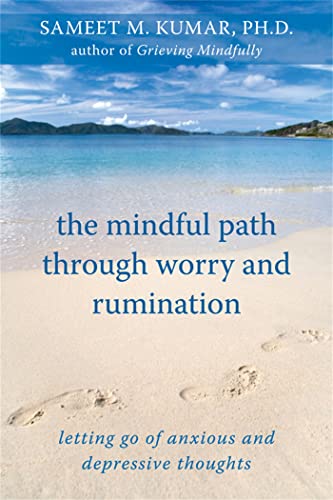
Overview: This is a clinically oriented guide to understanding and responding to worry and rumination through mindfulness-based methods. It speaks directly to the mental habits that keep anxious and depressive thinking in motion, and it is structured to help readers observe thoughts differently instead of getting pulled into them automatically. The result is a book that feels grounded in practice rather than theory alone.
Why it stands out: For readers who want a book with a stronger therapeutic foundation, this is one of the most credible choices on the list. It is especially valuable because it addresses both worry and rumination together, which mirrors how these patterns often show up in real life. Compared with more general self-help books, it offers a more disciplined framework and will appeal to readers who like evidence-based methods.
Strengths:
- Strong mindfulness-based clinical orientation
- Addresses both anxious and depressive thought patterns
- Good fit for readers who want a structured, skills-based approach
Best for: Readers who want an evidence-informed method for working with repetitive negative thought.
Potential limitations: The tone is more clinical than conversational, so it may feel less accessible to readers who want a lighter introduction.
View price, available formats, and reader reviews.
Is It Me or Relationship OCD: A CBT-based Tool Book on Living Without Constant Worry, Rumination, Obsessive Fear, Uncertainty and Crippling Anxiety

Overview: This book is aimed at readers whose rumination centers on romantic relationships, uncertainty, and obsessive self-checking. Relationship OCD can be hard to recognize because it often looks like intense reflection or a desire to be “sure,” when it is actually a cycle of anxiety and reassurance-seeking. A CBT-based tool book is a sensible format for that problem because it focuses on patterns, triggers, and habits rather than vague advice.
Why it stands out: The strength of this recommendation is specificity. General rumination books can miss the relational form of obsessive doubt, which often has its own logic and its own traps. Readers dealing with constant questioning about feelings, compatibility, or commitment will likely find this far more relevant than a broad anxiety title. It also fills an important gap for people who know something is wrong but have not seen their experience named clearly.
Strengths:
- Targets relationship-based rumination directly
- CBT framing makes it practical and action-oriented
- Especially useful when reassurance-seeking becomes part of the cycle
Best for: Readers dealing with relationship-focused obsessive doubt and repetitive checking.
Potential limitations: The focus is narrow, so it is not the best choice for readers whose rumination is unrelated to relationships.
View price, available formats, and reader reviews.
Unwinding Anxiety

Overview: Unwinding Anxiety gives readers a focused way to understand the habit loop behind worry and the behavioral steps that interrupt anxious rumination. Its value is not only the headline idea; it also shows how the idea affects decisions, habits, relationships, or work in real situations.
Why it stands out: It earns a place in this list because it adds a distinct perspective on the habit loop behind worry and the behavioral steps that interrupt anxious rumination, helping readers move beyond a generic motivational summary and choose a practical next step.
Strengths:
- Clear framework for the topic
- Useful examples or reflection prompts
- Can be applied beyond a single situation
Best for: readers who need a practical explanation of why worry repeats and how to practice a different response
Potential limitations: It is an educational self-help approach and not a replacement for clinical assessment when anxiety is severe.
View price, available formats, and reader reviews.
Cleaning Up Your Mental Mess

Overview: Cleaning Up Your Mental Mess gives readers a focused way to understand attention, repetitive thinking, and the small practices that make mental clarity more available. Its value is not only the headline idea; it also shows how the idea affects decisions, habits, relationships, or work in real situations.
Why it stands out: It earns a place in this list because it adds a distinct perspective on attention, repetitive thinking, and the small practices that make mental clarity more available, helping readers move beyond a generic motivational summary and choose a practical next step.
Strengths:
- Clear framework for the topic
- Useful examples or reflection prompts
- Can be applied beyond a single situation
Best for: readers who want a structured routine for reducing rumination and cognitive overload
Potential limitations: The exercises require repetition and cannot resolve every source of stress or grief.
View price, available formats, and reader reviews.
Stop Letting Everything Affect You

Overview: Stop Letting Everything Affect You gives readers a focused way to understand emotional boundaries, overthinking, and recovering a sense of agency after other people’s reactions. Its value is not only the headline idea; it also shows how the idea affects decisions, habits, relationships, or work in real situations.
Why it stands out: It earns a place in this list because it adds a distinct perspective on emotional boundaries, overthinking, and recovering a sense of agency after other people’s reactions, helping readers move beyond a generic motivational summary and choose a practical next step.
Strengths:
- Clear framework for the topic
- Useful examples or reflection prompts
- Can be applied beyond a single situation
Best for: readers who absorb criticism or conflict and struggle to return to their own priorities
Potential limitations: Boundaries should not become emotional avoidance or an excuse to ignore legitimate feedback.
View price, available formats, and reader reviews.
Who This List Is Best For
These recommendations are a good fit for readers caught in repetitive thinking, worry loops, or obsessive relationship questions. They are especially useful if you want to understand rumination with more nuance than a short checklist, quote, or social-media summary can provide.
- Readers who want a clear conceptual foundation before choosing a technique.
- People who prefer to compare research, practical exercises, and real-world examples.
- Professionals, students, or caregivers who need language they can apply in a real conversation or decision.
Use the Best For and Why It Stands Out columns together. A book can be excellent yet still be the wrong starting point if its depth, tone, or intended reader does not match your goal.
Final Thoughts
The strongest choice for rumination depends on what you need to do next. Begin with Can’t Stop Thinking: How to Let Go of Anxiety and Free Yourself from Obsessive Rumination if you need a foundation, move to The Mindful Path through Worry and Rumination: Letting Go of Anxious and Depressive Thoughts if you need a practical change, and consider Is It Me or Relationship OCD: A CBT-based Tool Book on Living Without Constant Worry, Rumination, Obsessive Fear, Uncertainty and Crippling Anxiety if you need a broader or more challenging perspective. The comparison table is meant to shorten that decision, not pretend that one book works for every reader.
A useful reading plan is simple: select one book, write down the question you want it to answer, and apply one idea before moving to another recommendation. For this topic, label the loop, identify what it is trying to solve, and take one grounded action that creates real information. persistent intrusive thoughts may need professional assessment and should not be handled through self-help alone. Books can support reflection and skills practice, but they are not a substitute for qualified professional care when symptoms are severe, persistent, or unsafe.
FAQ
Which book should I read first for rumination?
Start with Can’t Stop Thinking: How to Let Go of Anxiety and Free Yourself from Obsessive Rumination if you want the clearest foundation. If your immediate need is action rather than background, compare it with The Mindful Path through Worry and Rumination: Letting Go of Anxious and Depressive Thoughts and choose the one whose exercises, examples, or audience match your situation.
How do I choose between a research-based book and a workbook?
Choose the research-oriented option when you need context and a better mental model. Choose the workbook or practical guide when you already understand the problem and need repetition, prompts, or a structured plan. The table’s Best For column is the fastest way to make that distinction.
What is a practical way to use books about rumination?
Do not read the whole list at once. Pick one recommendation, define the behavior or decision you want to improve, and test a small idea from the book for seven days. For this topic, label the loop, identify what it is trying to solve, and take one grounded action that creates real information.
Are these recommendations suitable for self-study?
Yes, for education and structured reflection. Take notes in your own words, mark claims you want to verify, and discuss difficult ideas with a trusted person or qualified professional when appropriate. Books can support reflection and skills practice, but they are not a substitute for qualified professional care when symptoms are severe, persistent, or unsafe.
Do I need to read every book on the list?
No. One well-matched book that changes what you notice or do is more valuable than collecting several recommendations without applying any of them.