Empire of Pain is a family history, a corporate investigation, and a national tragedy at once. Patrick Radden Keefe traces the Sackler family’s rise through medicine and philanthropy while following the development and marketing of OxyContin. The book’s force comes from its double vision: the elegant rooms where reputations are built and the lives where pain, dependency, and loss become impossible to hide. Readers comparing books like Empire of Pain will find that the most useful match depends on which part of the seed book created the strongest attachment: its voice, argument, setting, characters, problem, or promise of change.
The strongest books like Empire of Pain should connect private suffering to an institution’s decisions. These recommendations share multiple qualities with Keefe’s work: patient reporting, a powerful family or corporation, a medical or scientific promise, regulatory or professional failure, and a long aftermath that cannot be reduced to one bad actor. They include opioid reporting, public-health histories, genetics, pollution, and corporate medicine.
A Family Fortune Built on a Public Emergency
Begin with Dopesick for the opioid crisis at community level, Dreamland for the geography of addiction, and The Bottle of Lies for global pharmaceutical manufacturing. The Immortal Life of Henrietta Lacks and The Gene examine ownership and medical progress, while The Emperor of All Maladies, The Radium Girls, The Premonition, and Medical Apartheid widen the history of medicine and public trust.
At-a-Glance Comparison
| Book | Best for | Major qualities shared with Empire of Pain |
|---|---|---|
| Dopesick | Readers who want the opioid crisis traced through companies, doctors, and communities | Pharmaceutical marketing, addiction, regulatory failure, rural communities, legal accountability, pain treatment, and families living with the aftermath |
| Dreamland | Readers who want the geography and history of addiction | Opioid marketing, community networks, pharmaceutical economics, addiction, law enforcement, family history, and a crisis spreading through ordinary places |
| The Bottle of Lies | Readers who want global pharmaceutical manufacturing and regulatory failure | Drug safety, hidden manufacturing defects, corporate secrecy, whistleblowers, international regulation, patient risk, and evidence ignored for profit |
| The Immortal Life of Henrietta Lacks | Readers who want medical discovery, consent, family history, and ownership | A medical breakthrough, a family excluded from the benefits, race, consent, scientific progress, institutional power, and a long struggle to be recognized |
| Medical Apartheid | Readers who want the long history of racial exploitation in American medicine | Medical experimentation, racism, consent, institutional power, public memory, scientific progress, and communities whose bodies were treated as resources |
| The Gene | Readers who want a history of heredity, genetics, and scientific ambition | Scientific discovery, family illness, medical power, genetics, ethical uncertainty, research history, and the question of who controls biological knowledge |
| The Emperor of All Maladies | Readers who want an expansive history of cancer and treatment | Medical research, institutional ambition, patient suffering, scientific breakthroughs, failed treatments, advocacy, and the long history of a disease |
| The Radium Girls | Readers who want workplace poisoning, women workers, and a legal fight for recognition | Industrial science, corporate denial, workplace harm, women workers, public health, legal action, and evidence written into damaged bodies |
| The Premonition | Readers who want public-health decisions, bureaucracy, and unconventional investigators | Epidemic response, institutional failure, scientific evidence, public responsibility, professional dissent, and the fight to act before harm becomes visible |
What Makes a Strong Empire of Pain Companion?
A book needed to show the link between scientific or medical language and the people living with its consequences. I prioritized reporting that names systems: marketing, regulation, race, class, family wealth, professional prestige, or the economics of treatment. The best matches do not simply repeat that corporations are bad; they show the choices, evidence, incentives, and silences through which harm becomes normal.
The 9 Recommended Books
Dopesick

Overview: Beth Macy follows OxyContin’s spread from pharmaceutical promotion through pill mills, rural towns, treatment centers, and lawsuits. The book keeps the national story connected to people whose work, health, and families were changed by addiction.
Why it belongs on this list: The connection is strongest through pharmaceutical marketing, addiction, regulatory failure, rural communities, legal accountability, pain treatment, and families living with the aftermath. Dopesick approaches the seed’s concerns from a different angle, adding its own evidence, examples, and limits instead of repeating a familiar list of advice. It is especially useful for readers who want the opioid crisis traced through companies, doctors, and communities because it makes the underlying choice more visible: what to protect, what to question, and what may not be under personal control.
Reading experience: The strongest overlap is the movement between boardroom decisions and ordinary suffering. Macy is more community-focused than Keefe, but both make it impossible to discuss a drug’s success without describing the people carrying its cost.
Best for: Readers who want the opioid crisis traced through companies, doctors, and communities.
Keep in mind: Accessible, urgent, and organized around people and places, with a clear investigative narrative.
What to notice: The right reading pace for Dopesick depends on what the reader needs from readers who want the opioid crisis traced through companies, doctors, and communities. Its discussion of pharmaceutical marketing, addiction, regulatory failure, rural communities, legal accountability, pain treatment, and families living with the aftermath is clear enough to revisit, but it also benefits from pausing over examples and disagreements. Give the author room to make a case before deciding whether the ideas fit your work, health, relationships, and available freedom.
View available editions and reader reviews.
Dreamland

Overview: Sam Quinones connects the rise of black-tar heroin distribution in small American towns with the earlier normalization of prescription painkillers. The book moves between journalism, history, and personal stories to explain how supply, demand, and social isolation reinforced one another.
Why it belongs on this list: The connection is strongest through opioid marketing, community networks, pharmaceutical economics, addiction, law enforcement, family history, and a crisis spreading through ordinary places. Dreamland approaches the seed’s concerns from a different angle, adding its own evidence, examples, and limits instead of repeating a familiar list of advice. It is especially useful for readers who want the geography and history of addiction because it makes the underlying choice more visible: what to protect, what to question, and what may not be under personal control.
Reading experience: Where Empire of Pain begins with a wealthy family and corporation, Dreamland follows the systems that carry the drug to streets, homes, and workplaces. Together they show the crisis from different levels of the same economy.
Best for: Readers who want the geography and history of addiction.
Keep in mind: Reported, place-driven, and patient, with many individual stories and a broad account of social change.
What to notice: Readers may arrive at Dreamland because of opioid marketing, community networks, pharmaceutical economics, addiction, law enforcement, family history, and a crisis spreading through ordinary places, yet its lasting value lies in the complications attached to that promise. The book asks what happens when a desirable change meets fatigue, unequal resources, competing duties, or an imperfect environment. That makes it a genuine next read: related enough to satisfy the original interest, but independent enough to widen it.
View available editions and reader reviews.
The Bottle of Lies

Overview: Katherine Eban investigates the global generic-drug industry and the regulators who failed to see or act on manufacturing problems. The book follows inspectors, whistleblowers, and companies as they navigate a system in which low prices and production speed can hide dangerous shortcuts.
Why it belongs on this list: The connection is strongest through drug safety, hidden manufacturing defects, corporate secrecy, whistleblowers, international regulation, patient risk, and evidence ignored for profit. The Bottle of Lies approaches the seed’s concerns from a different angle, adding its own evidence, examples, and limits instead of repeating a familiar list of advice. It is especially useful for readers who want global pharmaceutical manufacturing and regulatory failure because it makes the underlying choice more visible: what to protect, what to question, and what may not be under personal control.
Reading experience: The parallel with Keefe’s book is the gap between a product’s official promise and what patients actually receive. It also shows how technical language and regulatory complexity can become cover for decisions that would look indefensible in plain speech.
Best for: Readers who want global pharmaceutical manufacturing and regulatory failure.
Keep in mind: Procedural and investigative, with factories, inspections, documents, and a clear explanation of pharmaceutical supply chains.
What to notice: The right reading pace for The Bottle of Lies depends on what the reader needs from readers who want global pharmaceutical manufacturing and regulatory failure. Its discussion of drug safety, hidden manufacturing defects, corporate secrecy, whistleblowers, international regulation, patient risk, and evidence ignored for profit is clear enough to revisit, but it also benefits from pausing over examples and disagreements. Give the author room to make a case before deciding whether the ideas fit your work, health, relationships, and available freedom.
View available editions and reader reviews.
The Immortal Life of Henrietta Lacks

Overview: Rebecca Skloot tells the story of Henrietta Lacks, whose cells were taken during cancer treatment and became one of the most important tools in biomedical research. The book follows her family as they learn what happened and try to understand a scientific legacy built without their knowledge.
Why it belongs on this list: The connection is strongest through a medical breakthrough, a family excluded from the benefits, race, consent, scientific progress, institutional power, and a long struggle to be recognized. The Immortal Life of Henrietta Lacks approaches the seed’s concerns from a different angle, adding its own evidence, examples, and limits instead of repeating a familiar list of advice. It is especially useful for readers who want medical discovery, consent, family history, and ownership because it makes the underlying choice more visible: what to protect, what to question, and what may not be under personal control.
Reading experience: The book shares Empire of Pain‘s concern with what medicine calls progress and who is asked to bear its cost. It is more intimate and less focused on corporate marketing, but the questions of ownership, race, and institutional trust are equally important.
Best for: Readers who want medical discovery, consent, family history, and ownership.
Keep in mind: Part family history, part science reporting, and part ethical investigation, with an accessible narrative voice.
What to notice: Read The Immortal Life of Henrietta Lacks as a companion rather than a replacement. Its treatment of a medical breakthrough, a family excluded from the benefits, race, consent, scientific progress, institutional power, and a long struggle to be recognized will feel familiar at first, but its evidence, vocabulary, and assumptions lead somewhere different. The contrast is valuable: it shows what the seed explains especially well and what this recommendation adds about context, trade-offs, relationships, or the cost of turning a good idea into a private obligation.
View available editions and reader reviews.
Medical Apartheid

Overview: Harriet A. Washington documents how Black Americans were used in medical research and treatment without meaningful consent, from slavery through modern institutions. The book connects individual cases to the beliefs and policies that made exploitation appear legitimate.
Why it belongs on this list: The connection is strongest through medical experimentation, racism, consent, institutional power, public memory, scientific progress, and communities whose bodies were treated as resources. Medical Apartheid approaches the seed’s concerns from a different angle, adding its own evidence, examples, and limits instead of repeating a familiar list of advice. It is especially useful for readers who want the long history of racial exploitation in american medicine because it makes the underlying choice more visible: what to protect, what to question, and what may not be under personal control.
Reading experience: Its historical scope deepens the ethical questions in Empire of Pain. Keefe shows how a powerful family used medicine and philanthropy to build authority; Washington shows how medicine itself has often used racial hierarchy to decide whose suffering matters.
Best for: Readers who want the long history of racial exploitation in American medicine.
Keep in mind: Dense, documented, and historically expansive, requiring patience with cases, institutions, and changing legal contexts.
What to notice: A strong reason to include Medical Apartheid is that medical experimentation, racism, consent, institutional power, public memory, scientific progress, and communities whose bodies were treated as resources are treated as lived conditions, not just slogans. The book is most rewarding when readers compare its account of readers who want the long history of racial exploitation in american medicine with their own circumstances. Some of its suggestions will be immediately usable; others are better read as questions that expose what a productivity or personal-growth promise leaves out.
View available editions and reader reviews.
The Gene

Overview: Siddhartha Mukherjee traces the idea of the gene from early heredity experiments through modern genomics. He combines scientific explanation with the history of families, diseases, laboratories, and the political misuse of genetic language.
Why it belongs on this list: The connection is strongest through scientific discovery, family illness, medical power, genetics, ethical uncertainty, research history, and the question of who controls biological knowledge. The Gene approaches the seed’s concerns from a different angle, adding its own evidence, examples, and limits instead of repeating a familiar list of advice. It is especially useful for readers who want a history of heredity, genetics, and scientific ambition because it makes the underlying choice more visible: what to protect, what to question, and what may not be under personal control.
Reading experience: The connection is the double edge of medical progress. Like Empire of Pain, it asks readers to admire genuine discovery without overlooking the institutions, funding structures, and ethical hazards surrounding it.
Best for: Readers who want a history of heredity, genetics, and scientific ambition.
Keep in mind: Long, explanatory, and historically layered, with science balanced by biography and cultural history.
What to notice: The right reading pace for The Gene depends on what the reader needs from readers who want a history of heredity, genetics, and scientific ambition. Its discussion of scientific discovery, family illness, medical power, genetics, ethical uncertainty, research history, and the question of who controls biological knowledge is clear enough to revisit, but it also benefits from pausing over examples and disagreements. Give the author room to make a case before deciding whether the ideas fit your work, health, relationships, and available freedom.
View available editions and reader reviews.
The Emperor of All Maladies
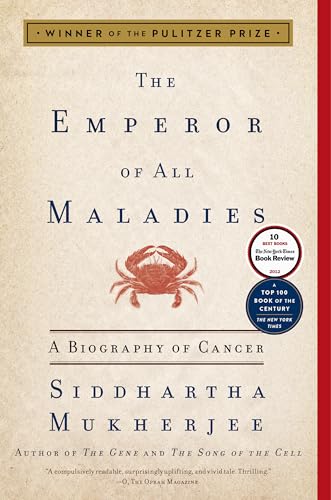
Overview: Mukherjee tells the story of cancer through patients, physicians, laboratories, and changing theories. The narrative moves from early surgery and chemotherapy to modern research while keeping the disease’s human experience in view.
Why it belongs on this list: The connection is strongest through medical research, institutional ambition, patient suffering, scientific breakthroughs, failed treatments, advocacy, and the long history of a disease. The Emperor of All Maladies approaches the seed’s concerns from a different angle, adding its own evidence, examples, and limits instead of repeating a familiar list of advice. It is especially useful for readers who want an expansive history of cancer and treatment because it makes the underlying choice more visible: what to protect, what to question, and what may not be under personal control.
Reading experience: Like Keefe, Mukherjee uses a large system to explain why progress is never morally neutral. Treatments can be groundbreaking and brutal at the same time, and institutions can help patients while also protecting their own prestige.
Best for: Readers who want an expansive history of cancer and treatment.
Keep in mind: Ambitious, compassionate, and dense, with scientific history carried by individual cases.
What to notice: A strong reason to include The Emperor of All Maladies is that medical research, institutional ambition, patient suffering, scientific breakthroughs, failed treatments, advocacy, and the long history of a disease are treated as lived conditions, not just slogans. The book is most rewarding when readers compare its account of readers who want an expansive history of cancer and treatment with their own circumstances. Some of its suggestions will be immediately usable; others are better read as questions that expose what a productivity or personal-growth promise leaves out.
View available editions and reader reviews.
The Radium Girls

Overview: Kate Moore follows young dial painters who were exposed to radium and then dismissed by the companies that profited from their labor. Their illnesses become evidence in a long legal and public fight over responsibility.
Why it belongs on this list: The connection is strongest through industrial science, corporate denial, workplace harm, women workers, public health, legal action, and evidence written into damaged bodies. The Radium Girls approaches the seed’s concerns from a different angle, adding its own evidence, examples, and limits instead of repeating a familiar list of advice. It is especially useful for readers who want workplace poisoning, women workers, and a legal fight for recognition because it makes the underlying choice more visible: what to protect, what to question, and what may not be under personal control.
Reading experience: The book shares the seed’s attention to wealth, reputation, and the institutional effort to redefine harm as coincidence. It is more intimate and workplace-centered, but the moral arc from product promise to bodily consequence is powerful.
Best for: Readers who want workplace poisoning, women workers, and a legal fight for recognition.
Keep in mind: Narrative and emotionally direct, alternating personal stories with the legal and scientific response to poisoning.
What to notice: Read The Radium Girls as a companion rather than a replacement. Its treatment of industrial science, corporate denial, workplace harm, women workers, public health, legal action, and evidence written into damaged bodies will feel familiar at first, but its evidence, vocabulary, and assumptions lead somewhere different. The contrast is valuable: it shows what the seed explains especially well and what this recommendation adds about context, trade-offs, relationships, or the cost of turning a good idea into a private obligation.
View available editions and reader reviews.
The Premonition

Overview: Michael Lewis follows scientists and public-health officials who tried to prepare for a pandemic while working inside systems that were slow, fragmented, or resistant to inconvenient warnings. The book emphasizes the difference between knowing a risk and organizing a response.
Why it belongs on this list: The connection is strongest through epidemic response, institutional failure, scientific evidence, public responsibility, professional dissent, and the fight to act before harm becomes visible. The Premonition approaches the seed’s concerns from a different angle, adding its own evidence, examples, and limits instead of repeating a familiar list of advice. It is especially useful for readers who want public-health decisions, bureaucracy, and unconventional investigators because it makes the underlying choice more visible: what to protect, what to question, and what may not be under personal control.
Reading experience: It is a useful contrast to Empire of Pain: the system here is not a corporation selling danger but a public-health bureaucracy struggling to use evidence. Both books show how authority can fail when urgency, incentives, and responsibility do not align.
Best for: Readers who want public-health decisions, bureaucracy, and unconventional investigators.
Keep in mind: Fast, character-led, and explanatory, with a cast of scientists and officials rather than one family or company.
What to notice: The most useful thing to watch in The Premonition is how epidemic response, institutional failure, scientific evidence, public responsibility, professional dissent, and the fight to act before harm becomes visible moves from an attractive idea into a question about ordinary decisions. The book earns its place beside the seed because it gives readers who want public-health decisions, bureaucracy, and unconventional investigators a different emotional and intellectual texture. Notice which examples carry the argument, where the author admits a limit, and which ideas remain useful after the initial enthusiasm fades.
View available editions and reader reviews.
Choose by Addiction, Medicine, Race, or Scientific Ambition
Read Dopesick or Dreamland for the opioid epidemic’s human geography. Choose Medical Apartheid for the history of racial exploitation in American medicine, or The Immortal Life of Henrietta Lacks for questions of consent and ownership. The Bottle of Lies follows manufacturing and regulatory weakness; The Gene and The Emperor of All Maladies follow scientific ambition. The Radium Girls and The Premonition are strong when workplace or public-health action is the focus.
Who This List Is Best For
This list is for readers of narrative nonfiction, medicine, public health, investigative journalism, and social history. Addiction, death, racism, exploitation, cancer, medical abuse, and family grief appear throughout. The books vary between fast investigative narrative and slower scientific history; choose by the kind of system you want to see made visible.
FAQ
What is the closest book to Empire of Pain?
Dopesick is the closest in its account of the opioid crisis, pharmaceutical marketing, regulators, doctors, and communities harmed by addiction. Dreamland is a more place-based and social companion, while The Bottle of Lies follows a different part of the pharmaceutical system.
Which book focuses on the Sackler family?
Empire of Pain is the central family investigation. The other books move to different institutions, but The Wizard of Lies and The Smartest Guys in the Room offer useful comparisons about reputation, wealth, and accountability.
Which recommendation is best for medical ethics?
The Immortal Life of Henrietta Lacks, Medical Apartheid, and The Gene make consent, ownership, race, and scientific responsibility central. They differ in tone and subject, so choose according to whether you want a family story, a historical investigation, or a scientific history.
Are these books only about opioids?
No. Opioids are central to Empire of Pain, Dopesick, and Dreamland, but the wider list examines cancer research, medical exploitation, drug manufacturing, workplace poisoning, genetics, and public-health decision-making.
Which book is most readable for someone new to medical nonfiction?
The Immortal Life of Henrietta Lacks offers a strong family and discovery narrative. Dopesick is direct and investigative, while The Emperor of All Maladies is longer and more historical but rewarding for readers who want the science explained.
The Most Important Evidence Is Often Found in the People a System Calls Exceptional
Empire of Pain shows how wealth can make a family look benevolent while its business decisions produce suffering elsewhere. The companion books keep that tension alive. They ask who gets believed, whose body becomes evidence, who owns a discovery, and what responsibility remains after a company has changed its name, paid a settlement, or donated enough money to appear respectable.