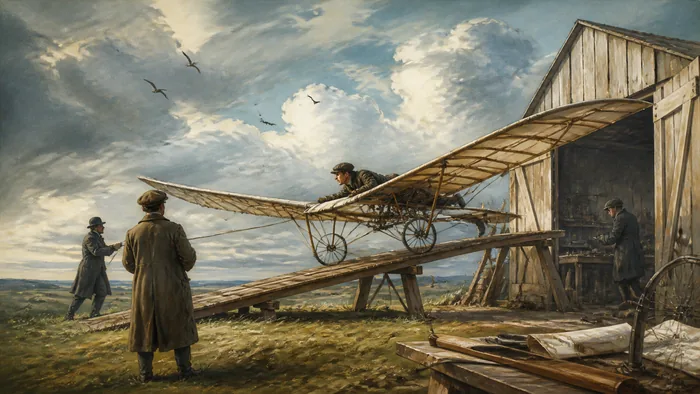
The Wright Brothers is a story about flight, but David McCullough gives equal weight to the workshop, the bicycle business, the wind tunnel, the arguments, and the repeated corrections that made flight possible. Wilbur and Orville do not appear as isolated geniuses waiting for inspiration. They are practical, competitive, self-teaching partners who keep turning observation into a better experiment. Readers comparing books like The Wright Brothers will find that the most useful match depends on which part of the seed book created the strongest attachment: its voice, argument, setting, characters, problem, or promise of change.
A strong shelf of books like The Wright Brothers should share at least two or three qualities: a breakthrough emerging from patient iteration, a partnership or team with distinct strengths, scientific or engineering uncertainty, public skepticism, and a historical setting that makes the achievement feel earned rather than inevitable. The recommendations below range from computing and spaceflight to architecture, exploration, and industrial design.
The Breakthrough Began with Years of Small Corrections
Choose The Innovators for collaborative computing, Hidden Figures for mathematics and institutional barriers, and Rocket Men for the Apollo mission. Longitude follows a single navigation problem, Skunk Works a secret engineering culture, and The Idea Factory a research institution. Einstein, The Code Breaker, and The Boys in the Boat offer different forms of discovery, teamwork, and persistence.
At-a-Glance Comparison
| Book | Best for | Major qualities shared with The Wright Brothers |
|---|---|---|
| The Innovators | Readers who want a collaborative history of computing and digital invention | Independent thinkers, research partnerships, iterative design, institutional support, rivalry, and inventions emerging from networks rather than one genius |
| Hidden Figures | Readers who want mathematics, spaceflight, and women overcoming institutional barriers | Flight calculation, engineering, teamwork, racism, sexism, public achievement, and skilled workers whose contributions were initially hidden |
| Rocket Men | Readers who want Apollo 8, flight risk, and a team reaching beyond the familiar | Spaceflight, engineering, national ambition, crew trust, public attention, risk, and a mission made possible by thousands of specialized decisions |
| Longitude | Readers who want a compact story of one navigation problem and a persistent inventor | Precision engineering, scientific rivalry, public need, institutional skepticism, practical experimentation, and a breakthrough that changes travel |
| Skunk Works | Readers who want secret aircraft, engineering culture, and fast iteration | Aircraft design, small expert teams, secrecy, military pressure, prototyping, material limits, and innovation under extreme deadlines |
| The Idea Factory | Readers who want a research institution and the origins of communication technology | Long-term research, institutional culture, scientific collaboration, telecommunications, curiosity-driven work, and discoveries whose uses arrive later |
| Einstein | Readers who want a single scientific mind in personal and historical context | Scientific imagination, persistence, institutional resistance, public fame, political pressure, and ideas changing how people understand the physical world |
| The Code Breaker | Readers who want genetics, CRISPR, and a modern scientific race | Laboratory collaboration, competing discoveries, scientific credit, medical possibility, public recognition, patents, and ethical uncertainty |
| The Boys in the Boat | Readers who want disciplined teamwork, class barriers, and an unlikely national achievement | Practice, team synchronization, economic hardship, institutional opportunity, rivalry, leadership, and ordinary people achieving an extraordinary result together |
What Makes an Invention Biography Worth Reading?
The choices were not based on fame alone. Each book had to make process visible: testing, failure, collaboration, institutional friction, or the physical limits that shaped the invention. I favored biographies that preserve uncertainty and show how an idea changes when it meets materials, money, politics, or a team. A genius without a method was not enough.
The 9 Recommended Books
The Innovators

Overview: Walter Isaacson traces the people and teams behind computers, software, networking, and the internet. The story moves from Ada Lovelace and early machines through wartime research, Silicon Valley, and the culture of personal computing.
Why it belongs on this list: The connection is strongest through independent thinkers, research partnerships, iterative design, institutional support, rivalry, and inventions emerging from networks rather than one genius. The Innovators approaches the seed’s concerns from a different angle, adding its own evidence, examples, and limits instead of repeating a familiar list of advice. It is especially useful for readers who want a collaborative history of computing and digital invention because it makes the underlying choice more visible: what to protect, what to question, and what may not be under personal control.
Reading experience: Like the Wright brothers, many innovators work through a combination of curiosity, practical skill, sibling or team dynamics, and repeated revision. The book broadens the lesson from one workshop to a network in which ideas move between universities, companies, and individuals.
Best for: Readers who want a collaborative history of computing and digital invention.
Keep in mind: Broad, accessible, and chronological, with many figures connected through recurring themes of collaboration and credit.
What to notice: Readers may arrive at The Innovators because of independent thinkers, research partnerships, iterative design, institutional support, rivalry, and inventions emerging from networks rather than one genius, yet its lasting value lies in the complications attached to that promise. The book asks what happens when a desirable change meets fatigue, unequal resources, competing duties, or an imperfect environment. That makes it a genuine next read: related enough to satisfy the original interest, but independent enough to widen it.
View available editions and reader reviews.
Hidden Figures

Overview: Margot Lee Shetterly follows Black women mathematicians who worked at NACA and NASA, calculating flight paths and supporting the American space program while navigating segregation and professional exclusion.
Why it belongs on this list: The connection is strongest through flight calculation, engineering, teamwork, racism, sexism, public achievement, and skilled workers whose contributions were initially hidden. Hidden Figures approaches the seed’s concerns from a different angle, adding its own evidence, examples, and limits instead of repeating a familiar list of advice. It is especially useful for readers who want mathematics, spaceflight, and women overcoming institutional barriers because it makes the underlying choice more visible: what to protect, what to question, and what may not be under personal control.
Reading experience: The shared appeal is practical intelligence made visible. Like the Wright brothers, these women solve physical problems through calculation, testing, and collaboration, but the book adds a vital history of who was allowed to receive credit and who had to work around the institution.
Best for: Readers who want mathematics, spaceflight, and women overcoming institutional barriers.
Keep in mind: Human, readable, and research-based, balancing personal biographies with the larger history of NASA and segregation.
What to notice: Readers may arrive at Hidden Figures because of flight calculation, engineering, teamwork, racism, sexism, public achievement, and skilled workers whose contributions were initially hidden, yet its lasting value lies in the complications attached to that promise. The book asks what happens when a desirable change meets fatigue, unequal resources, competing duties, or an imperfect environment. That makes it a genuine next read: related enough to satisfy the original interest, but independent enough to widen it.
View available editions and reader reviews.
Rocket Men

Overview: Robert Kurson reconstructs Apollo 8’s mission around the Moon, the astronauts who flew it, and the engineers who had to solve problems quickly enough for a crew to leave Earth and return.
Why it belongs on this list: The connection is strongest through spaceflight, engineering, national ambition, crew trust, public attention, risk, and a mission made possible by thousands of specialized decisions. Rocket Men approaches the seed’s concerns from a different angle, adding its own evidence, examples, and limits instead of repeating a familiar list of advice. It is especially useful for readers who want apollo 8, flight risk, and a team reaching beyond the familiar because it makes the underlying choice more visible: what to protect, what to question, and what may not be under personal control.
Reading experience: The connection is the combination of practical invention and public wonder. The Wright brothers’ first flight is compact and experimental; Apollo 8 is institutional and enormous, but both depend on people trusting measurements, machines, and one another.
Best for: Readers who want Apollo 8, flight risk, and a team reaching beyond the familiar.
Keep in mind: Cinematic and suspenseful, with clear technical explanations and strong attention to the astronauts’ relationships and fear.
What to notice: The most useful thing to watch in Rocket Men is how spaceflight, engineering, national ambition, crew trust, public attention, risk, and a mission made possible by thousands of specialized decisions moves from an attractive idea into a question about ordinary decisions. The book earns its place beside the seed because it gives readers who want apollo 8, flight risk, and a team reaching beyond the familiar a different emotional and intellectual texture. Notice which examples carry the argument, where the author admits a limit, and which ideas remain useful after the initial enthusiasm fades.
View available editions and reader reviews.
Longitude
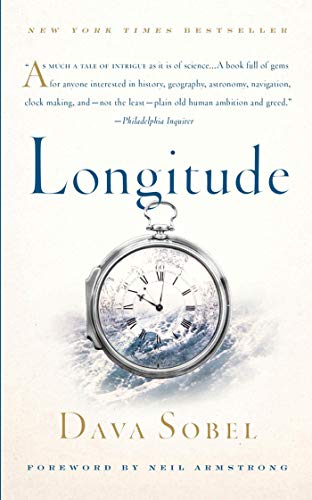
Overview: Dava Sobel tells the story of John Harrison’s quest to build a clock accurate enough to determine longitude at sea. The problem requires craftsmanship, astronomy, politics, testing, and a willingness to challenge the experts who control the prize.
Why it belongs on this list: The connection is strongest through precision engineering, scientific rivalry, public need, institutional skepticism, practical experimentation, and a breakthrough that changes travel. Longitude approaches the seed’s concerns from a different angle, adding its own evidence, examples, and limits instead of repeating a familiar list of advice. It is especially useful for readers who want a compact story of one navigation problem and a persistent inventor because it makes the underlying choice more visible: what to protect, what to question, and what may not be under personal control.
Reading experience: It mirrors the seed’s workshop-scale invention and the way practical observation can defeat a more prestigious theory. The book is smaller in scope but makes process and persistence unusually clear.
Best for: Readers who want a compact story of one navigation problem and a persistent inventor.
Keep in mind: Short, elegant, and shaped like a historical mystery, with technical detail kept accessible.
What to notice: Readers may arrive at Longitude because of precision engineering, scientific rivalry, public need, institutional skepticism, practical experimentation, and a breakthrough that changes travel, yet its lasting value lies in the complications attached to that promise. The book asks what happens when a desirable change meets fatigue, unequal resources, competing duties, or an imperfect environment. That makes it a genuine next read: related enough to satisfy the original interest, but independent enough to widen it.
View available editions and reader reviews.
Skunk Works

Overview: Ben Rich and Leo Janos describe Lockheed’s Skunk Works and the design of aircraft such as the U-2 and SR-71. The book emphasizes a small, trusted engineering culture able to make decisions quickly outside ordinary bureaucracy.
Why it belongs on this list: The connection is strongest through aircraft design, small expert teams, secrecy, military pressure, prototyping, material limits, and innovation under extreme deadlines. Skunk Works approaches the seed’s concerns from a different angle, adding its own evidence, examples, and limits instead of repeating a familiar list of advice. It is especially useful for readers who want secret aircraft, engineering culture, and fast iteration because it makes the underlying choice more visible: what to protect, what to question, and what may not be under personal control.
Reading experience: The partnership with The Wright Brothers is the belief that a small team close to the problem can outwork a larger institution. The military setting changes the stakes, adding secrecy, classified testing, and the moral complications of defense technology.
Best for: Readers who want secret aircraft, engineering culture, and fast iteration.
Keep in mind: Technical, energetic, and process-focused, with aircraft projects providing a clear narrative spine.
What to notice: Read Skunk Works as a companion rather than a replacement. Its treatment of aircraft design, small expert teams, secrecy, military pressure, prototyping, material limits, and innovation under extreme deadlines will feel familiar at first, but its evidence, vocabulary, and assumptions lead somewhere different. The contrast is valuable: it shows what the seed explains especially well and what this recommendation adds about context, trade-offs, relationships, or the cost of turning a good idea into a private obligation.
View available editions and reader reviews.
The Idea Factory

Overview: Jon Gertner follows Bell Labs and the scientists who developed foundational ideas in information theory, communications, materials, and computing. The book shows how an institution gave researchers time and resources to pursue questions without immediate commercial payoff.
Why it belongs on this list: The connection is strongest through long-term research, institutional culture, scientific collaboration, telecommunications, curiosity-driven work, and discoveries whose uses arrive later. The Idea Factory approaches the seed’s concerns from a different angle, adding its own evidence, examples, and limits instead of repeating a familiar list of advice. It is especially useful for readers who want a research institution and the origins of communication technology because it makes the underlying choice more visible: what to protect, what to question, and what may not be under personal control.
Reading experience: The book expands the seed’s small workshop into a research ecosystem. Both stories value practical experimentation, but Bell Labs also raises questions about how much innovation depends on a rare institutional environment that modern companies may not reproduce.
Best for: Readers who want a research institution and the origins of communication technology.
Keep in mind: Historical, explanatory, and team-centered, with recurring scientists and projects connecting the chapters.
What to notice: Read The Idea Factory as a companion rather than a replacement. Its treatment of long-term research, institutional culture, scientific collaboration, telecommunications, curiosity-driven work, and discoveries whose uses arrive later will feel familiar at first, but its evidence, vocabulary, and assumptions lead somewhere different. The contrast is valuable: it shows what the seed explains especially well and what this recommendation adds about context, trade-offs, relationships, or the cost of turning a good idea into a private obligation.
View available editions and reader reviews.
Einstein

Overview: Walter Isaacson traces Einstein’s scientific breakthroughs alongside his family life, friendships, academic career, Jewish identity, pacifism, and public role during war and political upheaval.
Why it belongs on this list: The connection is strongest through scientific imagination, persistence, institutional resistance, public fame, political pressure, and ideas changing how people understand the physical world. Einstein approaches the seed’s concerns from a different angle, adding its own evidence, examples, and limits instead of repeating a familiar list of advice. It is especially useful for readers who want a single scientific mind in personal and historical context because it makes the underlying choice more visible: what to protect, what to question, and what may not be under personal control.
Reading experience: The comparison is useful because it refuses the isolated-genius myth. Einstein’s ideas emerge from reading, argument, correspondence, and a willingness to imagine physics differently, just as the Wright brothers’ flight emerged from observation and discussion.
Best for: Readers who want a single scientific mind in personal and historical context.
Keep in mind: Biographical and expansive, with science explained through intellectual history and personal relationships.
What to notice: The right reading pace for Einstein depends on what the reader needs from readers who want a single scientific mind in personal and historical context. Its discussion of scientific imagination, persistence, institutional resistance, public fame, political pressure, and ideas changing how people understand the physical world is clear enough to revisit, but it also benefits from pausing over examples and disagreements. Give the author room to make a case before deciding whether the ideas fit your work, health, relationships, and available freedom.
View available editions and reader reviews.
The Code Breaker
Overview: Walter Isaacson follows Jennifer Doudna, Emmanuelle Charpentier, and the researchers whose work made CRISPR gene editing possible. The book moves from basic biology to Nobel recognition and debates over editing human embryos.
Why it belongs on this list: The connection is strongest through laboratory collaboration, competing discoveries, scientific credit, medical possibility, public recognition, patents, and ethical uncertainty. The Code Breaker approaches the seed’s concerns from a different angle, adding its own evidence, examples, and limits instead of repeating a familiar list of advice. It is especially useful for readers who want genetics, crispr, and a modern scientific race because it makes the underlying choice more visible: what to protect, what to question, and what may not be under personal control.
Reading experience: Like the seed, it makes invention a social process in which ideas, tools, rivalry, and timing matter. The ethical horizon is much broader, because the invention can alter living systems rather than simply move a machine through air.
Best for: Readers who want genetics, CRISPR, and a modern scientific race.
Keep in mind: Fast, profile-driven, and accessible, with scientific explanation woven through laboratory personalities and ethical debate.
What to notice: Read The Code Breaker as a companion rather than a replacement. Its treatment of laboratory collaboration, competing discoveries, scientific credit, medical possibility, public recognition, patents, and ethical uncertainty will feel familiar at first, but its evidence, vocabulary, and assumptions lead somewhere different. The contrast is valuable: it shows what the seed explains especially well and what this recommendation adds about context, trade-offs, relationships, or the cost of turning a good idea into a private obligation.
View available editions and reader reviews.
The Boys in the Boat

Overview: Daniel James Brown follows the University of Washington rowing crew as it competes for a place at the 1936 Olympics. Joe Rantz’s poverty and isolation sit alongside the technical demands of making nine bodies move as one.
Why it belongs on this list: The connection is strongest through practice, team synchronization, economic hardship, institutional opportunity, rivalry, leadership, and ordinary people achieving an extraordinary result together. The Boys in the Boat approaches the seed’s concerns from a different angle, adding its own evidence, examples, and limits instead of repeating a familiar list of advice. It is especially useful for readers who want disciplined teamwork, class barriers, and an unlikely national achievement because it makes the underlying choice more visible: what to protect, what to question, and what may not be under personal control.
Reading experience: The setting is sport rather than invention, but the shared pleasure is unmistakable: a breakthrough is built from repeated practice, trust, small corrections, and a group learning that individual brilliance can disrupt the whole.
Best for: Readers who want disciplined teamwork, class barriers, and an unlikely national achievement.
Keep in mind: Immersive, emotional, and very readable, with training, personal history, and competition building toward the Olympics.
What to notice: The most useful thing to watch in The Boys in the Boat is how practice, team synchronization, economic hardship, institutional opportunity, rivalry, leadership, and ordinary people achieving an extraordinary result together moves from an attractive idea into a question about ordinary decisions. The book earns its place beside the seed because it gives readers who want disciplined teamwork, class barriers, and an unlikely national achievement a different emotional and intellectual texture. Notice which examples carry the argument, where the author admits a limit, and which ideas remain useful after the initial enthusiasm fades.
View available editions and reader reviews.
Choose by Engineering, Space, Teamwork, or Scientific History
Start with The Innovators for a broad history of collaborative computing, or Longitude for a compact story about one technical problem. Hidden Figures and Rocket Men are strong choices for spaceflight and institutional teamwork, while Skunk Works focuses on secrecy and engineering culture. Choose The Idea Factory for research institutions, Einstein for a single mind in historical context, and The Boys in the Boat for disciplined teamwork outside the laboratory.
Who This List Is Best For
This list is for readers of biography, popular science, engineering history, innovation, and creative-process nonfiction. The books include racism, war, workplace danger, scientific rivalry, illness, and institutional exclusion. Some focus on one invention; others follow a long ecosystem of laboratories, universities, or government programs.
FAQ
What is the closest book to The Wright Brothers?
Rocket Men is closest in the combination of flight, engineering, public attention, and a team attempting something that seems beyond the available technology. The Innovators is the closest in its focus on collaboration and iterative invention.
Which recommendation focuses most on engineering?
Skunk Works, Longitude, and The Idea Factory make engineering, design, and institutional problem-solving central. Rocket Men adds the complexity of a national space program.
Which books discuss women or racial barriers in science?
Hidden Figures focuses on Black women mathematicians at NASA and the structures that limited their recognition. The Code Breaker and The Innovators also examine how scientific credit and access are distributed.
Are these books only about famous inventors?
No. Several focus on teams, institutions, workers, or communities rather than one celebrated genius. The Boys in the Boat is included because it shares the seed’s attention to disciplined collaboration and the way repeated practice produces an extraordinary result.
Which is the shortest and easiest next read?
Longitude is compact and built like a historical mystery. Hidden Figures is also accessible, while The Innovators and The Idea Factory are longer, broader histories of systems and collaboration.
Innovation Looks Less Like a Lightning Bolt Than a Workshop
The Wright Brothers is satisfying because it restores friction to a story often told as a miracle. The companion books do the same. They show that breakthroughs are built from tools, arguments, failed prototypes, rivalries, patient measurement, and people willing to revise a beautiful idea when the evidence refuses to cooperate.