
Bootstrapping changes the questions founders have to answer. Instead of asking how to spend a round of funding, you have to decide what can be built, sold, and improved with very little cash. That makes the right book less about motivation and more about judgment: how to conserve runway, validate demand, set priorities, and avoid expensive mistakes. The best books for bootstrapping do not all take the same angle, which is exactly why a short, carefully chosen list is more useful than a long one.
Quick Answer
If you want the strongest books for bootstrapping, start with Bootstrapping Your Business, The Power of Broke, and Startup Success. For more specialized guidance, 11 Lessons from Bootstrapping a Non-Tech Startup is especially useful for founders building outside tech, while Bootstrapping E-commerce fits sellers who want a lean path into Amazon commerce. If you want a broader, more ambitious digital-business playbook, MBA Disrupted is the most targeted option here.
Comparison Table
| Book | Best For | Why It Stands Out |
|---|---|---|
| Bootstrapping Your Business | Founders starting with very little capital | A practical, broad guide to starting and growing on a tight budget |
| The Power of Broke | Entrepreneurs who need a mindset and strategy reset | Shows how financial constraint can sharpen decision-making |
| Startup Success | Founders figuring out early-stage funding options | Useful for understanding how to finance a venture without drifting from the bootstrapped path |
| 11 Lessons from Bootstrapping a Non-Tech Startup | Non-tech founders | Grounded in the realities of building without a software-first model |
| Bootstrapping E-commerce | Lean Amazon and import sellers | Focused on a specific, practical bootstrapped business model |
| MBA Disrupted | Builders of digital businesses | Step-by-step guidance for ambitious online ventures without conventional startup capital |
How We Chose These Recommendations
Bootstrapping is a practical subject, so the best books need to offer more than encouragement. The selections here were chosen for their usefulness to early founders, their clear connection to operating with limited capital, and their ability to help readers make better decisions under constraint. Where possible, the list favors books that provide durable business value, not just a narrow tactic or a passing trend.
We also looked for range. Some readers need a general foundation, while others need a book shaped around a specific path such as e-commerce, non-tech startups, or early-stage funding. The result is a list that gives you different angles on the same problem without drifting away from the core question of how to build a business with less money.
Recommended Books
Bootstrapping Your Business: Start and Grow a Successful Company with Almost No Money

Overview: This book focuses directly on the central challenge of bootstrapping: starting and growing a company while protecting cash. It covers the practical realities founders face when outside capital is limited, from making early spending decisions to building a business that can support itself. The emphasis is on disciplined growth rather than theory.
Why it stands out: Among the books on this list, this is the most straightforward general-purpose starting point. It is useful for readers who want a broad framework before diving into a niche like e-commerce or non-tech startups. The appeal is its directness. It speaks to the founder who needs to make each dollar count and wants a grounded approach to getting through the earliest stages.
Strengths:
- Clear focus on starting with limited capital
- Broad enough to help across many small business models
- Practical rather than motivational
Best for: First-time founders, side hustlers moving toward a real business, and anyone who wants a general bootstrapping playbook before choosing a more specialized book.
Potential limitations: Readers looking for a highly specific industry framework may want a more targeted title after this one.
View price, available formats, and reader reviews.
The Power of Broke: How Empty Pockets, a Tight Budget, and a Hunger for Success Can Become Your Greatest Competitive Advantage

Overview: This book makes the case that limited resources can force better focus, sharper positioning, and more creative execution. Rather than treating a small budget as a setback, it reframes constraint as a business advantage when it pushes founders to validate demand and stay lean. That perspective makes it especially relevant for bootstrappers who need to think strategically, not just frugally.
Why it stands out: Not every founder needs another operational checklist. Some need a better mental model for what bootstrapping is really for. This book earns its place by helping readers use scarcity well. It is less about mechanics than about the discipline and clarity that lean founders often need in order to stay focused on what matters.
Strengths:
- Strong conceptual fit for resource-constrained founders
- Useful for mindset, prioritization, and resilience
- Encourages sharper business judgment under pressure
Best for: Entrepreneurs who need motivation backed by a practical business philosophy, especially if they are struggling to stay focused with limited resources.
Potential limitations: Readers seeking a highly detailed operating manual may want a more process-driven book alongside it.
View price, available formats, and reader reviews.
Startup Success: Funding the Early Stages of Your Venture

Overview: This book looks at one of the hardest questions for founders: how to fund the earliest stages of a venture without making unnecessary mistakes. For bootstrappers, that matters because the line between healthy frugality and bad undercapitalization can be thin. The book is useful for understanding early financing choices in a way that supports, rather than undermines, lean growth.
Why it stands out: Some bootstrapping books focus only on cutting costs. This one adds a more strategic view of early-stage funding, which makes it valuable for readers deciding whether to remain self-funded, raise modest capital, or combine approaches. It is a smart inclusion for founders who want to think clearly about money before they commit to a financing path.
Strengths:
- Focused on the earliest funding decisions
- Helpful for weighing self-funding against other options
- Relevant to founders who need financial clarity, not just encouragement
Best for: Early-stage entrepreneurs who are still deciding how much capital they actually need and how to structure growth responsibly.
Potential limitations: Readers already deep into operations may find it more useful at the planning stage than later on.
View price, available formats, and reader reviews.
11 Lessons from Bootstrapping a Non-Tech Startup: The brutal journey from idea to reality

Overview: For founders outside the software world, bootstrapping can look very different from the startup advice that dominates business conversations. This book concentrates on the realities of a non-tech startup, which makes it especially relevant for service businesses, physical products, local businesses, and other ventures that do not follow a typical venture-backed pattern. Its lesson-driven format keeps the focus on hard-earned insight.
Why it stands out: The strongest reason to recommend it is specificity. Many startup books assume a tech model even when they do not say so. This one is better matched to readers building a business where product development, operations, and customer acquisition look more traditional. That makes it one of the most practical choices for founders who keep feeling that standard startup advice does not quite fit.
Strengths:
- Highly relevant to non-tech founders
- Lessons are easy to apply to real business decisions
- Helps readers avoid advice built for a different kind of startup
Best for: Founders launching service-based, local, product-based, or other non-software businesses on a lean budget.
Potential limitations: Readers looking for broad startup theory may want a more general title first.
View price, available formats, and reader reviews.
Bootstrapping E-commerce: How to Import and Sell on Amazon (Revised 2018 Edition)
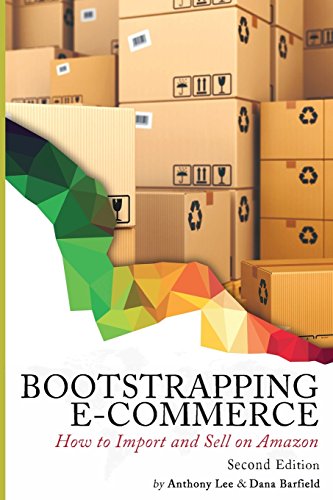
Overview: This book is aimed at readers who want to build an e-commerce business with a lean starting budget, particularly through importing and selling on Amazon. It is narrower than the broader startup titles on this list, but that narrowness is also its value. The material is more directly tied to the mechanics of one business model, which can help readers who already know they want to sell products online.
Why it stands out: Bootstrapping is easiest to understand when the business model is concrete. This book earns its place because it speaks to a very specific path rather than trying to cover all of entrepreneurship at once. For readers who are serious about Amazon or import-based selling, that makes it more useful than a general bootstrapping overview.
Strengths:
- Highly targeted to e-commerce founders
- Useful for readers focused on importing and Amazon sales
- Practical scope for a specific business model
Best for: Aspiring e-commerce operators who want a lean, product-selling business rather than a broad startup framework.
Potential limitations: Its focus is narrow, so it is not the best fit for readers seeking general entrepreneurship advice.
View price, available formats, and reader reviews.
MBA Disrupted: Your Step-by-Step Guide to Bootstrapping $1M+ Digital Businesses

Overview: This book is built for readers who want a more ambitious digital-business path without relying on outside capital from day one. It takes a step-by-step approach to bootstrapping online businesses and is aimed at founders who want structure as they move from idea to execution. The emphasis on digital businesses makes it more specific than a general startup book.
Why it stands out: Among newer bootstrapping titles, this one stands out for giving readers a structured path that stays close to the realities of building online. It belongs on the list because it addresses a common bootstrapping goal: getting a digital business moving with discipline, not excess spending. For readers who want an online-first model and prefer a more guided framework, it fills an important niche.
Strengths:
- Step-by-step structure
- Focused on digital business building
- Useful for founders who want an action-oriented framework
Best for: Readers building digital businesses who want a more structured, execution-focused bootstrapping guide.
Potential limitations: Because it is centered on digital businesses, it is less relevant for offline ventures or highly traditional companies.
View price, available formats, and reader reviews.
Who This List Is Best For
This list is best for early-stage founders, solo entrepreneurs, side hustlers, and small business owners who want to grow without relying on significant outside funding. It will also help readers who need to make disciplined choices about spending, validation, and timing. If you are comparing bootstrapping with fundraising, or trying to understand how lean businesses actually get built, these books cover the main angles without wasting your time.
Final Thoughts
If you want a single starting point, begin with Bootstrapping Your Business. If you need a mindset shift as much as an operating guide, The Power of Broke is the better entry point. If your concern is how to finance the earliest stage responsibly, Startup Success is the most targeted choice.
Readers building outside software should move toward 11 Lessons from Bootstrapping a Non-Tech Startup, while e-commerce founders will get more value from Bootstrapping E-commerce. For a more ambitious online-business framework, MBA Disrupted is the strongest fit.
FAQ
Which book is best for beginners?
Bootstrapping Your Business is the best starting point for most beginners because it gives a broad, practical introduction to building with limited money.
Which book is best for non-tech founders?
11 Lessons from Bootstrapping a Non-Tech Startup is the most relevant choice if your business is not software-based.
Which book is most focused on funding decisions?
Startup Success is the most useful option if you are trying to understand early-stage funding choices.
Which book is most practical for e-commerce?
Bootstrapping E-commerce is the clearest fit for readers planning to import and sell on Amazon.
Can I learn bootstrapping without reading a lot of theory?
Yes. Bootstrapping Your Business and 11 Lessons from Bootstrapping a Non-Tech Startup are the most immediately practical books on the list.
Which recommendation offers the best long-term value?
The Power of Broke offers durable value because it helps readers think clearly about operating under constraint, which is useful far beyond the first stage of a business.
Bootstrapping changes the questions founders have to answer. Instead of asking how to spend a round of funding, you have to decide what can be built, sold, and improved with very little cash. That makes the right book less about motivation and more about judgment: how to conserve runway, validate demand, set priorities, and avoid expensive mistakes. The best books for bootstrapping do not all take the same angle, which is exactly why a short, carefully chosen list is more useful than a long one.




