
Executives usually do not need a generic primer on customer service. They need books that help them see service as a strategic issue, not just an operational one. That means understanding how customer experience affects retention, reputation, employee behavior, and long-term growth, while also knowing how front-line service systems actually work. The best books for customer service for executives tend to do one of two things well: they either sharpen leadership judgment around customers, or they show how strong service cultures are built and sustained. A few also offer a practical view from the front lines, which can be especially useful when executive decisions need to translate into daily service behavior.
Quick Answer
For customer service for executives, start with Be Our Guest: Perfecting the Art of Customer Service, then compare it with Customer Centricity: Focus on the Right Customers for Strategic Advantage and use The Challenger Sale: Taking Control of the Customer Conversation when you need a different level of detail. The right choice depends on your current goal, experience, and the kind of change you want the book to support.
This shortlist was selected for service culture, customer trust, coaching value, relevance to escalations, and the ability to connect frontline behavior with business outcomes. It mixes foundational explanations with practical guidance so readers can move from understanding the topic to making a better decision or trying a small, testable change.
Comparison Table
| Book | Best For | Why It Stands Out |
|---|---|---|
| Be Our Guest: Perfecting the Art of Customer Service | Executives responsible for culture, operations, or service standards. | Among books on customer service, this one is unusually strong at connecting service ideals to repeatable execution. Executives will appreciate that it does not stop at inspiration. It explains how service culture is reinforced through systems, expectations, and management attention. If you need a book that helps you think about service as part of operating strategy, this is one of the most relevant choices on the list. |
| Customer Centricity: Focus on the Right Customers for Strategic Advantage | Executives, strategy leaders, and general managers who want a sharper customer focus. | Many customer-service books assume the goal is to delight every customer equally. This one is more strategic. It argues that executive judgment matters in deciding where resources produce the greatest return. That makes it especially useful for senior leaders who need to align service with growth, margin, and long-term positioning rather than treat service as a universal slogan. |
| The Challenger Sale: Taking Control of the Customer Conversation | Executives leading sales organizations, account management, or consultative customer teams. | The book belongs on this list because many executive service problems are really conversation problems. Customers are not always asking for more courtesy. They are asking for more clarity, better guidance, and stronger problem framing. The Challenger Sale gives leaders a structured way to think about those interactions without reducing them to friendliness alone. |
| Best of Class: Building a Customer Service Organization | Executives designing service structures or improving an existing service function. | Few books address the architecture of customer service as plainly as this one. For executives, that is valuable because service quality usually depends on systems, accountability, and management habits, not just frontline personality. The book’s classical business orientation also makes it feel at home beside enduring management reading rather than trend-driven service advice. |
| Inspired: How to Create Tech Products Customers Love | Executives in product, tech, digital operations, or innovation roles. | This book broadens the conversation beyond support interactions. It helps executives see that customer service outcomes are often determined by product decisions, internal collaboration, and clear product thinking. For organizations where service and product are tightly connected, that perspective is often more useful than a pure service manual. |
| Setting the Table: The Transforming Power of Hospitality in Business | restaurant owners, hospitality leaders, and service-focused executives | It connects the guest experience to culture, operations, leadership, and long-term business performance. |
| The Nordstrom Way: The Inside Story of America’s #1 Customer Service Company | executives who want to study service culture and customer-centered leadership | It shows how a recognizable service culture is reinforced through hiring, autonomy, expectations, and everyday decisions. |
| How to Win Friends and Influence People | people in their twenties developing communication, relationship, and workplace judgment | It offers durable principles for listening, showing respect, handling disagreement, and building trust without relying on status. |
How We Chose These Recommendations
This list favors books that help executives think more clearly about service as a business function. That means prioritizing books with durable value, clear strategic relevance, and practical insight into how customer experience is shaped by leadership decisions. Some selections focus on culture and organization building, while others are useful for sales, product, or frontline service systems.
We also kept the list balanced. Executives need more than one angle on customer service, so the recommendations include strategy-focused books, management-oriented classics, and a few operational tools for teams that still need reliable service documentation. Every book here earns its place by serving a distinct need.
Recommended Books
Be Our Guest: Perfecting the Art of Customer Service

Overview: Be Our Guest uses the Disney service model to show how exceptional customer experience is built through standards, training, consistency, and leadership. Rather than treating service as a soft skill, it frames it as a disciplined organizational practice. That makes it especially useful for executives who need to influence behavior across teams, locations, or departments.
Why it stands out: Among books on customer service, this one is unusually strong at connecting service ideals to repeatable execution. Executives will appreciate that it does not stop at inspiration. It explains how service culture is reinforced through systems, expectations, and management attention. If you need a book that helps you think about service as part of operating strategy, this is one of the most relevant choices on the list.
Strengths:
- Clear link between customer service and organizational leadership
- Practical examples that translate well to executive decision-making
- Useful for building a consistent service culture
Best for: Executives responsible for culture, operations, or service standards.
Potential limitations: Some readers may find the Disney context more illustrative than directly transferable, so it works best when paired with a book that speaks more explicitly to your own industry.
View price, available formats, and reader reviews.
Customer Centricity: Focus on the Right Customers for Strategic Advantage

Overview: This Wharton Executive Essentials book tackles a question many leaders face but do not always ask directly: which customers should a business prioritize? The book is about customer strategy, not just service etiquette. It helps executives think about profitable focus, segmentation, and where customer effort should actually go.
Why it stands out: Many customer-service books assume the goal is to delight every customer equally. This one is more strategic. It argues that executive judgment matters in deciding where resources produce the greatest return. That makes it especially useful for senior leaders who need to align service with growth, margin, and long-term positioning rather than treat service as a universal slogan.
Strengths:
- Strategic rather than purely operational
- Well suited to executive-level decision making
- Helps leaders think about customer value and prioritization
Best for: Executives, strategy leaders, and general managers who want a sharper customer focus.
Potential limitations: Readers looking for frontline scripts or service recovery techniques will find it more conceptual than tactical.
View price, available formats, and reader reviews.
The Challenger Sale: Taking Control of the Customer Conversation

Overview: Although this book is often discussed as a sales title, it matters to customer service leaders because it changes how organizations think about customer conversations. The central idea is that the best representatives do not simply respond. They guide, educate, and shape the discussion. For executives overseeing account teams, customer success, or service-adjacent sales functions, that distinction is important.
Why it stands out: The book belongs on this list because many executive service problems are really conversation problems. Customers are not always asking for more courtesy. They are asking for more clarity, better guidance, and stronger problem framing. The Challenger Sale gives leaders a structured way to think about those interactions without reducing them to friendliness alone.
Strengths:
- Strong for customer-facing teams that need to influence, not just respond
- Offers a memorable framework for higher-value conversations
- Useful for executives managing sales and service together
Best for: Executives leading sales organizations, account management, or consultative customer teams.
Potential limitations: The focus is more on commercial conversations than broad customer-service operations, so it is not a general service management handbook.
View price, available formats, and reader reviews.
Best of Class: Building a Customer Service Organization

Overview: This title speaks directly to the executive challenge of turning customer service into an organization, not just a department. It focuses on structure, leadership, and the practical realities of building service capability. That makes it a fitting choice for readers who need something more managerial than inspirational.
Why it stands out: Few books address the architecture of customer service as plainly as this one. For executives, that is valuable because service quality usually depends on systems, accountability, and management habits, not just frontline personality. The book’s classical business orientation also makes it feel at home beside enduring management reading rather than trend-driven service advice.
Strengths:
- Directly focused on building a customer service organization
- Practical for managers and executives responsible for operations
- Classic business-book framing rather than a passing trend
Best for: Executives designing service structures or improving an existing service function.
Potential limitations: Readers looking for a modern, fast-paced style may find it more traditional in tone.
View price, available formats, and reader reviews.
Inspired: How to Create Tech Products Customers Love

Overview: Inspired is centered on product leadership, but executives involved in customer service will find it highly relevant because it shows how customer value is built before service ever begins. The book explains how strong products reduce service friction, improve satisfaction, and align teams around real customer needs. That makes it especially useful for leaders in technology, digital services, or product-driven organizations.
Why it stands out: This book broadens the conversation beyond support interactions. It helps executives see that customer service outcomes are often determined by product decisions, internal collaboration, and clear product thinking. For organizations where service and product are tightly connected, that perspective is often more useful than a pure service manual.
Strengths:
- Excellent bridge between product quality and customer experience
- Useful for executives leading digital or technology teams
- Strong on organizational thinking and customer outcomes
Best for: Executives in product, tech, digital operations, or innovation roles.
Potential limitations: It is more product-focused than service-focused, so readers wanting a classic customer-service playbook may prefer one of the other titles first.
View price, available formats, and reader reviews.
Setting the Table: The Transforming Power of Hospitality in Business
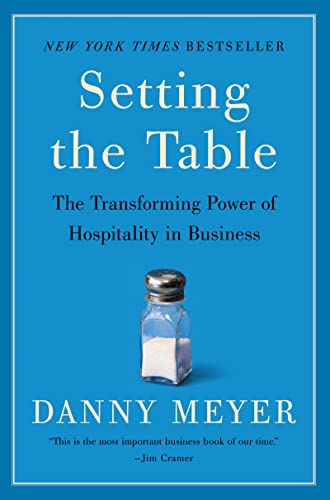
Overview: Danny Meyer explains how hospitality can become a repeatable business capability rather than a vague promise to be friendly. The book is especially useful for readers who need to connect frontline behavior with hiring, training, loyalty, and financial results.
Why it stands out: It connects the guest experience to culture, operations, leadership, and long-term business performance.
Strengths:
- Links service culture with operating decisions
- Useful for both independent operators and larger teams
- Turns hospitality into concrete management questions
Best for: restaurant owners, hospitality leaders, and service-focused executives
Potential limitations: It is a leadership and hospitality book, not a step-by-step restaurant accounting manual.
View price, available formats, and reader reviews.
The Nordstrom Way: The Inside Story of America’s #1 Customer Service Company

Overview: The Nordstrom Way gives customer-service leaders a concrete case study rather than a list of abstract slogans. Its value is in showing how service becomes part of the operating culture, including how employees are trusted to respond to customers in real situations.
Why it stands out: It shows how a recognizable service culture is reinforced through hiring, autonomy, expectations, and everyday decisions.
Strengths:
- Concrete service-culture case study
- Useful for leadership and training discussions
- Highlights the link between trust and customer experience
Best for: executives who want to study service culture and customer-centered leadership
Potential limitations: A company case study should be adapted to your industry rather than copied literally.
View price, available formats, and reader reviews.
How to Win Friends and Influence People

Overview: Dale Carnegie’s book is best read as a guide to interpersonal habits rather than as a promise of effortless influence. For readers entering work, managing friendships, or learning to navigate difficult conversations, its emphasis on curiosity and respect provides a useful baseline.
Why it stands out: It offers durable principles for listening, showing respect, handling disagreement, and building trust without relying on status.
Strengths:
- Accessible communication principles
- Useful across work and personal relationships
- Encourages listening before persuasion
Best for: people in their twenties developing communication, relationship, and workplace judgment
Potential limitations: The advice works best when applied sincerely rather than as a set of manipulation techniques.
View price, available formats, and reader reviews.
Who This List Is Best For
This list is for executives, customer-experience leaders, service managers, and teams handling complex accounts. It is especially useful when you want a thoughtful starting point rather than a one-size-fits-all answer. Read selectively: choose the book whose examples, level, and method match the decision or difficulty in front of you.
Final Thoughts
Executives get the most value from customer-service books when they treat service as an operating system rather than a script. Read for principles that can shape hiring, empowerment, escalation design, measurement, and the quality of customer conversations.
FAQ
Which book is best for service culture?
The Nordstrom Way is the strongest case study in this list for understanding how trust, autonomy, and expectations shape customer experience.
What helps with difficult customer conversations?
The Challenger Sale is useful when the conversation involves complex needs, renewal risk, or a decision that requires guidance rather than a quick answer.
How can executives use these books with managers?
Turn each chapter into a coaching question: what behavior should change, what authority is needed, and how will the customer notice the difference?
Should customer service be measured only by satisfaction?
No. Pair satisfaction with retention, resolution quality, repeat contacts, employee capability, and the business outcome relevant to the service promise.
Are case studies transferable across industries?
The principles can transfer, but the policies, customer expectations, and authority limits must be adapted to the actual industry and risk profile.




