
Your 20s can feel like a decade of firsts: first full-time job, first apartment, first serious relationship, first time making long-term decisions without much guidance. The best books for people in their 20s are not just about self-improvement. They help with judgment, money, work, relationships, confidence, and the uncomfortable transition from school-age structure to adult responsibility. Some readers need practical life advice. Others need a clearer sense of direction. A few need help making peace with uncertainty.
That is why the strongest books for this stage do different kinds of work. Some are direct and tactical. Others are reflective and grounding. A good list should give you options for the specific version of adulthood you are trying to navigate.
Quick Answer
For books for people in their twenties, start with 100 Things You NEED to Know in Your 20s: A Guide for Navigating Early Adulthood, then compare it with Designing Your Life and use I Will Teach You to Be Rich when you need a different level of detail. The right choice depends on your current goal, experience, and the kind of change you want the book to support.
This shortlist was selected for practical relevance, emotional maturity, communication, habits, and whether the advice respects that early adulthood is not one fixed path. It mixes foundational explanations with practical guidance so readers can move from understanding the topic to making a better decision or trying a small, testable change.
Comparison Table
| Book | Best For | Why It Stands Out |
|---|---|---|
| 100 Things You NEED to Know in Your 20s: A Guide for Navigating Early Adulthood | A focused audience for this recommendation | Adds a distinct perspective to the list |
| Designing Your Life | A focused audience for this recommendation | Adds a distinct perspective to the list |
| I Will Teach You to Be Rich | A focused audience for this recommendation | Adds a distinct perspective to the list |
| Atomic Habits | A focused audience for this recommendation | Adds a distinct perspective to the list |
| You Are a Badass | A focused audience for this recommendation | Adds a distinct perspective to the list |
| How to Win Friends and Influence People | people in their twenties developing communication, relationship, and workplace judgment | It offers durable principles for listening, showing respect, handling disagreement, and building trust without relying on status. |
| The ONE Thing: The Surprisingly Simple Truth About Extraordinary Results | readers choosing a small number of priorities instead of juggling every goal at once | It offers a practical way to identify the next high-leverage action and reduce goal-setting noise. |
| Deep Work: Rules for Focused Success in a Distracted World | professionals and students who need protected time for demanding learning | It treats concentration as a trainable skill and connects focused practice with better learning and higher-quality work. |
How We Chose These Recommendations
Books for people in their 20s need to do more than sound encouraging. They should help readers make decisions, build habits, handle uncertainty, and avoid common mistakes that become more expensive with time. The books here were selected for their practical usefulness, long-term reputation, and ability to meet different needs within the same life stage.
Some focus on money and work. Others address mindset, habits, or the bigger questions of adulthood. Together, they give readers a realistic set of choices rather than a stack of nearly identical self-help books.
Recommended Books
100 Things You NEED to Know in Your 20s: A Guide for Navigating Early Adulthood

Overview: This book is built for the real-life questions that come up in early adulthood. Rather than focusing on one narrow topic, it offers a broad guide to the transitions, decisions, and habits that shape your 20s. That makes it especially useful for readers who feel they are handling several adult responsibilities at once and want something practical, grounded, and easy to dip into.
Why it stands out: Among books for people in their 20s, this is one of the most straightforward matches for the search intent. It is not trying to be a philosophy of adulthood or a deep career manual. Its value is in covering a wide range of issues that younger adults actually face, from everyday judgment to bigger life-direction questions. That breadth makes it a strong first choice for readers who want a general guide before narrowing in on a specialty topic.
Strengths:
- Covers many common 20s challenges in one place
- Easy to approach without needing a background in self-help or personal development
- Useful as a reference book you can return to over time
Best for: Readers who want a broad, practical overview of early adulthood.
Potential limitations: Readers looking for deep treatment of one subject, such as career strategy or personal finance, may want something more specialized.
View price, available formats, and reader reviews.
Designing Your Life

Overview: This book treats career and life planning as a design problem rather than a one-time decision. It gives readers tools for testing ideas, exploring options, and building a direction through small experiments instead of waiting for perfect clarity. For people in their 20s, that approach is often more realistic than advice that assumes you already know your calling.
Why it stands out: Many books about purpose are heavy on inspiration and light on process. This one is more structured. It is especially helpful for readers who feel stuck between too many choices or who worry that one wrong move will define their future. The book does not promise certainty. Instead, it gives a practical way to move forward with less anxiety and more intelligence.
Strengths:
- Strong framework for career exploration
- Useful for students, recent graduates, and early professionals
- Reduces pressure by treating life choices as experiments
Best for: Readers who are unsure about career direction or long-term goals.
Potential limitations: The method is thoughtful and useful, but readers wanting quick motivation or a simple checklist may find it more involved than expected.
View price, available formats, and reader reviews.
I Will Teach You to Be Rich
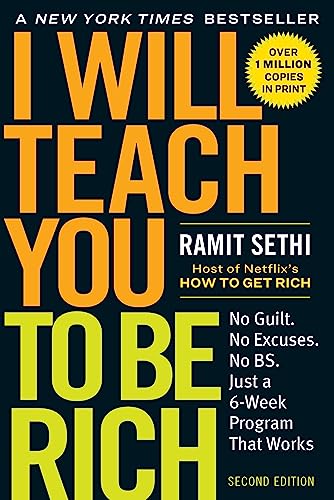
Overview: Personal finance is one of the most important subjects to get right in your 20s, and this book focuses on the habits that make money management simpler. It walks readers through banking, saving, investing, and automating basic financial decisions. The tone is practical rather than punitive, which helps make money feel manageable instead of intimidating.
Why it stands out: A lot of finance books overwhelm beginners with abstract theory or moralizing advice. This one is more usable day to day. It is especially strong for readers who want a system, not just inspiration. If you are starting your career, paying off debt, or trying to build a stable foundation, this book offers clear steps without requiring deep financial knowledge first.
Strengths:
- Highly practical for beginners
- Focuses on habits and systems, not just budget guilt
- Helps readers automate the basics of saving and investing
Best for: Young adults who want a clear, manageable introduction to personal finance.
Potential limitations: Readers looking for advanced investing strategy or deep coverage of complex financial situations will need a more specialized book later.
View price, available formats, and reader reviews.
Atomic Habits

Overview: This book focuses on how small behavior changes compound over time. For readers in their 20s, that matters because this is often the decade when routines, identity, and work habits begin to harden. The book gives a clear, repeatable system for building good habits and making bad ones harder to maintain.
Why it stands out: Many books talk about motivation. This one is about design. That makes it especially useful for people who already know what they should do but have trouble doing it consistently. It earns its place here because habits are one of the most reliable ways to improve almost every part of adult life, from health and studying to finances and career performance.
Strengths:
- Clear framework for habit formation
- Easy to apply across many areas of life
- Useful for both beginners and readers who have tried self-improvement before
Best for: Readers who want practical tools for consistency and follow-through.
Potential limitations: The book is comprehensive, but readers seeking deep treatment of psychology or philosophy may want something more specialized.
View price, available formats, and reader reviews.
You Are a Badass
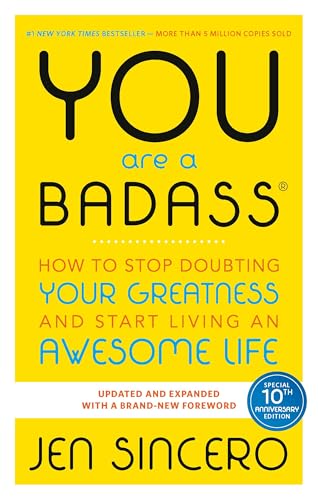
Overview: This is a motivational book aimed at readers who need to stop second-guessing themselves and start taking action. It blends confidence-building, mindset shifts, and encouragement in a conversational style. For people in their 20s who feel stuck, overwhelmed, or overly cautious, it can be a useful nudge toward momentum.
Why it stands out: The book is not the most analytical recommendation on this list, but it fills an important role. Some readers are not looking for a framework or a long-term theory. They need energy, confidence, and a more self-assured way of approaching work and life. This book is best understood as a push toward motion, which makes it a useful complement to the more practical and structured titles above.
Strengths:
- Accessible and easy to read
- Focuses on confidence and action
- Works well for readers who want a motivational reset
Best for: Readers who want a lighter, more encouraging book about self-belief and momentum.
Potential limitations: The style is more conversational and inspirational than deeply practical, so readers wanting detailed step-by-step advice may prefer another title first.
View price, available formats, and reader reviews.
How to Win Friends and Influence People

Overview: Dale Carnegie’s book is best read as a guide to interpersonal habits rather than as a promise of effortless influence. For readers entering work, managing friendships, or learning to navigate difficult conversations, its emphasis on curiosity and respect provides a useful baseline.
Why it stands out: It offers durable principles for listening, showing respect, handling disagreement, and building trust without relying on status.
Strengths:
- Accessible communication principles
- Useful across work and personal relationships
- Encourages listening before persuasion
Best for: people in their twenties developing communication, relationship, and workplace judgment
Potential limitations: The advice works best when applied sincerely rather than as a set of manipulation techniques.
View price, available formats, and reader reviews.
The ONE Thing: The Surprisingly Simple Truth About Extraordinary Results

Overview: The ONE Thing is useful when goal setting has become crowded with competing plans. Its central question helps readers distinguish a meaningful priority from a long list of attractive intentions, then translate that priority into a next action and a repeatable rhythm.
Why it stands out: It offers a practical way to identify the next high-leverage action and reduce goal-setting noise.
Strengths:
- Simple prioritization question
- Helpful for overloaded planners
- Connects long-term goals with daily action
Best for: readers choosing a small number of priorities instead of juggling every goal at once
Potential limitations: A single priority still has to be balanced with maintenance work and responsibilities that cannot be postponed.
View price, available formats, and reader reviews.
Deep Work: Rules for Focused Success in a Distracted World
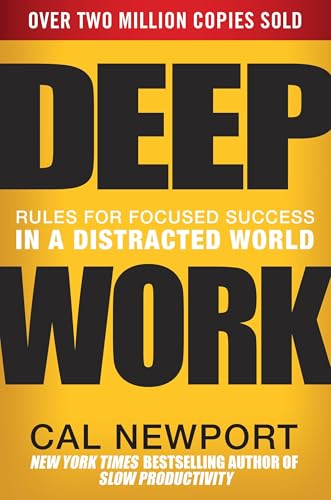
Overview: Cal Newport makes a persuasive case that lifelong learning requires more than collecting books or courses. It requires regular periods of undistracted effort. The book helps readers build a realistic system for deep study, deliberate practice, and producing work that proves what they have learned.
Why it stands out: It treats concentration as a trainable skill and connects focused practice with better learning and higher-quality work.
Strengths:
- Makes focus a concrete learning skill
- Useful for knowledge workers and students
- Encourages routines that protect serious practice
Best for: professionals and students who need protected time for demanding learning
Potential limitations: The strongest recommendations require negotiation with real workplace and family obligations.
View price, available formats, and reader reviews.
Who This List Is Best For
This list is for readers navigating early adulthood, work, relationships, money, and personal direction. It is especially useful when you want a thoughtful starting point rather than a one-size-fits-all answer. Read selectively: choose the book whose examples, level, and method match the decision or difficulty in front of you.
Final Thoughts
The best books for people in their twenties do not pretend there is one correct timeline. They help readers make better decisions about work, relationships, attention, communication, and personal priorities while leaving room for change. Choose the book that fits the decision in front of you, not the life stage you think you should already have mastered.
FAQ
What should I read first in my twenties?
The Defining Decade is a useful starting point for thinking about work, relationships, identity capital, and the long-term effect of small choices.
Which book helps with focus and productivity?
Deep Work offers a practical framework for protecting attention, while Atomic Habits is better for building small routines.
Are these books only for people who feel lost?
No. They are also useful for readers who want to make deliberate choices before a problem becomes urgent.
How can I handle advice that feels too prescriptive?
Treat it as a hypothesis. Keep what fits your values and circumstances, test it in a small way, and reject advice that ignores safety or reality.
Do I need to have my career figured out by thirty?
No. A useful goal is to build skills, relationships, and self-knowledge that make future choices more informed—not to follow a universal deadline.




