
Choosing a good book on critical thinking is harder than it first looks. Some books focus on bias and reasoning errors, some teach argument analysis, some connect the topic to decision-making, and a few use psychology or systems thinking to show how judgment fails in everyday life. The best books about critical thinking do not just tell you to “think better.” They give you a usable framework for asking sharper questions, noticing weak evidence, and making clearer choices in work and daily life.
For readers exploring this topic through cognitive psychology and neuroscience, the best starting point depends on what you want to improve. If you want a broad introduction to reasoning, a classic book on cognitive bias, or a practical way to spot flawed thinking in real situations, the right choice will be different. The recommendations below are selected for clarity, long-term value, and usefulness across both academic and everyday settings.
Quick Answer
If you want the clearest entry point into critical thinking, start with Asking the Right Questions: A Guide to Critical Thinking. It gives you a useful foundation in questions, evidence, assumptions, systems, cognitive bias, and reasoning across domains. Choose Critical Thinking (The MIT Press Essential Knowledge series) when you want a more applied or contrasting approach, and use Think Again: The Power of Knowing What You Don’t Know when you want to extend the idea into a different context.
This list is designed for students, professionals, educators, and readers making decisions under uncertainty. The recommendations are intentionally varied: some explain the underlying research, some offer exercises, and some are strongest as narrative or leadership case studies. That variety makes it easier to choose a book that matches your current question rather than buying the longest list.
Comparison Table
| Book | Best For | Why It Stands Out |
|---|---|---|
| Asking the Right Questions: A Guide to Critical Thinking | Beginners, students, and readers who want a straightforward guide to analyzing claims. | Compared with more theory-heavy books, this one gives readers a usable framework from the start. It teaches critical thinking as a sequence of questions, which makes it especially helpful for students and anyone who wants a repeatable… |
| Critical Thinking (The MIT Press Essential Knowledge series) | Readers who want a compact introduction with a more academic feel. | The main value here is tone and precision. It is a good fit for readers who want an academically credible overview that can serve as a foundation before moving into more specialized books on logic, decision-making, or cognitive bias. |
| Think Again: The Power of Knowing What You Don’t Know | Professionals, managers, and readers who want to become more adaptable thinkers. | Many critical thinking books focus on spotting mistakes in other people’s arguments. This one pays more attention to our own resistance to being wrong. That makes it especially relevant for readers who want to improve judgment in work,… |
| Thinking, Fast and Slow | Readers who want the classic cognitive psychology book behind much of today’s bias research. | This is the most important psychology-driven book on the list. It gives readers a vocabulary for understanding bias, overconfidence, anchoring, and other predictable failures of judgment. Even when later research has refined some of its… |
| Thinking in Systems: International Bestseller | Readers who want to think more clearly about systems, complexity, and long-term effects. | Most critical thinking books focus on individual claims or arguments. This one trains readers to look at patterns and structures. For people who deal with complex problems, that shift is often the difference between a shallow analysis and… |
| How Finance Works: The HBR Guide to Thinking Smart About the Numbers | Managers, analysts, entrepreneurs, and professionals who need stronger number sense. | Critical thinking is often tested hardest in workplaces where people must interpret numbers quickly and make decisions with incomplete information. This book serves that need well, especially for readers who want to become less vulnerable… |
| Factfulness | critical-thinking readers who want to replace reflexive pessimism with better questions and data | It earns a place in this list because it adds a distinct perspective on the cognitive biases that distort how people interpret evidence, risk, and progress, helping readers move beyond a generic motivational summary and choose a practical… |
| Superforecasting | Readers who solve strategic problems where the available information is incomplete or changing. | It replaces a generic confidence book with a research-based method for thinking through uncertain, multi-factor problems. |
How We Chose These Recommendations
This list favors books that teach critical thinking as a real skill rather than a vague self-improvement idea. The strongest selections here are respected because they explain how reasoning works, where it fails, and how readers can improve their judgment in concrete situations.
We also looked for books with enduring educational value. That means choosing titles that are useful for students, professionals, and lifelong learners, while avoiding books that are too narrow, too trendy, or too dependent on motivational language. In psychology-adjacent reading, the best books usually combine conceptual clarity with practical relevance, and the selections below do that in different ways.
Recommended Books
Asking the Right Questions: A Guide to Critical Thinking

Overview: This is one of the clearest practical introductions to critical thinking. It focuses on how to evaluate arguments, identify assumptions, assess evidence, and recognize reasoning that sounds persuasive but does not actually hold up. The book is especially useful for readers who want a method they can apply to articles, conversations, classroom discussions, and everyday decisions.
Why it stands out: Compared with more theory-heavy books, this one gives readers a usable framework from the start. It teaches critical thinking as a sequence of questions, which makes it especially helpful for students and anyone who wants a repeatable process rather than abstract advice.
Strengths:
- Clear focus on argument analysis and evidence
- Highly practical for study and discussion
- Accessible without oversimplifying the subject
Best for: Beginners, students, and readers who want a straightforward guide to analyzing claims.
Potential limitations: Readers looking for a deeper cognitive psychology perspective may want to pair it with a book on bias or judgment.
View price, available formats, and reader reviews.
Critical Thinking (The MIT Press Essential Knowledge series)

Overview: This compact MIT Press book offers a concise, serious look at what critical thinking actually involves. Rather than treating the topic as a list of tips, it places critical thinking in a broader intellectual context and shows why careful reasoning matters across disciplines. The format is efficient, which makes it attractive for readers who want substance without a long commitment.
Why it stands out: The main value here is tone and precision. It is a good fit for readers who want an academically credible overview that can serve as a foundation before moving into more specialized books on logic, decision-making, or cognitive bias.
Strengths:
- Concise but intellectually grounded
- Useful for self-study or classroom support
- Good bridge between theory and general reading
Best for: Readers who want a compact introduction with a more academic feel.
Potential limitations: The shorter format leaves less room for extended practice or worked examples than some readers may want.
View price, available formats, and reader reviews.
Think Again: The Power of Knowing What You Don’t Know

Overview: Adam Grant’s book is about intellectual humility, rethinking, and the ability to revise your views when the evidence changes. It speaks directly to one of the most important parts of critical thinking: not just forming an opinion, but knowing when to question it. The examples are practical and accessible, which makes the book useful outside psychology classrooms as well.
Why it stands out: Many critical thinking books focus on spotting mistakes in other people’s arguments. This one pays more attention to our own resistance to being wrong. That makes it especially relevant for readers who want to improve judgment in work, learning, leadership, and collaborative settings.
Strengths:
- Strong emphasis on rethinking and belief revision
- Practical examples from work and everyday life
- Readable without feeling shallow
Best for: Professionals, managers, and readers who want to become more adaptable thinkers.
Potential limitations: Readers looking for a formal logic or argumentation textbook will find this more behavioral than technical.
View price, available formats, and reader reviews.
Thinking, Fast and Slow
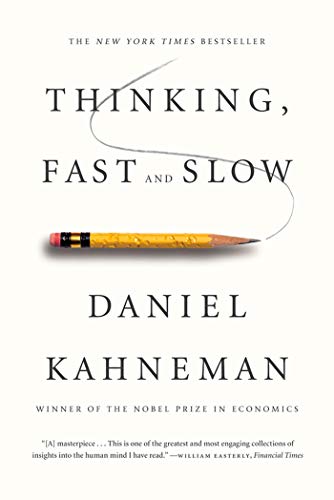
Overview: Daniel Kahneman’s classic explores the two modes of thought that shape judgment: fast, intuitive thinking and slower, more deliberate reasoning. For readers interested in cognitive psychology, this remains one of the most influential books ever written on how people make decisions, misjudge probability, and fall into systematic error.
Why it stands out: This is the most important psychology-driven book on the list. It gives readers a vocabulary for understanding bias, overconfidence, anchoring, and other predictable failures of judgment. Even when later research has refined some of its ideas, the book remains foundational for anyone serious about critical thinking from a cognitive science perspective.
Strengths:
- Foundational account of judgment and bias
- Deep relevance to decision-making and reasoning
- Widely used in psychology and behavioral science discussions
Best for: Readers who want the classic cognitive psychology book behind much of today’s bias research.
Potential limitations: It is substantial, and some sections feel more analytical than immediately practical.
View price, available formats, and reader reviews.
Thinking in Systems: International Bestseller

Overview: Donella Meadows’ book teaches readers how to think about systems, feedback loops, leverage points, and unintended consequences. That makes it especially valuable for critical thinking in situations where simple cause-and-effect reasoning breaks down, such as organizations, policy, economics, and personal habits.
Why it stands out: Most critical thinking books focus on individual claims or arguments. This one trains readers to look at patterns and structures. For people who deal with complex problems, that shift is often the difference between a shallow analysis and a useful one.
Strengths:
- Excellent for complex, real-world problem solving
- Teaches pattern-based thinking rather than isolated facts
- Highly useful across business, policy, and daily life
Best for: Readers who want to think more clearly about systems, complexity, and long-term effects.
Potential limitations: It is not a beginner’s guide to argument analysis, so some readers may want a more basic critical thinking book first.
View price, available formats, and reader reviews.
How Finance Works: The HBR Guide to Thinking Smart About the Numbers

Overview: This Harvard Business Review guide helps readers think more carefully about financial statements, numbers, and business decisions. It is not a general philosophy book about reasoning. Its value comes from showing how critical thinking looks when the evidence is quantitative and the stakes are practical.
Why it stands out: Critical thinking is often tested hardest in workplaces where people must interpret numbers quickly and make decisions with incomplete information. This book serves that need well, especially for readers who want to become less vulnerable to shaky financial claims or superficial performance metrics.
Strengths:
- Practical numerical judgment for business settings
- Useful for non-finance readers who work with metrics
- Direct connection between reasoning and decision-making
Best for: Managers, analysts, entrepreneurs, and professionals who need stronger number sense.
Potential limitations: It is focused on finance rather than general critical thinking, so it works best as a specialized supplement.
View price, available formats, and reader reviews.
Factfulness
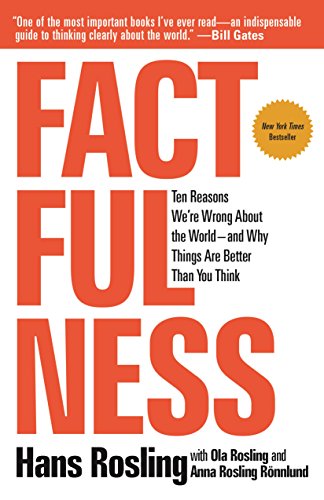
Overview: Factfulness gives readers a focused way to understand the cognitive biases that distort how people interpret evidence, risk, and progress. Its value is not only the headline idea; it also shows how the idea affects decisions, habits, relationships, or work in real situations.
Why it stands out: It earns a place in this list because it adds a distinct perspective on the cognitive biases that distort how people interpret evidence, risk, and progress, helping readers move beyond a generic motivational summary and choose a practical next step.
Strengths:
- Clear framework for the topic
- Useful examples or reflection prompts
- Can be applied beyond a single situation
Best for: critical-thinking readers who want to replace reflexive pessimism with better questions and data
Potential limitations: The framework simplifies complex global trends and should be paired with source-level investigation.
View price, available formats, and reader reviews.
Superforecasting
Overview: Philip Tetlock and Dan Gardner examine how disciplined probability, evidence gathering, and updating beliefs can improve judgment under uncertainty.
Why it stands out: It replaces a generic confidence book with a research-based method for thinking through uncertain, multi-factor problems.
Strengths:
- Evidence-based approach to judgment
- Teaches probabilistic updating
- Useful for decisions under uncertainty
Best for: Readers who solve strategic problems where the available information is incomplete or changing.
Potential limitations: Forecasting methods take practice and do not remove uncertainty from decisions.
View price, available formats, and reader reviews.
Who This List Is Best For
These recommendations are a good fit for students, professionals, educators, and readers making decisions under uncertainty. They are especially useful if you want to understand critical thinking with more nuance than a short checklist, quote, or social-media summary can provide.
- Readers who want a clear conceptual foundation before choosing a technique.
- People who prefer to compare research, practical exercises, and real-world examples.
- Professionals, students, or caregivers who need language they can apply in a real conversation or decision.
Use the Best For and Why It Stands Out columns together. A book can be excellent yet still be the wrong starting point if its depth, tone, or intended reader does not match your goal.
Final Thoughts
The strongest choice for critical thinking depends on what you need to do next. Begin with Asking the Right Questions: A Guide to Critical Thinking if you need a foundation, move to Critical Thinking (The MIT Press Essential Knowledge series) if you need a practical change, and consider Think Again: The Power of Knowing What You Don’t Know if you need a broader or more challenging perspective. The comparison table is meant to shorten that decision, not pretend that one book works for every reader.
A useful reading plan is simple: select one book, write down the question you want it to answer, and apply one idea before moving to another recommendation. For this topic, write down the claim, evidence, alternative explanation, and what would change your mind. critical thinking is slower than a hot take, but it also requires knowing when evidence is incomplete.
FAQ
Which book should I read first for critical thinking?
Start with Asking the Right Questions: A Guide to Critical Thinking if you want the clearest foundation. If your immediate need is action rather than background, compare it with Critical Thinking (The MIT Press Essential Knowledge series) and choose the one whose exercises, examples, or audience match your situation.
How do I choose between a research-based book and a workbook?
Choose the research-oriented option when you need context and a better mental model. Choose the workbook or practical guide when you already understand the problem and need repetition, prompts, or a structured plan. The table’s Best For column is the fastest way to make that distinction.
What is a practical way to use books about critical thinking?
Do not read the whole list at once. Pick one recommendation, define the behavior or decision you want to improve, and test a small idea from the book for seven days. For this topic, write down the claim, evidence, alternative explanation, and what would change your mind.
Are these recommendations suitable for self-study?
Yes, for education and structured reflection. Take notes in your own words, mark claims you want to verify, and discuss difficult ideas with a trusted person or qualified professional when appropriate.
Do I need to read every book on the list?
No. One well-matched book that changes what you notice or do is more valuable than collecting several recommendations without applying any of them.