
The Enneagram draws in a lot of readers for the same reason: it promises a clearer way to understand personality, but the quality of the books varies widely. Some books treat it as a practical self-awareness tool. Others lean more spiritual, more relationship-focused, or more structured and explanatory. If you want the best books about enneagram, the real challenge is not finding books with the keyword in the title. It is choosing the ones that teach the system clearly without flattening it into slogans or personality trivia.
The strongest books below cover different needs. A few are better for beginners who want a straightforward introduction. Others go deeper into the system’s inner logic, growth paths, and spiritual dimensions. Together, they give you a careful starting point whether you are learning for personal insight, relationship work, faith-based reflection, or a more serious study of the Enneagram.
Quick Answer
If you want the clearest entry point into Enneagram, start with The Essential Enneagram. It gives you a useful foundation in the value and limits of type-based language, motivation, self-observation, and avoiding rigid labels. Choose The Wisdom of the Enneagram when you want a more applied or contrasting approach, and use The Road Back to You when you want to extend the idea into a different context.
This list is designed for readers using personality frameworks for reflection, relationships, or coaching conversations. The recommendations are intentionally varied: some explain the underlying research, some offer exercises, and some are strongest as narrative or leadership case studies. That variety makes it easier to choose a book that matches your current question rather than buying the longest list.
Comparison Table
| Book | Best For | Why It Stands Out |
|---|---|---|
| The Essential Enneagram | Beginners, self-study readers, and anyone who wants a practical first book on the Enneagram. | The strongest reason to begin here is its balance of accessibility and credibility. The “research-based” framing gives it a more measured tone than many popular Enneagram books, and that makes it a useful first stop for readers who want… |
| The Wisdom of the Enneagram | Serious learners, long-term Enneagram students, and readers who want the most complete single-book overview. | Compared with lighter introductions, this book has real staying power because it is expansive and serious about the system. It is the book to choose when you want one volume that can serve as both an introduction and a reference point for… |
| The Road Back to You | General readers, group study, and anyone who wants a friendly introduction with relational payoff. | What makes this recommendation useful is its broad appeal. It is less technical than the most comprehensive guides, but it is still substantial enough to feel worthwhile. It also connects naturally with the way many people actually… |
| The Enneagram Made Easy | Casual readers, beginners, and anyone who wants a fast, readable overview before moving to a deeper book. | Among introductory books, this one earns a place because it keeps the subject accessible without making it feel trivial. It is the kind of book that helps readers who have heard Enneagram labels tossed around in conversation and want a… |
| Understanding the Enneagram | Readers who want a straightforward guide they can actually use while learning the basics. | There are many books that explain the Enneagram, but not all of them are equally practical. This one fills the middle ground between a brief primer and a more demanding reference work. That makes it useful for readers who want clarity and… |
| The Enneagram Guide to Waking Up | Readers who already know the basics and want a more inward, growth-centered Enneagram book. | Compared with introductory titles, this one does more to connect the Enneagram to personal transformation. That makes it especially useful for readers who already know their type and want to understand what comes next. It is not the… |
| The Sacred Enneagram | Spiritual readers, faith communities, and anyone who wants the Enneagram connected to personal formation. | Many Enneagram books talk about growth in general terms. This one is more intentional about spiritual formation and the work of becoming more whole. That gives it a distinct place on the list for readers who want the Enneagram to function… |
| The Journey Toward Wholeness | Readers who want an Enneagram book centered on health, stress, and gradual change. | The practical strength here is its attention to integration. Rather than treating the Enneagram as a static label, it uses it as a framework for change. That makes it especially useful for readers who want a book centered on growth under… |
How We Chose These Recommendations
These books were selected for practical usefulness, long-term relevance, and clear value for readers who want to understand the Enneagram without wasting time on shallow summaries. The list balances accessibility and depth, so a beginner can start with an approachable book while a more committed reader can move toward fuller, more reflective treatment of the system.
We also looked for books that serve distinct purposes. Some are better for first-time learning, some for self-reflection, some for relationship insight, and some for spiritual or growth-oriented reading. That mix matters because the Enneagram is used in different ways by different readers, and the best books about enneagram should reflect that range instead of repeating the same approach in slightly different packaging.
Recommended Books
The Essential Enneagram

Overview: For readers who want a clear introduction without unnecessary complexity, this book offers a structured way into the nine Enneagram types. It combines personality typing with a practical self-discovery framework, making it especially approachable for people who are curious about the system but do not want to start with the densest or most mystical book available.
Why it stands out: The strongest reason to begin here is its balance of accessibility and credibility. The “research-based” framing gives it a more measured tone than many popular Enneagram books, and that makes it a useful first stop for readers who want something organized, readable, and relatively grounded. It works well as an entry point before moving into more expansive or more interpretive titles.
Strengths:
- Clear introduction to the nine types
- Useful for self-assessment and reflection
- Accessible without feeling overly simplistic
- Good bridge between casual curiosity and deeper study
Best for: Beginners, self-study readers, and anyone who wants a practical first book on the Enneagram.
Potential limitations: Readers looking for very deep psychological analysis or a strongly spiritual approach may want a more expansive companion book after this one.
View price, available formats, and reader reviews.
The Wisdom of the Enneagram

Overview: This is the most substantial all-purpose guide on the list. It treats the Enneagram as a system of personality structure, motivation, and growth, and it goes well beyond a quick type description. Readers get a fuller picture of how the nine types function, what patterns drive them, and how growth is understood within the model.
Why it stands out: Compared with lighter introductions, this book has real staying power because it is expansive and serious about the system. It is the book to choose when you want one volume that can serve as both an introduction and a reference point for deeper study. For many readers, it becomes the book they return to after the first round of curiosity has passed.
Strengths:
- Comprehensive treatment of the Enneagram
- Strong for readers who want depth, not just type summaries
- Useful as a long-term reference
- Connects personality patterns with growth and self-observation
Best for: Serious learners, long-term Enneagram students, and readers who want the most complete single-book overview.
Potential limitations: The depth that makes it valuable also makes it a less casual read than some newer introductory books.
View price, available formats, and reader reviews.
The Road Back to You

Overview: This book presents the Enneagram in a conversational, highly readable way, with a strong emphasis on self-awareness and relationships. It is especially effective for readers who want to understand how type shows up in daily life, why they keep repeating certain patterns, and how that insight can improve interactions with other people.
Why it stands out: What makes this recommendation useful is its broad appeal. It is less technical than the most comprehensive guides, but it is still substantial enough to feel worthwhile. It also connects naturally with the way many people actually discover the Enneagram, through family dynamics, friendships, work, and faith communities, which gives it immediate real-world relevance.
Strengths:
- Easy to read without feeling thin
- Strong focus on relationships and everyday behavior
- Good choice for book clubs and discussion groups
- Makes the Enneagram feel practical rather than abstract
Best for: General readers, group study, and anyone who wants a friendly introduction with relational payoff.
Potential limitations: Readers seeking a more academic or system-heavy approach may want something more detailed after finishing it.
View price, available formats, and reader reviews.
The Enneagram Made Easy

Overview: This is a simplified guide to the nine types, written for readers who want an approachable explanation of the system without a steep learning curve. It is especially useful if you are trying to get a basic grip on Enneagram language, type differences, and how the model fits into everyday personality understanding.
Why it stands out: Among introductory books, this one earns a place because it keeps the subject accessible without making it feel trivial. It is the kind of book that helps readers who have heard Enneagram labels tossed around in conversation and want a straightforward explanation of what those labels actually mean.
Strengths:
- Simple, approachable presentation
- Good for readers new to personality typing
- Quickly clarifies the basics of the nine types
- Useful as a low-pressure starting point
Best for: Casual readers, beginners, and anyone who wants a fast, readable overview before moving to a deeper book.
Potential limitations: Readers who want deeper psychological nuance or a more comprehensive framework may outgrow it fairly quickly.
View price, available formats, and reader reviews.
Understanding the Enneagram

Overview: This practical guide focuses on personality types in a direct, user-friendly way. It is built for readers who want to understand the core logic of the Enneagram and apply it to real behavior, relationships, and self-observation without getting buried in theory.
Why it stands out: There are many books that explain the Enneagram, but not all of them are equally practical. This one fills the middle ground between a brief primer and a more demanding reference work. That makes it useful for readers who want clarity and usefulness in the same package.
Strengths:
- Practical structure
- Direct explanation of personality types
- Good fit for everyday application
- Approachable for self-guided learning
Best for: Readers who want a straightforward guide they can actually use while learning the basics.
Potential limitations: It is more focused on practical understanding than on the richer spiritual or transformative dimensions of the Enneagram.
View price, available formats, and reader reviews.
The Enneagram Guide to Waking Up
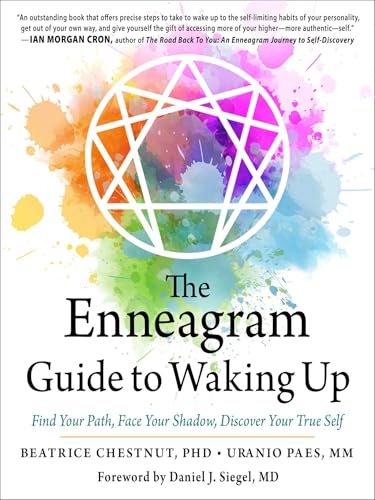
Overview: For readers interested in growth work rather than type labeling alone, this book focuses on self-observation, shadow material, and the process of becoming more honest about habitual patterns. It treats the Enneagram as a tool for inner awareness, not just a personality chart.
Why it stands out: Compared with introductory titles, this one does more to connect the Enneagram to personal transformation. That makes it especially useful for readers who already know their type and want to understand what comes next. It is not the simplest book on the list, but it offers a more reflective, developmental angle than the average primer.
Strengths:
- Strong emphasis on growth and self-awareness
- Useful for readers beyond the beginner stage
- Connects type awareness with shadow work
- Encourages honest, practical reflection
Best for: Readers who already know the basics and want a more inward, growth-centered Enneagram book.
Potential limitations: The reflective style may feel less immediately practical for readers who want a quick type explanation.
View price, available formats, and reader reviews.
The Sacred Enneagram

Overview: This book frames the Enneagram as a spiritual practice, with an emphasis on growth, self-awareness, and inner transformation. It is designed for readers who want more than personality description and are looking for a deeper account of how the Enneagram intersects with faith, reflection, and personal change.
Why it stands out: Many Enneagram books talk about growth in general terms. This one is more intentional about spiritual formation and the work of becoming more whole. That gives it a distinct place on the list for readers who want the Enneagram to function as a contemplative or devotional tool rather than just a typing system.
Strengths:
- Clear spiritual focus
- Useful for readers interested in reflection and formation
- Balances personality insight with inner growth
- Fits well with faith-based reading
Best for: Spiritual readers, faith communities, and anyone who wants the Enneagram connected to personal formation.
Potential limitations: Readers looking for a secular or research-oriented introduction may prefer one of the more neutral guides first.
View price, available formats, and reader reviews.
The Journey Toward Wholeness

Overview: This title focuses on stress, balance, and transformation through the lens of the Enneagram. It is aimed at readers who want to understand not only their type but also the movement toward healthier patterns, especially when life pressure tends to pull them back into familiar habits.
Why it stands out: The practical strength here is its attention to integration. Rather than treating the Enneagram as a static label, it uses it as a framework for change. That makes it especially useful for readers who want a book centered on growth under stress, which is a common reason people keep returning to the Enneagram in the first place.
Strengths:
- Focuses on stress and balance
- Helpful for readers who want transformation, not just description
- Connects type insight to daily emotional patterns
- Good fit for reflective personal use
Best for: Readers who want an Enneagram book centered on health, stress, and gradual change.
Potential limitations: It is more growth-oriented than introductory, so complete beginners may want a simpler overview first.
View price, available formats, and reader reviews.
Who This List Is Best For
These recommendations are a good fit for readers using personality frameworks for reflection, relationships, or coaching conversations. They are especially useful if you want to understand Enneagram with more nuance than a short checklist, quote, or social-media summary can provide.
- Readers who want a clear conceptual foundation before choosing a technique.
- People who prefer to compare research, practical exercises, and real-world examples.
- Professionals, students, or caregivers who need language they can apply in a real conversation or decision.
Use the Best For and Why It Stands Out columns together. A book can be excellent yet still be the wrong starting point if its depth, tone, or intended reader does not match your goal.
Final Thoughts
The strongest choice for Enneagram depends on what you need to do next. Begin with The Essential Enneagram if you need a foundation, move to The Wisdom of the Enneagram if you need a practical change, and consider The Road Back to You if you need a broader or more challenging perspective. The comparison table is meant to shorten that decision, not pretend that one book works for every reader.
A useful reading plan is simple: select one book, write down the question you want it to answer, and apply one idea before moving to another recommendation. For this topic, treat a type description as a hypothesis to test against behavior, not a verdict about identity. the Enneagram is a reflective framework, not a clinical diagnosis or a complete theory of personality. Books can support reflection and skills practice, but they are not a substitute for qualified professional care when symptoms are severe, persistent, or unsafe.
FAQ
Which book should I read first for Enneagram?
Start with The Essential Enneagram if you want the clearest foundation. If your immediate need is action rather than background, compare it with The Wisdom of the Enneagram and choose the one whose exercises, examples, or audience match your situation.
How do I choose between a research-based book and a workbook?
Choose the research-oriented option when you need context and a better mental model. Choose the workbook or practical guide when you already understand the problem and need repetition, prompts, or a structured plan. The table’s Best For column is the fastest way to make that distinction.
What is a practical way to use books about Enneagram?
Do not read the whole list at once. Pick one recommendation, define the behavior or decision you want to improve, and test a small idea from the book for seven days. For this topic, treat a type description as a hypothesis to test against behavior, not a verdict about identity.
Are these recommendations suitable for self-study?
Yes, for education and structured reflection. Take notes in your own words, mark claims you want to verify, and discuss difficult ideas with a trusted person or qualified professional when appropriate. Books can support reflection and skills practice, but they are not a substitute for qualified professional care when symptoms are severe, persistent, or unsafe.
Do I need to read every book on the list?
No. One well-matched book that changes what you notice or do is more valuable than collecting several recommendations without applying any of them.