
Setting goals at work sounds straightforward until the day-to-day reality gets in the way. Deadlines shift, priorities compete, managers ask for updates, and a well-meaning annual objective can fade into vague good intentions. The books below are useful because they do more than encourage motivation. They help readers define meaningful work goals, turn those goals into action, and stay focused long enough to make progress. Some are better for building a clear system. Others are better for people who need a simple structure they can actually use on busy workdays.
Quick Answer
For most readers, The 4 Disciplines of Execution is the best starting point because it gives the clearest foundation for goal setting at work. Atomic Habits is a strong next choice when you want a more practical or applied approach, while Measure What Matters adds a different perspective for readers who want to go deeper.
Comparison Table
| Book | Best For | Why It Stands Out |
|---|---|---|
| The 4 Disciplines of Execution | Managers and teams that set goals well but struggle to execute consistently. | It is a direct replacement for a planner in a workplace goal-setting list because it focuses on execution discipline and team follow-through. |
| Atomic Habits | Professionals who need to make progress on goals through repeatable daily actions. | It helps employees translate a work goal into consistent daily behavior instead of relying on motivation alone. |
| Measure What Matters | Managers and teams who need a shared system for turning goals into accountable action. | It is a substantially better fit for workplace goal setting than consumer planners because it connects goals to team alignment and results. |
| Deep Work | Professionals whose goals are repeatedly delayed by interruptions and shallow work. | Effective goal setting depends on protected execution time; this book addresses the work conditions that make goals achievable. |
| The ONE Thing | Professionals who need to choose a vital next step instead of tracking too many priorities. | It gives workplace goal setting a useful prioritization lens and helps prevent a long list of goals from becoming a list of competing priorities. |
How We Chose These Recommendations
This list focuses on books and guided planning systems that help people set better work goals, not generic motivational reading. The strongest selections here offer a clear method, a practical framework, or a disciplined way to convert goals into daily action. We also favored titles that serve real workplace needs, such as prioritizing tasks, reviewing progress, and keeping long-term goals visible during a busy week.
Because the search intent is specific to work, the recommendations lean toward professional usefulness rather than broad personal development. Each title earns its place by offering a distinct approach. Some are best for structured quarterly planning, some for daily execution, and some for clarifying what matters before you start measuring progress.
Recommended Books
The 4 Disciplines of Execution

Overview: Chris McChesney, Sean Covey, and Jim Huling present a practical method for translating important goals into lead measures, visible scoreboards, and regular accountability.
Why it stands out: It is a direct replacement for a planner in a workplace goal-setting list because it focuses on execution discipline and team follow-through.
Strengths:
- Concrete execution framework
- Useful for teams
- Connects goals with weekly commitments
Best for: Managers and teams that set goals well but struggle to execute consistently.
Potential limitations: The framework works best when leaders protect time for review and remove competing priorities.
View price, available formats, and reader reviews.
Atomic Habits

Overview: James Clear presents a practical framework for designing environments and routines that make useful behaviors easier to repeat.
Why it stands out: It helps employees translate a work goal into consistent daily behavior instead of relying on motivation alone.
Strengths:
- Highly actionable habit framework
- Useful for individual and team routines
- Connects goals with environment design
Best for: Professionals who need to make progress on goals through repeatable daily actions.
Potential limitations: It is strongest on behavior change and less detailed on organizational goal governance.
View price, available formats, and reader reviews.
Measure What Matters
Overview: John Doerr explains how objectives and key results can turn broad goals into measurable commitments, review cycles, and visible progress.
Why it stands out: It is a substantially better fit for workplace goal setting than consumer planners because it connects goals to team alignment and results.
Strengths:
- Clear OKR framework
- Useful for team alignment
- Encourages measurable progress reviews
Best for: Managers and teams who need a shared system for turning goals into accountable action.
Potential limitations: OKRs can become bureaucratic if teams measure activity instead of meaningful outcomes.
View price, available formats, and reader reviews.
Deep Work
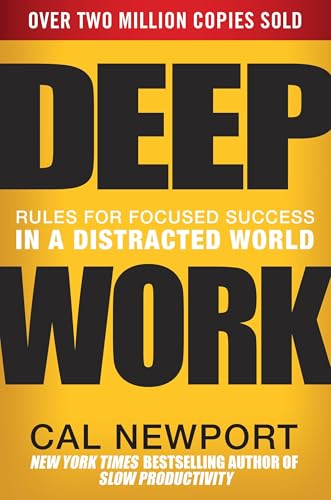
Overview: Cal Newport argues that sustained, distraction-free concentration is a competitive advantage and offers rules for building that capacity into a working week.
Why it stands out: Effective goal setting depends on protected execution time; this book addresses the work conditions that make goals achievable.
Strengths:
- Clear case for focused work
- Practical scheduling ideas
- Useful for knowledge workers
Best for: Professionals whose goals are repeatedly delayed by interruptions and shallow work.
Potential limitations: Some roles require constant availability, so the methods need careful adaptation.
View price, available formats, and reader reviews.
The ONE Thing

Overview: Gary Keller and Jay Papasan encourage readers to identify the most important action that makes other work easier or unnecessary.
Why it stands out: It gives workplace goal setting a useful prioritization lens and helps prevent a long list of goals from becoming a list of competing priorities.
Strengths:
- Strong focus on prioritization
- Easy to apply to weekly planning
- Useful when goals compete for attention
Best for: Professionals who need to choose a vital next step instead of tracking too many priorities.
Potential limitations: The simple framework can feel reductive in complex, interdependent projects.
View price, available formats, and reader reviews.
Who This List Is Best For
This list is best for professionals, managers, entrepreneurs, students entering the workplace, and anyone who needs a more deliberate way to set goals at work. It will also help readers who have tried to stay organized with loose to-do lists but need something more consistent. If you want a structured planning system, a goal tracker, or a way to connect daily work to larger objectives, these recommendations give you several strong entry points.
Final Thoughts
The strongest choice depends on what you need from a book about goal setting at work. Start with The 4 Disciplines of Execution if you want the clearest foundation, move to Atomic Habits when you want a more practical framework, and use Measure What Matters when you want to broaden your perspective. The comparison table above is designed to make that choice easier without treating one book as the right answer for every reader.
FAQ
Which book should I read first?
Start with The 4 Disciplines of Execution if you want the clearest introduction to goal setting at work. It is the most useful foundation before choosing a narrower or more advanced recommendation.
Which recommendation is the most practical?
Atomic Habits is a strong practical choice because it translates the topic into ideas or exercises that can be used immediately. If your needs are more specialized, compare the Best For column in the table.
Can I use these books for self-study?
Yes. Read one book at a time, take notes on the ideas that fit your situation, and apply one or two practices before moving on. For mental-health or clinical concerns, books should support—not replace—professional care.
How should I choose between the recommendations?
Choose based on your current goal, experience level, and preferred format. A practical guide may be best when you need action now, while a broader or more research-oriented book may be better when you want context and long-term understanding.
Do I need to read every book on the list?
No. One well-matched book, followed by deliberate application, is usually more useful than collecting several books without using what they teach.