
Somatic trauma therapy asks a practical question: how does trauma live in the body, and what helps people work with it without forcing the nervous system to relive everything at once? That is a different problem from simply understanding trauma in theory. Some readers want a clear introduction to body-based recovery. Others need clinician-focused tools, a map of developmental trauma, or a better grasp of the vagus nerve, dissociation, memory, or internal parts work. The best books for somatic trauma therapy do not all teach the same method, which is exactly why a curated list is useful. The right book depends on whether you are a therapist, a student, or someone looking for informed self-study with realistic expectations.
Quick Answer
If you want the clearest entry point into somatic trauma therapy, start with Waking the Tiger: Healing Trauma. It gives you a useful foundation in body awareness, regulation, memory, safety, and the boundaries between self-help and clinical therapy. Choose In an Unspoken Voice: How the Body Releases Trauma and Restores Goodness when you want a more applied or contrasting approach, and use Healing Developmental Trauma: How Early Trauma Affects Self-Regulation, Self-Image, and the Capacity for Relationship when you want to extend the idea into a different context.
This list is designed for trauma-informed practitioners, students, and readers exploring body-based approaches. The recommendations are intentionally varied: some explain the underlying research, some offer exercises, and some are strongest as narrative or leadership case studies. That variety makes it easier to choose a book that matches your current question rather than buying the longest list.
Comparison Table
| Book | Best For | Why It Stands Out |
|---|---|---|
| Waking the Tiger: Healing Trauma | Beginners, therapists-in-training, and readers who want a foundational book before moving into more technical material. | This is one of the most important gateway books for readers who want to understand somatic trauma therapy at its roots. It is not a technique manual, and that is part of its value. Instead, it gives readers a conceptual foundation that… |
| In an Unspoken Voice: How the Body Releases Trauma and Restores Goodness | Readers who already understand basic trauma concepts and want a more nuanced account of body-based healing. | Among books on somatic trauma therapy, this one is especially valuable for readers who want depth without jargon-heavy clinical writing. It is thoughtful and human, with enough conceptual richness to reward careful reading. That makes it… |
| Healing Developmental Trauma: How Early Trauma Affects Self-Regulation, Self-Image, and the Capacity for Relationship | Therapists, students, and readers who want to understand complex trauma rooted in early life experiences. | Developmental trauma is central to many somatic therapy conversations, yet it is often treated too broadly. This book is useful because it keeps the focus on early relational injury and its long-term consequences. For therapists and… |
| The Polyvagal Theory Workbook for Trauma: Body-Based Activities to Regulate, Rebalance, and Rewire Your Nervous System Without Reliving the Trauma | Self-guided readers, therapists looking for client-friendly exercises, and anyone who wants a workbook rather than a narrative text. | Some somatic trauma books explain the theory well but stop short of usable practice. This one is more directly action-oriented. It is a smart choice for readers who want a hands-on resource that fits between educational reading and… |
| Somatic Therapy Workbook Exercises to Treat Trauma, Complex PTSD and Dissociation: Mindfulness, Self-Compassion, and the Mind-Body Approach to Reduce Stress and Heal Trauma | Readers who want practical exercises, especially those exploring somatic support between therapy sessions. | Compared with the more foundational books on this list, this one is built for application. It is especially useful for readers who are looking for a self-study companion that emphasizes day-to-day regulation and coping rather than… |
| 101 Trauma-Informed Interventions: Activities, Exercises and Assignments to Move the Client and Therapy Forward | Licensed clinicians, interns, counselors, and social workers. | The book belongs on a somatic trauma therapy list because trauma treatment often requires concrete tools, not just theoretical knowledge. While it is broader than somatic work alone, its intervention format makes it a practical companion… |
| Healing the Fragmented Selves of Trauma Survivors: Overcoming Internal Self-Alienation | Therapists, trauma specialists, and advanced students. | In somatic trauma therapy, body symptoms and internal fragmentation often overlap. This book is especially valuable for readers who want a serious clinical account of complex trauma that goes beyond generic talk of stress or resilience.… |
How We Chose These Recommendations
The strongest books for somatic trauma therapy need to do more than mention the body. They should offer a credible framework for understanding trauma, a useful method for working with it, or a clinical perspective that still feels grounded in real practice. For this list, priority went to books with lasting relevance, clear educational value, and strong usefulness for readers who want to learn either the theory or the application of body-based trauma work.
That means the selection leans toward established titles and clinically oriented books rather than trend-driven or overly general self-help. Some books are better for beginners, while others are better for therapists, students, or readers who already know the basics of trauma theory. Together, they give a balanced view of somatic trauma therapy without repeating the same approach over and over.
Recommended Books
Waking the Tiger: Healing Trauma

Overview: Peter A. Levine’s classic book introduces trauma as a bodily experience, not just a psychological one. Rather than focusing only on the event itself, it looks at how survival responses can remain incomplete and how the body may continue holding that stress long after danger has passed. The writing is accessible, but the ideas have had real influence across somatic and trauma-informed practice.
Why it stands out: This is one of the most important gateway books for readers who want to understand somatic trauma therapy at its roots. It is not a technique manual, and that is part of its value. Instead, it gives readers a conceptual foundation that helps make later books on regulation, dissociation, or nervous system work much easier to understand.
Strengths:
- Foundational somatic trauma framework
- Clear explanation of survival responses
- Useful for both general readers and clinicians
Best for: Beginners, therapists-in-training, and readers who want a foundational book before moving into more technical material.
Potential limitations: Readers looking for step-by-step exercises may want a more workbook-driven title alongside it.
View price, available formats, and reader reviews.
In an Unspoken Voice: How the Body Releases Trauma and Restores Goodness

Overview: This book extends the somatic view of trauma with a more reflective, clinically informed look at how trauma affects perception, posture, sensation, and the capacity to feel safe. It is concerned with how the body expresses what words cannot always hold, and it treats recovery as a gradual process of restoring connection rather than forcing catharsis.
Why it stands out: Among books on somatic trauma therapy, this one is especially valuable for readers who want depth without jargon-heavy clinical writing. It is thoughtful and human, with enough conceptual richness to reward careful reading. That makes it a strong choice for clinicians, advanced students, and readers who want to move beyond introductory material.
Strengths:
- Deep focus on the body in trauma recovery
- Clinically informed without becoming overly technical
- Strong fit for reflective, sustained reading
Best for: Readers who already understand basic trauma concepts and want a more nuanced account of body-based healing.
Potential limitations: The pace is more contemplative than practical, so it is not the best choice if you want quick exercises first.
View price, available formats, and reader reviews.
Healing Developmental Trauma: How Early Trauma Affects Self-Regulation, Self-Image, and the Capacity for Relationship

Overview: This book focuses on the effects of early trauma, especially how it shapes regulation, identity, and relationship patterns over time. That makes it especially useful for readers trying to understand why trauma is not only about distressing memories, but also about how a person learns to manage emotions, trust others, and experience the self.
Why it stands out: Developmental trauma is central to many somatic therapy conversations, yet it is often treated too broadly. This book is useful because it keeps the focus on early relational injury and its long-term consequences. For therapists and informed readers, that distinction matters. It helps bridge body-based work with attachment and self-regulation concerns.
Strengths:
- Strong focus on developmental and relational trauma
- Helpful for understanding self-regulation problems
- Connects somatic ideas with attachment themes
Best for: Therapists, students, and readers who want to understand complex trauma rooted in early life experiences.
Potential limitations: The material is more specialized than a general trauma introduction.
View price, available formats, and reader reviews.
The Polyvagal Theory Workbook for Trauma: Body-Based Activities to Regulate, Rebalance, and Rewire Your Nervous System Without Reliving the Trauma

Overview: This workbook translates nervous system concepts into exercises readers can actually use. Instead of treating polyvagal theory as an abstract idea, it offers body-based activities designed to support regulation, grounding, and a greater sense of safety. The format is practical and structured, which makes it easier to use consistently.
Why it stands out: Some somatic trauma books explain the theory well but stop short of usable practice. This one is more directly action-oriented. It is a smart choice for readers who want a hands-on resource that fits between educational reading and everyday self-regulation work.
Strengths:
- Exercise-driven format
- Useful for nervous system regulation work
- Accessible bridge between theory and practice
Best for: Self-guided readers, therapists looking for client-friendly exercises, and anyone who wants a workbook rather than a narrative text.
Potential limitations: Readers who want a deeper scientific discussion of polyvagal ideas will need a more theory-focused book.
View price, available formats, and reader reviews.
Somatic Therapy Workbook Exercises to Treat Trauma, Complex PTSD and Dissociation: Mindfulness, Self-Compassion, and the Mind-Body Approach to Reduce Stress and Heal Trauma

Overview: This workbook is aimed at readers who want direct, structured exercises for working with trauma, complex PTSD, and dissociation through a mind-body lens. It combines mindfulness and self-compassion with practical body-based strategies, which makes it approachable for people who want to do something concrete rather than only read theory.
Why it stands out: Compared with the more foundational books on this list, this one is built for application. It is especially useful for readers who are looking for a self-study companion that emphasizes day-to-day regulation and coping rather than abstract explanation. That practical orientation earns it a place here.
Strengths:
- Workbook format with direct exercises
- Addresses dissociation alongside trauma and CPTSD
- Useful for building a routine around regulation skills
Best for: Readers who want practical exercises, especially those exploring somatic support between therapy sessions.
Potential limitations: As with any self-help workbook, it works best as a supplement to professional care when symptoms are severe or longstanding.
View price, available formats, and reader reviews.
101 Trauma-Informed Interventions: Activities, Exercises and Assignments to Move the Client and Therapy Forward

Overview: This is a clinician-oriented collection of interventions rather than a general introduction to trauma. It is built around activities, exercises, and assignments that therapists can draw on in sessions, treatment planning, or homework. For professionals, that makes it especially useful because it emphasizes what can be done with clients, not just what should be understood about trauma.
Why it stands out: The book belongs on a somatic trauma therapy list because trauma treatment often requires concrete tools, not just theoretical knowledge. While it is broader than somatic work alone, its intervention format makes it a practical companion for therapists who want ideas that can be adapted to body-based, trauma-informed care.
Strengths:
- Large toolkit of trauma-informed activities
- Very practical for clinical use
- Helpful for sessions, homework, and treatment structure
Best for: Licensed clinicians, interns, counselors, and social workers.
Potential limitations: Readers looking for a theory-heavy somatic text may find it more utilitarian than conceptual.
View price, available formats, and reader reviews.
Healing the Fragmented Selves of Trauma Survivors: Overcoming Internal Self-Alienation
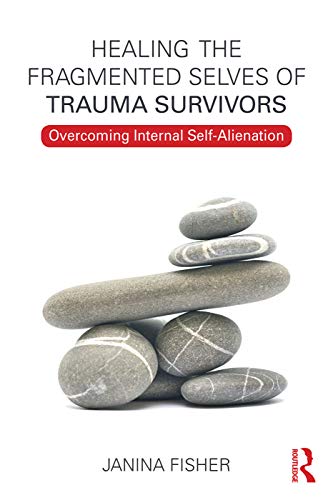
Overview: This book addresses the internal fragmentation that can follow trauma, with a focus on self-alienation, dissociation, and the experience of having parts of the self feel disconnected. It is more clinical than many general trauma books and gives serious readers a framework for understanding why some trauma survivors do not experience their distress as a single, unified problem.
Why it stands out: In somatic trauma therapy, body symptoms and internal fragmentation often overlap. This book is especially valuable for readers who want a serious clinical account of complex trauma that goes beyond generic talk of stress or resilience. It pairs well with books on developmental trauma and memory because it clarifies the inner structure of trauma-related suffering.
Strengths:
- Strong clinical focus on dissociation and self-fragmentation
- Useful for advanced trauma study
- Helpful bridge between body-based and parts-oriented thinking
Best for: Therapists, trauma specialists, and advanced students.
Potential limitations: More demanding than a beginner-friendly self-help book.
View price, available formats, and reader reviews.
Who This List Is Best For
These recommendations are a good fit for trauma-informed practitioners, students, and readers exploring body-based approaches. They are especially useful if you want to understand somatic trauma therapy with more nuance than a short checklist, quote, or social-media summary can provide.
- Readers who want a clear conceptual foundation before choosing a technique.
- People who prefer to compare research, practical exercises, and real-world examples.
- Professionals, students, or caregivers who need language they can apply in a real conversation or decision.
Use the Best For and Why It Stands Out columns together. A book can be excellent yet still be the wrong starting point if its depth, tone, or intended reader does not match your goal.
Final Thoughts
The strongest choice for somatic trauma therapy depends on what you need to do next. Begin with Waking the Tiger: Healing Trauma if you need a foundation, move to In an Unspoken Voice: How the Body Releases Trauma and Restores Goodness if you need a practical change, and consider Healing Developmental Trauma: How Early Trauma Affects Self-Regulation, Self-Image, and the Capacity for Relationship if you need a broader or more challenging perspective. The comparison table is meant to shorten that decision, not pretend that one book works for every reader.
A useful reading plan is simple: select one book, write down the question you want it to answer, and apply one idea before moving to another recommendation. For this topic, choose a gentle grounding practice and stop if an exercise increases distress or dissociation. trauma work should be paced with qualified support, especially when symptoms are intense. Books can support reflection and skills practice, but they are not a substitute for qualified professional care when symptoms are severe, persistent, or unsafe.
FAQ
Which book should I read first for somatic trauma therapy?
Start with Waking the Tiger: Healing Trauma if you want the clearest foundation. If your immediate need is action rather than background, compare it with In an Unspoken Voice: How the Body Releases Trauma and Restores Goodness and choose the one whose exercises, examples, or audience match your situation.
How do I choose between a research-based book and a workbook?
Choose the research-oriented option when you need context and a better mental model. Choose the workbook or practical guide when you already understand the problem and need repetition, prompts, or a structured plan. The table’s Best For column is the fastest way to make that distinction.
What is a practical way to use books about somatic trauma therapy?
Do not read the whole list at once. Pick one recommendation, define the behavior or decision you want to improve, and test a small idea from the book for seven days. For this topic, choose a gentle grounding practice and stop if an exercise increases distress or dissociation.
Are these recommendations suitable for self-study?
Yes, for education and structured reflection. Take notes in your own words, mark claims you want to verify, and discuss difficult ideas with a trusted person or qualified professional when appropriate. Books can support reflection and skills practice, but they are not a substitute for qualified professional care when symptoms are severe, persistent, or unsafe.
Do I need to read every book on the list?
No. One well-matched book that changes what you notice or do is more valuable than collecting several recommendations without applying any of them.