
Trauma bonding is one of those relationship patterns that is easy to misunderstand and hard to untangle once you are inside it. The attachment can feel intense, confusing, and stubbornly resistant to logic, which is why a useful book has to do more than define the term. It should explain the psychology behind the pull, help readers recognize abuse dynamics without minimizing them, and offer grounded steps toward recovery. Some books are better for understanding the pattern, while others focus more on healing, boundaries, attachment, or the effects of complex trauma.
That distinction matters. If you are trying to leave a harmful relationship, you may need practical, compassionate guidance. If you are trying to understand why the bond formed in the first place, a broader trauma or attachment book may serve you better. The best books for trauma bonding are the ones that help readers make sense of the cycle without pretending there is a quick fix.
Quick Answer
If you want the clearest entry point into trauma bonding, start with Run Like Hell: A Therapist’s Guide to Recognizing, Escaping, and Healing from Trauma Bonds. It gives you a useful foundation in intermittent reinforcement, attachment, boundaries, trauma recovery, and the practical steps that support safety. Choose Why Can’t I Leave?: How to End the Emotional Spiral of Trauma Bonds, Co-Dependency & Self-Blame by Rewiring Toxic Patterns and Your Fear of Abandonment when you want a more applied or contrasting approach, and use Break the Cycle: A Guide to Healing Intergenerational Trauma when you want to extend the idea into a different context.
This list is designed for readers trying to understand coercive relationship patterns and recover safely. The recommendations are intentionally varied: some explain the underlying research, some offer exercises, and some are strongest as narrative or leadership case studies. That variety makes it easier to choose a book that matches your current question rather than buying the longest list.
Comparison Table
| Book | Best For | Why It Stands Out |
|---|---|---|
| Run Like Hell: A Therapist’s Guide to Recognizing, Escaping, and Healing from Trauma Bonds | People who need a structured, readable guide to understanding abusive attachment and beginning the process of leaving. | Among the trauma bonding books on this list, this is one of the most focused on the actual task readers are facing. It does not broaden out into general wellness advice too quickly. Instead, it keeps the emphasis on recognition, escape,… |
| Why Can’t I Leave?: How to End the Emotional Spiral of Trauma Bonds, Co-Dependency & Self-Blame by Rewiring Toxic Patterns and Your Fear of Abandonment | Readers who understand they are stuck, but need help understanding the psychological pull that keeps them there. | Many books explain abusive behavior from the outside. This one pays closer attention to the internal loop that keeps people attached. That gives it a distinct place on the list, particularly for readers who need language for their own… |
| Break the Cycle: A Guide to Healing Intergenerational Trauma | Readers who suspect that trauma bonding is connected to deeper, long-standing trauma patterns. | Where the other books focus more directly on abusive attachment, this one helps readers understand where the vulnerability may have started. It is a strong fit for readers who want to move from “What is happening to me?” to “Why does this… |
| The Pain We Carry: Healing from Complex PTSD for People of Color | Readers of color who want a trauma book that reflects their experience more directly. | The value here is not just the topic of complex PTSD. It is the perspective. Many trauma books speak in broad universal terms that overlook how trauma is experienced differently across communities. This book fills that gap while still… |
| Journey Through Trauma: A Trail Guide to the 5-Phase Cycle of Healing Repeated Trauma | Readers who want a more methodical healing roadmap after trauma-related relationship patterns. | Compared with the more immediate trauma-bonding titles, this one helps readers think in stages. That is helpful when the main challenge is not just identifying the bond, but understanding how healing unfolds over time. It works well for… |
| Trauma Bonding: Understanding and Overcoming the Trauma Bond in a Narcissistic Relationship: Narcissistic Relationship Recovery, Book 1 | Readers who want a simple, direct primer on trauma bonding and recovery. | The book earns its place as a simple entry point. For readers who are just learning the term trauma bond and want something easy to orient them, a direct guide like this can be less intimidating than a broader trauma text. It is not the… |
| Trauma Bonding: Escape the Control: 7 easy steps for anyone to break the cycle of hidden abuse & feeling inadequate. Learn how to love yourself and find lasting peace & acceptance. | Readers who want a simple framework for breaking the trauma bond and rebuilding confidence. | While some trauma books are better for insight, this one is more about momentum. The seven-step structure makes it feel manageable, which matters when a reader is in the middle of confusion and self-doubt. It is a useful option for… |
| Securely Attached: How Understanding Childhood Trauma Will Transform Your Parenting-A Handbook for Adoptive and Foster Parents | Adoptive and foster parents, and readers who want a caregiving-oriented view of childhood trauma and attachment. | This is the most specialized recommendation on the list, but it serves an important purpose. Some readers exploring trauma bonding are not only trying to recover from adult abuse, they are also trying to understand their attachment style,… |
How We Chose These Recommendations
These recommendations were selected for practical usefulness, clarity of explanation, and long-term value for readers trying to understand or recover from trauma bonding. Since trauma bonding sits at the intersection of abuse dynamics, attachment, and complex trauma, the list includes books that approach the problem from different angles rather than repeating the same advice in slightly different language.
Priority went to books that are useful in real life: books that help readers recognize patterns, name the emotional hooks, and begin healing without oversimplifying the problem. Where possible, the list favors established trauma and psychology titles with a stronger educational or clinical orientation. A few more recent self-help books are included because they directly address trauma bonding in a way that can be immediately useful to readers who need specific guidance now.
Recommended Books
Run Like Hell: A Therapist’s Guide to Recognizing, Escaping, and Healing from Trauma Bonds

Overview: For readers who want direct, clinically minded guidance, this book stays close to the practical realities of trauma bonding. It addresses how these relationships form, why leaving can feel so difficult, and what recovery looks like after the break. The therapist framing gives it a more grounded tone than many general self-help books on abusive relationships.
Why it stands out: Among the trauma bonding books on this list, this is one of the most focused on the actual task readers are facing. It does not broaden out into general wellness advice too quickly. Instead, it keeps the emphasis on recognition, escape, and healing, which makes it especially useful for someone in an active or recently ended harmful relationship.
Strengths:
- Clear focus on identifying and leaving trauma bonds
- Therapist-informed perspective
- Useful for readers who want practical next steps
- Balances safety, insight, and recovery
Best for: People who need a structured, readable guide to understanding abusive attachment and beginning the process of leaving.
Potential limitations: Readers looking for a deeper academic treatment of trauma or attachment theory may want to pair it with a broader psychology title.
View price, available formats, and reader reviews.
Why Can’t I Leave?: How to End the Emotional Spiral of Trauma Bonds, Co-Dependency & Self-Blame by Rewiring Toxic Patterns and Your Fear of Abandonment

Overview: This book is useful for the inner experience of trauma bonding, especially the parts that outsiders often miss. It centers the emotional spiral, including self-blame, codependency, and fear of abandonment. That makes it a good choice for readers who already know the relationship is unhealthy but still cannot make sense of why leaving feels so hard.
Why it stands out: Many books explain abusive behavior from the outside. This one pays closer attention to the internal loop that keeps people attached. That gives it a distinct place on the list, particularly for readers who need language for their own ambivalence rather than another explanation of the abuser’s tactics.
Strengths:
- Focuses on emotional dependency and abandonment fear
- Helps readers identify self-blame cycles
- Directly relevant to trauma bond recovery
- Accessible for non-specialists
Best for: Readers who understand they are stuck, but need help understanding the psychological pull that keeps them there.
Potential limitations: Its emphasis is practical and self-help oriented, so readers seeking a more clinical or research-heavy book may want something broader as well.
View price, available formats, and reader reviews.
Break the Cycle: A Guide to Healing Intergenerational Trauma

Overview: This book widens the frame beyond one relationship and looks at how trauma can be carried across generations. That matters because trauma bonding is often not just about one partner or one conflict. It can be tied to early attachment wounds, family roles, and patterns learned long before adulthood.
Why it stands out: Where the other books focus more directly on abusive attachment, this one helps readers understand where the vulnerability may have started. It is a strong fit for readers who want to move from “What is happening to me?” to “Why does this pattern feel familiar?” That broader perspective is valuable when trauma bonding is only one part of a larger story.
Strengths:
- Connects present-day relationships to family-of-origin trauma
- Useful for readers exploring repeating patterns
- Offers a broader healing lens, not just crisis guidance
- Helps explain why certain dynamics feel normal
Best for: Readers who suspect that trauma bonding is connected to deeper, long-standing trauma patterns.
Potential limitations: It is not limited to trauma bonding specifically, so readers needing only immediate relationship guidance may want a more targeted book first.
View price, available formats, and reader reviews.
The Pain We Carry: Healing from Complex PTSD for People of Color

Overview: This is one of the strongest trauma recovery books for readers whose experience of trauma cannot be separated from race, culture, or lived social stress. While it is not narrowly about trauma bonding, it is highly relevant for people whose attachment patterns are shaped by complex trauma. The book addresses healing in a way that recognizes identity and systemic context.
Why it stands out: The value here is not just the topic of complex PTSD. It is the perspective. Many trauma books speak in broad universal terms that overlook how trauma is experienced differently across communities. This book fills that gap while still remaining practical for recovery work. For some readers, that makes it more resonant and more usable than a general trauma text.
Strengths:
- Trauma recovery with a culturally informed perspective
- Especially relevant to complex PTSD and relational wounds
- Thoughtful, accessible discussion of healing
- Useful when trauma bonding overlaps with broader trauma history
Best for: Readers of color who want a trauma book that reflects their experience more directly.
Potential limitations: Because it is broader than trauma bonding alone, readers may want to pair it with a more relationship-specific guide.
View price, available formats, and reader reviews.
Journey Through Trauma: A Trail Guide to the 5-Phase Cycle of Healing Repeated Trauma

Overview: This book offers a phase-based way to understand repeated trauma and recovery. That structure is useful for readers who feel overwhelmed by the idea of healing and want something more organized than generic encouragement. The emphasis on repeated trauma also makes it relevant when trauma bonding is part of a longer history of harmful relationships or chronic stress.
Why it stands out: Compared with the more immediate trauma-bonding titles, this one helps readers think in stages. That is helpful when the main challenge is not just identifying the bond, but understanding how healing unfolds over time. It works well for people who want a process they can return to rather than a quick set of tips.
Strengths:
- Clear framework for healing repeated trauma
- Good for readers who want a structured process
- Less reactive, more reflective than crisis-focused books
- Useful for long-term recovery planning
Best for: Readers who want a more methodical healing roadmap after trauma-related relationship patterns.
Potential limitations: Its broader trauma focus means it is not as immediately targeted to trauma bonds as the most specialized books on the list.
View price, available formats, and reader reviews.
Trauma Bonding: Understanding and Overcoming the Trauma Bond in a Narcissistic Relationship: Narcissistic Relationship Recovery, Book 1

Overview: This is a direct, accessible book for readers who want a straightforward introduction to trauma bonding in the context often discussed alongside narcissistic abuse. It is geared toward understanding the dynamic and beginning recovery, without asking the reader to wade through a lot of theory first.
Why it stands out: The book earns its place as a simple entry point. For readers who are just learning the term trauma bond and want something easy to orient them, a direct guide like this can be less intimidating than a broader trauma text. It is not the deepest option on the list, but it is one of the clearest for early-stage understanding.
Strengths:
- Highly focused on trauma bonding itself
- Easy to approach for beginners
- Useful for early recognition and recovery
- Addresses narcissistic relationship dynamics directly
Best for: Readers who want a simple, direct primer on trauma bonding and recovery.
Potential limitations: The scope is narrower than the more clinically grounded titles, so readers may want a second book for deeper trauma or attachment context.
View price, available formats, and reader reviews.
Trauma Bonding: Escape the Control: 7 easy steps for anyone to break the cycle of hidden abuse & feeling inadequate. Learn how to love yourself and find lasting peace & acceptance.
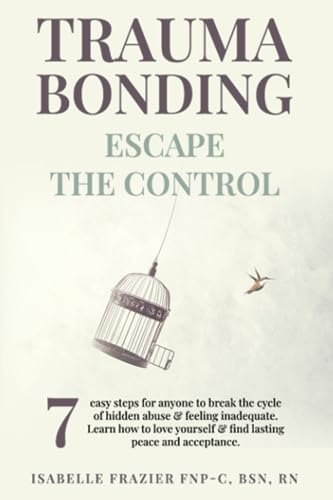
Overview: This book is built for readers who want a concise, step-based approach to getting unstuck. Its emphasis is on hidden abuse, shame, and self-worth, which are often central to trauma bonding even when the relationship has already become unbearable. The shorter, more tactical format can be reassuring for someone who feels overloaded.
Why it stands out: While some trauma books are better for insight, this one is more about momentum. The seven-step structure makes it feel manageable, which matters when a reader is in the middle of confusion and self-doubt. It is a useful option for someone who wants an entry point that does not require a large time commitment.
Strengths:
- Short, actionable structure
- Focused on hidden abuse and self-worth
- Helpful for readers who feel overwhelmed
- Easy to use as an initial recovery guide
Best for: Readers who want a simple framework for breaking the trauma bond and rebuilding confidence.
Potential limitations: The concise format is useful, but readers who want a deeper clinical or research-based treatment of trauma bonding may need a more expansive companion book.
View price, available formats, and reader reviews.
Securely Attached: How Understanding Childhood Trauma Will Transform Your Parenting-A Handbook for Adoptive and Foster Parents

Overview: Although this book is written for adoptive and foster parents, it earns inclusion because trauma bonding often makes more sense when viewed through attachment development. The book focuses on childhood trauma and how it shapes caregiving relationships, which can be very helpful for readers trying to understand the roots of relational insecurity.
Why it stands out: This is the most specialized recommendation on the list, but it serves an important purpose. Some readers exploring trauma bonding are not only trying to recover from adult abuse, they are also trying to understand their attachment style, or the attachment needs of a child in their care. That makes this a strong supporting title rather than a primary self-help book for everyone.
Strengths:
- Strong attachment-focused perspective
- Helpful for understanding childhood trauma in relationships
- Particularly relevant to caregiving and family systems
- Useful background reading for attachment repair
Best for: Adoptive and foster parents, and readers who want a caregiving-oriented view of childhood trauma and attachment.
Potential limitations: It is not a direct trauma-bonding manual, so it works best as a complementary book rather than the first choice for someone in acute relationship distress.
View price, available formats, and reader reviews.
Who This List Is Best For
These recommendations are a good fit for readers trying to understand coercive relationship patterns and recover safely. They are especially useful if you want to understand trauma bonding with more nuance than a short checklist, quote, or social-media summary can provide.
- Readers who want a clear conceptual foundation before choosing a technique.
- People who prefer to compare research, practical exercises, and real-world examples.
- Professionals, students, or caregivers who need language they can apply in a real conversation or decision.
Use the Best For and Why It Stands Out columns together. A book can be excellent yet still be the wrong starting point if its depth, tone, or intended reader does not match your goal.
Final Thoughts
The strongest choice for trauma bonding depends on what you need to do next. Begin with Run Like Hell: A Therapist’s Guide to Recognizing, Escaping, and Healing from Trauma Bonds if you need a foundation, move to Why Can’t I Leave?: How to End the Emotional Spiral of Trauma Bonds, Co-Dependency & Self-Blame by Rewiring Toxic Patterns and Your Fear of Abandonment if you need a practical change, and consider Break the Cycle: A Guide to Healing Intergenerational Trauma if you need a broader or more challenging perspective. The comparison table is meant to shorten that decision, not pretend that one book works for every reader.
A useful reading plan is simple: select one book, write down the question you want it to answer, and apply one idea before moving to another recommendation. For this topic, prioritize safety planning and trusted support before attempting a dramatic confrontation or contact decision. books can help name a pattern, but they cannot replace specialized support in an abusive or dangerous situation. Books can support reflection and skills practice, but they are not a substitute for qualified professional care when symptoms are severe, persistent, or unsafe.
FAQ
Which book should I read first for trauma bonding?
Start with Run Like Hell: A Therapist’s Guide to Recognizing, Escaping, and Healing from Trauma Bonds if you want the clearest foundation. If your immediate need is action rather than background, compare it with Why Can’t I Leave?: How to End the Emotional Spiral of Trauma Bonds, Co-Dependency & Self-Blame by Rewiring Toxic Patterns and Your Fear of Abandonment and choose the one whose exercises, examples, or audience match your situation.
How do I choose between a research-based book and a workbook?
Choose the research-oriented option when you need context and a better mental model. Choose the workbook or practical guide when you already understand the problem and need repetition, prompts, or a structured plan. The table’s Best For column is the fastest way to make that distinction.
What is a practical way to use books about trauma bonding?
Do not read the whole list at once. Pick one recommendation, define the behavior or decision you want to improve, and test a small idea from the book for seven days. For this topic, prioritize safety planning and trusted support before attempting a dramatic confrontation or contact decision.
Are these recommendations suitable for self-study?
Yes, for education and structured reflection. Take notes in your own words, mark claims you want to verify, and discuss difficult ideas with a trusted person or qualified professional when appropriate. Books can support reflection and skills practice, but they are not a substitute for qualified professional care when symptoms are severe, persistent, or unsafe.
Do I need to read every book on the list?
No. One well-matched book that changes what you notice or do is more valuable than collecting several recommendations without applying any of them.