The Chain turns parental fear into a mechanism. A child is abducted, but rescue requires the parent to abduct another child and keep the system alive. The horror is not only the threat to one family. It is the way a person is forced to become part of the machinery that terrified them, then asked to call that participation love, necessity, and survival. Readers comparing books like The Chain will find that the most useful match depends on which part of the seed book created the strongest attachment: its voice, argument, setting, characters, problem, or promise of change.
The best books like The Chain need more than a missing child or a fast pace. They should build suspense from coercion, moral compromise, family vulnerability, hidden networks, and a protagonist forced to act under rules designed by someone else. The recommendations below share at least two or three major qualities with McKinty’s thriller while changing the setting, scale, or emotional question.
The Worst Threat Is the One That Makes You Continue It
Choose No Exit for a snowbound rescue, The Couple Next Door for domestic secrets, or An Anonymous Girl for a dangerous psychological experiment. The Family Upstairs, The Last Mrs. Parrish, Behind Closed Doors, The Guest List, The Push, and The Woman in Cabin 10 offer different versions of coercion, surveillance, family pressure, and escape.
At-a-Glance Comparison
| Book | Best for | Major qualities shared with The Chain |
|---|---|---|
| No Exit | Readers who want immediate rescue danger and a blizzard-bound trap | Child abduction, confinement, strangers, time pressure, moral choice, violence, and a protagonist forced to identify a threat before escape is possible |
| The Couple Next Door | Readers who want a missing child and secrets inside an ordinary marriage | Child disappearance, neighborhood suspicion, marriage, hidden motives, police pressure, and a domestic life that becomes evidence |
| An Anonymous Girl | Readers who want a psychological experiment that turns participation into a trap | Identity, deception, surveillance, manipulation, psychological testing, moral compromise, and a protagonist whose need for money makes her vulnerable |
| The Family Upstairs | Readers who want inherited secrets and a family home with a violent history | Family history, cult-like control, inheritance, hidden identities, children in danger, domestic space, and secrets passed across generations |
| The Last Mrs. Parrish | Readers who want social manipulation and power hidden behind a perfect family | Marriage, envy, identity performance, hidden abuse, social ambition, manipulation, and a public image that conceals private rules |
| Behind Closed Doors | Readers who want coercive control inside a marriage | Domestic captivity, public performance, isolation, marriage, hidden abuse, escape, and a house transformed into a prison |
| The Guest List | Readers who want a closed group, secrets, and revenge at a remote celebration | Isolated setting, marriage, class, old grievances, multiple viewpoints, secrets, revenge, and a group whose public event conceals private danger |
| The Push | Readers who want parental fear and uncertainty inside an intimate relationship | Motherhood, inherited trauma, family expectation, unreliable memory, isolation, child danger, and the question of whether love ensures safety |
| The Woman in Cabin 10 | Readers who want a closed-circle mystery where the witness is doubted | Confined journey, missing person, wealthy passengers, alcohol, observation, unreliable testimony, and danger inside a controlled environment |
What Makes a Strong Chain Read-Alike?
Each book had to make pressure structural. I looked for threats that force a person into complicity, family or intimate relationships used as leverage, an antagonist who controls information, and suspense that grows from the protagonist’s narrowing choices. The list includes different kinds of danger, but it avoids generic action novels that do not share the seed’s moral trap.
The 9 Recommended Books
No Exit
Overview: Darby Thorne is stranded at a highway rest stop during a blizzard and discovers a kidnapped child in one of the parked vehicles. With no reliable help and several possible perpetrators nearby, she must act before the storm or the captor closes the trap.
Why it belongs on this list: The overlap comes from child abduction, confinement, strangers, time pressure, moral choice, violence, and a protagonist forced to identify a threat before escape is possible. No Exit belongs beside the seed because it creates comparable pressure through character, setting, withheld information, and escalating consequence. It is not a duplicate: the investigation may be more domestic, more procedural, more violent, or more psychologically intimate, but the reader is still asked to keep revising what seems safe and what seems true.
Reading experience: The book shares The Chain‘s compressed moral pressure and the presence of a child whose safety turns every decision into a risk. It is more physically immediate and less networked, with a snowbound location replacing the sprawling chain.
Best for: Readers who want immediate rescue danger and a blizzard-bound trap.
Keep in mind: Short, rapid, and claustrophobic, with repeated attempts to identify danger in a closed group.
What to notice: A good companion thriller does not merely add another shocking reveal. In No Exit, child abduction, confinement, strangers, time pressure, moral choice, violence, and a protagonist forced to identify a threat before escape is possible shape the character’s choices and the pace of discovery. The book’s strongest match with the seed is readers who want immediate rescue danger and a blizzard-bound trap, but its voice, moral temperature, and treatment of evidence may be very different. Read it for that change in pressure, not only for the final explanation.
View available editions and reader reviews.
The Couple Next Door
Overview: Anne and Marco leave their baby at home while visiting next door. When the child disappears, police questioning exposes secrets, lies, and pressures inside the marriage and the apparently safe neighborhood.
Why it belongs on this list: The overlap comes from child disappearance, neighborhood suspicion, marriage, hidden motives, police pressure, and a domestic life that becomes evidence. The Couple Next Door belongs beside the seed because it creates comparable pressure through character, setting, withheld information, and escalating consequence. It is not a duplicate: the investigation may be more domestic, more procedural, more violent, or more psychologically intimate, but the reader is still asked to keep revising what seems safe and what seems true.
Reading experience: The connection is the way family love becomes a source of vulnerability and suspicion. Lapena is more domestic and procedural, but the story shares the seed’s insistence that ordinary choices can become part of a criminal system.
Best for: Readers who want a missing child and secrets inside an ordinary marriage.
Keep in mind: Fast, compact, and twist-heavy, with alternating suspicion among several adults.
What to notice: The pleasure of The Couple Next Door lies in the way child disappearance, neighborhood suspicion, marriage, hidden motives, police pressure, and a domestic life that becomes evidence becomes part of the suspense rather than decoration around it. Watch how the book controls information, shifts the reader’s trust, and turns apparently ordinary details into pressure. Its version of readers who want a missing child and secrets inside an ordinary marriage may be darker, slower, or more intimate than the seed, but that difference is exactly what makes the comparison useful.
View available editions and reader reviews.
An Anonymous Girl

Overview: Jessica Farris joins a psychological study that promises easy money but gradually asks her to surrender information, privacy, and judgment. The researchers’ interest becomes personal and the experiment’s rules begin to change.
Why it belongs on this list: The overlap comes from identity, deception, surveillance, manipulation, psychological testing, moral compromise, and a protagonist whose need for money makes her vulnerable. An Anonymous Girl belongs beside the seed because it creates comparable pressure through character, setting, withheld information, and escalating consequence. It is not a duplicate: the investigation may be more domestic, more procedural, more violent, or more psychologically intimate, but the reader is still asked to keep revising what seems safe and what seems true.
Reading experience: Like The Chain, the thriller makes the protagonist participate in the system that threatens her. The pressure is psychological and financial rather than parental, but both novels ask whether consent remains meaningful when choices are engineered by desperation.
Best for: Readers who want a psychological experiment that turns participation into a trap.
Keep in mind: Controlled, twist-driven, and built around shifting power between participant and observer.
What to notice: A good companion thriller does not merely add another shocking reveal. In An Anonymous Girl, identity, deception, surveillance, manipulation, psychological testing, moral compromise, and a protagonist whose need for money makes her vulnerable shape the character’s choices and the pace of discovery. The book’s strongest match with the seed is readers who want a psychological experiment that turns participation into a trap, but its voice, moral temperature, and treatment of evidence may be very different. Read it for that change in pressure, not only for the final explanation.
View available editions and reader reviews.
The Family Upstairs

Overview: Libby inherits a London house and discovers that the property is tied to a decades-old crime, a vanished family, and a group whose ideas turned domestic life into a system of control.
Why it belongs on this list: The overlap comes from family history, cult-like control, inheritance, hidden identities, children in danger, domestic space, and secrets passed across generations. The Family Upstairs belongs beside the seed because it creates comparable pressure through character, setting, withheld information, and escalating consequence. It is not a duplicate: the investigation may be more domestic, more procedural, more violent, or more psychologically intimate, but the reader is still asked to keep revising what seems safe and what seems true.
Reading experience: The book shares the seed’s interest in family as both refuge and mechanism. It is less relentlessly immediate, but the unfolding history shows how coercion can survive by becoming part of what later generations think they owe one another.
Best for: Readers who want inherited secrets and a family home with a violent history.
Keep in mind: Atmospheric and multi-timeline, with family revelations unfolding through documents, memories, and present investigation.
What to notice: Readers who loved the seed may recognize family history, cult-like control, inheritance, hidden identities, children in danger, domestic space, and secrets passed across generations in The Family Upstairs, but the book does not simply repeat the same trick. It changes the point of view, the scale of danger, or the relationship between private life and public consequence. That shift gives the recommendation a clear identity and makes it suitable for a different reading mood within the same thriller territory.
View available editions and reader reviews.
The Last Mrs. Parrish

Overview: Amber Patterson carefully inserts herself into the life of an apparently perfect couple. Shifting perspectives reveal how money, marriage, and status can make a person both visible and trapped.
Why it belongs on this list: The overlap comes from marriage, envy, identity performance, hidden abuse, social ambition, manipulation, and a public image that conceals private rules. The Last Mrs. Parrish belongs beside the seed because it creates comparable pressure through character, setting, withheld information, and escalating consequence. It is not a duplicate: the investigation may be more domestic, more procedural, more violent, or more psychologically intimate, but the reader is still asked to keep revising what seems safe and what seems true.
Reading experience: The moral pressure is social rather than criminally networked, but the shared suspense comes from watching a character enter a system whose rules were written by someone more powerful. Survival depends on understanding which version of the relationship is real.
Best for: Readers who want social manipulation and power hidden behind a perfect family.
Keep in mind: Twist-driven and socially sharp, with a strong shift in perspective and moral emphasis.
What to notice: Read The Last Mrs. Parrish for its handling of marriage, envy, identity performance, hidden abuse, social ambition, manipulation, and a public image that conceals private rules: the clues, reversals, and emotional costs are connected rather than placed in separate compartments. Notice who gets to tell the story, whose account is doubted, and how the setting limits escape. The book belongs here because it shares the seed’s suspense engine while giving the reader a different kind of uncertainty to inhabit.
View available editions and reader reviews.
Behind Closed Doors
Overview: Jack and Grace appear to be a perfect couple to their neighbors, while the private rules of their home are controlled by Jack. Grace must find a way to survive and communicate without making the danger worse.
Why it belongs on this list: The overlap comes from domestic captivity, public performance, isolation, marriage, hidden abuse, escape, and a house transformed into a prison. Behind Closed Doors belongs beside the seed because it creates comparable pressure through character, setting, withheld information, and escalating consequence. It is not a duplicate: the investigation may be more domestic, more procedural, more violent, or more psychologically intimate, but the reader is still asked to keep revising what seems safe and what seems true.
Reading experience: The book shares The Chain‘s fear of a system that requires the victim to participate in its appearance. It is smaller in scale but more intimate, making control and escape the entire suspense engine.
Best for: Readers who want coercive control inside a marriage.
Keep in mind: Short, intense, and deeply disturbing, with coercive abuse and captivity at the center.
What to notice: Readers who loved the seed may recognize domestic captivity, public performance, isolation, marriage, hidden abuse, escape, and a house transformed into a prison in Behind Closed Doors, but the book does not simply repeat the same trick. It changes the point of view, the scale of danger, or the relationship between private life and public consequence. That shift gives the recommendation a clear identity and makes it suitable for a different reading mood within the same thriller territory.
View available editions and reader reviews.
The Guest List
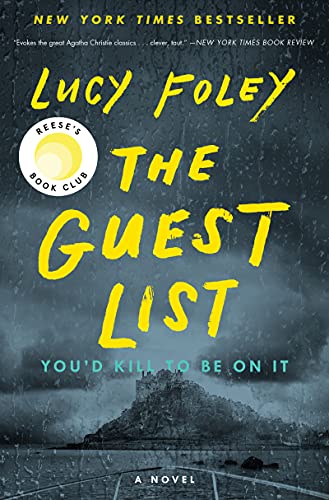
Overview: Guests gather on a remote Irish island for a glamorous wedding. As the celebration continues, old resentments, betrayals, and hidden identities accumulate until someone is dead and everyone has a reason to lie.
Why it belongs on this list: The overlap comes from isolated setting, marriage, class, old grievances, multiple viewpoints, secrets, revenge, and a group whose public event conceals private danger. The Guest List belongs beside the seed because it creates comparable pressure through character, setting, withheld information, and escalating consequence. It is not a duplicate: the investigation may be more domestic, more procedural, more violent, or more psychologically intimate, but the reader is still asked to keep revising what seems safe and what seems true.
Reading experience: The connection is the closed system and the sense that a social ritual has become a machine for pressure. Foley is more ensemble-based and less directly about abduction, but the same question of what people will do to protect a chosen story remains.
Best for: Readers who want a closed group, secrets, and revenge at a remote celebration.
Keep in mind: Atmospheric, multi-perspective, and steadily escalating, with a strong setting and a controlled reveal.
What to notice: Readers who loved the seed may recognize isolated setting, marriage, class, old grievances, multiple viewpoints, secrets, revenge, and a group whose public event conceals private danger in The Guest List, but the book does not simply repeat the same trick. It changes the point of view, the scale of danger, or the relationship between private life and public consequence. That shift gives the recommendation a clear identity and makes it suitable for a different reading mood within the same thriller territory.
View available editions and reader reviews.
The Push

Overview: Blythe becomes a mother and begins to fear that something is wrong in the relationship with her daughter. Family history and present experience blur as she tries to determine what is happening and who will believe her.
Why it belongs on this list: The overlap comes from motherhood, inherited trauma, family expectation, unreliable memory, isolation, child danger, and the question of whether love ensures safety. The Push belongs beside the seed because it creates comparable pressure through character, setting, withheld information, and escalating consequence. It is not a duplicate: the investigation may be more domestic, more procedural, more violent, or more psychologically intimate, but the reader is still asked to keep revising what seems safe and what seems true.
Reading experience: The book shares the seed’s use of parental fear as a moral and psychological trap. It is quieter and more ambiguous, but its suspense grows from the possibility that the protagonist’s love, history, and perception are all being used against her.
Best for: Readers who want parental fear and uncertainty inside an intimate relationship.
Keep in mind: Claustrophobic, intimate, and emotionally disturbing, with pregnancy, postpartum distress, and child danger.
What to notice: The best reason to choose The Push is the particular atmosphere it builds around motherhood, inherited trauma, family expectation, unreliable memory, isolation, child danger, and the question of whether love ensures safety. Its suspense may come from pursuit, domestic unease, institutional power, or a mystery that keeps changing shape. Readers who enjoy readers who want parental fear and uncertainty inside an intimate relationship should also pay attention to the pauses between major turns, because the quiet scenes often reveal what the characters are trying not to know.
View available editions and reader reviews.
The Woman in Cabin 10
Overview: A travel journalist believes she saw a woman thrown overboard from a luxury yacht, but the passenger list says everyone is present. Her effort to prove the sighting turns the ship into a trap.
Why it belongs on this list: The overlap comes from confined journey, missing person, wealthy passengers, alcohol, observation, unreliable testimony, and danger inside a controlled environment. The Woman in Cabin 10 belongs beside the seed because it creates comparable pressure through character, setting, withheld information, and escalating consequence. It is not a duplicate: the investigation may be more domestic, more procedural, more violent, or more psychologically intimate, but the reader is still asked to keep revising what seems safe and what seems true.
Reading experience: Like The Chain, the novel creates rules of movement and information that benefit the hidden threat. It replaces the family network with a wealthy passenger group, but the protagonist still has to act while credibility and safety deteriorate together.
Best for: Readers who want a closed-circle mystery where the witness is doubted.
Keep in mind: Atmospheric and propulsive, with a closed setting, class tension, and a witness no one wants to believe.
What to notice: Read The Woman in Cabin 10 for its handling of confined journey, missing person, wealthy passengers, alcohol, observation, unreliable testimony, and danger inside a controlled environment: the clues, reversals, and emotional costs are connected rather than placed in separate compartments. Notice who gets to tell the story, whose account is doubted, and how the setting limits escape. The book belongs here because it shares the seed’s suspense engine while giving the reader a different kind of uncertainty to inhabit.
View available editions and reader reviews.
Choose by Family Threat, Coercion, Confinement, or Network
Start with No Exit for immediate physical rescue, or The Couple Next Door for domestic suspicion and a missing child. An Anonymous Girl makes participation in a psychological experiment dangerous; Behind Closed Doors focuses on coercive control. Choose The Family Upstairs for inherited family secrets, The Last Mrs. Parrish for social manipulation, The Guest List for a closed group, The Push for intimate uncertainty, and The Woman in Cabin 10 for a confined journey.
Who This List Is Best For
This list is for adult thriller readers who want relentless pacing with moral and family pressure rather than simple hero-versus-villain action. Expect child danger, abduction, murder, coercive control, abuse, trauma, and difficult ethical choices. Several books are emotionally intense; the reader should choose based on the kind of threat they are prepared to inhabit.
FAQ
What is the closest book to The Chain?
No Exit is the closest for immediate rescue pressure and a protagonist forced to act under a threat involving a child. The Couple Next Door is the strongest domestic companion for secrets, suspicion, and family danger.
Which books involve child abduction or family danger?
No Exit, The Couple Next Door, and The Family Upstairs place family or child danger at the center. The Push explores a more intimate and psychologically uncertain form of parental fear.
Which recommendation has the most coercive control?
Behind Closed Doors is the clearest account of domestic captivity and coercion. The Last Mrs. Parrish focuses more on social manipulation and the control hidden behind a wealthy public image.
Are these books as fast-paced as The Chain?
No Exit and The Couple Next Door are the most immediate. The Family Upstairs and The Push are slower and more psychological, while The Guest List builds tension through a closed group and layered secrets.
Which book has the most complicated moral choices?
An Anonymous Girl and The Push make the protagonist question her own participation and perception. The Chain remains the most literal moral trap because survival requires reproducing the harm.
A Choice Made Under Threat Still Leaves a Moral Trace
The Chain is frightening because it does not allow the parent to remain outside the crime. The companion thrillers explore similar pressure through families, marriages, experiments, hotels, ships, and closed communities. Their strongest shared quality is the way suspense follows a person after the first impossible choice, asking what survival costs when the rules have been designed to make innocence impossible.