
Busy professionals rarely need more information. They need the right kind of reading for the time they actually have. Some want sharper focus and better habits, others need help managing schedules, communication, or decision fatigue, and many simply want a book that respects a limited attention span while still offering real value.
The best books for busy professionals are not always the most famous ones. The strongest choices are usually practical, concise, and useful in daily work, with enough depth to reward a careful read. A good list should help you choose based on your pressure points, whether that is productivity, leadership, time management, or making better use of the hours between meetings.
Quick Answer
For books for busy professionals, start with Essentialism: The Disciplined Pursuit of Less, then compare it with Deep Work and use The 7 Habits of Highly Effective People when you need a different level of detail. The right choice depends on your current goal, experience, and the kind of change you want the book to support.
This shortlist was selected for focus, prioritization, time realism, usefulness in short sessions, and whether the advice reduces friction instead of adding another obligation. It mixes foundational explanations with practical guidance so readers can move from understanding the topic to making a better decision or trying a small, testable change.
Comparison Table
| Book | Best For | Why It Stands Out |
|---|---|---|
| Essentialism: The Disciplined Pursuit of Less | Professionals who need to protect their time, energy, and decision-making capacity. | Many productivity books focus on speed. Essentialism focuses on selection. That difference matters for professionals who are already working hard but still feeling behind. Its real value is not in squeezing more into the day, but in making clearer decisions about what should not be in the day at all. |
| Deep Work | Readers who need to do high-value thinking in limited time. | Among books for busy professionals, this is one of the clearest defenses of focus itself. It does not treat concentration as a nice extra. It treats it as a competitive advantage. That makes it especially helpful for readers who are constantly reactive and want a better way to work, not just a busier calendar. |
| The 7 Habits of Highly Effective People | Professionals who want a foundational book rather than a quick productivity hack. | This is not a quick-fix title. Its strength is that it addresses the underlying habits behind professional success. Readers who want more than a few tactics, and who are willing to think about character, judgment, and consistency, will get more from this book than from many faster, slimmer alternatives. |
| Getting Things Done | Readers who want a practical organization system they can actually use. | Some books inspire better work. This one helps create a structure for it. Busy professionals who need a reliable method for handling tasks, inbox pressure, and moving pieces will appreciate how concrete the system is. It is one of the most directly useful books on this list for day-to-day execution. |
| Atomic Habits | Busy readers who want a practical book on changing behavior without overcomplicating the process. | Compared with broader productivity books, Atomic Habits is especially good at turning intention into repeatable action. That makes it a strong choice for readers who know what they should do but struggle to make it automatic. It also works well because it respects limited time, since the goal is not dramatic reinvention but cumulative progress. |
| How to Win Friends and Influence People | Professionals who want to improve interpersonal effectiveness at work. | Many professional books emphasize efficiency. This one emphasizes human behavior. That makes it especially valuable in settings where competence alone is not enough. For readers whose success depends on trust, persuasion, and day-to-day interaction, it fills an important gap that task-focused books often miss. |
| The Effective Executive | Executives, managers, and professionals who need a strategic view of effectiveness. | Unlike books that focus heavily on motivation or habits, this one is about effectiveness as a discipline. It is one of the best choices for readers who need a sharper sense of how to think like a manager of priorities, not just a doer of tasks. Its perspective is more strategic than tactical, which gives the list some needed range. |
| The ONE Thing: The Surprisingly Simple Truth About Extraordinary Results | readers choosing a small number of priorities instead of juggling every goal at once | It offers a practical way to identify the next high-leverage action and reduce goal-setting noise. |
How We Chose These Recommendations
This list focuses on books that help busy professionals use their time more intelligently. That means practical value mattered more than trendiness, and enduring usefulness mattered more than novelty. We favored books with a strong reputation among readers who need ideas they can apply quickly, whether the challenge is attention, planning, leadership, or personal discipline.
We also looked for variety. A busy professional does not need eight books that say the same thing in slightly different language. Some readers need a better system, while others need a better mindset, a better way to prioritize, or a better approach to working with other people. The books below were chosen because they serve different needs without drifting away from the core search intent.
Recommended Books
Essentialism: The Disciplined Pursuit of Less

Overview: Greg McKeown’s book is built around a simple but difficult idea: busy professionals often do too much, not too little. Rather than trying to improve everything at once, it asks readers to identify what truly deserves attention and remove the rest. The book is especially useful for people who feel overcommitted, pulled in too many directions, or stuck saying yes to the wrong requests.
Why it stands out: Many productivity books focus on speed. Essentialism focuses on selection. That difference matters for professionals who are already working hard but still feeling behind. Its real value is not in squeezing more into the day, but in making clearer decisions about what should not be in the day at all.
Strengths:
- Offers a practical framework for priority setting
- Helps readers reduce unnecessary obligations
- Well suited to high-demand jobs and leadership roles
Best for: Professionals who need to protect their time, energy, and decision-making capacity.
Potential limitations: Readers looking for a task-management system may want something more procedural.
View price, available formats, and reader reviews.
Deep Work
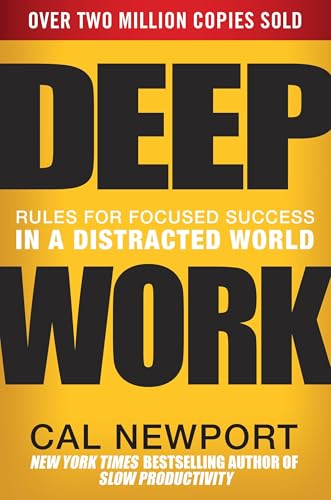
Overview: Cal Newport’s book argues that concentrated, distraction-free work is one of the most valuable professional skills in a noisy, interruption-heavy environment. It explores why deep focus matters, how modern work fragments attention, and what habits help create more meaningful blocks of uninterrupted time. The book is especially relevant for knowledge workers, managers, and anyone whose best work depends on sustained thought.
Why it stands out: Among books for busy professionals, this is one of the clearest defenses of focus itself. It does not treat concentration as a nice extra. It treats it as a competitive advantage. That makes it especially helpful for readers who are constantly reactive and want a better way to work, not just a busier calendar.
Strengths:
- Explains why distraction is so costly in modern work
- Gives readers a strong case for protecting focused time
- Useful for writers, analysts, executives, and technical professionals
Best for: Readers who need to do high-value thinking in limited time.
Potential limitations: The argument is strong, but some readers may want more tactical scheduling advice.
View price, available formats, and reader reviews.
The 7 Habits of Highly Effective People
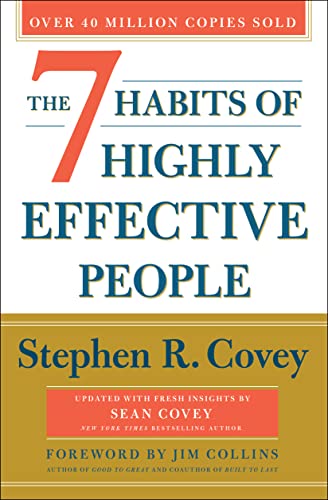
Overview: Stephen R. Covey’s classic remains one of the most useful books on personal effectiveness because it blends principles, habits, and long-term thinking. It covers self-management, prioritization, interpersonal effectiveness, and leadership in a way that still feels relevant to the modern workplace. Busy professionals often return to it because it offers a broader framework than a narrow productivity book.
Why it stands out: This is not a quick-fix title. Its strength is that it addresses the underlying habits behind professional success. Readers who want more than a few tactics, and who are willing to think about character, judgment, and consistency, will get more from this book than from many faster, slimmer alternatives.
Strengths:
- Provides a durable framework for personal and professional effectiveness
- Balances private discipline with relationship skills
- Useful for new managers and experienced leaders alike
Best for: Professionals who want a foundational book rather than a quick productivity hack.
Potential limitations: It is more expansive and reflective than some readers expect from a business book.
View price, available formats, and reader reviews.
Getting Things Done

Overview: David Allen’s system for capturing, organizing, and reviewing commitments has become a standard reference for people who feel mentally overloaded. The book is less about motivation than about clearing space in the head so attention can go where it matters. That makes it especially useful for professionals juggling projects, deadlines, and a long list of half-finished obligations.
Why it stands out: Some books inspire better work. This one helps create a structure for it. Busy professionals who need a reliable method for handling tasks, inbox pressure, and moving pieces will appreciate how concrete the system is. It is one of the most directly useful books on this list for day-to-day execution.
Strengths:
- Gives a clear process for managing tasks and commitments
- Helps reduce mental clutter
- Works well for people with complex workloads
Best for: Readers who want a practical organization system they can actually use.
Potential limitations: The method is detailed, so it rewards readers willing to build a system rather than skim for tips.
View price, available formats, and reader reviews.
Atomic Habits

Overview: James Clear’s book shows how small behavior changes can add up to better routines, stronger follow-through, and more reliable performance over time. It is particularly helpful for busy professionals who do not have the luxury of big life overhauls, but still want visible improvement in work habits, energy, and consistency. The examples are accessible, and the advice is easy to adapt.
Why it stands out: Compared with broader productivity books, Atomic Habits is especially good at turning intention into repeatable action. That makes it a strong choice for readers who know what they should do but struggle to make it automatic. It also works well because it respects limited time, since the goal is not dramatic reinvention but cumulative progress.
Strengths:
- Breaks habit change into manageable steps
- Useful for work routines, focus, and personal discipline
- Easy to revisit when trying to build one specific habit
Best for: Busy readers who want a practical book on changing behavior without overcomplicating the process.
Potential limitations: Experienced readers of self-improvement books may find some ideas familiar, though still well organized.
View price, available formats, and reader reviews.
How to Win Friends and Influence People

Overview: Dale Carnegie’s classic focuses on rapport, communication, and influence, all of which matter enormously to busy professionals who work through other people. The book is built around simple social principles rather than complicated theory, and that is one reason it has lasted. It is useful for readers who need to handle clients, colleagues, direct reports, or stakeholders with more confidence and less friction.
Why it stands out: Many professional books emphasize efficiency. This one emphasizes human behavior. That makes it especially valuable in settings where competence alone is not enough. For readers whose success depends on trust, persuasion, and day-to-day interaction, it fills an important gap that task-focused books often miss.
Strengths:
- Strong focus on communication and relationship-building
- Still relevant in business, leadership, and client work
- Offers memorable principles rather than abstract advice
Best for: Professionals who want to improve interpersonal effectiveness at work.
Potential limitations: Some examples feel dated, but the core lessons remain useful.
View price, available formats, and reader reviews.
The Effective Executive

Overview: Peter Drucker’s book is a concise, serious look at what effective decision-makers actually do with their time, attention, and judgment. It is aimed at people whose work involves responsibility rather than just activity. That makes it especially relevant to executives, senior managers, and professionals who make consequential decisions under pressure.
Why it stands out: Unlike books that focus heavily on motivation or habits, this one is about effectiveness as a discipline. It is one of the best choices for readers who need a sharper sense of how to think like a manager of priorities, not just a doer of tasks. Its perspective is more strategic than tactical, which gives the list some needed range.
Strengths:
- Strong emphasis on decision-making and priorities
- Useful for leadership roles and high-responsibility work
- Compact, thoughtful, and still influential
Best for: Executives, managers, and professionals who need a strategic view of effectiveness.
Potential limitations: It is more conceptual than hands-on, so it may not be the first choice for readers seeking a step-by-step system.
View price, available formats, and reader reviews.
The ONE Thing: The Surprisingly Simple Truth About Extraordinary Results

Overview: The ONE Thing is useful when goal setting has become crowded with competing plans. Its central question helps readers distinguish a meaningful priority from a long list of attractive intentions, then translate that priority into a next action and a repeatable rhythm.
Why it stands out: It offers a practical way to identify the next high-leverage action and reduce goal-setting noise.
Strengths:
- Simple prioritization question
- Helpful for overloaded planners
- Connects long-term goals with daily action
Best for: readers choosing a small number of priorities instead of juggling every goal at once
Potential limitations: A single priority still has to be balanced with maintenance work and responsibilities that cannot be postponed.
View price, available formats, and reader reviews.
Who This List Is Best For
This list is for professionals balancing demanding work, limited attention, and the need to keep learning. It is especially useful when you want a thoughtful starting point rather than a one-size-fits-all answer. Read selectively: choose the book whose examples, level, and method match the decision or difficulty in front of you.
Final Thoughts
Busy professionals do not need a longer reading list; they need books that help them protect attention and make better trade-offs. Read in focused blocks, capture one idea in your own words, and apply it to a live project before moving to the next title.
FAQ
Which book is best for a busy professional?
Deep Work is a strong choice when distraction is the main problem; choose a prioritization book when the issue is too many competing commitments.
How can I finish a book with limited time?
Set a small recurring reading block, define what question you want the book to answer, and stop treating every page as equally important.
Should I read productivity books during work hours?
Use them only when the reading supports a real decision or experiment. The goal is better work, not more productivity content.
How do I remember what I read?
Write a short summary, identify one action, and revisit the note after applying it. Retrieval and use are stronger than highlighting alone.
Can audiobooks replace print reading?
They can be useful for suitable material and commutes, but demanding technical or reflective work may need slower reading and notes.




