
When emotional intimacy is missing, the problem is often not a lack of love. More often, it is a lack of language, safety, or a repeatable way to stay open with another person. That is why books on emotional intimacy can be so useful: some help you understand your own emotional patterns, some focus on communication in couples, and others give a more structured path for rebuilding closeness after distance or conflict.
Quick Answer
If you want the best books for emotional intimacy, start with The Seven Levels of Intimacy, The Love Prescription, Passionate Marriage, The High-Conflict Couple, and Emotional Intimacy. Together, they cover the core needs most readers have: better self-disclosure, more secure communication, practical relationship habits, and deeper connection in committed partnerships.
Comparison Table
| Book | Best For | Why It Stands Out |
|---|---|---|
| The Seven Levels of Intimacy: The Art of Loving and the Joy of Being Loved | Readers who want a practical framework for building closeness and understanding why some relationships stay emotionally distant. | The strongest reason to consider this book is its clarity. Instead of treating emotional intimacy as a vague ideal, it breaks the process into understandable levels, which makes it especially useful for readers who feel stuck in polite… |
| The Love Prescription: Seven Days to More Intimacy, Connection, and Joy | Couples who want a concise, practical way to improve intimacy without taking on a heavy or highly technical book. | Compared with broader relationship books, this one is deliberately focused and easy to put into action. Its value lies in how little friction it creates. Readers do not need to commit to a major program before they begin, which makes it… |
| Passionate Marriage: Keeping Love and Intimacy Alive in Committed Relationships | Couples in long-term relationships who want to understand intimacy as an ongoing process rather than a fixed state. | What makes this recommendation especially valuable is its seriousness. Rather than reducing intimacy to better communication tips, it addresses the deeper dynamics that shape long-term connection. Readers who want a richer, more… |
| The High-Conflict Couple: A Dialectical Behavior Therapy Guide to Finding Peace, Intimacy, and Validation | Couples who recognize that their communication patterns, not lack of caring, are keeping them from feeling close. | Many intimacy books assume the main problem is distance or lack of effort. This one is better suited to couples whose biggest barrier is reactivity. That distinction matters. When partners are stuck in repeated conflict, emotional… |
| Wired for Love: How Understanding Your Partner’s Brain and Attachment Style Can Help You Defuse Conflict and Build a Secure Relationship | Readers who want a practical, focused resource on attachment, emotional safety, and intimate connection. | This recommendation adds a distinct framework instead of repeating a generic introduction. It helps readers move from recognizing the issue to understanding the patterns, choices, or skills involved in attachment, emotional safety, and… |
| Emotional and Sexual Intimacy in Marriage: How to Connect or Reconnect With Your Spouse, Grow Together, and Strengthen Your Marriage | Married couples who want to reconnect across both emotional and physical dimensions of intimacy. | The book earns its place by speaking directly to married readers who need help at the intersection of intimacy, communication, and physical connection. That combined focus makes it different from broader relationship titles that stay at a… |
| Communicate Your Feelings (without starting a fight): What to Say and What Not to Say to Your Partner | Couples and partners who want to express feelings more clearly and reduce unnecessary conflict. | Some readers do not need a broad intimacy framework. They need help with the moment when they are trying to speak honestly and the conversation goes wrong. That makes this a useful complement to more expansive books, especially for… |
| Hold Me Tight: Seven Conversations for a Lifetime of Love | Readers who want a practical, focused resource on emotionally focused conversations and secure bonding. | This recommendation adds a distinct framework instead of repeating a generic introduction. It helps readers move from recognizing the issue to understanding the patterns, choices, or skills involved in emotionally focused conversations… |
| Attached: The New Science of Adult Attachment and How It Can Help You Find—and Keep—Love | Readers who want a practical, focused resource on adult attachment styles and relationship patterns. | This recommendation adds a distinct framework instead of repeating a generic introduction. It helps readers move from recognizing the issue to understanding the patterns, choices, or skills involved in adult attachment styles and… |
How We Chose These Recommendations
These books were selected for their usefulness to readers who want stronger emotional intimacy, not simply for matching the keyword. The list includes different but complementary approaches: a framework for closeness, a short practical plan for couples, a deeper relationship text for committed partners, a conflict-focused guide for strained relationships, and a broader book on emotional awareness. That mix matters because emotional intimacy is not one problem with one solution.
Preference was given to books with enduring value, clear educational purpose, and a distinct role on the shelf. The result is a list that can help readers at different stages, whether they are trying to open up more honestly, reconnect after drift, or learn how to relate with more steadiness and trust.
Recommended Books
The Seven Levels of Intimacy: The Art of Loving and the Joy of Being Loved

Overview: This book presents intimacy as something that deepens in stages, beginning with safer surface-level conversation and moving toward more honest emotional disclosure. It is a straightforward, accessible framework for readers who know they want closeness but are not sure how to get there in a way that feels natural and sustainable.
Why it stands out: The strongest reason to consider this book is its clarity. Instead of treating emotional intimacy as a vague ideal, it breaks the process into understandable levels, which makes it especially useful for readers who feel stuck in polite but emotionally thin relationships. It is less clinical than some relationship books, but that simplicity is part of its appeal.
Strengths:
- Clear structure for understanding gradual emotional openness
- Easy to read without losing substance
- Useful for both self-reflection and couple conversations
Best for: Readers who want a practical framework for building closeness and understanding why some relationships stay emotionally distant.
Potential limitations: Readers looking for a highly detailed therapeutic or research-heavy book may want something more clinical.
View price, available formats, and reader reviews.
The Love Prescription: Seven Days to More Intimacy, Connection, and Joy

Overview: For couples who need a realistic reset, this short book offers a compact seven-day plan centered on connection, appreciation, and small habits that strengthen emotional closeness. It is practical rather than theoretical, which makes it a good choice for readers who want immediate steps instead of a long course in relationship psychology.
Why it stands out: Compared with broader relationship books, this one is deliberately focused and easy to put into action. Its value lies in how little friction it creates. Readers do not need to commit to a major program before they begin, which makes it especially helpful for busy couples who want a manageable starting point.
Strengths:
- Brief and approachable
- Strong emphasis on daily relationship habits
- Good entry point for couples wanting to reconnect
Best for: Couples who want a concise, practical way to improve intimacy without taking on a heavy or highly technical book.
Potential limitations: Readers dealing with deeper conflict or long-standing relationship patterns may need a more extensive guide.
View price, available formats, and reader reviews.
Passionate Marriage: Keeping Love and Intimacy Alive in Committed Relationships

Overview: This is one of the more substantial books on intimacy in long-term relationships. It explores what keeps desire, closeness, and emotional vitality alive over time, while also asking readers to think seriously about individuality within commitment. The book is more demanding than a quick-advice relationship guide, but it offers depth that many readers will appreciate.
Why it stands out: What makes this recommendation especially valuable is its seriousness. Rather than reducing intimacy to better communication tips, it addresses the deeper dynamics that shape long-term connection. Readers who want a richer, more challenging book will find a lot to work with here, especially if they are willing to reflect on their own patterns.
Strengths:
- Deep treatment of intimacy in committed relationships
- Thoughtful about desire, identity, and emotional closeness
- Useful for readers who want more than surface-level advice
Best for: Couples in long-term relationships who want to understand intimacy as an ongoing process rather than a fixed state.
Potential limitations: It is more substantial and reflective than a quick practical guide, so it may feel demanding for readers who want something light.
View price, available formats, and reader reviews.
The High-Conflict Couple: A Dialectical Behavior Therapy Guide to Finding Peace, Intimacy, and Validation

Overview: For relationships where conflict keeps interrupting closeness, this book offers a structured, skills-based approach grounded in dialectical behavior therapy. Its focus is not just on reducing arguments, but on helping partners create more stability, validation, and emotional safety in the middle of tension.
Why it stands out: Many intimacy books assume the main problem is distance or lack of effort. This one is better suited to couples whose biggest barrier is reactivity. That distinction matters. When partners are stuck in repeated conflict, emotional intimacy often has to be rebuilt through regulation and repair before deeper connection can take hold.
Strengths:
- Strong for conflict-heavy relationships
- Practical, skills-based orientation
- Balances intimacy with emotional regulation and validation
Best for: Couples who recognize that their communication patterns, not lack of caring, are keeping them from feeling close.
Potential limitations: Readers looking for a gentle, inspirational relationship book may find the tone more structured and clinical.
View price, available formats, and reader reviews.
Wired for Love: How Understanding Your Partner’s Brain and Attachment Style Can Help You Defuse Conflict and Build a Secure Relationship

Overview: Wired for Love: How Understanding Your Partner’s Brain and Attachment Style Can Help You Defuse Conflict and Build a Secure Relationship gives readers a clearer, more established way to explore attachment, emotional safety, and intimate connection. It is a stronger fit for this list because its main ideas connect directly to the practical questions readers bring to this topic.
Why it stands out: This recommendation adds a distinct framework instead of repeating a generic introduction. It helps readers move from recognizing the issue to understanding the patterns, choices, or skills involved in attachment, emotional safety, and intimate connection.
Strengths:
- Directly connected to attachment, emotional safety, and intimate connection
- Offers a clear framework readers can return to
- More focused than a general-purpose self-help choice
- Works well alongside the other recommendations on this list
Best for: Readers who want a practical, focused resource on attachment, emotional safety, and intimate connection.
Potential limitations: It works best as a focused resource for this topic, so readers may want to pair it with a broader foundational book.
View price, available formats, and reader reviews.
Emotional and Sexual Intimacy in Marriage: How to Connect or Reconnect With Your Spouse, Grow Together, and Strengthen Your Marriage

Overview: This marriage-focused book addresses emotional and sexual closeness together, which is useful for couples who do not experience those parts of the relationship as separate issues. It is centered on reconnecting with a spouse, building mutual growth, and strengthening the partnership in practical ways.
Why it stands out: The book earns its place by speaking directly to married readers who need help at the intersection of intimacy, communication, and physical connection. That combined focus makes it different from broader relationship titles that stay at a more general level or avoid the subject of sexual closeness altogether.
Strengths:
- Addresses emotional and sexual intimacy together
- Clearly oriented toward marriage and reconnection
- Useful for couples who want a faith-compatible or values-based marriage resource
Best for: Married couples who want to reconnect across both emotional and physical dimensions of intimacy.
Potential limitations: The marriage-specific focus means it is less useful for dating couples or readers seeking a general self-help book.
View price, available formats, and reader reviews.
Communicate Your Feelings (without starting a fight): What to Say and What Not to Say to Your Partner
Overview: This book focuses on a very practical problem: how to express feelings in a relationship without turning the conversation into a fight. It is less about long-term theory and more about the day-to-day language choices that can either create connection or trigger defensiveness.
Why it stands out: Some readers do not need a broad intimacy framework. They need help with the moment when they are trying to speak honestly and the conversation goes wrong. That makes this a useful complement to more expansive books, especially for couples who need a communication-first solution before deeper intimacy can develop.
Strengths:
- Directly addresses everyday communication problems
- Practical and conversational in scope
- Good for readers who want immediate behavior changes
Best for: Couples and partners who want to express feelings more clearly and reduce unnecessary conflict.
Potential limitations: Readers wanting a deep or research-heavy treatment of intimacy may find it narrower in scope.
View price, available formats, and reader reviews.
Hold Me Tight: Seven Conversations for a Lifetime of Love
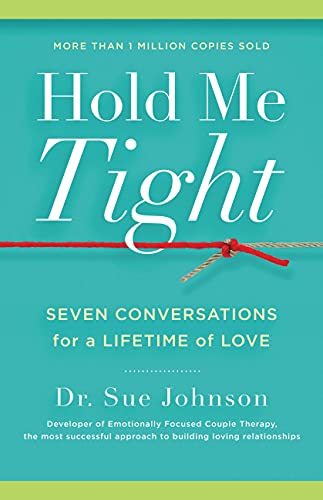
Overview: Hold Me Tight: Seven Conversations for a Lifetime of Love gives readers a clearer, more established way to explore emotionally focused conversations and secure bonding. It is a stronger fit for this list because its main ideas connect directly to the practical questions readers bring to this topic.
Why it stands out: This recommendation adds a distinct framework instead of repeating a generic introduction. It helps readers move from recognizing the issue to understanding the patterns, choices, or skills involved in emotionally focused conversations and secure bonding.
Strengths:
- Directly connected to emotionally focused conversations and secure bonding
- Offers a clear framework readers can return to
- More focused than a general-purpose self-help choice
- Works well alongside the other recommendations on this list
Best for: Readers who want a practical, focused resource on emotionally focused conversations and secure bonding.
Potential limitations: It works best as a focused resource for this topic, so readers may want to pair it with a broader foundational book.
View price, available formats, and reader reviews.
Attached: The New Science of Adult Attachment and How It Can Help You Find—and Keep—Love

Overview: Attached: The New Science of Adult Attachment and How It Can Help You Find—and Keep—Love gives readers a clearer, more established way to explore adult attachment styles and relationship patterns. It is a stronger fit for this list because its main ideas connect directly to the practical questions readers bring to this topic.
Why it stands out: This recommendation adds a distinct framework instead of repeating a generic introduction. It helps readers move from recognizing the issue to understanding the patterns, choices, or skills involved in adult attachment styles and relationship patterns.
Strengths:
- Directly connected to adult attachment styles and relationship patterns
- Offers a clear framework readers can return to
- More focused than a general-purpose self-help choice
- Works well alongside the other recommendations on this list
Best for: Readers who want a practical, focused resource on adult attachment styles and relationship patterns.
Potential limitations: It works best as a focused resource for this topic, so readers may want to pair it with a broader foundational book.
View price, available formats, and reader reviews.
Who This List Is Best For
This list is best for readers who want emotional intimacy to feel more concrete and manageable. That includes couples trying to reconnect, partners working through conflict, readers who want better communication habits, and anyone who suspects that closeness depends partly on self-awareness and emotional regulation. It is also useful for people who prefer different entry points, from short practical guides to deeper relationship books.
Final Thoughts
If you want the most accessible framework, start with The Seven Levels of Intimacy. If you want a short, practical reset for a relationship, The Love Prescription is the easiest place to begin. If your relationship is long-term and you want more depth, Passionate Marriage offers the richest long-view perspective. And if conflict keeps getting in the way of closeness, The High-Conflict Couple is the most targeted choice.
For readers who want emotional intimacy to begin with the self, Emotional Intimacy and Hold Me Tight: Seven Conversations for a Lifetime of Love offer a more inward-looking path. The best book for you depends on whether your main challenge is opening up, reconnecting, or creating enough emotional safety for closeness to take root.
FAQ
Which book is best for beginners?
The Seven Levels of Intimacy is the most approachable starting point because it gives readers a clear structure for understanding how emotional closeness develops.
Which book is best for couples?
The Love Prescription is the easiest practical choice for couples who want a short, manageable reset. For married couples who want a more specific reconnection guide, Emotional and Sexual Intimacy in Marriage is also a strong option.
Which book is best for conflict-heavy relationships?
The High-Conflict Couple is the most focused choice for relationships where reactivity, tension, or repeated arguments are blocking closeness.
Which book offers the deepest long-term perspective?
Passionate Marriage provides the most substantial discussion of intimacy in committed relationships, especially for readers willing to do more reflective work.
Which book is best if I want to improve my own emotional awareness first?
Emotional Intimacy and Hold Me Tight: Seven Conversations for a Lifetime of Love are the strongest choices if you want to understand how self-awareness and trust support closeness with other people.
Which book should I read first if communication is the main issue?
Communicate Your Feelings (without starting a fight) is the most direct option for readers who want help expressing themselves without triggering unnecessary conflict.
When emotional intimacy is missing, the problem is often not a lack of love. More often, it is a lack of language, safety, or a repeatable way to stay open with another person. That is why books on emotional intimacy can be so useful: some help you understand your own emotional patterns, some focus on communication in couples, and others give a more structured path for rebuilding closeness after distance or conflict.




