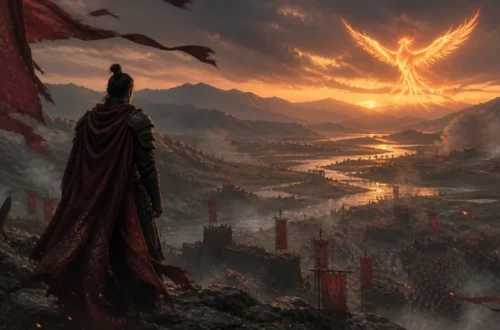
The Priory of the Orange Tree creates an epic fantasy world out of competing memories. One tradition treats dragons as sacred enemies, another preserves older knowledge in secret, and a queen’s succession is made into a public defense against apocalypse. The novel’s pleasure is not only the return of a legendary threat. It comes from moving among court, convent, ship, battlefield, and island, watching characters discover that inherited stories have been edited to protect power. Readers comparing books like The Priory of the Orange Tree will find that the most useful match depends on which part of the seed book created the strongest attachment: its voice, argument, setting, characters, problem, or promise of change.
The best books like The Priory of the Orange Tree need genuine scale: several regions or cultures, a history that matters to present politics, a threat larger than one romance, and characters whose private loyalty complicates public duty. Dragons are welcome but not mandatory. The recommendations below favor complete or clearly shaped epics with women at the center, political or religious conflict, long memory, and a balance between wonder and consequence.
A Dragon Story Is Also a Story About Who Owns History
Choose A Day of Fallen Night for the direct prequel, The Way of Kings for a much larger series architecture, and The Jasmine Throne for forbidden magic in an imperial court. The Dragonbone Chair and The Once and Future King offer classic mythic roots, while Kushiel’s Dart, The Grace of Kings, The Bone Season, and The City of Brass shift the balance toward romance, empire, or secret magic.
At-a-Glance Comparison
| Book | Best for | Major qualities shared with The Priory of the Orange Tree |
|---|---|---|
| A Day of Fallen Night | Readers who want more dragons, history, and the roots of the world | The Nameless One, dragon mythology, queens, religious conflict, women in power, multiple viewpoints, and a threat remembered differently by different cultures |
| The Way of Kings | Readers who want a far larger epic with ancient orders and damaged leaders | Forgotten history, multiple narrators, formal magic, political factions, military trauma, hidden oaths, and a crisis growing from local suffering into world history |
| The Jasmine Throne | Readers who want a close political fantasy with women, forbidden power, and empire | Imprisoned royal power, secret magic, religious authority, resistance, cultural conflict, women shaping succession, and a relationship built through distrust |
| The Dragonbone Chair | Readers who want classic quest fantasy, ancient enemies, and a slow awakening | A young outsider, a threatened kingdom, old races, disputed history, court danger, mythic relics, and a long conflict returning to the present |
| The Once and Future King | Readers who want Arthurian history, moral argument, and a complete legendary arc | Mythic succession, education, rulers shaped by stories, competing ideals, war, political duty, and the question of whether power can become humane |
| Kushiel’s Dart | Readers who want political intrigue, prophecy, sensuality, and a heroine at court | A trained heroine, royal politics, religious history, forbidden knowledge, sensual relationships, court danger, and a prophecy whose meaning unfolds over time |
| The Grace of Kings | Readers who want a continent-spanning revolution and rival visions of rule | Island kingdoms, rebellion, military innovation, political ambition, competing rulers, legend, and a revolution that changes shape after victory |
| The Bone Season | Readers who want a hidden magical society, psychic power, and institutional control | A young woman with forbidden abilities, oppressive government, hidden orders, political imprisonment, supernatural hierarchy, and a rebellion that crosses social boundaries |
| The City of Brass | Readers who want a hidden city, dynastic politics, and competing magical histories | An outsider crossing into a secret civilization, royal factions, inherited violence, ethnic division, historical memory, and magic used as political power |
How Were These Epic Fantasy Matches Chosen?
Each title had to share at least three substantial qualities: a large imagined history, more than one cultural or political viewpoint, a central conflict involving succession or inherited power, and characters whose relationships cross boundaries of faith, class, gender, or nation. I also required a distinct reading experience. A book with dragons but no political or historical depth was not strong enough, and a dense series without emotional access was not included just for size.
The 9 Recommended Books
A Day of Fallen Night

Overview: Set centuries before the seed novel, the story follows rulers, warriors, priests, and riders as the Dread begins to rise again. The characters inherit institutions that believe they understand the past, but the old stories prove incomplete and politically convenient.
Why it belongs on this list: The shared qualities are the nameless one, dragon mythology, queens, religious conflict, women in power, multiple viewpoints, and a threat remembered differently by different cultures. A Day of Fallen Night offers a neighboring reading experience through its characters, setting, tone, pacing, and treatment of consequence. The match is strongest for readers who want more dragons, history, and the roots of the world, although its emotional register and narrative structure may be quieter, stranger, or more expansive than the seed.
Reading experience: This is the most direct companion because it offers the same balance of court, convent, battlefield, sea, and dragon lore. The historical distance changes the mood: readers see how legends are made rather than only how they are rediscovered.
Best for: Readers who want more dragons, history, and the roots of the world.
Keep in mind: Large and multi-perspective, with a patient opening and a gradual convergence of regional storylines.
What to notice: The strongest connection between A Day of Fallen Night and the seed is found in the nameless one, dragon mythology, queens, religious conflict, women in power, multiple viewpoints, and a threat remembered differently by different cultures, but the reading experience is deliberately different. Its tone, narrative distance, and treatment of consequence create another route into the same broad pleasure. Readers should let the book establish its own rhythm before judging it against the original.
View available editions and reader reviews.
The Way of Kings

Overview: On storm-battered Roshar, Kaladin is forced into a military unit designed to die, Shallan enters a scholar’s household with a secret purpose, and Dalinar receives visions that challenge the history of his family. Their stories slowly reveal the return of an ancient order.
Why it belongs on this list: The shared qualities are forgotten history, multiple narrators, formal magic, political factions, military trauma, hidden oaths, and a crisis growing from local suffering into world history. The Way of Kings offers a neighboring reading experience through its characters, setting, tone, pacing, and treatment of consequence. The match is strongest for readers who want a far larger epic with ancient orders and damaged leaders, although its emotional register and narrative structure may be quieter, stranger, or more expansive than the seed.
Reading experience: The shared appeal is the way old legends become present political facts. Sanderson’s magic is more explicit and the series is much longer, but the combination of scholarship, war, succession, and characters carrying private damage makes it a natural next epic.
Best for: Readers who want a far larger epic with ancient orders and damaged leaders.
Keep in mind: Very long, map-heavy, and structurally layered, with flashbacks and interludes. It rewards readers who enjoy a patient convergence of several arcs.
What to notice: The strongest connection between The Way of Kings and the seed is found in forgotten history, multiple narrators, formal magic, political factions, military trauma, hidden oaths, and a crisis growing from local suffering into world history, but the reading experience is deliberately different. Its tone, narrative distance, and treatment of consequence create another route into the same broad pleasure. Readers should let the book establish its own rhythm before judging it against the original.
View available editions and reader reviews.
The Jasmine Throne

Overview: Malini is confined in a mountain temple by the empire she once expected to inherit. Priya, a maid with a hidden magical connection, becomes entangled in the politics of the temple and the rebellion gathering outside it.
Why it belongs on this list: The shared qualities are imprisoned royal power, secret magic, religious authority, resistance, cultural conflict, women shaping succession, and a relationship built through distrust. The Jasmine Throne offers a neighboring reading experience through its characters, setting, tone, pacing, and treatment of consequence. The match is strongest for readers who want a close political fantasy with women, forbidden power, and empire, although its emotional register and narrative structure may be quieter, stranger, or more expansive than the seed.
Reading experience: The novel narrows the geographical scale but deepens the intimate politics. Like Shannon’s book, it asks how doctrine protects rulers and how a forbidden relationship can become both a weakness and the first language of resistance.
Best for: Readers who want a close political fantasy with women, forbidden power, and empire.
Keep in mind: Atmospheric, tense, and gradual, with palace and temple intrigue before the wider conflict opens.
What to notice: Choose The Jasmine Throne when the reader wants readers who want a close political fantasy with women, forbidden power, and empire but is open to a different tone and pace. Its shared qualities create a bridge to the seed, while its characters, setting, and structure make the journey distinct. The contrast can be as satisfying as the resemblance, especially for readers who want a familiar tension presented through new social or emotional circumstances.
View available editions and reader reviews.
The Dragonbone Chair

Overview: Simon begins as a kitchen boy in Hayholt and is drawn into the mystery of a murdered king, a dangerous sorcerer, and a war connected to the ancient Sithi and the Storm King. His growth from observer to participant carries the first book.
Why it belongs on this list: The shared qualities are a young outsider, a threatened kingdom, old races, disputed history, court danger, mythic relics, and a long conflict returning to the present. The Dragonbone Chair offers a neighboring reading experience through its characters, setting, tone, pacing, and treatment of consequence. The match is strongest for readers who want classic quest fantasy, ancient enemies, and a slow awakening, although its emotional register and narrative structure may be quieter, stranger, or more expansive than the seed.
Reading experience: This is a foundational companion for readers who enjoy the seed’s sense of deep history, courtly tension, and a legendary threat returning through forgotten records. It is less diverse in viewpoint and slower at the start, but its atmosphere is richly old-world.
Best for: Readers who want classic quest fantasy, ancient enemies, and a slow awakening.
Keep in mind: Deliberate, atmospheric, and traditional, with a long opening before the quest fully reveals itself.
What to notice: What matters most in The Dragonbone Chair is the way a young outsider, a threatened kingdom, old races, disputed history, court danger, mythic relics, and a long conflict returning to the present shapes the characters’ lives and the world around them. The resemblance to the seed is not limited to a premise. Pay attention to voice, pacing, setting, and the small choices that reveal how this book imagines danger, loyalty, or belonging.
View available editions and reader reviews.
The Once and Future King

Overview: T. H. White retells the Arthurian legend across four linked movements, beginning with a boy’s education under Merlin and ending with a king confronting the difference between justice and force. The magic is playful early and tragic later.
Why it belongs on this list: The shared qualities are mythic succession, education, rulers shaped by stories, competing ideals, war, political duty, and the question of whether power can become humane. The Once and Future King offers a neighboring reading experience through its characters, setting, tone, pacing, and treatment of consequence. The match is strongest for readers who want arthurian history, moral argument, and a complete legendary arc, although its emotional register and narrative structure may be quieter, stranger, or more expansive than the seed.
Reading experience: The match lies in the way a ruler’s private education becomes a public argument about history, violence, and legitimacy. It is more literary and episodic than Shannon’s novel, but it gives the reader a deep conversation with the myths behind modern epic fantasy.
Best for: Readers who want Arthurian history, moral argument, and a complete legendary arc.
Keep in mind: Witty, reflective, and increasingly tragic, moving from comic instruction to philosophical and wartime gravity.
What to notice: Readers may begin The Once and Future King for mythic succession, education, rulers shaped by stories, competing ideals, war, political duty, and the question of whether power can become humane, then stay for the way the book complicates that attraction. The most revealing moments are often not the loudest ones: a change in loyalty, a detail of place, a silence between characters, or a choice that alters the meaning of an earlier scene. Those details give this recommendation a life beyond the seed title.
View available editions and reader reviews.
Kushiel’s Dart

Overview: Phèdre nó Delaunay is trained to read secrets and navigate a court where pleasure, faith, and power are entangled. Her talent draws her into a conspiracy that reaches through noble houses, religious traditions, and distant kingdoms.
Why it belongs on this list: The shared qualities are a trained heroine, royal politics, religious history, forbidden knowledge, sensual relationships, court danger, and a prophecy whose meaning unfolds over time. Kushiel’s Dart offers a neighboring reading experience through its characters, setting, tone, pacing, and treatment of consequence. The match is strongest for readers who want political intrigue, prophecy, sensuality, and a heroine at court, although its emotional register and narrative structure may be quieter, stranger, or more expansive than the seed.
Reading experience: The book shares the seed’s interest in how culture, religion, and intimate relationships shape state power. It is more explicitly erotic and focused on one heroine’s perceptions, making the political story feel personal rather than panoramic.
Best for: Readers who want political intrigue, prophecy, sensuality, and a heroine at court.
Keep in mind: Lush, slow-building, and richly detailed, with courtly language, travel, intrigue, and a long-form romantic arc.
What to notice: Readers may begin Kushiel’s Dart for a trained heroine, royal politics, religious history, forbidden knowledge, sensual relationships, court danger, and a prophecy whose meaning unfolds over time, then stay for the way the book complicates that attraction. The most revealing moments are often not the loudest ones: a change in loyalty, a detail of place, a silence between characters, or a choice that alters the meaning of an earlier scene. Those details give this recommendation a life beyond the seed title.
View available editions and reader reviews.
The Grace of Kings
Overview: Kuni Garu begins as a clever drifter, while Mata Zyndu inherits a tradition of military honor. Their rebellion topples an empire, then turns toward the difficult work of governing a world in which every victor carries a different idea of justice.
Why it belongs on this list: The shared qualities are island kingdoms, rebellion, military innovation, political ambition, competing rulers, legend, and a revolution that changes shape after victory. The Grace of Kings offers a neighboring reading experience through its characters, setting, tone, pacing, and treatment of consequence. The match is strongest for readers who want a continent-spanning revolution and rival visions of rule, although its emotional register and narrative structure may be quieter, stranger, or more expansive than the seed.
Reading experience: The connection is the movement from local injustice to a history-sized transformation. It is more panoramic and faster-moving than The Priory, with less emphasis on romance and more on the mechanics of founding and losing kingdoms.
Best for: Readers who want a continent-spanning revolution and rival visions of rule.
Keep in mind: Expansive, energetic, and full of political reversals, inventions, battles, and many characters.
What to notice: Choose The Grace of Kings when the reader wants readers who want a continent-spanning revolution and rival visions of rule but is open to a different tone and pace. Its shared qualities create a bridge to the seed, while its characters, setting, and structure make the journey distinct. The contrast can be as satisfying as the resemblance, especially for readers who want a familiar tension presented through new social or emotional circumstances.
View available editions and reader reviews.
The Bone Season
Overview: Paige Mahoney is a clairvoyant working in an underground criminal world in a future London where clairvoyance is outlawed. When she is captured and sent to a secret colony, she discovers that the official account of the world is built on deliberate lies.
Why it belongs on this list: The shared qualities are a young woman with forbidden abilities, oppressive government, hidden orders, political imprisonment, supernatural hierarchy, and a rebellion that crosses social boundaries. The Bone Season offers a neighboring reading experience through its characters, setting, tone, pacing, and treatment of consequence. The match is strongest for readers who want a hidden magical society, psychic power, and institutional control, although its emotional register and narrative structure may be quieter, stranger, or more expansive than the seed.
Reading experience: This is a more urban and YA-crossover route into the seed’s interest in hidden orders and dangerous histories. Paige’s abilities place her inside a hierarchy she did not choose, while alliances across human and supernatural factions complicate the idea of liberation.
Best for: Readers who want a hidden magical society, psychic power, and institutional control.
Keep in mind: Fast, secretive, and series-oriented, with a strong central romance and a gradual expansion of the world.
What to notice: What matters most in The Bone Season is the way a young woman with forbidden abilities, oppressive government, hidden orders, political imprisonment, supernatural hierarchy, and a rebellion that crosses social boundaries shapes the characters’ lives and the world around them. The resemblance to the seed is not limited to a premise. Pay attention to voice, pacing, setting, and the small choices that reveal how this book imagines danger, loyalty, or belonging.
View available editions and reader reviews.
The City of Brass

Overview: Nahri, a con artist in Cairo, accidentally summons Dara, a djinn warrior with a dangerous past. In Daevabad, she encounters a royal family divided by history and a city whose political conflicts reach back to old massacres and broken promises.
Why it belongs on this list: The shared qualities are an outsider crossing into a secret civilization, royal factions, inherited violence, ethnic division, historical memory, and magic used as political power. The City of Brass offers a neighboring reading experience through its characters, setting, tone, pacing, and treatment of consequence. The match is strongest for readers who want a hidden city, dynastic politics, and competing magical histories, although its emotional register and narrative structure may be quieter, stranger, or more expansive than the seed.
Reading experience: Both novels make history a living political force rather than a decorative backstory. The city is more intimate and the tone more adventurous, but readers who like court factions, hidden orders, and a heroine discovering that every story has a side will find much to enjoy.
Best for: Readers who want a hidden city, dynastic politics, and competing magical histories.
Keep in mind: Lush, accessible, and increasingly political, with travel, court scenes, romance, and magical factions.
What to notice: In The City of Brass, an outsider crossing into a secret civilization, royal factions, inherited violence, ethnic division, historical memory, and magic used as political power are part of the story’s emotional architecture. Notice how the characters move through the setting, how quickly the plot reveals its information, and whether the book offers closure or leaves room for unease. Those choices explain why it belongs on this list more clearly than a surface genre label would.
View available editions and reader reviews.
Choose by Dragons, Religion, Court, or Series Size
Start with A Day of Fallen Night if you want to remain in Shannon’s world. Choose The Way of Kings when you want a much longer commitment and a formal magic system, or The Jasmine Throne for a closer, more intimate political fantasy. The City of Brass and Kushiel’s Dart make culture and sensuality central; The Grace of Kings makes revolution panoramic. The Dragonbone Chair and The Once and Future King are the best routes into the older literary roots of modern epic fantasy.
Who This List Is Best For
This list suits adult epic-fantasy readers, fantasy book clubs, and readers who want a self-contained story with the atmosphere of a larger world. Expect war, religious persecution, political marriage, grief, and complicated romance in different combinations. The list includes both approachable doorstops and more demanding classics, with the notes explaining whether dragons, court intrigue, or mythic history carries the match.
FAQ
What is the closest book to The Priory of the Orange Tree?
A Day of Fallen Night is the closest because it returns to the same world, history, dragons, and religious conflict. Outside the series, The Jasmine Throne is the strongest match for women, political imprisonment, forbidden power, and an empire built on competing beliefs.
Which recommendations have dragons?
A Day of Fallen Night, The Way of Kings, and The Dragonbone Chair include dragons or dragon-like mythic history in important ways. The Grace of Kings and The City of Brass offer large-scale creatures and legends without reproducing Shannon’s exact dragon mythology.
Which book is a standalone?
The Once and Future King, The Grace of Kings, and The Priory of the Orange Tree can be read as complete stories, though some have related works or sequels. Kushiel’s Dart, The Bone Season, and The Way of Kings begin longer arcs.
Which choice has the strongest romance?
Kushiel’s Dart makes erotic and political relationships central. The Jasmine Throne offers a tense, slow-building bond inside a rebellion, while The Priory of the Orange Tree balances romance with court, religious, and dragon politics.
Which epic fantasy is easiest to start with?
The City of Brass has the most immediate outsider-and-hidden-city hook. The Grace of Kings is also accessible if you want a fast historical sweep, while The Way of Kings and Kushiel’s Dart require more patience with terminology, geography, and series setup.
A World Becomes Epic When Its People Can Disagree About the Past
The Priory of the Orange Tree works because its world is not a backdrop waiting for the heroes to unite it. The arguments about dragons, faith, succession, and history are already shaping how people live. The strongest follow-up books preserve that sense of contested memory. Choose one for dragons, another for a dangerous court, another for a forbidden order, but look for the moment when a private relationship forces the characters to question the official story of their world.