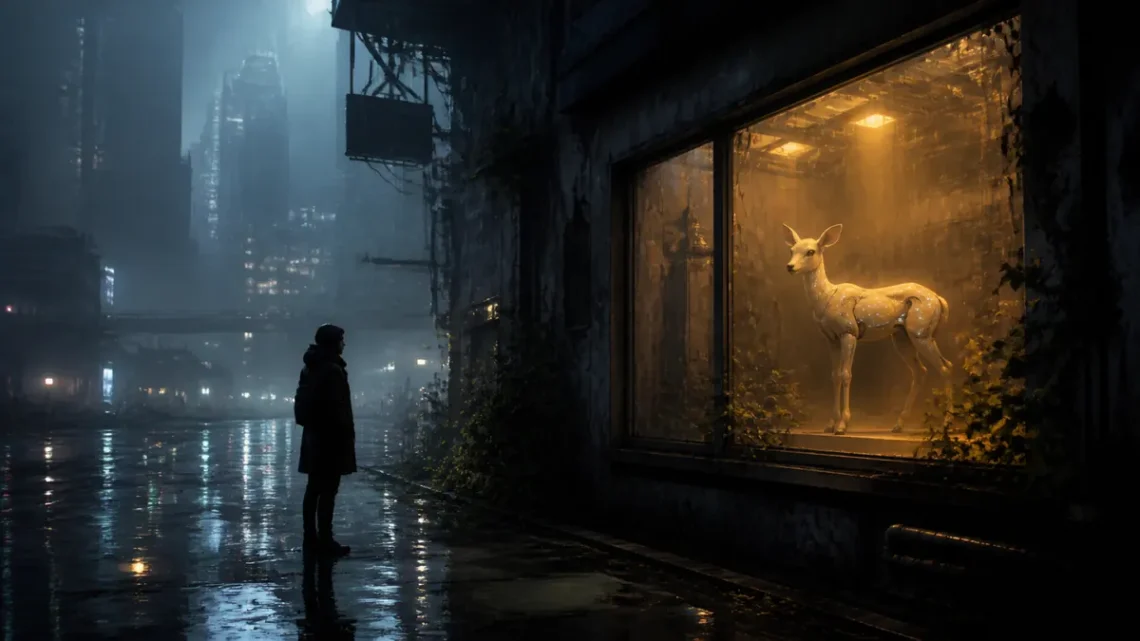
Do Androids Dream of Electric Sheep? is set after ecological disaster has made real animals scarce and human life feel increasingly artificial. Rick Deckard hunts androids for a living, yet the work becomes morally unstable as he encounters artificial beings who may be more emotionally responsive than the humans judging them. The novel’s strangeness comes from its refusal to make empathy a simple proof of humanity. Religion, media, animals, labor, and desire all become competing ways of deciding what is real. Readers comparing books like Do Androids Dream of Electric Sheep? will find that the most useful match depends on which part of the seed book created the strongest attachment: its voice, argument, setting, characters, problem, or promise of change.
The strongest books like Do Androids Dream of Electric Sheep? should share at least two or three qualities: artificial or posthuman identity, ecological or social damage, a protagonist working inside a compromised system, an unstable boundary between authentic and manufactured experience, and a philosophical question embedded in a noir or speculative plot. The recommendations below include cyberpunk, literary dystopia, AI fiction, and alien contact.
The Test for Humanity May Be the Wrong Question
Choose Klara and the Sun for an artificial companion’s viewpoint, Never Let Me Go for quiet institutional dehumanization, and Neuromancer for cybernetic noir. Do Androids‘s closest philosophical cousins include A Scanner Darkly, Ubik, Solaris, The Left Hand of Darkness, The Windup Girl, and Snow Crash, each shifting the focus among drugs, reality, gender, ecology, or networked identity.
At-a-Glance Comparison
| Book | Best for | Major qualities shared with Do Androids Dream of Electric Sheep? |
|---|---|---|
| Klara and the Sun | Readers who want an artificial companion’s quiet view of human love | Artificial intelligence, childhood illness, social inequality, programmed care, observation, and the question of whether a machine can understand devotion |
| Never Let Me Go | Readers who want quiet institutional control and manufactured bodies | Artificially produced lives, euphemism, memory, controlled bodies, friendship, social hierarchy, and a narrator reconstructing the truth of her world |
| Neuromancer | Readers who want cybernetic bodies, AI, corporate power, and noir momentum | Artificial intelligence, altered bodies, hackers, corporate control, identity, urban decay, and a protagonist navigating systems whose goals exceed human understanding |
| A Scanner Darkly | Readers who want drugs, surveillance, and a human identity splitting under technology | Surveillance, altered perception, addiction, identity, state power, compromised memory, and a protagonist unable to remain outside the system he observes |
| Ubik | Readers who want unstable reality, corporate technology, and metaphysical uncertainty | Manufactured reality, psychic technology, corporate power, death, unreliable perception, and a group trying to understand a world changing around them |
| Solaris | Readers who want alien intelligence and the limits of human empathy | Nonhuman intelligence, scientific isolation, memory, grief, failed communication, and the human need to turn the unknown into a familiar shape |
| The Left Hand of Darkness | Readers who want gender, identity, culture, and an outsider learning to see differently | Alien society, gender instability, political suspicion, social identity, estrangement, and empathy across cultural difference |
| The Windup Girl | Readers who want ecological collapse, biotechnology, and corporate control | Climate damage, engineered bodies, biotechnology, corporate power, labor, artificial life, and a future where biology is an economic weapon |
| Snow Crash | Readers who want a faster, satirical cyberpunk route into language and virtual identity | Virtual reality, corporate power, artificial intelligence, language, fragmented society, hackers, and technology altering what people believe is real |
What Makes a Strong Androids Read-Alike?
A book needed to make personhood unstable through story rather than through a lecture. I looked for artificial beings, altered bodies, ecological loss, corporate or state power, and narrators whose categories become unreliable. Noir, satire, and quiet literary tragedy are all welcome, but every recommendation had to share multiple qualities with Dick’s novel rather than simply feature robots.
The 9 Recommended Books
Klara and the Sun

Overview: Klara is an Artificial Friend purchased to keep a sick child company. Her unusual observational intelligence leads her to form a theory about the sun, the child’s illness, and the promises adults make when fear is stronger than evidence.
Why it belongs on this list: The shared qualities are artificial intelligence, childhood illness, social inequality, programmed care, observation, and the question of whether a machine can understand devotion. Klara and the Sun offers a neighboring reading experience through its characters, setting, tone, pacing, and treatment of consequence. The match is strongest for readers who want an artificial companion’s quiet view of human love, although its emotional register and narrative structure may be quieter, stranger, or more expansive than the seed.
Reading experience: Like Dick’s androids, Klara occupies the unstable space between tool and person. Ishiguro is quieter and more emotionally controlled, but both novels ask whether a society can use an artificial being for care while refusing to recognize its inner life.
Best for: Readers who want an artificial companion’s quiet view of human love.
Keep in mind: Restrained, melancholy, and intimate, with a child-centered household replacing noir pursuit.
What to notice: In Klara and the Sun, artificial intelligence, childhood illness, social inequality, programmed care, observation, and the question of whether a machine can understand devotion are part of the story’s emotional architecture. Notice how the characters move through the setting, how quickly the plot reveals its information, and whether the book offers closure or leaves room for unease. Those choices explain why it belongs on this list more clearly than a surface genre label would.
View available editions and reader reviews.
Never Let Me Go

Overview: Kathy looks back on her childhood at Hailsham, a school whose students grow up inside a gentle vocabulary that hides their social purpose. Her memories of Ruth and Tommy gradually reveal what the institution expects from their bodies.
Why it belongs on this list: The shared qualities are artificially produced lives, euphemism, memory, controlled bodies, friendship, social hierarchy, and a narrator reconstructing the truth of her world. Never Let Me Go offers a neighboring reading experience through its characters, setting, tone, pacing, and treatment of consequence. The match is strongest for readers who want quiet institutional control and manufactured bodies, although its emotional register and narrative structure may be quieter, stranger, or more expansive than the seed.
Reading experience: The connection is the moral horror of a society deciding that some beings can be used while preserving a language that makes the decision sound natural. It is less noir and more elegiac, but the question of personhood is equally sharp.
Best for: Readers who want quiet institutional control and manufactured bodies.
Keep in mind: Quiet, nonlinear, and emotionally cumulative, with boarding-school memories carrying the tragedy.
What to notice: What matters most in Never Let Me Go is the way artificially produced lives, euphemism, memory, controlled bodies, friendship, social hierarchy, and a narrator reconstructing the truth of her world shapes the characters’ lives and the world around them. The resemblance to the seed is not limited to a premise. Pay attention to voice, pacing, setting, and the small choices that reveal how this book imagines danger, loyalty, or belonging.
View available editions and reader reviews.
Neuromancer

Overview: Case is a damaged hacker recruited for a job involving corporate power, artificial intelligences, implanted technology, and a crew of specialists. The mission changes the relationship between human agency and machine intelligence.
Why it belongs on this list: The shared qualities are artificial intelligence, altered bodies, hackers, corporate control, identity, urban decay, and a protagonist navigating systems whose goals exceed human understanding. Neuromancer offers a neighboring reading experience through its characters, setting, tone, pacing, and treatment of consequence. The match is strongest for readers who want cybernetic bodies, ai, corporate power, and noir momentum, although its emotional register and narrative structure may be quieter, stranger, or more expansive than the seed.
Reading experience: Both novels turn a compromised future into a test of identity. Gibson is faster, more stylish, and more cyberpunk, while Dick is more interested in empathy and ecological loss, but the city, body, and machine are equally unstable.
Best for: Readers who want cybernetic bodies, AI, corporate power, and noir momentum.
Keep in mind: Dense, short, stylish, and propulsive, with slang, virtual space, and rapid shifts of scale.
What to notice: The strongest connection between Neuromancer and the seed is found in artificial intelligence, altered bodies, hackers, corporate control, identity, urban decay, and a protagonist navigating systems whose goals exceed human understanding, but the reading experience is deliberately different. Its tone, narrative distance, and treatment of consequence create another route into the same broad pleasure. Readers should let the book establish its own rhythm before judging it against the original.
View available editions and reader reviews.
A Scanner Darkly

Overview: Bob Arctor works undercover in a drug investigation while living with the people he is supposed to monitor. Substance use and surveillance gradually divide his identity until the observer and observed become difficult to separate.
Why it belongs on this list: The shared qualities are surveillance, altered perception, addiction, identity, state power, compromised memory, and a protagonist unable to remain outside the system he observes. A Scanner Darkly offers a neighboring reading experience through its characters, setting, tone, pacing, and treatment of consequence. The match is strongest for readers who want drugs, surveillance, and a human identity splitting under technology, although its emotional register and narrative structure may be quieter, stranger, or more expansive than the seed.
Reading experience: The shared moral instability is close to Deckard’s work. Both protagonists participate in a system that classifies people while the technology and institutions doing the classifying damage their own ability to judge reality.
Best for: Readers who want drugs, surveillance, and a human identity splitting under technology.
Keep in mind: Bleak, paranoid, and psychologically fragmented, with a tragic arc rather than a conventional mystery payoff.
What to notice: The strongest connection between A Scanner Darkly and the seed is found in surveillance, altered perception, addiction, identity, state power, compromised memory, and a protagonist unable to remain outside the system he observes, but the reading experience is deliberately different. Its tone, narrative distance, and treatment of consequence create another route into the same broad pleasure. Readers should let the book establish its own rhythm before judging it against the original.
View available editions and reader reviews.
Ubik

Overview: A team of anti-psychics is caught in an accident and begins experiencing reality as a series of changes, advertisements, and deteriorating timelines. The product Ubik may offer an answer, but every explanation creates another uncertainty.
Why it belongs on this list: The shared qualities are manufactured reality, psychic technology, corporate power, death, unreliable perception, and a group trying to understand a world changing around them. Ubik offers a neighboring reading experience through its characters, setting, tone, pacing, and treatment of consequence. The match is strongest for readers who want unstable reality, corporate technology, and metaphysical uncertainty, although its emotional register and narrative structure may be quieter, stranger, or more expansive than the seed.
Reading experience: Like Dick’s android novel, it treats commercial language and reality as disturbingly close. The world is less ecological and more surreal, but the reader is still forced to ask what evidence can be trusted and who controls the categories of life and death.
Best for: Readers who want unstable reality, corporate technology, and metaphysical uncertainty.
Keep in mind: Short, strange, darkly comic, and structurally slippery, with rapid shifts in time and perception.
What to notice: Readers may begin Ubik for manufactured reality, psychic technology, corporate power, death, unreliable perception, and a group trying to understand a world changing around them, then stay for the way the book complicates that attraction. The most revealing moments are often not the loudest ones: a change in loyalty, a detail of place, a silence between characters, or a choice that alters the meaning of an earlier scene. Those details give this recommendation a life beyond the seed title.
View available editions and reader reviews.
Solaris
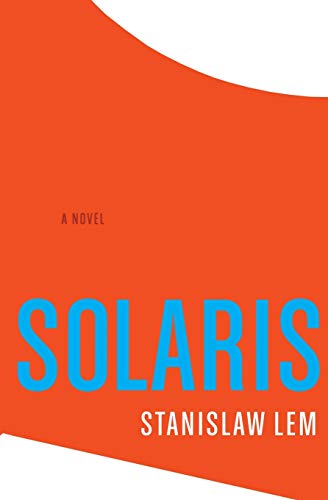
Overview: Scientists orbiting Solaris encounter physical manifestations connected to memory and guilt. The ocean may be intelligent, but it refuses the explanations the humans bring to it.
Why it belongs on this list: The shared qualities are nonhuman intelligence, scientific isolation, memory, grief, failed communication, and the human need to turn the unknown into a familiar shape. Solaris offers a neighboring reading experience through its characters, setting, tone, pacing, and treatment of consequence. The match is strongest for readers who want alien intelligence and the limits of human empathy, although its emotional register and narrative structure may be quieter, stranger, or more expansive than the seed.
Reading experience: The connection is the failed test of empathy: humans want to know whether the entity cares, but may be asking a question built from human assumptions. It is quieter than Dick and more philosophical than noir.
Best for: Readers who want alien intelligence and the limits of human empathy.
Keep in mind: Slow, claustrophobic, and contemplative, with a station setting and long scientific conversations.
What to notice: In Solaris, nonhuman intelligence, scientific isolation, memory, grief, failed communication, and the human need to turn the unknown into a familiar shape are part of the story’s emotional architecture. Notice how the characters move through the setting, how quickly the plot reveals its information, and whether the book offers closure or leaves room for unease. Those choices explain why it belongs on this list more clearly than a surface genre label would.
View available editions and reader reviews.
The Left Hand of Darkness

Overview: Genly Ai is an envoy on the planet Gethen, whose people do not fit the gender assumptions he brings from Earth. Political intrigue and a dangerous journey force him to reconsider how identity, loyalty, and intimacy are organized.
Why it belongs on this list: The shared qualities are alien society, gender instability, political suspicion, social identity, estrangement, and empathy across cultural difference. The Left Hand of Darkness offers a neighboring reading experience through its characters, setting, tone, pacing, and treatment of consequence. The match is strongest for readers who want gender, identity, culture, and an outsider learning to see differently, although its emotional register and narrative structure may be quieter, stranger, or more expansive than the seed.
Reading experience: Both novels ask whether humanity is a stable category or a habit of perception. Le Guin is more anthropological and hopeful, but her outsider’s difficulty reading another society offers a wider, more humane version of Dick’s identity problem.
Best for: Readers who want gender, identity, culture, and an outsider learning to see differently.
Keep in mind: Measured, atmospheric, and politically thoughtful, balancing travel, diplomacy, and relationship.
What to notice: What matters most in The Left Hand of Darkness is the way alien society, gender instability, political suspicion, social identity, estrangement, and empathy across cultural difference shapes the characters’ lives and the world around them. The resemblance to the seed is not limited to a premise. Pay attention to voice, pacing, setting, and the small choices that reveal how this book imagines danger, loyalty, or belonging.
View available editions and reader reviews.
The Windup Girl

Overview: In a flooded and energy-poor future Bangkok, genetically engineered crops, megacorporations, and a “windup” woman named Emiko shape a struggle over food, labor, and sovereignty.
Why it belongs on this list: The shared qualities are climate damage, engineered bodies, biotechnology, corporate power, labor, artificial life, and a future where biology is an economic weapon. The Windup Girl offers a neighboring reading experience through its characters, setting, tone, pacing, and treatment of consequence. The match is strongest for readers who want ecological collapse, biotechnology, and corporate control, although its emotional register and narrative structure may be quieter, stranger, or more expansive than the seed.
Reading experience: It shares Dick’s ecological anxiety and suspicion of bodies treated as property. The story is more political and biopunk, with less attention to a single empathy test and more to the systems that manufacture life for profit.
Best for: Readers who want ecological collapse, biotechnology, and corporate control.
Keep in mind: Dense, atmospheric, and politically complex, with multiple viewpoints and a harsh tropical setting.
What to notice: What matters most in The Windup Girl is the way climate damage, engineered bodies, biotechnology, corporate power, labor, artificial life, and a future where biology is an economic weapon shapes the characters’ lives and the world around them. The resemblance to the seed is not limited to a premise. Pay attention to voice, pacing, setting, and the small choices that reveal how this book imagines danger, loyalty, or belonging.
View available editions and reader reviews.
Snow Crash

Overview: Hiro Protagonist is a hacker and sword fighter in a privatized future where cities, businesses, and online worlds overlap. A digital virus connects ancient language, brain function, and a threat to both virtual and physical reality.
Why it belongs on this list: The shared qualities are virtual reality, corporate power, artificial intelligence, language, fragmented society, hackers, and technology altering what people believe is real. Snow Crash offers a neighboring reading experience through its characters, setting, tone, pacing, and treatment of consequence. The match is strongest for readers who want a faster, satirical cyberpunk route into language and virtual identity, although its emotional register and narrative structure may be quieter, stranger, or more expansive than the seed.
Reading experience: The tone is much more comic and energetic, but the shared question is how technology changes identity and social control. It is the choice for readers who want Dick’s artificiality and media anxiety with a faster plot.
Best for: Readers who want a faster, satirical cyberpunk route into language and virtual identity.
Keep in mind: Hyperactive, satirical, and visually inventive, with hackers, virtual worlds, and linguistic ideas.
What to notice: What matters most in Snow Crash is the way virtual reality, corporate power, artificial intelligence, language, fragmented society, hackers, and technology altering what people believe is real shapes the characters’ lives and the world around them. The resemblance to the seed is not limited to a premise. Pay attention to voice, pacing, setting, and the small choices that reveal how this book imagines danger, loyalty, or belonging.
View available editions and reader reviews.
Choose by AI, Empathy, Ecology, or Cyberpunk Atmosphere
Start with Klara and the Sun for an artificial companion’s quiet observation, or Never Let Me Go for euphemistic institutional control. Neuromancer is the cyberpunk route; A Scanner Darkly for identity and drugs; Ubik for unstable reality; Solaris for alien minds; The Left Hand of Darkness for gender and social identity; The Windup Girl for ecological capitalism; and Snow Crash for a faster, more satirical networked future.
Who This List Is Best For
This list is for adult science-fiction readers, literary readers, and fans of speculative fiction that treats technology as a social and moral problem. Addiction, ecological collapse, death, sexual exploitation, racism, illness, and psychological distress appear. The books differ widely in pace, from short philosophical classics to faster cyberpunk adventures.
FAQ
What is the closest book to Do Androids Dream of Electric Sheep?
Klara and the Sun is the closest for an artificial being observing human attachment, while Never Let Me Go is closest in quiet institutional dehumanization. Neuromancer is the strongest cyberpunk and artificial-intelligence companion.
Which book focuses most on empathy?
The seed itself is the most direct, but Klara and the Sun and Never Let Me Go make care, attachment, and social value central. The Left Hand of Darkness explores empathy through a culture whose gender and relationship structures challenge the reader’s assumptions.
Which recommendations have artificial intelligence?
Klara and the Sun, Neuromancer, Ubik, and Snow Crash include artificial or networked intelligence in different forms. A Scanner Darkly is more concerned with human identity breaking under technology and drugs.
Which book is the most accessible?
Klara and the Sun and Never Let Me Go are quiet and readable, while The Left Hand of Darkness offers an accessible social premise. Neuromancer and Ubik are shorter but stylistically stranger.
Are these books optimistic about technology?
Klara and the Sun allows tenderness but remains ethically uneasy. Never Let Me Go, The Windup Girl, and A Scanner Darkly are darker, while The Left Hand of Darkness is more hopeful about cultural difference than technological progress.
A Manufactured Thing Can Still Change the Meaning of Care
Do Androids Dream of Electric Sheep? remains unsettling because it does not let the reader stand outside the test of empathy. Its companion books keep moving that test. They ask whether a machine can care, whether a human can become an instrument, whether a memory can be owned, and whether the category of “real” is a moral fact or a privilege protected by power.