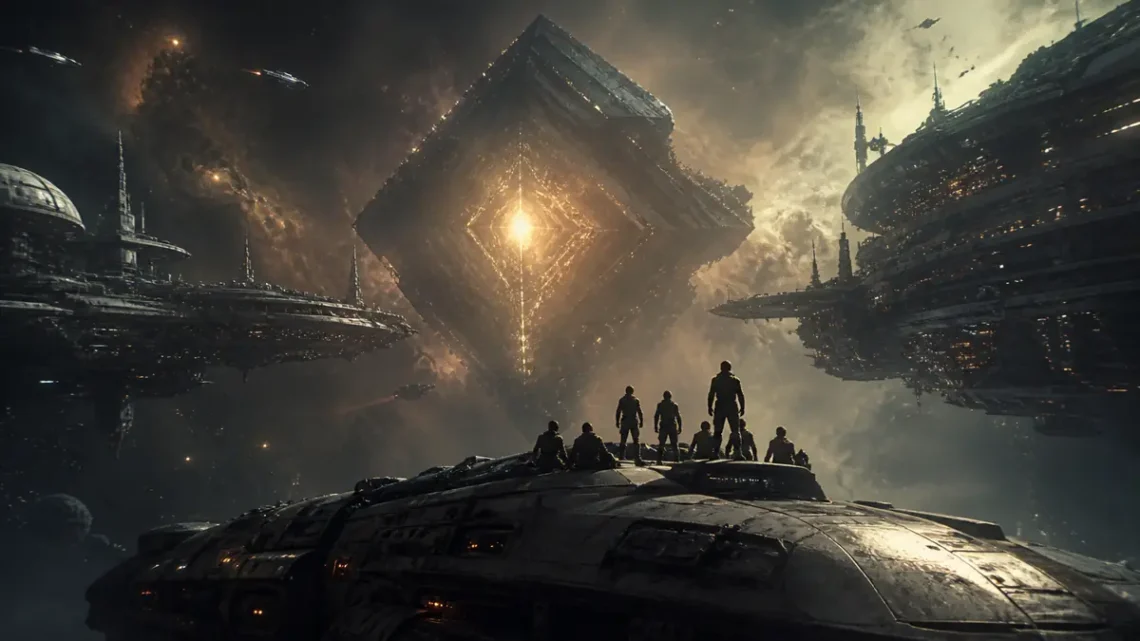
Leviathan Wakes begins with a missing woman and a damaged ship, then lets the investigation widen until Earth, Mars, the Belt, and an alien technology are part of the same unstable system. Holden’s crew and Miller’s case give the reader two ways into the future: one through practical shipboard loyalty, the other through noir suspicion and institutional rot. The series feels large because every faction has a history, but its emotional force stays with people trying to keep one another alive. Readers comparing books like Leviathan Wakes will find that the most useful match depends on which part of the seed book created the strongest attachment: its voice, argument, setting, characters, problem, or promise of change.
The strongest books like Leviathan Wakes should share at least two or three of its major qualities: a politically divided human society, a crew or ensemble, physical constraints on travel, an investigation that grows into a larger crisis, and technology that changes the balance of power. The list includes space opera, military science fiction, first contact, and warmer crew stories, but no book is here merely because it has a spaceship.
The Mystery Starts Small Because the Solar System Is Already Under Strain
Choose Caliban’s War for the direct continuation, Children of Time for civilization-scale first contact, and Old Man’s War for military humor and altered bodies. Ancillary Justice adds empire and distributed identity; Seveneves engineering; Red Rising class rebellion; Hyperion literary pilgrimage; Revelation Space archaeology; and The Long Way to a Small, Angry Planet the warmest found-family crew.
At-a-Glance Comparison
| Book | Best for | Major qualities shared with Leviathan Wakes |
|---|---|---|
| Caliban’s War | Readers who want the direct continuation and a wider political crisis | Solar-system factions, shipboard crews, alien technology, investigation, military conflict, personal loyalty, and a mystery becoming a system-wide threat |
| Children of Time | Readers who want civilization-scale first contact and nonhuman intelligence | Competing civilizations, long time scale, scientific survival, ecological change, political disagreement, and a future where humanity must redefine personhood |
| Old Man’s War | Readers who want military science fiction, squad relationships, and altered bodies | Military recruitment, new bodies, alien conflict, squad loyalty, colonial pressure, aging, humor, and soldiers questioning the story they are told |
| Ancillary Justice | Readers who want empire, artificial identity, and one body carrying a larger history | Imperial politics, distributed intelligence, colonial power, multiple bodies, memory, gender, and a mission shaped by a divided ruler |
| Seveneves | Readers who want engineering, orbital survival, and civilization redesign | Planetary disaster, orbital construction, scientific specialists, political decisions, survival logistics, and a future built through deliberate adaptation |
| Red Rising | Readers who want caste rebellion, military training, and political space opera | A divided solar system, class hierarchy, hidden identity, elite training, rebellion, strategic alliances, betrayal, and war with civilizational consequences |
| Hyperion | Readers who want a pilgrimage, literary voices, and a mysterious threat | Multiple narrators, distant worlds, religious and political factions, a dangerous nonhuman figure, personal histories, and a journey whose meaning changes with each story |
| Revelation Space | Readers who want archaeology, ancient technology, and a darker cosmic mystery | Lost civilizations, archaeological investigation, star systems, artificial intelligence, political factions, and a discovery that makes human history more dangerous |
| The Long Way to a Small, Angry Planet | Readers who want the warmest found-family crew in space | A diverse ship crew, practical space travel, cultural difference, friendship, political displacement, work, and belonging built through daily life |
What Makes a Strong Leviathan Wakes Companion?
A recommendation needed more than space combat. I looked for politics that affect ordinary movement and labor, a crew or investigative partnership, a mystery whose explanation changes the political map, and enough physical or social detail to make the future feel inhabited. The strongest matches also preserve the seed’s moral pressure: survival decisions can be practical and still create victims.
The 9 Recommended Books
Caliban’s War

Overview: The second novel follows Holden’s crew as political and military tensions rise around Ganymede and a new protomolecule-related threat. Bobbie Draper and Avasarala add military and political viewpoints to the investigation.
Why it belongs on this list: The shared qualities are solar-system factions, shipboard crews, alien technology, investigation, military conflict, personal loyalty, and a mystery becoming a system-wide threat. Caliban’s War offers a neighboring reading experience through its characters, setting, tone, pacing, and treatment of consequence. The match is strongest for readers who want the direct continuation and a wider political crisis, although its emotional register and narrative structure may be quieter, stranger, or more expansive than the seed.
Reading experience: It is the most direct match because it preserves the seed’s combination of crew dynamics, alternating viewpoints, realistic political factions, and a technology nobody fully understands. The scope widens without abandoning human-scale consequences.
Best for: Readers who want the direct continuation and a wider political crisis.
Keep in mind: Propulsive, political, and ensemble-driven, with more military and governmental viewpoints.
What to notice: Choose Caliban’s War when the reader wants readers who want the direct continuation and a wider political crisis but is open to a different tone and pace. Its shared qualities create a bridge to the seed, while its characters, setting, and structure make the journey distinct. The contrast can be as satisfying as the resemblance, especially for readers who want a familiar tension presented through new social or emotional circumstances.
View available editions and reader reviews.
Children of Time
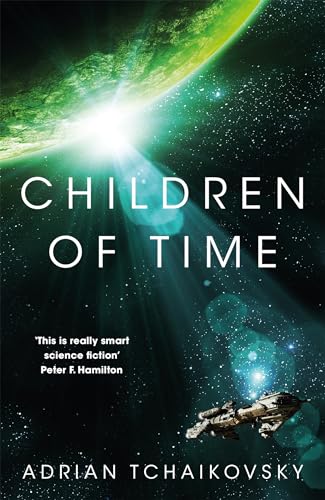
Overview: A terraforming experiment and a human arkship lead toward contact between humanity and an intelligent spider civilization. The story follows both societies across generations as survival becomes a question of cooperation and translation.
Why it belongs on this list: The shared qualities are competing civilizations, long time scale, scientific survival, ecological change, political disagreement, and a future where humanity must redefine personhood. Children of Time offers a neighboring reading experience through its characters, setting, tone, pacing, and treatment of consequence. The match is strongest for readers who want civilization-scale first contact and nonhuman intelligence, although its emotional register and narrative structure may be quieter, stranger, or more expansive than the seed.
Reading experience: The connection is the way a local technical or political problem opens into a history larger than any crew. Tchaikovsky is more evolutionary and less noir, but the same question of how humans respond to unfamiliar intelligence drives both.
Best for: Readers who want civilization-scale first contact and nonhuman intelligence.
Keep in mind: Expansive and alternating, with long historical transitions balanced by urgent human survival.
What to notice: The strongest connection between Children of Time and the seed is found in competing civilizations, long time scale, scientific survival, ecological change, political disagreement, and a future where humanity must redefine personhood, but the reading experience is deliberately different. Its tone, narrative distance, and treatment of consequence create another route into the same broad pleasure. Readers should let the book establish its own rhythm before judging it against the original.
View available editions and reader reviews.
Old Man’s War

Overview: John Perry joins the Colonial Defense Forces at seventy-five and receives a young genetically modified body. Training and deployments reveal that the promise of serving humanity is entangled with competition for worlds and the moral cost of colonization.
Why it belongs on this list: The shared qualities are military recruitment, new bodies, alien conflict, squad loyalty, colonial pressure, aging, humor, and soldiers questioning the story they are told. Old Man’s War offers a neighboring reading experience through its characters, setting, tone, pacing, and treatment of consequence. The match is strongest for readers who want military science fiction, squad relationships, and altered bodies, although its emotional register and narrative structure may be quieter, stranger, or more expansive than the seed.
Reading experience: The seed’s crew becomes a military unit here, but the shared appeal is ordinary people facing enormous political stakes. Scalzi is funnier and more openly military, while the series gradually reveals the ethical complications beneath the banter.
Best for: Readers who want military science fiction, squad relationships, and altered bodies.
Keep in mind: Fast, witty, and accessible, with training, squad action, and philosophical questions about aging and war.
What to notice: Choose Old Man’s War when the reader wants readers who want military science fiction, squad relationships, and altered bodies but is open to a different tone and pace. Its shared qualities create a bridge to the seed, while its characters, setting, and structure make the journey distinct. The contrast can be as satisfying as the resemblance, especially for readers who want a familiar tension presented through new social or emotional circumstances.
View available editions and reader reviews.
Ancillary Justice

Overview: Breq was once the intelligence of a ship controlling thousands of ancillary bodies. Now reduced to one body, she follows a personal mission through an empire whose ruler has split into competing identities.
Why it belongs on this list: The shared qualities are imperial politics, distributed intelligence, colonial power, multiple bodies, memory, gender, and a mission shaped by a divided ruler. Ancillary Justice offers a neighboring reading experience through its characters, setting, tone, pacing, and treatment of consequence. The match is strongest for readers who want empire, artificial identity, and one body carrying a larger history, although its emotional register and narrative structure may be quieter, stranger, or more expansive than the seed.
Reading experience: Both novels make politics personal through the body. Leckie replaces the ship crew with one artificial mind carrying a lost network, but the questions of empire, loyalty, and what counts as an individual remain closely related.
Best for: Readers who want empire, artificial identity, and one body carrying a larger history.
Keep in mind: Measured, political, and voice-driven, with identity revealed through unusual perception.
What to notice: In Ancillary Justice, imperial politics, distributed intelligence, colonial power, multiple bodies, memory, gender, and a mission shaped by a divided ruler are part of the story’s emotional architecture. Notice how the characters move through the setting, how quickly the plot reveals its information, and whether the book offers closure or leaves room for unease. Those choices explain why it belongs on this list more clearly than a surface genre label would.
View available editions and reader reviews.
Seveneves

Overview: When the Moon breaks apart, Earth faces an extinction chain. Scientists, engineers, and governments attempt to preserve humanity in orbit, but survival requires new institutions, new bodies, and a new understanding of time.
Why it belongs on this list: The shared qualities are planetary disaster, orbital construction, scientific specialists, political decisions, survival logistics, and a future built through deliberate adaptation. Seveneves offers a neighboring reading experience through its characters, setting, tone, pacing, and treatment of consequence. The match is strongest for readers who want engineering, orbital survival, and civilization redesign, although its emotional register and narrative structure may be quieter, stranger, or more expansive than the seed.
Reading experience: The shared pleasure is seeing technical constraints become political. It is less crew-noir and more civilization engineering, but readers who like air, fuel, distance, and institutional failure will find a deep match.
Best for: Readers who want engineering, orbital survival, and civilization redesign.
Keep in mind: Long, technical, and very large in scale, with a major time jump and extensive systems detail.
What to notice: Readers may begin Seveneves for planetary disaster, orbital construction, scientific specialists, political decisions, survival logistics, and a future built through deliberate adaptation, then stay for the way the book complicates that attraction. The most revealing moments are often not the loudest ones: a change in loyalty, a detail of place, a silence between characters, or a choice that alters the meaning of an earlier scene. Those details give this recommendation a life beyond the seed title.
View available editions and reader reviews.
Red Rising

Overview: Darrow begins as a miner in a rigid caste system and is transformed to infiltrate the ruling class. An elite training program becomes a path into rebellion, but victory requires him to navigate the very hierarchy he wants to destroy.
Why it belongs on this list: The shared qualities are a divided solar system, class hierarchy, hidden identity, elite training, rebellion, strategic alliances, betrayal, and war with civilizational consequences. Red Rising offers a neighboring reading experience through its characters, setting, tone, pacing, and treatment of consequence. The match is strongest for readers who want caste rebellion, military training, and political space opera, although its emotional register and narrative structure may be quieter, stranger, or more expansive than the seed.
Reading experience: Both series place individual crews and friendships inside a system divided by planet, class, and political power. Brown is more operatic and action-heavy, while the seed is more procedurally realistic, but the moral pressure of rebellion is familiar.
Best for: Readers who want caste rebellion, military training, and political space opera.
Keep in mind: Fast, violent, and cinematic, with academy competition leading into military and political conflict.
What to notice: What matters most in Red Rising is the way a divided solar system, class hierarchy, hidden identity, elite training, rebellion, strategic alliances, betrayal, and war with civilizational consequences shapes the characters’ lives and the world around them. The resemblance to the seed is not limited to a premise. Pay attention to voice, pacing, setting, and the small choices that reveal how this book imagines danger, loyalty, or belonging.
View available editions and reader reviews.
Hyperion
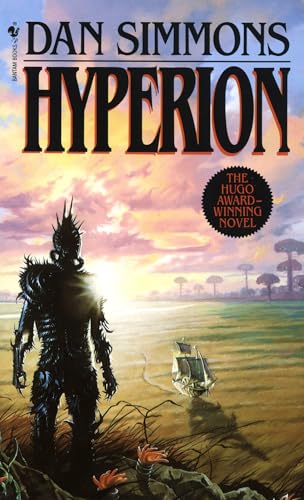
Overview: Seven pilgrims travel toward the mysterious Shrike, each carrying a story that explains why they have come. The separate narratives reveal a future shaped by AI, empire, religion, war, and an intelligence that may not be interpretable.
Why it belongs on this list: The shared qualities are multiple narrators, distant worlds, religious and political factions, a dangerous nonhuman figure, personal histories, and a journey whose meaning changes with each story. Hyperion offers a neighboring reading experience through its characters, setting, tone, pacing, and treatment of consequence. The match is strongest for readers who want a pilgrimage, literary voices, and a mysterious threat, although its emotional register and narrative structure may be quieter, stranger, or more expansive than the seed.
Reading experience: The connection is the way a group carries different political and emotional histories toward a threat larger than any single story. It is more literary and fragmented than Leviathan Wakes, but equally interested in how systems shape individuals.
Best for: Readers who want a pilgrimage, literary voices, and a mysterious threat.
Keep in mind: Ambitious, varied, and literary, with nested stories rather than a continuous crew narrative.
What to notice: Choose Hyperion when the reader wants readers who want a pilgrimage, literary voices, and a mysterious threat but is open to a different tone and pace. Its shared qualities create a bridge to the seed, while its characters, setting, and structure make the journey distinct. The contrast can be as satisfying as the resemblance, especially for readers who want a familiar tension presented through new social or emotional circumstances.
View available editions and reader reviews.
Revelation Space

Overview: Dan Sylveste studies the dead Amarantin civilization while a crewed ship, an assassin, and an ancient threat converge. The novel treats the galaxy as a landscape filled with traces of civilizations that may have been erased for a reason.
Why it belongs on this list: The shared qualities are lost civilizations, archaeological investigation, star systems, artificial intelligence, political factions, and a discovery that makes human history more dangerous. Revelation Space offers a neighboring reading experience through its characters, setting, tone, pacing, and treatment of consequence. The match is strongest for readers who want archaeology, ancient technology, and a darker cosmic mystery, although its emotional register and narrative structure may be quieter, stranger, or more expansive than the seed.
Reading experience: Like the seed, it begins with an investigation and a local mystery before widening into a conflict involving technology, history, and survival. It is darker and more gothic, with less banter and more archaeological dread.
Best for: Readers who want archaeology, ancient technology, and a darker cosmic mystery.
Keep in mind: Dense, atmospheric, and slow-building, with several viewpoints and a large technical mythology.
What to notice: The strongest connection between Revelation Space and the seed is found in lost civilizations, archaeological investigation, star systems, artificial intelligence, political factions, and a discovery that makes human history more dangerous, but the reading experience is deliberately different. Its tone, narrative distance, and treatment of consequence create another route into the same broad pleasure. Readers should let the book establish its own rhythm before judging it against the original.
View available editions and reader reviews.
The Long Way to a Small, Angry Planet
Overview: Rosemary Harper joins the Wayfarer, a ship that tunnels through space for a living. The crew includes people and species with different histories, bodies, and expectations, and ordinary shipboard routines become the basis for trust.
Why it belongs on this list: The shared qualities are a diverse ship crew, practical space travel, cultural difference, friendship, political displacement, work, and belonging built through daily life. The Long Way to a Small, Angry Planet offers a neighboring reading experience through its characters, setting, tone, pacing, and treatment of consequence. The match is strongest for readers who want the warmest found-family crew in space, although its emotional register and narrative structure may be quieter, stranger, or more expansive than the seed.
Reading experience: This is a softer companion that shares the seed’s belief that a crew is a social world. It has less mystery and military violence, but more time for meals, customs, friendship, and the question of what makes a place feel like home.
Best for: Readers who want the warmest found-family crew in space.
Keep in mind: Warm, episodic, and relationship-centered, with accessible world-building and a slower external plot.
What to notice: In The Long Way to a Small, Angry Planet, a diverse ship crew, practical space travel, cultural difference, friendship, political displacement, work, and belonging built through daily life are part of the story’s emotional architecture. Notice how the characters move through the setting, how quickly the plot reveals its information, and whether the book offers closure or leaves room for unease. Those choices explain why it belongs on this list more clearly than a surface genre label would.
View available editions and reader reviews.
Choose by Crew, Politics, Mystery, or First Contact
Read Caliban’s War next for the direct arc. Choose Children of Time for nonhuman civilization, Seveneves for engineering, or Old Man’s War for military service and altered bodies. Ancillary Justice is strongest for empire and identity; Red Rising for caste rebellion; Hyperion for literary voices; Revelation Space for a darker archaeological mystery; and The Long Way to a Small, Angry Planet for relationships over combat.
Who This List Is Best For
This list is for adult and crossover science-fiction readers who enjoy political space opera, crews, investigations, and worlds that expand across a series. War, body horror, colonial violence, torture, sexual violence, and genocide appear in different books. The notes identify the most realistic, most military, most philosophical, and most relationship-focused choices.
FAQ
What is the closest book to Leviathan Wakes?
Caliban’s War is the direct continuation. For a new series with the same mix of crew, politics, mystery, and alien technology, Red Rising is more military and Children of Time more evolutionary, while Ancillary Justice is closer in imperial identity politics.
Which recommendation has the best crew dynamic?
The Long Way to a Small, Angry Planet offers the warmest found-family crew. Old Man’s War has squad humor and military bonds, while Hyperion uses a temporary pilgrimage group whose individual stories matter as much as the destination.
Which books are most realistic about space travel?
Seveneves and the seed series foreground engineering and physical constraints. Ancillary Justice and Children of Time are more speculative, while Red Rising is more operatic than realistic.
Which book has the strongest mystery?
Revelation Space and Children of Time use large scientific or historical mysteries. Caliban’s War continues the seed’s investigative energy, while Hyperion uses multiple stories to create a layered mystery.
Which recommendation is the most hopeful?
The Long Way to a Small, Angry Planet is the warmest and most relationship-centered. Children of Time allows cooperation across difference, while Old Man’s War and Red Rising are more morally and militarily severe.
The Future Is Not Empty Space; It Is a Fight Over Who Gets to Move Through It
Leviathan Wakes is compelling because the solar system is politically crowded before the alien technology arrives. The companion books preserve that sense of pressure. Their ships, stations, planets, and empires are not neutral scenery; they determine who can travel, who must work, who receives protection, and whose discovery becomes a reason for someone else to be afraid.