Dark Matter uses a scientific premise to turn regret into physical suspense. Jason Dessen is taken from an ordinary life into a version of reality where another choice has produced a different career, relationship, and self. The novel moves quickly, but its emotional engine is not the machinery of the box. It is the recognition that a life can be both imperfect and precious, and that the desire to correct one decision can become a way of losing the people who gave the life meaning. Readers comparing books like Dark Matter will find that the most useful match depends on which part of the seed book created the strongest attachment: its voice, argument, setting, characters, problem, or promise of change.
The best books like Dark Matter should share at least two or three of its major qualities: a high-concept scientific premise, a fast mystery or chase, identity under pressure, alternate realities or timelines, and an emotional question about love, regret, or choice. The recommendations below include multiverse thrillers, time loops, simulations, and more philosophical alternatives, clearly separated by tone and complexity.
The Most Dangerous Question Is What You Would Change
Choose Recursion for memory and reality collapse, The First Fifteen Lives of Harry August for repeated lifetimes, and Oona Out of Order for a more emotional time structure. Version Control and The Gone World are darker, while Replay, Life After Life, Sea of Tranquility, and The Midnight Library explore choice with different balances of science, history, and comfort.
At-a-Glance Comparison
| Book | Best for | Major qualities shared with Dark Matter |
|---|---|---|
| Recursion | Readers who want memory, reality collapse, and a high-speed scientific thriller | False memories, alternate timelines, scientific invention, identity, love, pursuit, and a technology that changes the past by changing what people remember |
| The First Fifteen Lives of Harry August | Readers who want repeated lives, long strategy, and identity across time | Reincarnation, memory across lifetimes, historical change, secret communities, ethical choice, friendship, and a protagonist trying to stop a future catastrophe |
| The Gone World | Readers who want a darker investigation across possible futures | Time travel, murder investigation, alternate futures, scientific uncertainty, grief, government secrecy, and a detective trying to prevent an extinction event |
| Version Control | Readers who want grief, scientific uncertainty, and a quieter alternate-reality novel | Experimental physics, possible timelines, marriage, grief, scientific work, uncertainty, and a protagonist questioning whether reality has changed or perception has failed |
| Oona Out of Order | Readers who want a more emotional life-jumping structure | Disordered time, identity, love, friendship, regret, repeated life stages, and a protagonist learning to live without a stable chronology |
| Replay | Readers who want a classic reset-life story and changing historical choices | Repeated lives, marriage, regret, historical change, identity, and a protagonist trying to understand what a second chance can actually fix |
| Life After Life | Readers who want literary alternate lives, family history, and the weight of ordinary choices | Repeated lives, war, family, historical trauma, identity, possibility, and a woman attempting to change outcomes through experience |
| Sea of Tranquility | Readers who want time, art, history, and a more literary speculative mystery | Time travel, alternate realities, historical repetition, art, pandemics, identity, and a mystery that crosses centuries |
| The Midnight Library | Readers who want an accessible, consoling meditation on alternate lives | Alternate lives, regret, depression, possibility, small choices, identity, and a protagonist learning that worth is not measured by perfect outcomes |
What Makes a Strong Dark Matter Read-Alike?
A recommendation needed more than a parallel universe. It had to connect the speculative mechanism to identity and an emotional decision, then maintain enough forward momentum to satisfy a thriller reader. I also looked for distinct approaches to alternate lives: some use physics, some memory, some repeated time, and some literary possibility. The best matches make the “what if” change the character rather than merely decorate the plot.
The 9 Recommended Books
Recursion

Overview: Barry Sutton investigates a phenomenon called false memory syndrome while neuroscientist Helena Smith works on a technology intended to preserve human experience. Their stories converge as memory begins creating competing versions of reality.
Why it belongs on this list: The shared qualities are false memories, alternate timelines, scientific invention, identity, love, pursuit, and a technology that changes the past by changing what people remember. Recursion offers a neighboring reading experience through its characters, setting, tone, pacing, and treatment of consequence. The match is strongest for readers who want memory, reality collapse, and a high-speed scientific thriller, although its emotional register and narrative structure may be quieter, stranger, or more expansive than the seed.
Reading experience: This is the closest structural companion because the science produces immediate emotional and physical consequences. Like Jason, the characters are driven by the desire to save a person and discover that changing reality changes the self who wanted the change.
Best for: Readers who want memory, reality collapse, and a high-speed scientific thriller.
Keep in mind: Propulsive, cinematic, and twist-driven, with alternating viewpoints and escalating reality instability.
What to notice: Readers may begin Recursion for false memories, alternate timelines, scientific invention, identity, love, pursuit, and a technology that changes the past by changing what people remember, then stay for the way the book complicates that attraction. The most revealing moments are often not the loudest ones: a change in loyalty, a detail of place, a silence between characters, or a choice that alters the meaning of an earlier scene. Those details give this recommendation a life beyond the seed title.
View available editions and reader reviews.
The First Fifteen Lives of Harry August

Overview: Harry August repeatedly returns to the same life with full memory of previous cycles. His unusual condition connects him to other people who remember, creating a long struggle over how much history can be changed and whether saving the future justifies controlling the past.
Why it belongs on this list: The shared qualities are reincarnation, memory across lifetimes, historical change, secret communities, ethical choice, friendship, and a protagonist trying to stop a future catastrophe. The First Fifteen Lives of Harry August offers a neighboring reading experience through its characters, setting, tone, pacing, and treatment of consequence. The match is strongest for readers who want repeated lives, long strategy, and identity across time, although its emotional register and narrative structure may be quieter, stranger, or more expansive than the seed.
Reading experience: It shares the seed’s fascination with alternate lives but replaces the multiverse chase with a long moral strategy. The emotional question is less “which life is mine?” and more “what do I owe a world I will keep re-entering?”
Best for: Readers who want repeated lives, long strategy, and identity across time.
Keep in mind: Thoughtful, sweeping, and slower, with history, friendship, espionage, and repeated patterns accumulating over decades.
What to notice: Readers may begin The First Fifteen Lives of Harry August for reincarnation, memory across lifetimes, historical change, secret communities, ethical choice, friendship, and a protagonist trying to stop a future catastrophe, then stay for the way the book complicates that attraction. The most revealing moments are often not the loudest ones: a change in loyalty, a detail of place, a silence between characters, or a choice that alters the meaning of an earlier scene. Those details give this recommendation a life beyond the seed title.
View available editions and reader reviews.
The Gone World

Overview: NCIS agent Shannon Moss investigates a murder connected to a future technology that allows investigators to visit possible timelines. Each jump reveals a different version of the crime and a larger catastrophe moving toward the present.
Why it belongs on this list: The shared qualities are time travel, murder investigation, alternate futures, scientific uncertainty, grief, government secrecy, and a detective trying to prevent an extinction event. The Gone World offers a neighboring reading experience through its characters, setting, tone, pacing, and treatment of consequence. The match is strongest for readers who want a darker investigation across possible futures, although its emotional register and narrative structure may be quieter, stranger, or more expansive than the seed.
Reading experience: The shared structure is a scientific mystery that makes identity and future consequence unstable. It is far darker and more procedural than Dark Matter, with the emotional relationship embedded inside an investigation rather than a domestic love story.
Best for: Readers who want a darker investigation across possible futures.
Keep in mind: Dense, grim, and propulsive, combining police procedure, cosmic horror, and multiple timelines.
What to notice: Readers may begin The Gone World for time travel, murder investigation, alternate futures, scientific uncertainty, grief, government secrecy, and a detective trying to prevent an extinction event, then stay for the way the book complicates that attraction. The most revealing moments are often not the loudest ones: a change in loyalty, a detail of place, a silence between characters, or a choice that alters the meaning of an earlier scene. Those details give this recommendation a life beyond the seed title.
View available editions and reader reviews.
Version Control
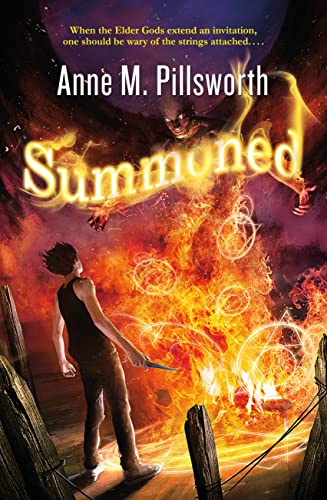
Overview: Rebecca Wright works on a controversial particle experiment while grieving the death of her daughter and struggling in her marriage. As anomalies appear, she begins to wonder whether the world has shifted or whether grief is changing the way she sees it.
Why it belongs on this list: The shared qualities are experimental physics, possible timelines, marriage, grief, scientific work, uncertainty, and a protagonist questioning whether reality has changed or perception has failed. Version Control offers a neighboring reading experience through its characters, setting, tone, pacing, and treatment of consequence. The match is strongest for readers who want grief, scientific uncertainty, and a quieter alternate-reality novel, although its emotional register and narrative structure may be quieter, stranger, or more expansive than the seed.
Reading experience: The connection to the seed is the collision between scientific possibility and the emotional desire to undo loss. It is less action-driven and more psychologically ambiguous, making the question of alternate reality feel intimate and painful.
Best for: Readers who want grief, scientific uncertainty, and a quieter alternate-reality novel.
Keep in mind: Slow, thoughtful, and relationship-centered, with science, grief, and uncertainty rather than constant chase scenes.
What to notice: What matters most in Version Control is the way experimental physics, possible timelines, marriage, grief, scientific work, uncertainty, and a protagonist questioning whether reality has changed or perception has failed shapes the characters’ lives and the world around them. The resemblance to the seed is not limited to a premise. Pay attention to voice, pacing, setting, and the small choices that reveal how this book imagines danger, loyalty, or belonging.
View available editions and reader reviews.
Oona Out of Order

Overview: On each New Year’s Eve, Oona wakes in a different age of her own life. Her memories remain, but the body and circumstances change, forcing her to experience adulthood out of sequence and rethink what makes a life coherent.
Why it belongs on this list: The shared qualities are disordered time, identity, love, friendship, regret, repeated life stages, and a protagonist learning to live without a stable chronology. Oona Out of Order offers a neighboring reading experience through its characters, setting, tone, pacing, and treatment of consequence. The match is strongest for readers who want a more emotional life-jumping structure, although its emotional register and narrative structure may be quieter, stranger, or more expansive than the seed.
Reading experience: The book shares the seed’s emotional interest in seeing a life from several possible positions, but it is warmer and more relationship-focused. It asks how identity survives when the timeline is broken rather than presenting a technology to control.
Best for: Readers who want a more emotional life-jumping structure.
Keep in mind: Accessible, romantic, and bittersweet, with a strong focus on friendship, music, and life-stage dislocation.
What to notice: In Oona Out of Order, disordered time, identity, love, friendship, regret, repeated life stages, and a protagonist learning to live without a stable chronology are part of the story’s emotional architecture. Notice how the characters move through the setting, how quickly the plot reveals its information, and whether the book offers closure or leaves room for unease. Those choices explain why it belongs on this list more clearly than a surface genre label would.
View available editions and reader reviews.
Replay

Overview: Jeff Winston dies in 1988 and wakes in his younger body, retaining memory of his future. He repeats and alters his life, discovering that knowledge does not guarantee happiness and that another chance creates new obligations.
Why it belongs on this list: The shared qualities are repeated lives, marriage, regret, historical change, identity, and a protagonist trying to understand what a second chance can actually fix. Replay offers a neighboring reading experience through its characters, setting, tone, pacing, and treatment of consequence. The match is strongest for readers who want a classic reset-life story and changing historical choices, although its emotional register and narrative structure may be quieter, stranger, or more expansive than the seed.
Reading experience: This is an older, more philosophical cousin to the seed’s regret engine. It is less scientific and less frenetic, but it shares the emotional problem of trying to construct a better life while carrying memory of the one already lost.
Best for: Readers who want a classic reset-life story and changing historical choices.
Keep in mind: Reflective, historical, and character-driven, with multiple life arcs and a slower pace.
What to notice: The strongest connection between Replay and the seed is found in repeated lives, marriage, regret, historical change, identity, and a protagonist trying to understand what a second chance can actually fix, but the reading experience is deliberately different. Its tone, narrative distance, and treatment of consequence create another route into the same broad pleasure. Readers should let the book establish its own rhythm before judging it against the original.
View available editions and reader reviews.
Life After Life
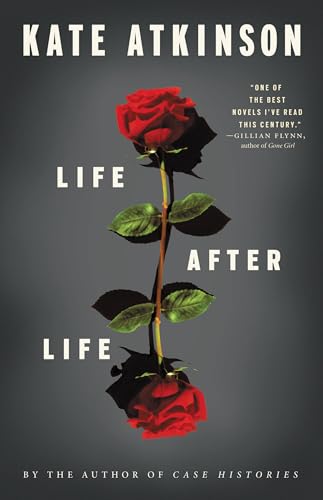
Overview: Ursula Todd is born again and again, each life altered by small decisions and historical circumstances. The novel follows her family, the World Wars, illness, and the gradual possibility that repetition might allow a different future.
Why it belongs on this list: The shared qualities are repeated lives, war, family, historical trauma, identity, possibility, and a woman attempting to change outcomes through experience. Life After Life offers a neighboring reading experience through its characters, setting, tone, pacing, and treatment of consequence. The match is strongest for readers who want literary alternate lives, family history, and the weight of ordinary choices, although its emotional register and narrative structure may be quieter, stranger, or more expansive than the seed.
Reading experience: The link is not a technological mechanism but the accumulation of choices. Like Jason, Ursula learns that changing one event does not create a perfect life; it creates a different set of losses, relationships, and responsibilities.
Best for: Readers who want literary alternate lives, family history, and the weight of ordinary choices.
Keep in mind: Literary, recursive, and historically rich, with repetition used to explore character rather than generate twists.
What to notice: What matters most in Life After Life is the way repeated lives, war, family, historical trauma, identity, possibility, and a woman attempting to change outcomes through experience shapes the characters’ lives and the world around them. The resemblance to the seed is not limited to a premise. Pay attention to voice, pacing, setting, and the small choices that reveal how this book imagines danger, loyalty, or belonging.
View available editions and reader reviews.
Sea of Tranquility

Overview: The novel moves among a nineteenth-century exile, a twentieth-century writer, and a future moon colony. A strange moment in a forest becomes a clue connecting lives, books, and a possible disturbance in reality.
Why it belongs on this list: The shared qualities are time travel, alternate realities, historical repetition, art, pandemics, identity, and a mystery that crosses centuries. Sea of Tranquility offers a neighboring reading experience through its characters, setting, tone, pacing, and treatment of consequence. The match is strongest for readers who want time, art, history, and a more literary speculative mystery, although its emotional register and narrative structure may be quieter, stranger, or more expansive than the seed.
Reading experience: It shares the seed’s sense that a life can be viewed from outside its original path, but Mandel is more interested in art, history, and pattern than in a thriller chase. Choose it for atmosphere and reflection.
Best for: Readers who want time, art, history, and a more literary speculative mystery.
Keep in mind: Elegant, compact, and literary, with timelines that connect through image and idea rather than constant action.
What to notice: Choose Sea of Tranquility when the reader wants readers who want time, art, history, and a more literary speculative mystery but is open to a different tone and pace. Its shared qualities create a bridge to the seed, while its characters, setting, and structure make the journey distinct. The contrast can be as satisfying as the resemblance, especially for readers who want a familiar tension presented through new social or emotional circumstances.
View available editions and reader reviews.
The Midnight Library

Overview: Nora Seed enters a library between life and death where each book opens onto a version of her life shaped by a different choice. The possibilities gradually change her understanding of what makes a life meaningful.
Why it belongs on this list: The shared qualities are alternate lives, regret, depression, possibility, small choices, identity, and a protagonist learning that worth is not measured by perfect outcomes. The Midnight Library offers a neighboring reading experience through its characters, setting, tone, pacing, and treatment of consequence. The match is strongest for readers who want an accessible, consoling meditation on alternate lives, although its emotional register and narrative structure may be quieter, stranger, or more expansive than the seed.
Reading experience: The premise directly echoes the seed’s alternate-life appeal, but the tone is more therapeutic and symbolic. It is the choice for readers who want emotional reassurance rather than a hard-science explanation or a chase plot.
Best for: Readers who want an accessible, consoling meditation on alternate lives.
Keep in mind: Fast, accessible, and reflective, with short chapters and a clear emotional arc.
What to notice: What matters most in The Midnight Library is the way alternate lives, regret, depression, possibility, small choices, identity, and a protagonist learning that worth is not measured by perfect outcomes shapes the characters’ lives and the world around them. The resemblance to the seed is not limited to a premise. Pay attention to voice, pacing, setting, and the small choices that reveal how this book imagines danger, loyalty, or belonging.
View available editions and reader reviews.
Choose by Multiverse, Memory, Time Loop, or Emotional Reflection
Start with Recursion for the closest combination of science, chase, and reality instability. Choose The First Fifteen Lives of Harry August for repeated lifetimes, The Gone World for darker investigation, or Version Control for grief and scientific uncertainty. Oona Out of Order and Life After Life are more literary; Replay is the classic reset-life story; Sea of Tranquility adds history and art; and The Midnight Library is the most directly consoling.
Who This List Is Best For
This list is for readers of accessible science-fiction thrillers and speculative novels about regret, identity, memory, and alternate lives. Some books include suicide, grief, violence, addiction, or existential despair. The notes distinguish the most propulsive choices from the quieter, more literary books so a reader can choose by mood.
FAQ
What is the closest book to Dark Matter?
Recursion is the closest in its combination of high-concept science, rapid suspense, memory, and realities destabilizing under pressure. The First Fifteen Lives of Harry August is the stronger choice if repeated lives and long-term consequences interest you most.
Which recommendation has the most action?
Recursion, The Gone World, and Oona Out of Order have the strongest forward momentum. Replay and The First Fifteen Lives of Harry August are more reflective even when the stakes are large.
Which book is the most emotional?
Life After Life, Oona Out of Order, and The Midnight Library focus most directly on regret, family, and the emotional weight of different lives. Version Control is more technically and psychologically bleak.
Are these books about parallel universes?
Some are. Dark Matter and Recursion use reality instability, while Replay, Harry August, and Life After Life use repeated lives or timelines. The Midnight Library uses alternate possibilities in a more philosophical and symbolic way.
Which book should I read if I want science rather than magical realism?
Recursion, Version Control, and The Gone World foreground scientific or technological mechanisms. Dark Matter is the most accessible high-concept entry point, while Sea of Tranquility uses a more literary structure.
A Life Is Not a Single Door You Failed to Open
Dark Matter makes choice feel physical, but its emotional conclusion depends on accepting that a meaningful life cannot be measured only by the roads not taken. The strongest companion books offer different answers. Some encourage revision, some insist on consequence, and some find freedom in the fact that identity is made through continuing to choose.