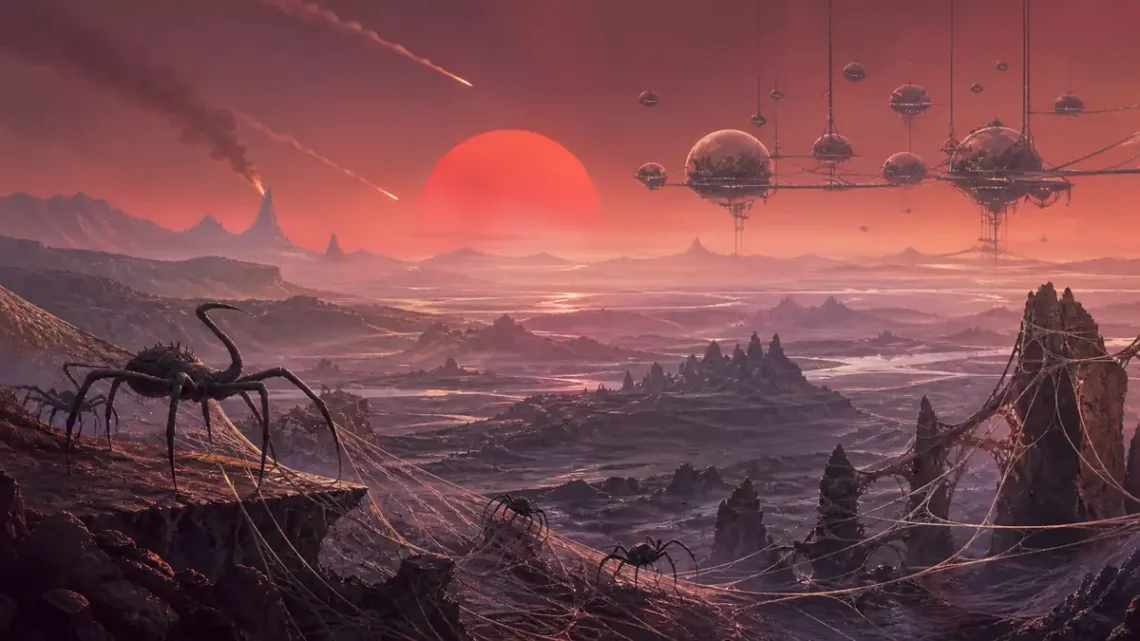
Children of Time is unusual because it gives the future to a civilization readers might first classify as a problem. The story moves between a terraformed planet where uplifted spiders develop language, culture, science, and politics, and a human arkship whose descendants are struggling to remain human after generations in space. The tension is not simply who will win. It is whether either civilization can survive contact without forcing the other into its own shape. Readers comparing books like Children of Time will find that the most useful match depends on which part of the seed book created the strongest attachment: its voice, argument, setting, characters, problem, or promise of change.
The best books like Children of Time must share more than a distant future. They should treat evolution, ecology, first contact, or civilization as active forces and give readers a nonhuman or posthuman viewpoint with real agency. Each recommendation below shares at least two or three of the seed’s major qualities while changing the balance of biology, engineering, politics, language, or cosmic mystery.
The Other Civilization Is Not Waiting to Become Human
Choose Children of Ruin for the direct continuation, Blindsight for a colder question about consciousness, and Seveneves for engineering under extinction. Semiosis makes a planet’s ecology political, A Fire Upon the Deep expands the scale to galactic civilizations, and Ancillary Justice, Solaris, Dragon’s Egg, and The Sparrow explore identity, communication, and contact from different angles.
At-a-Glance Comparison
| Book | Best for | Major qualities shared with Children of Time |
|---|---|---|
| Children of Ruin | Readers who want the direct continuation and more alien forms of intelligence | Evolution, multiple civilizations, nonhuman cognition, deep time, ecological threat, exploration, and humans struggling to communicate without domination |
| Blindsight | Readers who want consciousness, first contact, and a hostile cognitive puzzle | Alien intelligence, altered humans, mission specialists, communication failure, evolution, and the possibility that self-awareness is not an advantage |
| Seveneves | Readers who want extinction engineering and civilization rebuilt across generations | Planetary catastrophe, orbital engineering, scientific specialists, political conflict, survival planning, and future humans shaped by deliberate adaptation |
| Semiosis | Readers who want ecology, settlement, and a planet acting as an intelligent force | Generation settlement, alien ecology, plant intelligence, community survival, political adaptation, communication, and humans forced to change their assumptions |
| A Fire Upon the Deep | Readers who want galactic scale, multiple species, and ancient intelligence | Galactic civilizations, nonhuman species, ancient technology, communication, political factions, long-distance travel, and a threat larger than one world |
| Ancillary Justice | Readers who want artificial identity, empire, and bodies as infrastructure | Distributed consciousness, artificial intelligence, imperial politics, colonial power, memory, gender, and a person trying to act through one remaining body |
| Solaris | Readers who want planetary mystery and contact that refuses translation | Alien intelligence, planetary ecology, scientific observation, memory, grief, failed communication, and the limits of human knowledge |
| Dragon’s Egg | Readers who want extreme evolution and a civilization developing on a neutron star | Nonhuman life, radically different time scale, scientific observation, civilization, communication, evolution, and humans encountering intelligence under alien physics |
| The Sparrow | Readers who want first contact, religious questions, and the ethical cost of exploration | Alien contact, language, scientific mission, cultural misunderstanding, faith, colonial power, and a group changed by the world it hoped to study |
What Makes a Strong Children of Time Companion?
A book needed at least two or three of these overlaps: long time scale, evolutionary or ecological change, a civilization that is not simply human, scientific or engineering survival, competing communities, and first contact that changes the terms of the story. I also considered whether the nonhuman perspective has culture and agency rather than existing as scenery or a threat.
The 9 Recommended Books
Children of Ruin

Overview: The sequel follows the Portiids as they explore new worlds and encounter an intelligence whose relationship to life and memory is profoundly different. Human and spider perspectives continue to develop while the scale of contact expands.
Why it belongs on this list: The shared qualities are evolution, multiple civilizations, nonhuman cognition, deep time, ecological threat, exploration, and humans struggling to communicate without domination. Children of Ruin offers a neighboring reading experience through its characters, setting, tone, pacing, and treatment of consequence. The match is strongest for readers who want the direct continuation and more alien forms of intelligence, although its emotional register and narrative structure may be quieter, stranger, or more expansive than the seed.
Reading experience: It is the essential next read because it continues the seed’s experiment with nonhuman culture rather than resetting the premise. The story is stranger and more fragmented, asking whether communication can survive when the parties do not share the same model of self.
Best for: Readers who want the direct continuation and more alien forms of intelligence.
Keep in mind: Expansive, imaginative, and more psychologically alien, with exploration and multiple temporal layers.
What to notice: The strongest connection between Children of Ruin and the seed is found in evolution, multiple civilizations, nonhuman cognition, deep time, ecological threat, exploration, and humans struggling to communicate without domination, but the reading experience is deliberately different. Its tone, narrative distance, and treatment of consequence create another route into the same broad pleasure. Readers should let the book establish its own rhythm before judging it against the original.
View available editions and reader reviews.
Blindsight

Overview: A heavily modified crew investigates an alien object beyond Neptune and discovers an intelligence that may be more capable precisely because it does not think like a human. The mission becomes a test of cognition itself.
Why it belongs on this list: The shared qualities are alien intelligence, altered humans, mission specialists, communication failure, evolution, and the possibility that self-awareness is not an advantage. Blindsight offers a neighboring reading experience through its characters, setting, tone, pacing, and treatment of consequence. The match is strongest for readers who want consciousness, first contact, and a hostile cognitive puzzle, although its emotional register and narrative structure may be quieter, stranger, or more expansive than the seed.
Reading experience: Both books ask whether intelligence can evolve away from human interiority. Tchaikovsky is more generous to culture and cooperation; Watts is colder and more claustrophobic, but the conceptual bridge is exact.
Best for: Readers who want consciousness, first contact, and a hostile cognitive puzzle.
Keep in mind: Dense, technical, and psychologically unsettling, with a confined mission and escalating philosophical pressure.
What to notice: What matters most in Blindsight is the way alien intelligence, altered humans, mission specialists, communication failure, evolution, and the possibility that self-awareness is not an advantage shapes the characters’ lives and the world around them. The resemblance to the seed is not limited to a premise. Pay attention to voice, pacing, setting, and the small choices that reveal how this book imagines danger, loyalty, or belonging.
View available editions and reader reviews.
Seveneves

Overview: After the Moon breaks apart, Earth faces a chain of disasters. Scientists and engineers build a refuge in orbit, but survival requires political decisions, biological planning, and a willingness to imagine humanity across thousands of years.
Why it belongs on this list: The shared qualities are planetary catastrophe, orbital engineering, scientific specialists, political conflict, survival planning, and future humans shaped by deliberate adaptation. Seveneves offers a neighboring reading experience through its characters, setting, tone, pacing, and treatment of consequence. The match is strongest for readers who want extinction engineering and civilization rebuilt across generations, although its emotional register and narrative structure may be quieter, stranger, or more expansive than the seed.
Reading experience: The human arkship sections of Children of Time find a close counterpart here. The book is more engineering-heavy and less interested in alien culture, but it shares the pleasure of watching survival become civilization.
Best for: Readers who want extinction engineering and civilization rebuilt across generations.
Keep in mind: Very long, technical, and large-scale, with a major time jump and extensive systems detail.
What to notice: Readers may begin Seveneves for planetary catastrophe, orbital engineering, scientific specialists, political conflict, survival planning, and future humans shaped by deliberate adaptation, then stay for the way the book complicates that attraction. The most revealing moments are often not the loudest ones: a change in loyalty, a detail of place, a silence between characters, or a choice that alters the meaning of an earlier scene. Those details give this recommendation a life beyond the seed title.
View available editions and reader reviews.
Semiosis

Overview: A group of settlers arrives on a planet where the native ecology is not passive. Across generations, humans must negotiate with plants, animals, and one another while deciding whether survival means control or adaptation.
Why it belongs on this list: The shared qualities are generation settlement, alien ecology, plant intelligence, community survival, political adaptation, communication, and humans forced to change their assumptions. Semiosis offers a neighboring reading experience through its characters, setting, tone, pacing, and treatment of consequence. The match is strongest for readers who want ecology, settlement, and a planet acting as an intelligent force, although its emotional register and narrative structure may be quieter, stranger, or more expansive than the seed.
Reading experience: This is a more intimate and terrestrial companion. Like Children of Time, it makes biology political and asks how a species can build a civilization without assuming every other life-form exists for its use.
Best for: Readers who want ecology, settlement, and a planet acting as an intelligent force.
Keep in mind: Multi-generational and accessible, with a steady pace and a strong focus on community decisions.
What to notice: Choose Semiosis when the reader wants readers who want ecology, settlement, and a planet acting as an intelligent force but is open to a different tone and pace. Its shared qualities create a bridge to the seed, while its characters, setting, and structure make the journey distinct. The contrast can be as satisfying as the resemblance, especially for readers who want a familiar tension presented through new social or emotional circumstances.
View available editions and reader reviews.
A Fire Upon the Deep
Overview: A research experiment releases an ancient intelligence from a dangerous region of the galaxy. Human and alien groups become involved in a pursuit that crosses worlds, species, and different levels of technological development.
Why it belongs on this list: The shared qualities are galactic civilizations, nonhuman species, ancient technology, communication, political factions, long-distance travel, and a threat larger than one world. A Fire Upon the Deep offers a neighboring reading experience through its characters, setting, tone, pacing, and treatment of consequence. The match is strongest for readers who want galactic scale, multiple species, and ancient intelligence, although its emotional register and narrative structure may be quieter, stranger, or more expansive than the seed.
Reading experience: The shared appeal is the widening of a scientific problem into a history of civilizations. Vinge is more space-operatic and faster-moving, while Tchaikovsky spends more time on evolutionary development and social change.
Best for: Readers who want galactic scale, multiple species, and ancient intelligence.
Keep in mind: Grand, inventive, and multi-perspective, with several species and a fast-moving galactic plot.
What to notice: What matters most in A Fire Upon the Deep is the way galactic civilizations, nonhuman species, ancient technology, communication, political factions, long-distance travel, and a threat larger than one world shapes the characters’ lives and the world around them. The resemblance to the seed is not limited to a premise. Pay attention to voice, pacing, setting, and the small choices that reveal how this book imagines danger, loyalty, or belonging.
View available editions and reader reviews.
Ancillary Justice

Overview: Breq was once a starship intelligence controlling thousands of ancillary bodies. Now reduced to one body, she pursues a mission connected to an empire whose ruler is divided against itself.
Why it belongs on this list: The shared qualities are distributed consciousness, artificial intelligence, imperial politics, colonial power, memory, gender, and a person trying to act through one remaining body. Ancillary Justice offers a neighboring reading experience through its characters, setting, tone, pacing, and treatment of consequence. The match is strongest for readers who want artificial identity, empire, and bodies as infrastructure, although its emotional register and narrative structure may be quieter, stranger, or more expansive than the seed.
Reading experience: Both novels make the category of person unstable. Leckie focuses on artificial embodiment and empire rather than evolution, but the reader is still asked to understand a civilization from inside a mind that does not fit human individuality.
Best for: Readers who want artificial identity, empire, and bodies as infrastructure.
Keep in mind: Political, measured, and voice-driven, with identity revealed through perception and social detail.
What to notice: In Ancillary Justice, distributed consciousness, artificial intelligence, imperial politics, colonial power, memory, gender, and a person trying to act through one remaining body are part of the story’s emotional architecture. Notice how the characters move through the setting, how quickly the plot reveals its information, and whether the book offers closure or leaves room for unease. Those choices explain why it belongs on this list more clearly than a surface genre label would.
View available editions and reader reviews.
Solaris
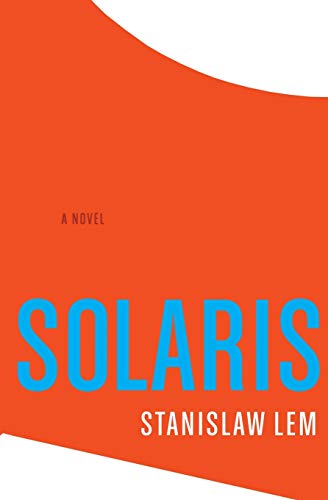
Overview: Scientists on a station above Solaris study an ocean that may be a single intelligence. The planet generates physical forms from memory, but the researchers cannot agree whether the events are communication, experiment, or something beyond their categories.
Why it belongs on this list: The shared qualities are alien intelligence, planetary ecology, scientific observation, memory, grief, failed communication, and the limits of human knowledge. Solaris offers a neighboring reading experience through its characters, setting, tone, pacing, and treatment of consequence. The match is strongest for readers who want planetary mystery and contact that refuses translation, although its emotional register and narrative structure may be quieter, stranger, or more expansive than the seed.
Reading experience: Like Tchaikovsky’s nonhuman societies, Solaris refuses to become a human metaphor on demand. It is much quieter and more psychologically inward, but it makes the problem of contact feel ethically and intellectually unresolved.
Best for: Readers who want planetary mystery and contact that refuses translation.
Keep in mind: Slow, claustrophobic, philosophical, and atmosphere-driven rather than action-centered.
What to notice: In Solaris, alien intelligence, planetary ecology, scientific observation, memory, grief, failed communication, and the limits of human knowledge are part of the story’s emotional architecture. Notice how the characters move through the setting, how quickly the plot reveals its information, and whether the book offers closure or leaves room for unease. Those choices explain why it belongs on this list more clearly than a surface genre label would.
View available editions and reader reviews.
Dragon’s Egg

Overview: Robert Forward imagines life evolving on the surface of a neutron star, where time passes vastly faster than for the human observers studying it. The cheela build a civilization and respond to the presence of humanity in a compressed historical window.
Why it belongs on this list: The shared qualities are nonhuman life, radically different time scale, scientific observation, civilization, communication, evolution, and humans encountering intelligence under alien physics. Dragon’s Egg offers a neighboring reading experience through its characters, setting, tone, pacing, and treatment of consequence. The match is strongest for readers who want extreme evolution and a civilization developing on a neutron star, although its emotional register and narrative structure may be quieter, stranger, or more expansive than the seed.
Reading experience: The novel shares the seed’s delight in making biology and physics shape culture. Its structure is more conceptual and its human characters more observational, but the nonhuman civilization is treated as a history rather than a novelty.
Best for: Readers who want extreme evolution and a civilization developing on a neutron star.
Keep in mind: Short, idea-driven, and scientifically imaginative, with rapid social change and a strong sense of scale.
What to notice: In Dragon’s Egg, nonhuman life, radically different time scale, scientific observation, civilization, communication, evolution, and humans encountering intelligence under alien physics are part of the story’s emotional architecture. Notice how the characters move through the setting, how quickly the plot reveals its information, and whether the book offers closure or leaves room for unease. Those choices explain why it belongs on this list more clearly than a surface genre label would.
View available editions and reader reviews.
The Sparrow

Overview: A Jesuit-led expedition reaches an inhabited planet after a radio signal suggests an invitation. Emilio Sandoz and the crew approach contact with curiosity and faith, but the encounter exposes the danger of assuming that goodwill creates understanding.
Why it belongs on this list: The shared qualities are alien contact, language, scientific mission, cultural misunderstanding, faith, colonial power, and a group changed by the world it hoped to study. The Sparrow offers a neighboring reading experience through its characters, setting, tone, pacing, and treatment of consequence. The match is strongest for readers who want first contact, religious questions, and the ethical cost of exploration, although its emotional register and narrative structure may be quieter, stranger, or more expansive than the seed.
Reading experience: This is a more human and religious companion, but it shares the seed’s insistence that contact changes both sides and that exploration carries power even when the explorers believe themselves benevolent.
Best for: Readers who want first contact, religious questions, and the ethical cost of exploration.
Keep in mind: Character-led, reflective, and devastating, with a slow buildup before the ethical consequences become clear.
What to notice: The strongest connection between The Sparrow and the seed is found in alien contact, language, scientific mission, cultural misunderstanding, faith, colonial power, and a group changed by the world it hoped to study, but the reading experience is deliberately different. Its tone, narrative distance, and treatment of consequence create another route into the same broad pleasure. Readers should let the book establish its own rhythm before judging it against the original.
View available editions and reader reviews.
Choose by Evolution, Ecology, Engineering, or Contact
Read Children of Ruin first for more Portiids and the consequences of the seed’s ending. Choose Blindsight for cognition, Seveneves for engineering, or Semiosis for ecology and settlement. A Fire Upon the Deep is the galactic-scale option; Ancillary Justice for distributed identity; Solaris for mystery; Dragon’s Egg for extreme evolution; and The Sparrow for the ethical cost of contact.
Who This List Is Best For
This list is for adult science-fiction readers, evolutionary-fiction fans, and readers who enjoy ideas unfolding across generations. Extinction, colonialism, disease, war, bodily transformation, religious conflict, and disturbing biological imagery appear. Some books are hopeful about cooperation; others insist that contact may be valuable precisely because it destroys human certainty.
FAQ
What is the closest book to Children of Time?
Children of Ruin is the direct continuation. Outside the series, Semiosis is closest in its ecological intelligence, while Blindsight is closest in its challenge to human assumptions about consciousness.
Which recommendation has the best nonhuman viewpoint?
Dragon’s Egg offers an extreme physical and social difference, while Ancillary Justice gives an artificial intelligence a sophisticated perspective on bodies and empire. Semiosis makes a planet’s ecology central to the relationship between species.
Which books cover the longest time span?
Children of Time, Seveneves, and A Fire Upon the Deep all move beyond one human lifetime. Dragon’s Egg uses an extraordinary timescale to show civilization developing under radically different physical conditions.
Which book is easiest for a new reader?
Semiosis has a relatively clear settlement structure and accessible ecological premise. The Sparrow is character-led, while Blindsight and A Fire Upon the Deep are more technically or conceptually demanding.
Are these books optimistic about human survival?
Children of Time and Semiosis allow cooperation to emerge, though never easily. Blindsight, Solaris, and parts of The Sparrow are more suspicious of what humans do when curiosity meets power.
A Future Becomes Interesting When Its People Are Not All the Same Kind of Person
Children of Time is generous to the idea that intelligence can take many forms while remaining unsentimental about survival. The companion books continue that experiment. They ask whether language is enough for contact, whether ecology can be a political actor, whether a copied mind is still a person, and whether humans can meet another civilization without turning it into a mirror.