
The Almanack of Naval Ravikant gathers short observations about wealth, leverage, specific knowledge, judgment, happiness, and independence. Its appeal lies in compression: a reader can encounter a sentence about ownership, time, or desire and carry it into a career decision or a private reflection. The risk of aphoristic books is that a clean sentence can make a complicated world seem simple. The best companion reads add evidence, history, psychology, or a more explicit account of trade-offs. Readers comparing books like The Almanack of Naval Ravikant will find that the most useful match depends on which part of the seed book created the strongest attachment: its voice, argument, setting, characters, problem, or promise of change.
The strongest books like The Almanack of Naval Ravikant should share several of its concerns without copying its voice. They may discuss wealth, leverage, entrepreneurship, time, attention, philosophy, desire, or personal freedom, but they should also make assumptions visible: who has access to risk, what money can and cannot buy, and how an idea changes when applied to a family, a community, or an unequal economy.
A Rich Life Is Larger Than a Number
Choose Poor Charlie’s Almanack for mental models, The Psychology of Money for behavior and wealth, or The Simple Path to Wealth for investing fundamentals. Essentialism and Four Thousand Weeks examine time and limits, while The Daily Stoic, The Millionaire Fastlane, The Personal MBA, and Man’s Search for Meaning offer philosophical, entrepreneurial, business, and existential contrasts.
At-a-Glance Comparison
| Book | Best for | Major qualities shared with The Almanack of Naval Ravikant |
|---|---|---|
| Poor Charlie’s Almanack | Readers who want mental models, judgment, and multidisciplinary thinking | Mental models, incentives, human misjudgment, patience, investing, learning across disciplines, and practical wisdom |
| The Psychology of Money | Readers who want the behavioral side of wealth and risk | Money behavior, compounding, luck, risk, time, enough, financial independence, and the difference between knowing and doing |
| The Simple Path to Wealth | Readers who want a straightforward approach to long-term investing | Financial independence, index investing, saving, risk, simplicity, time, and separating wealth-building from constant financial activity |
| Essentialism | Readers who want to protect time by doing fewer things better | Trade-offs, focus, boundaries, priorities, saying no, selective effort, and designing a life around what matters most |
| Four Thousand Weeks | Readers who want a philosophical challenge to endless optimization | Finite time, mortality, attention, productivity, limits, patience, meaningful choice, and accepting that not everything can be completed |
| The Daily Stoic | Readers who want daily reflection on control, desire, and judgment | Stoicism, control, desire, preparation, impermanence, discipline, and separating internal response from external outcome |
| The Personal MBA | Readers who want a broad map of business fundamentals and value creation | Value, marketing, sales, finance, systems, decision-making, leverage, entrepreneurship, and understanding how organizations create or destroy value |
| The Millionaire Fastlane | Readers who want an aggressive argument for business ownership and leverage | Entrepreneurship, ownership, systems, scale, time freedom, value creation, risk, and rejecting a lifetime tied only to wages |
| Man’s Search for Meaning | Readers who want purpose placed above comfort and acquisition | Meaning, freedom of response, suffering, responsibility, inner life, purpose, and the difference between external conditions and human dignity |
How Were These Almanack Companions Chosen?
Each selection had to share at least two or three substantial themes: ownership, leverage, judgment, financial behavior, time, freedom, purpose, or the relationship between desire and well-being. I favored books that make their evidence and assumptions visible. Advice about wealth should be read alongside tax, legal, cultural, family, and risk realities rather than treated as a universal personal formula.
The 9 Recommended Books
Poor Charlie’s Almanack

Overview: Charlie Munger’s talks and writings are collected with commentary about incentives, psychology, business, and the habits of good judgment. The central invitation is to build a latticework of ideas rather than rely on one narrow specialty.
Why it belongs on this list: The connection is strongest through mental models, incentives, human misjudgment, patience, investing, learning across disciplines, and practical wisdom. Poor Charlie’s Almanack approaches the seed’s concerns from a different angle, adding its own evidence, examples, and limits instead of repeating a familiar list of advice. It is especially useful for readers who want mental models, judgment, and multidisciplinary thinking because it makes the underlying choice more visible: what to protect, what to question, and what may not be under personal control.
Reading experience: The connection is the compact, aphoristic style and the emphasis on judgment as a trainable practice. Munger is more focused on misjudgment, incentives, and inversion, giving Naval’s broader observations a sharper analytical counterweight.
Best for: Readers who want mental models, judgment, and multidisciplinary thinking.
Keep in mind: Dense and idea-rich, with memorable principles that need context rather than being treated as universal laws.
What to notice: The right reading pace for Poor Charlie’s Almanack depends on what the reader needs from readers who want mental models, judgment, and multidisciplinary thinking. Its discussion of mental models, incentives, human misjudgment, patience, investing, learning across disciplines, and practical wisdom is clear enough to revisit, but it also benefits from pausing over examples and disagreements. Give the author room to make a case before deciding whether the ideas fit your work, health, relationships, and available freedom.
View available editions and reader reviews.
The Psychology of Money
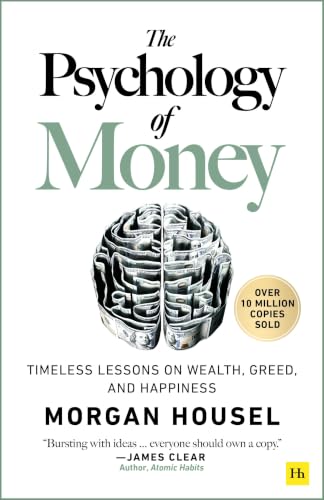
Overview: Morgan Housel uses short stories and historical examples to show that financial outcomes are shaped by behavior, patience, family history, luck, and the ability to survive risk.
Why it belongs on this list: The connection is strongest through money behavior, compounding, luck, risk, time, enough, financial independence, and the difference between knowing and doing. The Psychology of Money approaches the seed’s concerns from a different angle, adding its own evidence, examples, and limits instead of repeating a familiar list of advice. It is especially useful for readers who want the behavioral side of wealth and risk because it makes the underlying choice more visible: what to protect, what to question, and what may not be under personal control.
Reading experience: This is one of the strongest complements because it makes visible the emotional and social conditions behind wealth advice. It shares the seed’s interest in independence and compounding, but is more cautious about individual control and the randomness of outcomes.
Best for: Readers who want the behavioral side of wealth and risk.
Keep in mind: Accessible, story-driven, and reflective, with short chapters that work well for rereading.
What to notice: The right reading pace for The Psychology of Money depends on what the reader needs from readers who want the behavioral side of wealth and risk. Its discussion of money behavior, compounding, luck, risk, time, enough, financial independence, and the difference between knowing and doing is clear enough to revisit, but it also benefits from pausing over examples and disagreements. Give the author room to make a case before deciding whether the ideas fit your work, health, relationships, and available freedom.
View available editions and reader reviews.
The Simple Path to Wealth

Overview: JL Collins explains a simple, low-cost investing philosophy centered on broad index funds, savings, and resisting unnecessary complexity. The book connects investment choices with the larger goal of having more control over time.
Why it belongs on this list: The connection is strongest through financial independence, index investing, saving, risk, simplicity, time, and separating wealth-building from constant financial activity. The Simple Path to Wealth approaches the seed’s concerns from a different angle, adding its own evidence, examples, and limits instead of repeating a familiar list of advice. It is especially useful for readers who want a straightforward approach to long-term investing because it makes the underlying choice more visible: what to protect, what to question, and what may not be under personal control.
Reading experience: Where the seed discusses leverage and ownership at a high level, this book offers a concrete route for readers who want to translate those ideas into a long-term investing plan. It is narrower, more U.S.-specific, and less philosophical.
Best for: Readers who want a straightforward approach to long-term investing.
Keep in mind: Clear and practical, but readers must adapt account, tax, fund, and retirement details to their own country and situation.
What to notice: The most useful thing to watch in The Simple Path to Wealth is how financial independence, index investing, saving, risk, simplicity, time, and separating wealth-building from constant financial activity moves from an attractive idea into a question about ordinary decisions. The book earns its place beside the seed because it gives readers who want a straightforward approach to long-term investing a different emotional and intellectual texture. Notice which examples carry the argument, where the author admits a limit, and which ideas remain useful after the initial enthusiasm fades.
View available editions and reader reviews.
Essentialism

Overview: Greg McKeown argues that essentialism is not about doing more efficiently but choosing fewer commitments deliberately. The book examines how social pressure, opportunity overload, and unclear priorities consume time.
Why it belongs on this list: The connection is strongest through trade-offs, focus, boundaries, priorities, saying no, selective effort, and designing a life around what matters most. Essentialism approaches the seed’s concerns from a different angle, adding its own evidence, examples, and limits instead of repeating a familiar list of advice. It is especially useful for readers who want to protect time by doing fewer things better because it makes the underlying choice more visible: what to protect, what to question, and what may not be under personal control.
Reading experience: The book translates Naval’s ideas about time and freedom into a practice of exclusion. It is especially useful when the reader has enough opportunities but not enough attention, energy, or willingness to accept every request.
Best for: Readers who want to protect time by doing fewer things better.
Keep in mind: Readable and practical, with a strong focus on personal choice that should be balanced against work obligations and unequal power.
What to notice: A strong reason to include Essentialism is that trade-offs, focus, boundaries, priorities, saying no, selective effort, and designing a life around what matters most are treated as lived conditions, not just slogans. The book is most rewarding when readers compare its account of readers who want to protect time by doing fewer things better with their own circumstances. Some of its suggestions will be immediately usable; others are better read as questions that expose what a productivity or personal-growth promise leaves out.
View available editions and reader reviews.
Four Thousand Weeks

Overview: Oliver Burkeman argues that a human life contains only a few thousand weeks and that productivity cannot remove finitude. He explores how accepting limits can lead to more honest choices about work, relationships, and attention.
Why it belongs on this list: The connection is strongest through finite time, mortality, attention, productivity, limits, patience, meaningful choice, and accepting that not everything can be completed. Four Thousand Weeks approaches the seed’s concerns from a different angle, adding its own evidence, examples, and limits instead of repeating a familiar list of advice. It is especially useful for readers who want a philosophical challenge to endless optimization because it makes the underlying choice more visible: what to protect, what to question, and what may not be under personal control.
Reading experience: This is a necessary companion because it questions the fantasy that leverage can make a person unlimited. It shares the seed’s concern with freedom and time but makes mortality, incompletion, and dependence impossible to ignore.
Best for: Readers who want a philosophical challenge to endless optimization.
Keep in mind: Philosophical, witty, and gently confrontational, with less interest in wealth accumulation and more in living within limits.
What to notice: Readers may arrive at Four Thousand Weeks because of finite time, mortality, attention, productivity, limits, patience, meaningful choice, and accepting that not everything can be completed, yet its lasting value lies in the complications attached to that promise. The book asks what happens when a desirable change meets fatigue, unequal resources, competing duties, or an imperfect environment. That makes it a genuine next read: related enough to satisfy the original interest, but independent enough to widen it.
View available editions and reader reviews.
The Daily Stoic

Overview: Short selections from Stoic writers are paired with reflections designed for a daily reading habit. The book repeatedly returns to judgment, control, preparation, and the limits of external success.
Why it belongs on this list: The connection is strongest through stoicism, control, desire, preparation, impermanence, discipline, and separating internal response from external outcome. The Daily Stoic approaches the seed’s concerns from a different angle, adding its own evidence, examples, and limits instead of repeating a familiar list of advice. It is especially useful for readers who want daily reflection on control, desire, and judgment because it makes the underlying choice more visible: what to protect, what to question, and what may not be under personal control.
Reading experience: The book shares the seed’s compressed, quotable form but places its advice in a philosophical tradition. It offers a useful test for wealth and ambition: can a goal be pursued without making external acquisition the source of identity?
Best for: Readers who want daily reflection on control, desire, and judgment.
Keep in mind: Brief and repetitive by design. Stoic acceptance should not become an excuse for tolerating injustice or abandoning practical action.
What to notice: The most useful thing to watch in The Daily Stoic is how stoicism, control, desire, preparation, impermanence, discipline, and separating internal response from external outcome moves from an attractive idea into a question about ordinary decisions. The book earns its place beside the seed because it gives readers who want daily reflection on control, desire, and judgment a different emotional and intellectual texture. Notice which examples carry the argument, where the author admits a limit, and which ideas remain useful after the initial enthusiasm fades.
View available editions and reader reviews.
The Personal MBA

Overview: Josh Kaufman presents a self-study overview of business concepts, from value creation and pricing to systems, negotiation, finance, and decision-making. It is designed as a map rather than a specialized textbook.
Why it belongs on this list: The connection is strongest through value, marketing, sales, finance, systems, decision-making, leverage, entrepreneurship, and understanding how organizations create or destroy value. The Personal MBA approaches the seed’s concerns from a different angle, adding its own evidence, examples, and limits instead of repeating a familiar list of advice. It is especially useful for readers who want a broad map of business fundamentals and value creation because it makes the underlying choice more visible: what to protect, what to question, and what may not be under personal control.
Reading experience: The book adds operational detail to Naval’s entrepreneurial observations. It helps readers see what “build and leverage” means in a business system, while also showing that ownership does not remove the need to understand customers, costs, and execution.
Best for: Readers who want a broad map of business fundamentals and value creation.
Keep in mind: Broad and accessible, with useful frameworks that should be supplemented by industry-specific expertise and current data.
What to notice: Read The Personal MBA as a companion rather than a replacement. Its treatment of value, marketing, sales, finance, systems, decision-making, leverage, entrepreneurship, and understanding how organizations create or destroy value will feel familiar at first, but its evidence, vocabulary, and assumptions lead somewhere different. The contrast is valuable: it shows what the seed explains especially well and what this recommendation adds about context, trade-offs, relationships, or the cost of turning a good idea into a private obligation.
View available editions and reader reviews.
The Millionaire Fastlane
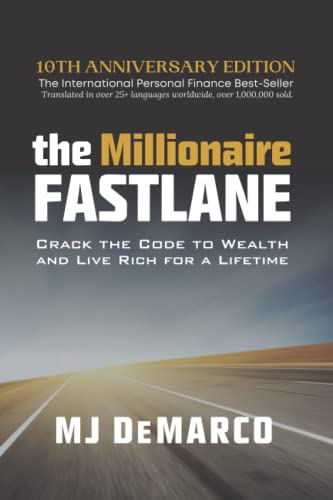
Overview: MJ DeMarco argues that traditional slow wealth-building can leave people waiting too long for freedom and advocates building scalable businesses that create value and control over time.
Why it belongs on this list: The connection is strongest through entrepreneurship, ownership, systems, scale, time freedom, value creation, risk, and rejecting a lifetime tied only to wages. The Millionaire Fastlane approaches the seed’s concerns from a different angle, adding its own evidence, examples, and limits instead of repeating a familiar list of advice. It is especially useful for readers who want an aggressive argument for business ownership and leverage because it makes the underlying choice more visible: what to protect, what to question, and what may not be under personal control.
Reading experience: The book shares the seed’s emphasis on ownership, leverage, and independence, but its tone is more combative and its path more entrepreneurial. It is a useful contrast for readers who want ambition without mistaking a high-risk route for a guaranteed one.
Best for: Readers who want an aggressive argument for business ownership and leverage.
Keep in mind: Energetic and provocative, with a strong anti-salary argument that underplays risk, privilege, and the appeal of stable work for many people.
What to notice: Readers may arrive at The Millionaire Fastlane because of entrepreneurship, ownership, systems, scale, time freedom, value creation, risk, and rejecting a lifetime tied only to wages, yet its lasting value lies in the complications attached to that promise. The book asks what happens when a desirable change meets fatigue, unequal resources, competing duties, or an imperfect environment. That makes it a genuine next read: related enough to satisfy the original interest, but independent enough to widen it.
View available editions and reader reviews.
Man’s Search for Meaning

Overview: Viktor Frankl combines memoir of concentration-camp survival with an account of logotherapy, arguing that meaning can shape how people endure suffering and choose a response.
Why it belongs on this list: The connection is strongest through meaning, freedom of response, suffering, responsibility, inner life, purpose, and the difference between external conditions and human dignity. Man’s Search for Meaning approaches the seed’s concerns from a different angle, adding its own evidence, examples, and limits instead of repeating a familiar list of advice. It is especially useful for readers who want purpose placed above comfort and acquisition because it makes the underlying choice more visible: what to protect, what to question, and what may not be under personal control.
Reading experience: This is the deepest philosophical counterweight on the list. It does not offer wealth tactics, but it asks what freedom and a well-lived life mean when control is radically limited. That question gives the seed’s language about happiness and independence a more serious moral horizon.
Best for: Readers who want purpose placed above comfort and acquisition.
Keep in mind: Short, powerful, and emotionally demanding, with historical trauma that requires care and context.
What to notice: Readers may arrive at Man’s Search for Meaning because of meaning, freedom of response, suffering, responsibility, inner life, purpose, and the difference between external conditions and human dignity, yet its lasting value lies in the complications attached to that promise. The book asks what happens when a desirable change meets fatigue, unequal resources, competing duties, or an imperfect environment. That makes it a genuine next read: related enough to satisfy the original interest, but independent enough to widen it.
View available editions and reader reviews.
Choose by Money, Time, Judgment, or Meaning
Start with The Psychology of Money for behavior around risk and wealth, or The Simple Path to Wealth for a more direct investing guide. Poor Charlie’s Almanack is the route for mental models, while Essentialism and Four Thousand Weeks address time and finite attention. Choose The Daily Stoic for daily philosophy, The Personal MBA for business fundamentals, The Millionaire Fastlane for entrepreneurial ambition, and Man’s Search for Meaning for a deeper account of purpose under suffering.
Who This List Is Best For
This list is for readers interested in entrepreneurship, investing, decision-making, personal freedom, time, and practical philosophy. The books differ in evidence quality and economic assumptions. They can sharpen questions, but none should replace professional financial advice, a realistic budget, or attention to family responsibilities and structural inequality.
FAQ
What is the closest book to The Almanack of Naval Ravikant?
Poor Charlie’s Almanack is the closest in its collection of mental models and compressed wisdom. The Psychology of Money is the strongest next read for wealth behavior, while Four Thousand Weeks offers a necessary account of time and limitation.
Which book is best for investing beginners?
The Simple Path to Wealth is the most direct guide among this list. It should still be adapted to the reader’s country, tax system, risk tolerance, and financial situation.
Which recommendation focuses on mental models?
Poor Charlie’s Almanack presents a broad latticework approach to judgment, while The Psychology of Money shows how behavior and emotion shape financial decisions even when a person understands the numbers.
Is The Almanack a business book or a philosophy book?
It sits between entrepreneurship, investing, and practical philosophy. Its short observations move from ownership and leverage to desire, happiness, and time, so readers may want a more evidence-heavy companion for any single topic.
Which book challenges the pursuit of wealth?
Four Thousand Weeks questions endless optimization, and Man’s Search for Meaning places purpose under extreme conditions rather than treating financial freedom as the final answer. Essentialism also asks what should be excluded.
Freedom Is a Practice of Choosing What Deserves Your Time
The Almanack of Naval Ravikant is most useful when its aphorisms become questions: what kind of leverage is ethical, what does enough mean, and what is freedom for? The companion books bring those questions into investing, business, time, philosophy, and human meaning. Together they make the idea of a rich life more demanding than income alone and more practical than a slogan about happiness.