
Learning French is rarely about finding one book that does everything. Some readers need a broad course that covers grammar, vocabulary, and practice in one place. Others want a lighter phrase book for travel, a compact grammar reference, or a resource that helps children start hearing the language early. The best books for learning French are the ones that match your starting point and the way you actually study, not just the ones with the broadest promise.
This list focuses on books that solve different parts of the same problem. Some are better for complete beginners. Some work well as a second book alongside a main course. A few are designed for children or family use. Together, they give readers practical options without repeating the same approach over and over.
Quick Answer
If you want the clearest entry point into learning French, start with French All-in-One For Dummies, with CD. It gives you a useful foundation in pronunciation, vocabulary, grammar, listening, spaced review, and practical communication. Choose Beginner French Workbook: Learn over 400 words! Level 1 when you want a more applied or contrasting approach, and use Rick Steves French Phrase Book & Dictionary when you want to extend the idea into a different context.
This list is designed for adult beginners, travelers, students, and independent language learners. The recommendations are intentionally varied: some explain the underlying research, some offer exercises, and some are strongest as narrative or leadership case studies. That variety makes it easier to choose a book that matches your current question rather than buying the longest list.
Comparison Table
| Book | Best For | Why It Stands Out |
|---|---|---|
| French All-in-One For Dummies, with CD | Adult beginners who want an organized all-in-one course and do not want to switch between multiple books right away. | For many beginners, the biggest challenge is not motivation but structure. This book earns its place because it offers a more complete path than a phrase book or a slim workbook without becoming too academic for self-study. It is the kind… |
| Beginner French Workbook: Learn over 400 words! Level 1 | Absolute beginners and visual learners who want to concentrate on core words before moving deeper into grammar. | Compared with broader textbooks, this one is narrower in scope but easier to use consistently. It is a strong recommendation for learners who want visible progress in a smaller, more manageable format. Rather than trying to teach… |
| Rick Steves French Phrase Book & Dictionary | Travelers, casual learners, and readers who want usable French before a trip rather than a long course of study. | The strength here is utility. Some French books are better for study, but this one is built for access and recall. It deserves recommendation because it solves a different problem than the workbooks on this list. If you need something you… |
| Learn French: Grammar Workbook + Textbook for Adult Beginners | Adult learners who want to understand how French works and not just collect useful expressions. | Among beginner French books, many lean heavily toward either phrase lists or general practice. This one is worth recommending because it makes grammar the center of the learning process in a way that still feels manageable. For readers… |
| Learn French Fast for Adult Beginners: 3-in-1 Workbook | Adult beginners who want a manageable, all-around workbook for steady home study. | The main advantage is convenience without complete oversimplification. Some beginners want one book that can touch several parts of learning French without feeling bloated. This one fits that middle ground well. It is not as expansive as… |
| Easy French Phrase Book NEW EDITION | Casual learners, travelers, and readers who want a phrase-centered supplement to another French book. | The value here is simplicity. Some readers are overwhelmed by textbooks that ask for more commitment than they can give right now. This book earns its place because it keeps the focus on usable phrases and repeatable exposure. It is not… |
| French Grammar: QuickStudy Laminated Reference Guide | Learners who already have a main French book and want a concise grammar aid for review. | The best grammar books teach, but the best reference guides help you recall. This one belongs on the list because it fills a different role from the workbooks and phrase books. It is especially good for review, reinforcement, and quick… |
| Carson Dellosa Skill Builders K-5 French Workbook | Children in elementary school and adults looking for a child-friendly French introduction for a young learner. | A good beginner French book for children should lower the barrier to entry without making the material feel babyish. This workbook earns its place because it offers a simple, structured introduction that can work at home or in a classroom… |
| Lulu Learns French Vol. 1 | Toddlers ages 1 to 3 and parents looking for early French exposure through sound and music. | Among French learning books, this one serves the earliest stage of language development. It is not competing with adult textbooks, and that is exactly why it belongs here. For bilingual households, preschoolers, or parents who want… |
How We Chose These Recommendations
These books were selected for usefulness, not just breadth. A strong book for learning French should give readers something concrete they can actually use, whether that is a clearer grasp of grammar, more usable vocabulary, better phrase recall, or an easier first step for a child. We also favored books with distinct purposes so the list does not collapse into several versions of the same workbook.
That means each recommendation has a clear job. Some books are broad enough to serve as a main self-study guide. Others are more specialized and work better as companions, refreshers, or age-specific starting points. The goal is to help readers choose based on how they learn, how much structure they want, and whether they need French for study, travel, or early exposure.
Recommended Books
French All-in-One For Dummies, with CD
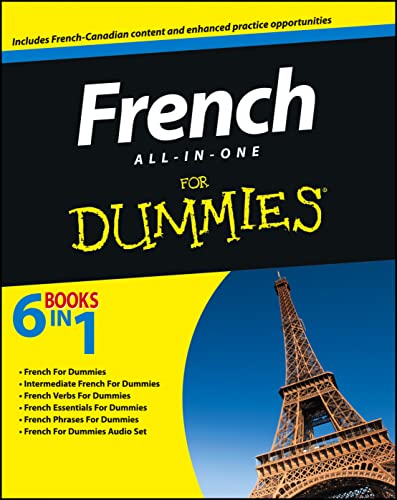
Overview: This is the broadest adult-friendly option on the list. It is built to give learners a single, steady place to work through core French concepts instead of forcing them to piece together several smaller books. The combination of grammar, vocabulary, and practice makes it useful for readers who want a general foundation rather than one narrow skill.
Why it stands out: For many beginners, the biggest challenge is not motivation but structure. This book earns its place because it offers a more complete path than a phrase book or a slim workbook without becoming too academic for self-study. It is the kind of book that can anchor a learning routine and still leave room for other resources later.
Strengths:
- Wide coverage of essential French learning areas
- Approachable for self-directed study
- Useful as a long-term reference while you progress
- Good choice when you want one main book to start with
Best for: Adult beginners who want an organized all-in-one course and do not want to switch between multiple books right away.
Potential limitations: Readers looking for a very fast phrase-based approach or a highly conversational course may find it broader than they need.
View price, available formats, and reader reviews.
Beginner French Workbook: Learn over 400 words! Level 1

Overview: Vocabulary is often where new French learners feel the most immediate progress, and this workbook is built around that need. With a strong emphasis on learning words, it gives beginners a way to build recognition early and reinforce it through practice. That makes it especially useful for readers who get discouraged by courses that stay too abstract for too long.
Why it stands out: Compared with broader textbooks, this one is narrower in scope but easier to use consistently. It is a strong recommendation for learners who want visible progress in a smaller, more manageable format. Rather than trying to teach everything at once, it focuses on the practical building blocks that make later study easier.
Strengths:
- Strong focus on foundational vocabulary
- Beginner-friendly pacing
- Good for short, regular study sessions
- Helpful for learners who want to build confidence early
Best for: Absolute beginners and visual learners who want to concentrate on core words before moving deeper into grammar.
Potential limitations: It is best treated as a vocabulary builder rather than a complete French course.
View price, available formats, and reader reviews.
Rick Steves French Phrase Book & Dictionary

Overview: This is the most practical travel-oriented choice on the list. Instead of trying to function like a full textbook, it concentrates on phrases and quick reference material that help readers communicate in real situations. That makes it especially useful for people who want useful French on a trip, not a long theory-driven course.
Why it stands out: The strength here is utility. Some French books are better for study, but this one is built for access and recall. It deserves recommendation because it solves a different problem than the workbooks on this list. If you need something you can open before a meal, a train ride, or a check-in conversation, this is one of the most sensible options.
Strengths:
- Highly practical for travel and everyday situations
- Easy to use as a reference book
- Focuses on phrases readers are more likely to need quickly
- Compact enough to carry with you
Best for: Travelers, casual learners, and readers who want usable French before a trip rather than a long course of study.
Potential limitations: It is not designed to replace a more complete grammar or vocabulary program.
View price, available formats, and reader reviews.
Learn French: Grammar Workbook + Textbook for Adult Beginners

Overview: Readers who want grammar explained in a structured way will appreciate this workbook-textbook combination. It is aimed at adult beginners and focuses on essential rules alongside practice, which makes it useful for learners who prefer understanding patterns instead of memorizing phrases alone. That balance gives it a more traditional classroom feel without requiring a formal class.
Why it stands out: Among beginner French books, many lean heavily toward either phrase lists or general practice. This one is worth recommending because it makes grammar the center of the learning process in a way that still feels manageable. For readers who keep getting stuck on sentence structure, gender, verbs, and agreement, that focus matters.
Strengths:
- Clear emphasis on grammar fundamentals
- Practical exercises support active learning
- Well suited to adults learning independently
- Good companion to a phrase book or vocabulary resource
Best for: Adult learners who want to understand how French works and not just collect useful expressions.
Potential limitations: Readers looking for a lighter, more conversation-centered book may find the grammar focus substantial.
View price, available formats, and reader reviews.
Learn French Fast for Adult Beginners: 3-in-1 Workbook

Overview: This workbook is built for learners who want variety without having to buy several separate books. It combines daily lessons, exercises, useful words and phrases, and essential grammar rules in one compact format. That makes it especially appealing for readers who prefer a short, repeatable study routine.
Why it stands out: The main advantage is convenience without complete oversimplification. Some beginners want one book that can touch several parts of learning French without feeling bloated. This one fits that middle ground well. It is not as expansive as an all-in-one course, but it is more versatile than a single-purpose phrase book or vocabulary workbook.
Strengths:
- Combines lessons, grammar, vocabulary, and practice
- Designed for daily study habits
- Balanced format for self-learners
- Useful when you want one book to keep your routine moving
Best for: Adult beginners who want a manageable, all-around workbook for steady home study.
Potential limitations: Readers who want deep grammar treatment or a highly conversational approach may want a second resource alongside it.
View price, available formats, and reader reviews.
Easy French Phrase Book NEW EDITION

Overview: This phrase book is a straightforward tool for readers who want a large set of everyday expressions in an easy-to-reference format. It is especially helpful when you do not need a full course, just a practical way to recognize and use common French phrases. That makes it a sensible companion for travel or low-pressure self-study.
Why it stands out: The value here is simplicity. Some readers are overwhelmed by textbooks that ask for more commitment than they can give right now. This book earns its place because it keeps the focus on usable phrases and repeatable exposure. It is not flashy, but it is genuinely useful for quick access to language you can put into practice.
Strengths:
- Large collection of everyday phrases
- Easy to dip into without a formal study plan
- Useful as a travel companion or quick reference
- Low-friction entry point for beginners
Best for: Casual learners, travelers, and readers who want a phrase-centered supplement to another French book.
Potential limitations: It is better for phrase exposure than for grammar development or structured progression.
View price, available formats, and reader reviews.
French Grammar: QuickStudy Laminated Reference Guide

Overview: This reference guide is designed to sit beside your main French materials, not replace them. It condenses grammar into a compact, easy-to-check format, which is useful when you need a quick reminder instead of a long explanation. For learners who already have some basics and keep forgetting specific rules, it is a practical support tool.
Why it stands out: The best grammar books teach, but the best reference guides help you recall. This one belongs on the list because it fills a different role from the workbooks and phrase books. It is especially good for review, reinforcement, and quick lookup while studying or writing.
Strengths:
- Compact grammar reference for fast consultation
- Helpful alongside a fuller course or workbook
- Good for review and rule-checking
- Portable and easy to keep nearby while studying
Best for: Learners who already have a main French book and want a concise grammar aid for review.
Potential limitations: By design, it is a reference guide rather than a full teaching method.
View price, available formats, and reader reviews.
Carson Dellosa Skill Builders K-5 French Workbook

Overview: This workbook is aimed at younger learners and early exposure rather than adult self-study. It covers basics such as alphabet, vocabulary, numbers, and related core concepts in a format suited to children in elementary grades. For families or educators looking for an age-appropriate first French resource, that matters more than depth.
Why it stands out: A good beginner French book for children should lower the barrier to entry without making the material feel babyish. This workbook earns its place because it offers a simple, structured introduction that can work at home or in a classroom setting. It fills a need that adult-focused books cannot address well.
Strengths:
- Age-appropriate for K-5 learners
- Useful for early vocabulary exposure
- Works well for guided practice
- Suitable for homeschool or classroom use
Best for: Children in elementary school and adults looking for a child-friendly French introduction for a young learner.
Potential limitations: It is not intended as a comprehensive French course for teens or adults.
View price, available formats, and reader reviews.
Lulu Learns French Vol. 1

Overview: This interactive sound book is designed for toddlers and very early language exposure. It uses songs, rhythm, and repetition to introduce French in a way that feels natural for very young children. The format makes sense for families who want French to be part of everyday listening before formal reading begins.
Why it stands out: Among French learning books, this one serves the earliest stage of language development. It is not competing with adult textbooks, and that is exactly why it belongs here. For bilingual households, preschoolers, or parents who want screen-free exposure to French sounds and songs, it offers a distinct and age-appropriate starting point.
Strengths:
- Built for toddlers and early learners
- Uses music and repetition to support listening
- Screen-free and hands-on
- Helpful for bilingual family routines
Best for: Toddlers ages 1 to 3 and parents looking for early French exposure through sound and music.
Potential limitations: It is an early-learning toy-book, not a study resource for older children or adults.
View price, available formats, and reader reviews.
Who This List Is Best For
These recommendations are a good fit for adult beginners, travelers, students, and independent language learners. They are especially useful if you want to understand learning French with more nuance than a short checklist, quote, or social-media summary can provide.
- Readers who want a clear conceptual foundation before choosing a technique.
- People who prefer to compare research, practical exercises, and real-world examples.
- Professionals, students, or caregivers who need language they can apply in a real conversation or decision.
Use the Best For and Why It Stands Out columns together. A book can be excellent yet still be the wrong starting point if its depth, tone, or intended reader does not match your goal.
Final Thoughts
The strongest choice for learning French depends on what you need to do next. Begin with French All-in-One For Dummies, with CD if you need a foundation, move to Beginner French Workbook: Learn over 400 words! Level 1 if you need a practical change, and consider Rick Steves French Phrase Book & Dictionary if you need a broader or more challenging perspective. The comparison table is meant to shorten that decision, not pretend that one book works for every reader.
A useful reading plan is simple: select one book, write down the question you want it to answer, and apply one idea before moving to another recommendation. For this topic, combine one structured course with daily listening and a small number of useful phrases. language progress depends on practice and exposure; a workbook alone cannot create fluency.
FAQ
Which book should I read first for learning French?
Start with French All-in-One For Dummies, with CD if you want the clearest foundation. If your immediate need is action rather than background, compare it with Beginner French Workbook: Learn over 400 words! Level 1 and choose the one whose exercises, examples, or audience match your situation.
How do I choose between a research-based book and a workbook?
Choose the research-oriented option when you need context and a better mental model. Choose the workbook or practical guide when you already understand the problem and need repetition, prompts, or a structured plan. The table’s Best For column is the fastest way to make that distinction.
What is a practical way to use books about learning French?
Do not read the whole list at once. Pick one recommendation, define the behavior or decision you want to improve, and test a small idea from the book for seven days. For this topic, combine one structured course with daily listening and a small number of useful phrases.
Are these recommendations suitable for self-study?
Yes, for education and structured reflection. Take notes in your own words, mark claims you want to verify, and discuss difficult ideas with a trusted person or qualified professional when appropriate.
Do I need to read every book on the list?
No. One well-matched book that changes what you notice or do is more valuable than collecting several recommendations without applying any of them.