
Choosing the best books for public relations usually comes down to a simple question: do you want a practical introduction, a stronger strategic foundation, or a more specialized guide for writing, evaluation, crisis work, or digital PR? The field moves quickly, but the best books still do the same core job well. They help you think clearly about audiences, messaging, credibility, media relationships, and measurement without treating PR as a bundle of trendy tactics.
The list below is built for readers who want books that are genuinely useful, not just keyword-heavy. Some are classroom staples, some are practical handbooks, and some are better for professionals who want to sharpen a specific part of the job. Together, they give you a balanced starting point for public relations work in traditional, digital, and crisis settings.
Quick Answer
If you want the strongest books for public relations, start with Public Relations: Strategies and Tactics, 12th edition, The New Rules of Marketing and PR: How to Use Content Marketing, Podcasts, Social Media, AI, and the News to Reach Buyers Directly, Trust Me, I’m Lying: Confessions of a Media Manipulator, Evaluating Public Relations: A best practice guide to public relations planning, research & evaluation, and AI for Public Relations: A How-To Guide for Implementation and Management.
Comparison Table
| Book | Best For | Why It Stands Out |
|---|---|---|
| Public Relations: Strategies and Tactics, 12th edition | A focused recommendation for this topic | Adds a distinct perspective to the list |
| The New Rules of Marketing and PR: How to Use Content Marketing, Podcasts, Social Media, AI, and the News to Reach Buyers Directly | Readers who want a practical, focused resource on modern PR, content, media, and digital reach. | This recommendation adds a distinct framework instead of repeating a generic introduction. It helps readers move from recognizing the issue to understanding the patterns, choices, or skills involved in modern PR, content, media, and… |
| Trust Me, I’m Lying: Confessions of a Media Manipulator | Readers who want a practical, focused resource on media incentives, reputation, and the risks of manufactured attention. | This recommendation adds a distinct framework instead of repeating a generic introduction. It helps readers move from recognizing the issue to understanding the patterns, choices, or skills involved in media incentives, reputation, and… |
| Evaluating Public Relations: A best practice guide to public relations planning, research & evaluation | A focused recommendation for this topic | Adds a distinct perspective to the list |
| AI for Public Relations: A How-To Guide for Implementation and Management | A focused recommendation for this topic | Adds a distinct perspective to the list |
| SEO for Growth: The Ultimate Guide for Marketers, Web Designers & Entrepreneurs | Readers who want a practical, focused resource on search visibility, content, and digital PR integration. | This recommendation adds a distinct framework instead of repeating a generic introduction. It helps readers move from recognizing the issue to understanding the patterns, choices, or skills involved in search visibility, content, and… |
| Public Relations | A focused recommendation for this topic | Adds a distinct perspective to the list |
How We Chose These Recommendations
The books here were selected for practical value, long-term usefulness, and clear relevance to public relations work. Rather than filling the list with anything that mentions PR in the title, the focus stayed on books that teach durable skills: planning, messaging, writing, evaluation, crisis response, and modern workflow adaptation.
The result is a list with range, but not clutter. Some books are better for first-time learners, while others help working professionals sharpen a specific weakness. That balance matters in public relations, where the field rewards both big-picture judgment and execution at the sentence level.
Recommended Books
Public Relations: Strategies and Tactics, 12th edition
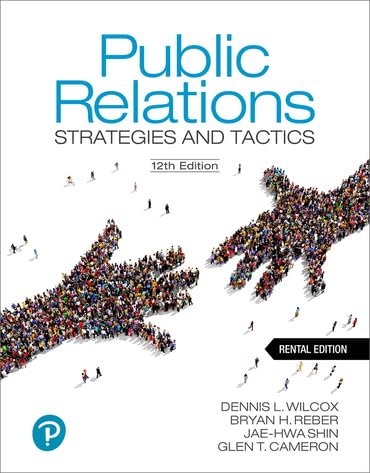
Overview: For readers who want a serious foundation in public relations, this is the broadest and most academically established book on the list. It covers the major building blocks of the field, including strategy, research, ethics, media relations, crisis communication, and campaign planning. The scope is wide enough to support a PR course, but practical enough to be useful for professionals who want a structured refresher.
Why it stands out: This is the closest thing here to a core PR text. Compared with shorter how-to books, it gives you the full framework of the profession rather than a narrow slice of tactics. That makes it especially valuable if you are learning PR systematically or want one reference that connects the moving parts of the job.
Strengths:
- Broad coverage of essential PR functions
- Strong fit for students and early-career professionals
- Useful as a reference, not just a one-time read
Best for: Students, instructors, and practitioners who want a complete overview of public relations.
Potential limitations: Because it is comprehensive, it is not the fastest read. Readers looking for a highly tactical, short, or niche guide may want a more focused book first.
View price, available formats, and reader reviews.
The New Rules of Marketing and PR: How to Use Content Marketing, Podcasts, Social Media, AI, and the News to Reach Buyers Directly

Overview: The New Rules of Marketing and PR: How to Use Content Marketing, Podcasts, Social Media, AI, and the News to Reach Buyers Directly gives readers a clearer, more established way to explore modern PR, content, media, and digital reach. It is a stronger fit for this list because its main ideas connect directly to the practical questions readers bring to this topic.
Why it stands out: This recommendation adds a distinct framework instead of repeating a generic introduction. It helps readers move from recognizing the issue to understanding the patterns, choices, or skills involved in modern PR, content, media, and digital reach.
Strengths:
- Directly connected to modern PR, content, media, and digital reach
- Offers a clear framework readers can return to
- More focused than a general-purpose self-help choice
- Works well alongside the other recommendations on this list
Best for: Readers who want a practical, focused resource on modern PR, content, media, and digital reach.
Potential limitations: It works best as a focused resource for this topic, so readers may want to pair it with a broader foundational book.
View price, available formats, and reader reviews.
Trust Me, I’m Lying: Confessions of a Media Manipulator

Overview: Trust Me, I’m Lying: Confessions of a Media Manipulator gives readers a clearer, more established way to explore media incentives, reputation, and the risks of manufactured attention. It is a stronger fit for this list because its main ideas connect directly to the practical questions readers bring to this topic.
Why it stands out: This recommendation adds a distinct framework instead of repeating a generic introduction. It helps readers move from recognizing the issue to understanding the patterns, choices, or skills involved in media incentives, reputation, and the risks of manufactured attention.
Strengths:
- Directly connected to media incentives, reputation, and the risks of manufactured attention
- Offers a clear framework readers can return to
- More focused than a general-purpose self-help choice
- Works well alongside the other recommendations on this list
Best for: Readers who want a practical, focused resource on media incentives, reputation, and the risks of manufactured attention.
Potential limitations: It works best as a focused resource for this topic, so readers may want to pair it with a broader foundational book.
View price, available formats, and reader reviews.
Evaluating Public Relations: A best practice guide to public relations planning, research & evaluation

Overview: For readers who want to move beyond activity and toward measurable results, this book is especially useful. It centers on planning, research, and evaluation, which are often the hardest parts of PR to do well and the easiest parts to neglect. That makes it a smart choice for professionals who need to justify campaigns, strengthen reporting, or build a more disciplined communications process.
Why it stands out: Many PR books give evaluation only a passing mention. This one treats it as central, which is refreshing and practical. If you already understand the basics and now need to show impact, this is one of the most relevant books you can read. It brings discipline to a part of the field that is often handled too casually.
Strengths:
- Strong emphasis on measurement and assessment
- Useful for planning campaigns with clearer objectives
- Helps professionals connect PR work to evidence
Best for: Communications managers, strategists, and readers who need better evaluation practices.
Potential limitations: The focus is narrower than a general PR textbook. Readers wanting a broad overview should start elsewhere and come to this book for depth.
View price, available formats, and reader reviews.
AI for Public Relations: A How-To Guide for Implementation and Management

Overview: Public relations teams are increasingly expected to understand how AI changes research, drafting, monitoring, and workflow management. This book speaks directly to that shift, offering a practical guide to implementation rather than abstract speculation. It is most relevant for readers who need to think about tools, process, and responsible adoption in a communications setting.
Why it stands out: The best PR books are not only about timeless principles. They also help readers work in the environment they actually have. This title earns its place by addressing a current operational need without abandoning the fundamentals of the profession. It is especially useful for teams trying to adapt thoughtfully rather than chase novelty.
Strengths:
- Addresses a timely workflow issue in PR
- Useful for teams evaluating real-world AI adoption
- Connects modern tools to communications practice
Best for: In-house teams, agency staff, and communications leaders exploring AI integration.
Potential limitations: Readers looking for a classic, field-wide foundation should start with a broader PR book first. This is best understood as a current-practice guide, not a substitute for core theory.
View price, available formats, and reader reviews.
SEO for Growth: The Ultimate Guide for Marketers, Web Designers & Entrepreneurs

Overview: SEO for Growth: The Ultimate Guide for Marketers, Web Designers & Entrepreneurs gives readers a clearer, more established way to explore search visibility, content, and digital PR integration. It is a stronger fit for this list because its main ideas connect directly to the practical questions readers bring to this topic.
Why it stands out: This recommendation adds a distinct framework instead of repeating a generic introduction. It helps readers move from recognizing the issue to understanding the patterns, choices, or skills involved in search visibility, content, and digital PR integration.
Strengths:
- Directly connected to search visibility, content, and digital PR integration
- Offers a clear framework readers can return to
- More focused than a general-purpose self-help choice
- Works well alongside the other recommendations on this list
Best for: Readers who want a practical, focused resource on search visibility, content, and digital PR integration.
Potential limitations: It works best as a focused resource for this topic, so readers may want to pair it with a broader foundational book.
View price, available formats, and reader reviews.
Public Relations

Overview: A straightforward title like this usually signals a broad field overview, and that is the role this book fills on the list. It is useful for readers who want a general PR reference without the more classroom-heavy feel of some textbooks or the beginner-friendly tone of a Dummies guide. In a list like this, it serves as a middle ground between introductory and specialized material.
Why it stands out: Not every reader wants a highly formatted textbook or a simplified primer. Some want a conventional, direct book that covers the subject in a clear professional register. This book belongs here because it provides that kind of balanced entry point, making it a good option for readers who want something practical without being overly elementary.
Strengths:
- Broad subject coverage
- Works as a general professional reference
- Fits readers who want a no-frills approach
Best for: Readers who want a general PR book with a straightforward professional tone.
Potential limitations: The plain title offers little clue about its emphasis, so it is best for readers comfortable choosing a broad survey rather than a narrowly targeted guide.
View price, available formats, and reader reviews.
Who This List Is Best For
This list is strongest for students, early-career communicators, small-business owners, in-house PR teams, and professionals who want a practical refresher. It also works well for readers who need a book for a specific problem, such as writing, evaluation, or adapting PR workflows to digital and AI tools.
If you are completely new to the field, start with a beginner-friendly overview. If you already work in PR, move toward the more specialized books that match your biggest gap.
Final Thoughts
If you want the most complete foundation, start with Public Relations: Strategies and Tactics, 12th edition. If you need the easiest entry point, choose The New Rules of Marketing and PR: How to Use Content Marketing, Podcasts, Social Media, AI, and the News to Reach Buyers Directly. If writing is your main challenge, begin with Trust Me, I’m Lying: Confessions of a Media Manipulator. And if your job already depends on proving results, Evaluating Public Relations will be the most immediately useful read.
For readers working in modern digital environments, A Modern Guide to Public Relations and AI for Public Relations add timely perspective without replacing the fundamentals. The best choice depends less on what PR book is most famous and more on what kind of communications problem you need to solve next.
FAQ
Which book is best for beginners in public relations?
The New Rules of Marketing and PR: How to Use Content Marketing, Podcasts, Social Media, AI, and the News to Reach Buyers Directly is the most approachable starting point if you want a clear explanation of the field without heavy jargon. It helps readers understand the basic vocabulary, major tasks, and common situations in PR before moving on to more advanced books. If you prefer a more serious textbook-style introduction, Public Relations: Strategies and Tactics, 12th edition is the stronger long-term choice, but it asks more of the reader.
Which book offers the strongest overall foundation?
Public Relations: Strategies and Tactics, 12th edition is the best all-around foundation on this list. It covers the field broadly and connects the major parts of PR into one structured framework. That makes it especially useful for students and professionals who want to understand how planning, research, ethics, media work, and campaign execution fit together.
Which PR book is most useful for writing?
Trust Me, I’m Lying: Confessions of a Media Manipulator is the most directly useful choice if your main goal is better PR writing. It focuses on the kinds of messages practitioners actually produce, so it is a practical option for people who need stronger releases, pitches, and digital communication. Readers who already know the basics but want to improve execution will get the most out of it.
Which book is best for measuring PR results?
Evaluating Public Relations: A best practice guide to public relations planning, research & evaluation is the best fit for measurement and assessment. It is especially helpful if you need to justify communications work, build better reporting habits, or design campaigns with clearer objectives. Compared with broader books, it goes deeper into one of the most overlooked parts of the profession.
Is there a good book for modern digital PR?
A Modern Guide to Public Relations is useful if you want a PR book that reflects content marketing, SEO, and social media alongside traditional practices. It is a good choice for small teams and solo professionals who have to manage multiple channels at once. If you want the most current operational perspective, AI for Public Relations is also worth considering.
Should I start with a broad PR book or a specialized one?
If you are new to the field, start broad. A general book gives you the framework you need before you narrow your focus to writing, evaluation, crisis response, or digital execution. If you already work in PR and know where your weakness is, a specialized book may be the more efficient choice. The best reading order depends on whether you are learning the profession or solving a specific problem inside it.




