
Innovation at work is easy to talk about and harder to practice. For professionals, the real challenge is usually not coming up with ideas. It is knowing how to spot the right opportunities, shape them into something useful, and build support inside an organization that has real constraints, budgets, and competing priorities. The best books on innovation help with that practical side of the work. Some focus on business models, some on culture, some on creativity, and some on how leaders create conditions where new ideas can survive long enough to matter.
If you are looking for the best books for innovation for professionals, the strongest choices are the ones that combine insight with usable frameworks. The list below favors books that have lasting value for managers, team leads, entrepreneurs, and other working professionals who need more than inspiration. They need books that can actually change how they think about opportunity, execution, and organizational change.
Quick Answer
If you want the clearest entry point into innovation for professionals, start with Business Model Generation. It gives you a useful foundation in business models, experimentation, psychological safety, technology, and the discipline of turning novelty into value. Choose Monetizing Innovation: How Smart Companies Design the Product Around the Price when you want a more applied or contrasting approach, and use Biomimicry: Innovation Inspired by Nature when you want to extend the idea into a different context.
This list is designed for product leaders, entrepreneurs, strategists, and teams. The recommendations are intentionally varied: some explain the underlying research, some offer exercises, and some are strongest as narrative or leadership case studies. That variety makes it easier to choose a book that matches your current question rather than buying the longest list.
Comparison Table
| Book | Best For | Why It Stands Out |
|---|---|---|
| Business Model Generation | Professionals working on strategy, product development, venture building, or business transformation. | Many books on innovation focus on ideas. This one focuses on structure. That distinction matters for professionals, because strong ideas only become useful when they fit a business model that customers understand and organizations can… |
| Monetizing Innovation: How Smart Companies Design the Product Around the Price | Product managers, business leaders, entrepreneurs, and anyone responsible for bringing new offerings to market. | Innovation books often stop at ideation or product design. This one goes further by asking whether the innovation can actually make money. That makes it particularly relevant for managers and executives who have seen promising ideas stall… |
| Biomimicry: Innovation Inspired by Nature | Professionals in design, engineering, sustainability, product development, and any field that benefits from nontraditional idea generation. | This is one of the few innovation books that genuinely expands how professionals think, not just what they do. It broadens the source of inspiration beyond markets and competitors. For teams that feel stuck in familiar patterns, that… |
| The 4 Stages of Psychological Safety: Defining the Path to Inclusion and Innovation | Managers, team leads, HR professionals, and organizational leaders. | Among books on innovation for professionals, this one addresses the human side that many others miss. Teams often have enough talent to innovate but lack the environment needed to surface good ideas early and learn from mistakes. This… |
| Co-Intelligence: Living and Working with AI | Professionals adapting their work, teams, or innovation process to AI. | Rather than treating AI as either a threat or a miracle solution, the book takes a practical middle ground. That is exactly the kind of stance many professionals need right now. Its value lies in helping readers think about collaboration… |
How We Chose These Recommendations
Innovation is a broad topic, so the goal here was not to pile up titles with similar advice. Instead, these books were selected for their usefulness to working professionals who need to innovate in real organizations. Each one covers a different part of the problem: designing offers, capturing value, generating ideas, building trust, and working with new technologies.
The list also favors books with lasting editorial value. That means practical frameworks, credible authorship, and a clear audience. A good innovation book should help you think more clearly about change, not just encourage creativity in the abstract. These titles do that in different ways, which is why they belong together.
Recommended Books
Business Model Generation
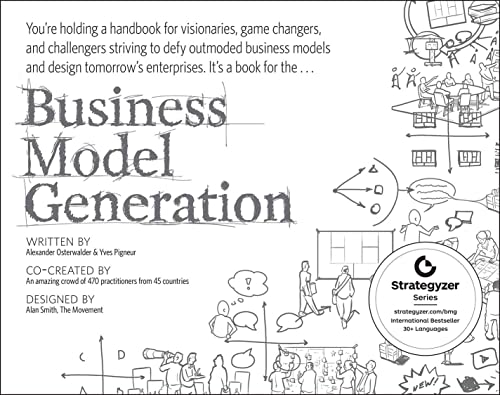
Overview: Business Model Generation is a visual, framework-driven guide to rethinking how businesses create and deliver value. Rather than treating innovation as a vague creative exercise, it breaks business models into components professionals can examine, test, and rebuild. That makes it especially useful for strategy teams, product leaders, founders, and consultants who need a shared language for innovation.
Why it stands out: Many books on innovation focus on ideas. This one focuses on structure. That distinction matters for professionals, because strong ideas only become useful when they fit a business model that customers understand and organizations can support. Its visual approach makes it accessible in workshops and team discussions, and its framework has remained influential because it is practical rather than theoretical.
Strengths:
- Clear framework for analyzing and redesigning business models
- Useful for team strategy sessions and cross-functional discussions
- Balances creativity with execution and market reality
Best for: Professionals working on strategy, product development, venture building, or business transformation.
Potential limitations: The visual, conceptual style is helpful, but readers who want step-by-step operational instruction may want a more tactical companion book.
View price, available formats, and reader reviews.
Monetizing Innovation: How Smart Companies Design the Product Around the Price

Overview: This book shifts innovation away from the familiar question of what to build and toward the harder question of how to make it commercially viable. It examines pricing as a design problem, showing how product value, customer willingness to pay, and business outcomes fit together. For professionals responsible for launches, portfolio decisions, or go-to-market strategy, that perspective is especially valuable.
Why it stands out: Innovation books often stop at ideation or product design. This one goes further by asking whether the innovation can actually make money. That makes it particularly relevant for managers and executives who have seen promising ideas stall because pricing, packaging, or customer expectations were not thought through early enough. It is a strong choice for readers who want innovation to translate into measurable business results.
Strengths:
- Connects innovation to pricing and revenue, not just creativity
- Highly relevant for product, strategy, and commercial teams
- Offers a disciplined way to think about value capture
Best for: Product managers, business leaders, entrepreneurs, and anyone responsible for bringing new offerings to market.
Potential limitations: Readers looking for a broad overview of innovation culture or ideation methods will find this narrower and more commercially focused.
View price, available formats, and reader reviews.
Biomimicry: Innovation Inspired by Nature

Overview: Biomimicry approaches innovation from a different angle by looking to nature for design principles, systems, and problem-solving strategies. Instead of the usual business case studies, it invites professionals to study how living systems solve challenges efficiently and sustainably. That makes it useful for readers who want a fresh source of ideas for product design, engineering, operations, or sustainability work.
Why it stands out: This is one of the few innovation books that genuinely expands how professionals think, not just what they do. It broadens the source of inspiration beyond markets and competitors. For teams that feel stuck in familiar patterns, that perspective can be unusually helpful. The book is also distinctive because it connects creativity with systems thinking, which gives it long-term value across disciplines.
Strengths:
- Introduces a memorable source of innovation inspiration
- Useful for creative problem-solving across technical and business fields
- Encourages sustainable thinking alongside invention
Best for: Professionals in design, engineering, sustainability, product development, and any field that benefits from nontraditional idea generation.
Potential limitations: The concept is compelling, but some readers will find the approach more exploratory than immediately tactical.
View price, available formats, and reader reviews.
The 4 Stages of Psychological Safety: Defining the Path to Inclusion and Innovation

Overview: Innovation depends on more than clever thinking. It also depends on whether people feel safe enough to speak honestly, test ideas, and admit uncertainty. This book focuses on the social conditions that make that possible. It explains psychological safety as a staged process, which helps leaders understand how trust, inclusion, and candor support better collaboration and innovation.
Why it stands out: Among books on innovation for professionals, this one addresses the human side that many others miss. Teams often have enough talent to innovate but lack the environment needed to surface good ideas early and learn from mistakes. This book is especially useful for managers because it translates a complex organizational topic into a workable model for day-to-day leadership. It belongs on this list because innovation rarely fails from lack of intelligence. It fails when people stop contributing fully.
Strengths:
- Connects team culture directly to innovation outcomes
- Helpful for leaders responsible for trust, inclusion, and collaboration
- Offers a clear model for understanding how safety develops over time
Best for: Managers, team leads, HR professionals, and organizational leaders.
Potential limitations: Readers seeking product, pricing, or strategy frameworks will find this more focused on culture and leadership.
View price, available formats, and reader reviews.
Co-Intelligence: Living and Working with AI

Overview: For professionals in 2026, innovation increasingly includes learning how to work with AI intelligently. This book addresses that reality directly. It explores how people can use AI as a thinking partner while still exercising judgment, responsibility, and discernment. That makes it especially relevant for knowledge workers, managers, and leaders trying to adapt innovation practices to a changing workplace.
Why it stands out: Rather than treating AI as either a threat or a miracle solution, the book takes a practical middle ground. That is exactly the kind of stance many professionals need right now. Its value lies in helping readers think about collaboration with AI in a way that supports better work without overrelying on automation. For innovation-minded professionals, that balance is important because the next wave of advantage will come from better human judgment, not just faster tools.
Strengths:
- Practical perspective on AI use in professional settings
- Helps readers think about judgment, productivity, and collaboration
- Timely without feeling narrow or overly technical
Best for: Professionals adapting their work, teams, or innovation process to AI.
Potential limitations: Readers looking for a traditional innovation strategy book may find this more future-of-work oriented than business-model focused.
View price, available formats, and reader reviews.
Who This List Is Best For
These recommendations are a good fit for product leaders, entrepreneurs, strategists, and teams. They are especially useful if you want to understand innovation for professionals with more nuance than a short checklist, quote, or social-media summary can provide.
- Readers who want a clear conceptual foundation before choosing a technique.
- People who prefer to compare research, practical exercises, and real-world examples.
- Professionals, students, or caregivers who need language they can apply in a real conversation or decision.
Use the Best For and Why It Stands Out columns together. A book can be excellent yet still be the wrong starting point if its depth, tone, or intended reader does not match your goal.
Final Thoughts
The strongest choice for innovation for professionals depends on what you need to do next. Begin with Business Model Generation if you need a foundation, move to Monetizing Innovation: How Smart Companies Design the Product Around the Price if you need a practical change, and consider Biomimicry: Innovation Inspired by Nature if you need a broader or more challenging perspective. The comparison table is meant to shorten that decision, not pretend that one book works for every reader.
A useful reading plan is simple: select one book, write down the question you want it to answer, and apply one idea before moving to another recommendation. For this topic, define the customer problem and the evidence needed before treating a new idea as an innovation. innovation is not novelty alone; it must create meaningful value under real constraints.
FAQ
Which book should I read first for innovation for professionals?
Start with Business Model Generation if you want the clearest foundation. If your immediate need is action rather than background, compare it with Monetizing Innovation: How Smart Companies Design the Product Around the Price and choose the one whose exercises, examples, or audience match your situation.
How do I choose between a research-based book and a workbook?
Choose the research-oriented option when you need context and a better mental model. Choose the workbook or practical guide when you already understand the problem and need repetition, prompts, or a structured plan. The table’s Best For column is the fastest way to make that distinction.
What is a practical way to use books about innovation for professionals?
Do not read the whole list at once. Pick one recommendation, define the behavior or decision you want to improve, and test a small idea from the book for seven days. For this topic, define the customer problem and the evidence needed before treating a new idea as an innovation.
Are these recommendations suitable for self-study?
Yes, for education and structured reflection. Take notes in your own words, mark claims you want to verify, and discuss difficult ideas with a trusted person or qualified professional when appropriate.
Do I need to read every book on the list?
No. One well-matched book that changes what you notice or do is more valuable than collecting several recommendations without applying any of them.