
Hiring has changed enough that a single book rarely covers the whole problem. Some readers need a practical guide to interviewing and selection. Others need a better framework for attracting candidates, improving the candidate experience, or recruiting for a specific setting like college athletics, small business, or military hiring. The best books for recruiting are the ones that match the real challenge in front of you, not just the broad idea of “getting people in the door.”
This list focuses on books that help you recruit more effectively in the real world. That means better sourcing, better conversations, better process, and better judgment. A few titles are broad and useful for anyone building a hiring function. Others are more specialized, which can be exactly what you need if you are working in a high-pressure, niche, or highly competitive recruiting environment.
Quick Answer
If you want the clearest entry point into recruiting, start with Recruiting 101: The Fundamentals of Being a Great Recruiter. It gives you a useful foundation in candidate experience, sourcing, structured hiring, recruiting ethics, and the realities of different labor markets. Choose High-Tech High-Touch Recruiting: How to Attract and Retain the Best Talent By Improving the Candidate Experience when you want a more applied or contrasting approach, and use The SOUL of Recruiting: Leading with Heart to Restore the Craft of Recruiting when you want to extend the idea into a different context.
This list is designed for recruiters, founders, hiring managers, and talent professionals. The recommendations are intentionally varied: some explain the underlying research, some offer exercises, and some are strongest as narrative or leadership case studies. That variety makes it easier to choose a book that matches your current question rather than buying the longest list.
Comparison Table
| Book | Best For | Why It Stands Out |
|---|---|---|
| Recruiting 101: The Fundamentals of Being a Great Recruiter | New recruiters, first-time hiring managers, and anyone who wants a practical foundation before reading more specialized recruiting books. | The strength of this book is its simplicity and clarity. A lot of recruiting material either goes too broad or too tactical. This one sits in the middle, which is where many readers actually need help. It is especially valuable if you… |
| High-Tech High-Touch Recruiting: How to Attract and Retain the Best Talent By Improving the Candidate Experience | Talent acquisition teams, HR professionals, and managers who want a more polished and responsive recruiting process. | Compared with general recruiting manuals, this title pays closer attention to the experience a candidate has from first contact through the hiring process. That perspective matters because recruiting is not only about finding people, it… |
| The SOUL of Recruiting: Leading with Heart to Restore the Craft of Recruiting | Recruiting leaders, experienced talent professionals, and readers interested in the people side of hiring. | Many books on recruiting emphasize speed, volume, or process. This one gives more attention to the quality of the work and the character of the recruiter. That makes it a strong choice for experienced practitioners who already know the… |
| Small Business BIG RECRUITING: How to Hire in Any Labor Market and Within Any Budget | Small business owners, operators, and hiring managers who need a workable recruiting system without a full HR department. | Where general recruiting books often assume a dedicated talent acquisition function, this one speaks to lean hiring environments. That is a real advantage for readers who need advice they can apply immediately without adding complexity.… |
| Fanatical Military Recruiting: The Ultimate Guide to Leveraging High-Impact Prospecting to Engage Qualified Applicants, Win the War for Talent, and Make Mission Fast (Jeb Blount) | Recruiters, talent sourcers, and hiring teams that need to improve outbound candidate engagement. | The main reason to recommend this book is its intensity of focus. It is not trying to cover every part of hiring. Instead, it gives attention to the front end of recruiting, where many searches are won or lost. That makes it especially… |
| Who: The A Method for Hiring | recruiting leaders who want a repeatable approach to improving hiring decisions | It earns a place in this list because it adds a distinct perspective on structured interviewing, scorecards, and the discipline of defining what a strong hire must accomplish, helping readers move beyond a generic motivational summary and… |
| Work Rules! | recruiting and HR leaders connecting hiring with development and workplace design | It earns a place in this list because it adds a distinct perspective on people operations, talent systems, and the organizational practices associated with high-performing teams, helping readers move beyond a generic motivational summary… |
How We Chose These Recommendations
The best books for recruiting should do more than repeat common advice about hiring. The books here were selected for their practical usefulness, their fit with real recruiting challenges, and their ability to serve different readers with different goals. Some are broad enough to help new recruiters build a base of knowledge. Others are more specialized and useful when the context matters, such as college athletics, small business hiring, or high-pressure talent acquisition.
We also looked for books that offer lasting value rather than short-lived trends. In recruiting, that usually means clear process thinking, better communication, stronger candidate relationships, and a realistic understanding of what makes people accept offers. No single book covers everything, so this list is arranged to give readers meaningful choices based on their situation.
Recommended Books
Recruiting 101: The Fundamentals of Being a Great Recruiter

Overview: This is the most straightforward starting point on the list for readers who want the basics of recruiting without getting lost in theory. It focuses on the core responsibilities of a recruiter and gives you a framework for understanding the job as a craft, not just a transaction. That makes it useful for new recruiters, hiring managers stepping into the function, and small teams that need a reliable operating foundation.
Why it stands out: The strength of this book is its simplicity and clarity. A lot of recruiting material either goes too broad or too tactical. This one sits in the middle, which is where many readers actually need help. It is especially valuable if you want to understand what good recruiting looks like before layering on more advanced strategy.
Strengths:
- Clear introduction to the fundamentals of recruiting
- Useful for beginners and non-specialists
- Practical enough to support day-to-day hiring work
Best for: New recruiters, first-time hiring managers, and anyone who wants a practical foundation before reading more specialized recruiting books.
Potential limitations: Readers looking for advanced sourcing strategy or deep talent acquisition theory may find it more basic than they need.
View price, available formats, and reader reviews.
High-Tech High-Touch Recruiting: How to Attract and Retain the Best Talent By Improving the Candidate Experience

Overview: This book centers on a problem many organizations underestimate: the candidate experience is part of recruiting, not a side issue. It looks at how technology and human interaction should work together to attract better applicants and keep strong candidates engaged. That makes it especially relevant for teams that have solid tools but still struggle with drop-off, poor communication, or inconsistent follow-through.
Why it stands out: Compared with general recruiting manuals, this title pays closer attention to the experience a candidate has from first contact through the hiring process. That perspective matters because recruiting is not only about finding people, it is also about convincing the right people to stay interested. Readers who want to improve their process rather than just increase activity will find this especially useful.
Strengths:
- Strong focus on candidate experience
- Balances technology with human judgment
- Useful for improving employer reputation and engagement
Best for: Talent acquisition teams, HR professionals, and managers who want a more polished and responsive recruiting process.
Potential limitations: Readers looking for a narrow playbook on sourcing tactics may want a more hands-on recruiting operations book alongside it.
View price, available formats, and reader reviews.
The SOUL of Recruiting: Leading with Heart to Restore the Craft of Recruiting
Overview: For readers who want recruiting framed as a relationship-driven craft, this book offers a more thoughtful and human approach. It focuses on leadership, professionalism, and the judgment required to recruit well over time. That perspective is useful if you are managing recruiters, building a team, or trying to move beyond a purely transactional hiring mindset.
Why it stands out: Many books on recruiting emphasize speed, volume, or process. This one gives more attention to the quality of the work and the character of the recruiter. That makes it a strong choice for experienced practitioners who already know the basics and want to improve how they lead, communicate, and represent the organization to candidates.
Strengths:
- Human-centered perspective on recruiting
- Useful for leadership and team development
- Encourages better judgment, not just faster activity
Best for: Recruiting leaders, experienced talent professionals, and readers interested in the people side of hiring.
Potential limitations: This is less of a tactical handbook than some other titles on the list, so readers wanting step-by-step process templates may need a more operational companion book.
View price, available formats, and reader reviews.
Small Business BIG RECRUITING: How to Hire in Any Labor Market and Within Any Budget
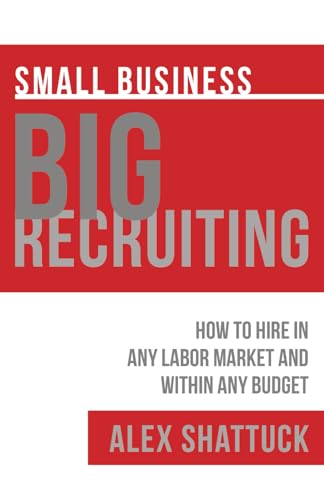
Overview: Small-business hiring has different constraints than corporate recruiting. Budget, time, and brand recognition all affect the process, and this book is aimed at that reality. It focuses on how to hire effectively without the infrastructure of a large organization, which makes it a practical choice for owners, operators, and managers who are responsible for hiring and still have to keep the business running.
Why it stands out: Where general recruiting books often assume a dedicated talent acquisition function, this one speaks to lean hiring environments. That is a real advantage for readers who need advice they can apply immediately without adding complexity. It belongs on this list because it helps solve one of the most common recruiting problems: how to compete for talent when your resources are limited.
Strengths:
- Tailored to small-business hiring realities
- Practical guidance for limited budgets
- Useful in tight labor markets
Best for: Small business owners, operators, and hiring managers who need a workable recruiting system without a full HR department.
Potential limitations: Readers at larger companies may find some of the advice too narrowly tuned to small-business conditions.
View price, available formats, and reader reviews.
Fanatical Military Recruiting: The Ultimate Guide to Leveraging High-Impact Prospecting to Engage Qualified Applicants, Win the War for Talent, and Make Mission Fast (Jeb Blount)

Overview: This is a recruiting book for readers who need a more disciplined and aggressive approach to prospecting. It focuses on outreach, engagement, and the challenge of getting qualified people to respond in competitive hiring environments. While the military context is specific, the ideas around persistence, clarity, and structured candidate pursuit can be useful far beyond that setting.
Why it stands out: The main reason to recommend this book is its intensity of focus. It is not trying to cover every part of hiring. Instead, it gives attention to the front end of recruiting, where many searches are won or lost. That makes it especially valuable for readers who spend a lot of time sourcing and contacting candidates and need a stronger system for consistent follow-up.
Strengths:
- Highly focused on prospecting and outreach
- Useful in competitive talent markets
- Structured enough to support repeatable recruiting habits
Best for: Recruiters, talent sourcers, and hiring teams that need to improve outbound candidate engagement.
Potential limitations: The military framing may not fit every reader, and the tone is more specialized than the broader books on this list.
View price, available formats, and reader reviews.
Who: The A Method for Hiring

Overview: Who: The A Method for Hiring gives readers a focused way to understand structured interviewing, scorecards, and the discipline of defining what a strong hire must accomplish. Its value is not only the headline idea; it also shows how the idea affects decisions, habits, relationships, or work in real situations.
Why it stands out: It earns a place in this list because it adds a distinct perspective on structured interviewing, scorecards, and the discipline of defining what a strong hire must accomplish, helping readers move beyond a generic motivational summary and choose a practical next step.
Strengths:
- Clear framework for the topic
- Useful examples or reflection prompts
- Can be applied beyond a single situation
Best for: recruiting leaders who want a repeatable approach to improving hiring decisions
Potential limitations: Hiring systems need legal review and thoughtful adaptation to role, market, and candidate experience.
View price, available formats, and reader reviews.
Work Rules!

Overview: Work Rules! gives readers a focused way to understand people operations, talent systems, and the organizational practices associated with high-performing teams. Its value is not only the headline idea; it also shows how the idea affects decisions, habits, relationships, or work in real situations.
Why it stands out: It earns a place in this list because it adds a distinct perspective on people operations, talent systems, and the organizational practices associated with high-performing teams, helping readers move beyond a generic motivational summary and choose a practical next step.
Strengths:
- Clear framework for the topic
- Useful examples or reflection prompts
- Can be applied beyond a single situation
Best for: recruiting and HR leaders connecting hiring with development and workplace design
Potential limitations: Company-specific practices should be treated as hypotheses, not universal rules.
View price, available formats, and reader reviews.
Who This List Is Best For
These recommendations are a good fit for recruiters, founders, hiring managers, and talent professionals. They are especially useful if you want to understand recruiting with more nuance than a short checklist, quote, or social-media summary can provide.
- Readers who want a clear conceptual foundation before choosing a technique.
- People who prefer to compare research, practical exercises, and real-world examples.
- Professionals, students, or caregivers who need language they can apply in a real conversation or decision.
Use the Best For and Why It Stands Out columns together. A book can be excellent yet still be the wrong starting point if its depth, tone, or intended reader does not match your goal.
Final Thoughts
The strongest choice for recruiting depends on what you need to do next. Begin with Recruiting 101: The Fundamentals of Being a Great Recruiter if you need a foundation, move to High-Tech High-Touch Recruiting: How to Attract and Retain the Best Talent By Improving the Candidate Experience if you need a practical change, and consider The SOUL of Recruiting: Leading with Heart to Restore the Craft of Recruiting if you need a broader or more challenging perspective. The comparison table is meant to shorten that decision, not pretend that one book works for every reader.
A useful reading plan is simple: select one book, write down the question you want it to answer, and apply one idea before moving to another recommendation. For this topic, define the candidate outcome and hiring evidence before choosing a sourcing tactic. recruiting advice must fit the role, labor market, legal context, and candidate’s experience.
FAQ
Which book should I read first for recruiting?
Start with Recruiting 101: The Fundamentals of Being a Great Recruiter if you want the clearest foundation. If your immediate need is action rather than background, compare it with High-Tech High-Touch Recruiting: How to Attract and Retain the Best Talent By Improving the Candidate Experience and choose the one whose exercises, examples, or audience match your situation.
How do I choose between a research-based book and a workbook?
Choose the research-oriented option when you need context and a better mental model. Choose the workbook or practical guide when you already understand the problem and need repetition, prompts, or a structured plan. The table’s Best For column is the fastest way to make that distinction.
What is a practical way to use books about recruiting?
Do not read the whole list at once. Pick one recommendation, define the behavior or decision you want to improve, and test a small idea from the book for seven days. For this topic, define the candidate outcome and hiring evidence before choosing a sourcing tactic.
Are these recommendations suitable for self-study?
Yes, for education and structured reflection. Take notes in your own words, mark claims you want to verify, and discuss difficult ideas with a trusted person or qualified professional when appropriate.
Do I need to read every book on the list?
No. One well-matched book that changes what you notice or do is more valuable than collecting several recommendations without applying any of them.