
Procrastination usually is not a simple problem of “not trying hard enough.” For many readers, it is a mix of avoidance, perfectionism, low energy, poor task structure, anxiety, and habits that do not hold up under real life. That is why the best books for procrastination are not all trying to solve the same issue. Some focus on the psychology behind delay, some give practical systems for getting started, and others work better for readers who need a more flexible or ADHD-friendly approach.
If you are trying to choose the right book, the most useful question is not “Which one is best overall?” It is “Which one matches the way I procrastinate?” The books below were selected with that in mind. A few are classic, research-informed choices. Others are more tactical and immediately usable. Together they give you a realistic set of options without repeating the same advice over and over.
Quick Answer
If you want the strongest starting points, begin with The Procrastination Equation by Piers Steel for a clear evidence-based framework, The Now Habit by Neil Fiore for a psychologically informed approach that reduces guilt and avoidance, and Procrastination: Why You Do It, What to Do About It Now by Jane B. Burka and Lenora M. Yuen for a practical classic that explains the habit in plain English. For a more hands-on, structured option, Procrastination Proof by Ramon Ray gives readers a straightforward anti-stuck toolkit. If you want a format designed for people who resist traditional planning, The Anti-Planner is the most specialized choice on this list.
Comparison Table
| Book | Author | Best For | Why We Recommend It |
|---|---|---|---|
| The Procrastination Equation | Piers Steel | Readers who want a research-based explanation of procrastination | Clear, evidence-informed, and useful for understanding why delay happens |
| The Now Habit | Neil Fiore | People caught in guilt, perfectionism, and avoidance cycles | Offers a humane framework that helps readers restart without self-criticism |
| Procrastination: Why You Do It, What to Do About It Now | Jane B. Burka and Lenora M. Yuen | Readers who want a practical classic with strong psychological insight | Still one of the clearest books on the emotional side of procrastination |
| Procrastination Proof | Ramon Ray | Readers who want direct, action-oriented advice | Focused on getting unstuck quickly with practical steps |
| The Anti-Planner | M. A. Young | ADHD readers and people who dislike conventional planners | Uses a more interactive, flexible format than standard productivity books |
| Addiction, Procrastination, and Laziness | J. J. A. McKenna | Readers interested in motivation and the deeper roots of stuck behavior | Explores procrastination through a broader psychology of motivation |
| The Procrastination Cure | Unknown | Readers who want a quick tactical overview | Short, inexpensive, and focused on immediate tactics |
| How to Stop Procrastinating | Unknown | Beginners who want a simple, easy-to-scan guide | Offers a straightforward introduction without much complexity |
How We Chose These Recommendations
The best books for procrastination should do more than repeat “set a timer” or “make a list.” We looked for books that offer either a meaningful framework, a useful system, or a distinctive angle on why people put things off. That means prioritizing books with lasting value, clear educational purpose, and enough depth to help readers change how they approach delayed tasks.
We also tried to balance approaches. Some readers need psychology. Others need structure. Some need a more forgiving mindset because shame is part of the problem. Others want a book that gets practical fast. The selections below were chosen to reflect those different needs without padding the list with books that say the same thing in slightly different words.
Recommended Books
The Procrastination Equation: How to Stop Putting Things Off and Start Getting Stuff Done
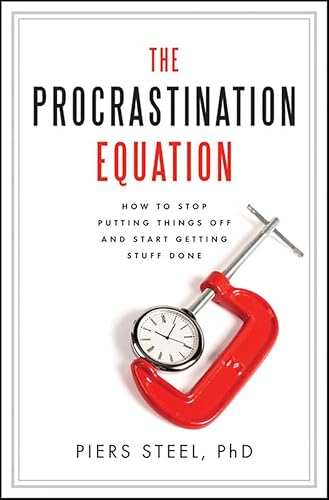
Author: Piers Steel
Book overview: This book treats procrastination as a measurable, predictable behavior rather than a vague character flaw. Steel explains the forces that drive delay and shows how motivation, impulsiveness, expectancy, and time matter in real life.
Why we recommend it: It is one of the strongest choices for readers who want to understand procrastination at a deeper level before trying to fix it. The book is especially useful if you have already tried generic productivity advice and want a better explanation for why those tips did not stick.
Strengths:
- Evidence-based and conceptually clear
- Helps readers identify the causes behind their procrastination
- Useful for reflective readers who want more than a quick hack
Best for: Readers who prefer a serious, research-informed approach and want to understand the mechanics of procrastination.
Potential limitations: It is more analytical than motivational, so readers looking for a short action plan may want a more tactical book first.
View price, available formats, and reader reviews.
The Now Habit: A Strategic Program for Overcoming Procrastination and Enjoying Guilt-Free Play

Author: Neil Fiore
Book overview: Fiore focuses on the emotional loop that keeps people stuck, especially guilt, fear of failure, and perfectionism. Rather than pushing harder, the book teaches readers how to reduce pressure and create momentum without self-attack.
Why we recommend it: This is one of the best books for readers who procrastinate because the task feels loaded with stress. It stands out for its tone as much as its content. The book is practical, but it also helps readers stop treating every delay as a moral failure.
Strengths:
- Addresses guilt and perfectionism directly
- Offers a calmer, more sustainable way to restart work
- Well suited to readers who are hard on themselves
Best for: Readers whose procrastination is tied to anxiety, self-criticism, or fear of not doing the task well enough.
Potential limitations: Some readers may want a more structured, step-by-step system than this book provides.
View price, available formats, and reader reviews.
Procrastination: Why You Do It, What to Do About It Now

Author: Jane B. Burka and Lenora M. Yuen
Book overview: This long-respected book explains procrastination as a habit with psychological roots, not just a time management problem. It covers the emotional patterns that keep people avoiding work and offers realistic ways to change them.
Why we recommend it: It belongs on any careful list of the best books for procrastination because it has remained useful for years without relying on trendy productivity language. Readers who want a grounded, accessible explanation of why they delay will find a lot here.
Strengths:
- Clear and readable without being superficial
- Strong on the emotional side of avoidance
- Helpful for readers who want a classic guide rather than a fad-driven system
Best for: Readers who want a well-rounded introduction that combines insight with practical advice.
Potential limitations: Some of the material feels more established than current productivity writing, which is not a flaw so much as a reflection of its age.
View price, available formats, and reader reviews.
Procrastination Proof: Never Get Stuck Again

Author: Ramon Ray
Book overview: This is a practical, direct book aimed at helping readers move from stuck to started. Its value is in the focus on immediate application rather than extended theory.
Why we recommend it: Some readers do not need a deep psychological model. They need a book that helps them take the next step today. This title earns its place by serving that exact need with a straightforward, action-first style.
Strengths:
- Fast-moving and practical
- Useful for readers who want immediate momentum
- Less abstract than many books on the topic
Best for: Readers who want a compact, no-frills guide to getting unstuck.
Potential limitations: Readers looking for deeper theory or a more research-heavy explanation may find it too brief.
View price, available formats, and reader reviews.
The Anti-Planner: How to Get Stuff Done When You Don’t Feel Like It (Clean Edition) – Undated ADHD Productivity Activity Book for Adults, Teens & Students, 100+ Focus & Procrastination Strategies

Author: M. A. Young
Book overview: This planner alternative is built for readers who do not respond well to conventional productivity systems. Instead of relying on rigid schedules alone, it uses a more interactive, activity-based format with a strong emphasis on flexibility.
Why we recommend it: It is the most specialized option here, and that is exactly why it matters. Readers with ADHD or readers who have repeatedly bounced off traditional planners may find this format more usable than a standard advice book.
Strengths:
- Highly structured but less rigid than a traditional planner
- Designed with ADHD-friendly and low-friction use in mind
- Helpful for people who need engagement, not just instructions
Best for: Adults, teens, and students who want a more interactive tool for tackling procrastination.
Potential limitations: The high price makes it a more selective purchase, and the format will appeal most to readers who want a workbook-style companion rather than a conventional book.
View price, available formats, and reader reviews.
Addiction, Procrastination, and Laziness: A Proactive Guide to the Psychology of Motivation

Author: J. J. A. McKenna
Book overview: This book widens the lens beyond procrastination alone and looks at motivation in the context of avoidance, laziness, and other stuck patterns. Its value is in connecting procrastination to broader behavioral and psychological habits.
Why we recommend it: Readers who suspect their procrastination is tied to low motivation rather than poor scheduling may find this perspective especially useful. It offers a different angle from the more standard “just start the task” advice.
Strengths:
- Explores motivation from a broader behavioral perspective
- Helpful for readers who want to understand recurring avoidance patterns
- Offers a less conventional but relevant take on the topic
Best for: Readers interested in the psychology behind motivation and inertia.
Potential limitations: The scope is broader than a pure procrastination handbook, so readers wanting a narrow tactical guide may prefer a different title.
View price, available formats, and reader reviews.
The Procrastination Cure: 21 Proven Tactics For Conquering Your Inner Procrastinator, Mastering Your Time, And Boosting Your Productivity!

Author: Unknown
Book overview: This short guide is built around quick tactics for getting started and staying on task. It is clearly aimed at readers who want immediate, bite-sized advice rather than a deep dive.
Why we recommend it: The book earns a place as an entry-level option for readers who want a low-commitment starting point. It is inexpensive, easy to approach, and likely to appeal to people who are testing whether a shorter format can help them.
Strengths:
- Brief and accessible
- Useful for readers who want a quick introduction
- Low-cost way to sample procrastination advice
Best for: Beginners who want a simple tactics-first book.
Potential limitations: The book is more basic than the strongest titles on this list, so readers who want depth should start elsewhere.
View price, available formats, and reader reviews.
How to Stop Procrastinating: A Simple Guide to Mastering Difficult Tasks and Breaking the Procrastination Habit

Author: Unknown
Book overview: This book is positioned as a plain-language guide to breaking the procrastination habit and handling difficult tasks more effectively. It is straightforward rather than elaborate.
Why we recommend it: It belongs on this list because some readers want the least intimidating entry point possible. If you are looking for something simple to scan and easy to start, this is a sensible option.
Strengths:
- Very approachable title and format
- Good for readers who want a plain, uncomplicated guide
- Works as a starter book before moving to deeper titles
Best for: Readers who want a simple first book on procrastination.
Potential limitations: It is likely to feel basic for readers who already know the usual productivity advice.
View price, available formats, and reader reviews.
Who This List Is Best For
This list will help readers who want more than generic productivity tips. It is a good fit for:
- Beginners who want a simple first book on procrastination
- Students who need help starting work without overcomplicating the process
- Professionals who want better task follow-through and less avoidance
- Readers with perfectionist habits who freeze when a task feels high-stakes
- ADHD readers who may need a less conventional system
- Self-directed learners who want a mix of psychology and practical tools
Final Thoughts
If your main goal is to understand procrastination more clearly, start with The Procrastination Equation. If your problem is more emotional, especially guilt or perfectionism, The Now Habit is the better first choice. If you want a classic, balanced explanation of the habit, Procrastination: Why You Do It, What to Do About It Now remains one of the most useful options.
If your priority is immediate action, Procrastination Proof is the most direct pick. If you need a format that works better for ADHD or for readers who dislike rigid planning, The Anti-Planner is the most distinctive choice. The other books fill in the gaps for readers who want a quick start, a broader motivation lens, or a simpler introductory guide.
FAQ
Which book is best for beginners?
How to Stop Procrastinating is the easiest starting point if you want something simple. If you want a better long-term foundation, Procrastination: Why You Do It, What to Do About It Now is a stronger all-around beginner choice.
Which book offers the best practical advice?
Procrastination Proof is the most direct practical pick. For readers who want structure with a more supportive tone, The Now Habit is also a strong option.
Which book is best if procrastination is tied to perfectionism?
The Now Habit is the best match for perfectionism, guilt, and self-criticism. It is especially helpful when pressure is part of the problem.
Which book is most research-based?
The Procrastination Equation is the most clearly evidence-informed title on the list. It is a good choice if you want theory backed by behavioral thinking.
Which book should ADHD readers start with?
The Anti-Planner is the most tailored option for ADHD readers or anyone who struggles with conventional planning systems.
Can I use these books together?
Yes. A good combination is one conceptual book and one practical book. For example, The Procrastination Equation pairs well with Procrastination Proof, while The Now Habit pairs well with The Anti-Planner for readers who need both mindset and structure.




