
Overthinking usually looks harmless at first. You replay a conversation, second-guess a decision, or keep running through worst-case scenarios until ordinary choices feel exhausting. The right book can help, but not every book on this topic solves the same problem. Some are better for anxious thought loops, some focus on decision-making, and others are more useful when overthinking is tied to relationships, self-trust, or emotional reactivity.
This list is built for readers who want practical relief, not vague encouragement. The best books for overthinking tend to do one of three things well: help you notice the habit in real time, give you a method for interrupting the spiral, or change the way you relate to your thoughts altogether. The books below cover those different needs without repeating the same advice in slightly different packaging.
Quick Answer
If you want the strongest options for dealing with overthinking, start here:
- Don’t Overthink It for practical help with decision-making and second-guessing.
- Don’t Believe Everything You Think for readers who want a broader shift in how they relate to thoughts.
- Soundtracks for a structured approach to replacing unhelpful mental loops.
- Stop Overthinking for readers who want straightforward techniques they can use right away.
- The Art of Letting Go for people whose overthinking is tied to emotional attachment and rumination.
- Quiet Your Mind for men looking for a focused, action-oriented guide.
- Rewired for readers interested in a body-based method for calming mental overload.
- Stop Letting Everything Affect You for readers who notice overthinking is linked to emotional overreaction and self-sabotage.
Comparison Table
| Book | Author | Best For | Why We Recommend It |
|---|---|---|---|
| Don’t Overthink It | Anne Bogel | Decision-making and everyday second-guessing | Clear, practical, and especially useful when overthinking shows up as indecision. |
| Don’t Believe Everything You Think | Joseph Nguyen | Changing your relationship to thoughts | Offers a simpler mental framework for readers who want less fixing and more perspective. |
| Soundtracks | Jon Acuff | Replacing repetitive thought loops | Structured and memorable, with a focus on practical self-talk and mindset shifts. |
| Stop Overthinking | Nick Trenton | Fast, technique-based relief | Useful when you want a direct set of tools rather than a theory-heavy approach. |
| The Art of Letting Go | Nick Trenton | Rumination and emotional release | Best when overthinking is rooted in clinging, regret, or persistent emotional loops. |
| Quiet Your Mind | Nick Trenton | Men who want a focused self-help guide | Tailored to readers who prefer a practical, no-nonsense format. |
| Rewired | Peta Stapleton | Body-based anxiety relief | Different from the other picks because it focuses on a tapping method rather than purely cognitive tools. |
| Stop Letting Everything Affect You | Neel Burton | Emotional reactivity and self-sabotage | Helpful for readers whose overthinking is closely tied to strong emotional swings. |
How We Chose These Recommendations
Books on overthinking can be too broad, too abstract, or too similar to one another. The strongest options are the ones that actually help readers change something, whether that means making decisions with less mental friction, interrupting anxious spirals, or learning to step back from thoughts instead of fighting them.
We prioritized books that offer clear value for specific types of readers. Some are more practical and technique-driven. Others are more reflective and better suited to readers who need a deeper shift in perspective. We also looked for books that are easy to trust as recommendations because they have a clear purpose and a recognizable place in the self-help conversation.
Just as important, we avoided padding the list with books that say the same thing in slightly different language. If a book made the list, it is because it serves a distinct need for someone who is actively trying to quiet their mind.
Recommended Books
Don’t Overthink It: Make Easier Decisions, Stop Second-Guessing, and Bring More Joy to Your Life
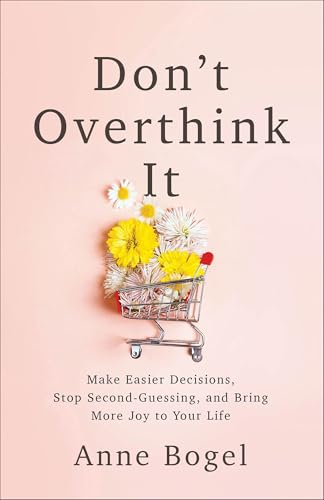
Author: Anne Bogel
Book overview: This book is centered on one of the most common forms of overthinking, which is the habit of overanalyzing ordinary choices until they feel heavier than they should. It focuses on decision fatigue, self-doubt, and the mental drag that comes from trying to choose the “right” option all the time.
Why we recommend it: It is one of the clearest books for readers whose overthinking shows up as indecision. Rather than treating overthinking as a vague mindset issue, it narrows the problem to everyday decision-making and gives it a practical shape.
Strengths:
- Accessible and easy to apply.
- Especially useful for everyday choices, routines, and habits.
- Less abstract than many books on anxiety and mental clutter.
Best for: Readers who freeze up, second-guess themselves, or spend too much time revisiting simple decisions.
Potential limitations: It is most useful for decision-related overthinking, so readers looking for a deeper anxiety or mindfulness framework may want to pair it with another title.
View price, available formats, and reader reviews.
Don’t Believe Everything You Think: Why Your Thinking Is The Beginning & End Of Suffering (Beyond Suffering)

Author: Joseph Nguyen
Book overview: This book takes a more philosophical and reflective approach to overthinking. Its core idea is that much of our distress comes from treating every thought as reliable, urgent, or meaningful.
Why we recommend it: It stands out because it addresses overthinking at the level of perspective rather than just symptoms. Readers who are tired of battling individual thoughts may find this approach more useful than a list of coping tricks.
Strengths:
- Clear and accessible conceptually.
- Useful for readers who want mental distance from their thoughts.
- Offers a calmer, less combative framework than many self-help books.
Best for: Readers who want to step back from mental chatter instead of managing it piece by piece.
Potential limitations: The approach is more reflective than procedural, so readers who want a very hands-on workbook style may prefer a different book first.
View price, available formats, and reader reviews.
Soundtracks: The Surprising Solution to Overthinking (Overcome Toxic Thought Patterns and Take Control of Your Mindset)

Author: Jon Acuff
Book overview: This book looks at the internal messages people repeat to themselves and how those “soundtracks” can keep overthinking alive. It offers a straightforward way to notice unhelpful scripts and replace them with something more useful.
Why we recommend it: It is one of the best choices for readers who want a memorable framework they can actually use. The book is practical without being cold, and it gives overthinking a structure that is easy to recognize in daily life.
Strengths:
- Memorable central metaphor.
- Good blend of encouragement and action.
- Helpful for self-talk, confidence, and mindset habits.
Best for: Readers who know their overthinking is tied to negative inner dialogue.
Potential limitations: Readers looking for a more clinical or research-heavy book may find this one lighter in tone than expected.
View price, available formats, and reader reviews.
Stop Overthinking: 23 Techniques to Relieve Stress, Stop Negative Spirals, Declutter Your Mind, and Focus on the Present (The Path to Calm)

Author: Nick Trenton
Book overview: This is a technique-driven guide built for readers who want concrete ways to interrupt spiraling thoughts. It focuses on stress reduction, present-moment focus, and simple interventions you can try without a long lead-in.
Why we recommend it: It earns its place because it is direct about the problem and practical about the solution. For many readers, that combination is exactly what makes a book on overthinking usable rather than merely reassuring.
Strengths:
- Action-oriented structure.
- Easy to dip into when you need a specific tool.
- Good for readers who prefer clear steps over long explanations.
Best for: People who want quick, practical tactics for calming a busy mind.
Potential limitations: Because it is technique-centered, it may feel more like a tool kit than a deep exploration of the psychology behind overthinking.
View price, available formats, and reader reviews.
The Art of Letting Go: Stop Overthinking, Stop Negative Spirals, and Find Emotional Freedom (The Path to Calm)

Author: Nick Trenton
Book overview: This book focuses on the kind of overthinking that keeps people attached to regret, resistance, and emotional loops. It is less about productivity and more about loosening the grip of thoughts that will not let go.
Why we recommend it: It is a strong choice for readers whose overthinking is tied to emotional holding patterns. Instead of simply telling you to think differently, it addresses the harder work of releasing what your mind keeps revisiting.
Strengths:
- Useful for rumination and emotional persistence.
- Pairs well with more practical books on decision-making.
- Focused on emotional relief rather than performance.
Best for: Readers caught in loops of regret, resentment, or mental replay.
Potential limitations: Readers who want a more conventional cognitive-behavioral approach may find the emphasis on emotional release less familiar.
View price, available formats, and reader reviews.
Quiet Your Mind: A Men’s Guide: Practical Techniques to Stop Overthinking and Take Charge of Your Life

Author: Jett Stone
Book overview: This is a targeted practical guide for men who want to reduce mental noise and make decisions with more steadiness. It keeps the focus on usable techniques rather than broad theory.
Why we recommend it: The book fills a specific need in this category. Some readers want overthinking advice that is framed for their day-to-day reality, and this title is one of the more direct options for that audience.
Strengths:
- Focused and straightforward.
- Practical tone with minimal fluff.
- Helpful for readers who prefer a gender-specific lens.
Best for: Men looking for a concise, practical approach to overthinking.
Potential limitations: Readers who do not want a gender-specific framing may prefer one of the broader titles on this list.
View price, available formats, and reader reviews.
Rewired: The Breakthrough Tapping Method to Stop Overthinking, Calm Your Body, and Finally Feel at Ease

Author: Peta Stapleton
Book overview: This book takes a body-based approach to overthinking by connecting mental overload with physical tension and stress responses. Its emphasis is on tapping as a method for calming the nervous system and creating a sense of ease.
Why we recommend it: It offers a distinctly different route from the other books on this list. If thought-based strategies have not been enough, a body-centered method may be a useful next step.
Strengths:
- Distinct from purely cognitive self-help books.
- Appeals to readers interested in mind-body tools.
- Addresses the physical side of mental overload.
Best for: Readers who notice overthinking shows up as physical tension, stress, or feeling constantly keyed up.
Potential limitations: The tapping method may not appeal to everyone, especially readers who prefer conventional psychology-based advice.
View price, available formats, and reader reviews.
Stop Letting Everything Affect You: How to break free from overthinking, emotional chaos, and self-sabotage.

Author: Neel Burton
Book overview: This title is aimed at readers whose overthinking is tangled up with emotional reactivity and patterns of self-sabotage. It focuses on learning to respond with more steadiness instead of being pulled around by every feeling or thought.
Why we recommend it: It is a strong fit for readers who already know that the problem is not just “thinking too much,” but getting emotionally derailed by what they think. That makes it a valuable complement to the more technique-based books here.
Strengths:
- Addresses emotional chaos directly.
- Useful for readers who feel easily triggered or overwhelmed.
- Focuses on self-management rather than shallow reassurance.
Best for: Readers whose overthinking often turns into emotional spirals or self-defeating behavior.
Potential limitations: It is most useful for readers who want to work on emotional regulation, not just decision-making.
View price, available formats, and reader reviews.
Who This List Is Best For
This list is best for readers who want more than generic advice. It works especially well for:
- Complete beginners who want a clear starting point for understanding overthinking.
- Professionals and managers who need to make decisions without overanalyzing every option.
- Readers dealing with anxiety or rumination who need tools for interrupting mental loops.
- People who prefer practical self-help over theory-heavy psychology books.
- Readers who want a mindset shift rather than just another productivity system.
- Men looking for a targeted guide that speaks to their experience more directly.
- Readers drawn to mind-body methods who want something beyond purely cognitive strategies.
Final Thoughts
If your main problem is second-guessing decisions, start with Don’t Overthink It. If you want a broader shift in how you relate to your thoughts, begin with Don’t Believe Everything You Think. If you want practical tools you can use right away, Stop Overthinking is the most direct place to begin.
If your overthinking is tied to self-talk, Soundtracks is the strongest fit. If it is tied to regret, emotional pressure, or persistent mental replay, The Art of Letting Go or Stop Letting Everything Affect You may be more relevant. And if you prefer a body-based approach, Rewired gives you a different angle altogether.
The best book for overthinking is the one that matches the form your overthinking actually takes. That is usually the fastest way to get something useful from reading, instead of just collecting more ideas.
FAQ
Which book is best for beginners?
Don’t Overthink It is the easiest starting point for most beginners because it focuses on everyday decision-making and keeps the advice grounded and practical.
Which book is easiest to read?
Stop Overthinking is one of the most straightforward choices because it is organized around concrete techniques rather than a heavy theoretical argument.
Which book offers the most practical advice?
Stop Overthinking and Don’t Overthink It are the most immediately practical if your goal is to interrupt thought spirals and make clearer choices.
Which book is best if I keep replaying conversations and mistakes?
The Art of Letting Go is a strong fit for rumination, regret, and emotional replay. It is more useful when the problem is not just thinking too much, but not being able to release what you are thinking about.
Which book should I read first?
If your overthinking is mostly indecision, start with Don’t Overthink It. If it feels more like constant mental chatter or self-criticism, start with Don’t Believe Everything You Think or Soundtracks.
Can I use these books to help with anxiety-related overthinking?
Yes, several of them can help, especially Stop Overthinking, Soundtracks, and Rewired. If overthinking is tied to significant anxiety, these books can be a useful supplement, though they are not a replacement for professional support when needed.




