
Consulting is a broad field, and the right book depends on what kind of consultant you are trying to become. Some readers need practical guidance on winning clients and building a business. Others want help with management consulting methods, moving from corporate employment into independent work, or developing expertise in a specialized consulting niche. The best books for consultants do not all teach the same thing, so a useful list has to separate foundational advice from books that are better suited to a specific stage of the consulting journey.
Quick Answer
If you want the strongest books for consultants, start with Succeeding as a Management Consultant, The Irresistible Consultant’s Guide to Winning Clients, The Seven-Figure Consultant, The Defragmented Consultant, and McKINSEY IN 360 PROMPTS. For consultants working in a specific niche, The Healthcare Consultant’s Handbook and The Consultant’s Guide to Physical Security Assessments offer more specialized value.
Comparison Table
| Book | Best For | Why It Stands Out |
|---|---|---|
| Succeeding as a Management Consultant | Readers entering or advancing in management consulting | Focuses on the practical realities of consulting work, not just theory |
| The Irresistible Consultant’s Guide to Winning Clients | Independent consultants who need a steadier client pipeline | Directly addresses one of the hardest parts of consulting, getting clients |
| The Seven-Figure Consultant | Consultants building a more scalable, higher-income practice | Centers on business growth and practice design, not just delivery skills |
| The Defragmented Consultant | Professionals transitioning from corporate work into independent consulting | Speaks to repositioning your background into a consulting identity |
| McKINSEY IN 360 PROMPTS | Consultants using AI to speed up analytical and client-work tasks | Built as a prompt library for consulting workflows |
| The Healthcare Consultant’s Handbook | Healthcare consultants and specialists entering the field | Tailored to a defined industry rather than general consulting |
| The Consultant’s Guide to Physical Security Assessments | Security consultants doing hands-on assessment work | Offers a field-specific, practical approach for technical consulting |
How We Chose These Recommendations
These books were selected for the value they offer to real consulting work, not for keyword matching alone. The strongest recommendations here help readers solve concrete problems such as learning the consulting craft, winning clients, building a practice, or applying consulting skills in a specialized niche. That means a book earned its place only if it offered a clear reason to read it and a distinct role on the list.
We also favored books with focused usefulness. A strong consulting book should help a reader make better decisions, communicate more clearly, or operate more effectively with clients. Where possible, the list leans toward titles that address enduring parts of consulting rather than narrow trends. That balance gives readers both broad guidance and niche options, depending on where they are in their consulting path.
Recommended Books
Succeeding as a Management Consultant

Overview: Written for people working in or preparing for management consulting, this book focuses on what actually matters once you are in the role: handling client work, structuring problems, managing expectations, and developing the habits that make a consultant useful on real engagements. Rather than treating consulting as a vague career aspiration, it concentrates on the day-to-day demands of the profession.
Why it stands out: Among books for consultants, this one is especially valuable because it addresses the core consulting craft in a direct way. It is a strong fit for readers who want a practical guide to professional performance, not just business development. If you want to understand how management consultants think and operate, this belongs near the top of the list.
Strengths:
- Useful for understanding the structure of consulting work
- Good fit for readers early in their consulting careers
- Emphasizes practical professional skills, not abstract advice
Best for: Aspiring consultants, junior consultants, and professionals who want a grounded introduction to management consulting practice.
Potential limitations: Readers looking for a broad business book may find it more specialized than they need. It is most useful to people aiming at management consulting specifically.
View price, available formats, and reader reviews.
The Irresistible Consultant’s Guide to Winning Clients

Overview: This book is built around one of the hardest problems in consulting: getting clients consistently. It focuses on the business-development side of consulting, with an emphasis on positioning, outreach, and the steps needed to turn expertise into paid work. That makes it especially relevant for independent consultants who cannot rely on a firm’s brand or sales team.
Why it stands out: Many consulting books concentrate on delivery and problem solving, but fewer get specific about client acquisition. That is where this title is especially useful. It earns a place on this list because consultants often need more help with winning work than with doing the work once they have it. For solo practitioners and small firms, that distinction matters.
Strengths:
- Focused on client acquisition, a central consulting challenge
- Practical for freelancers and independent consultants
- Useful for shaping a clearer consulting offer
Best for: Consultants who are building a client base, especially those operating independently or starting a boutique practice.
Potential limitations: Readers seeking methodical consulting frameworks or case interview style preparation will need a different book. Its focus is business development rather than delivery technique.
View price, available formats, and reader reviews.
The Seven-Figure Consultant
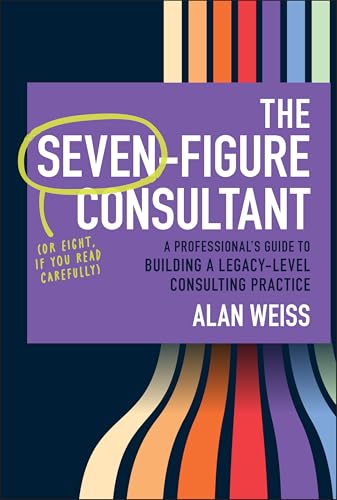
Overview: For consultants who are thinking beyond individual projects, this book focuses on building a more substantial consulting practice. Its emphasis is on turning expertise into a business that can support higher revenue and longer-term growth. That makes it particularly relevant for readers who already have experience and want a more strategic view of the consulting model.
Why it stands out: Some books teach how to do consulting well. This one is more concerned with how to shape consulting into a durable business. That difference gives it a useful place in the list. It is not the best starting point for a brand-new consultant, but it can be very helpful once you are ready to think about pricing, scale, positioning, and long-term practice design.
Strengths:
- Strong choice for business-minded consultants
- Focuses on growth and practice structure
- Better suited to established consultants than beginners
Best for: Experienced consultants, solo practitioners, and professionals planning to grow a consulting business beyond occasional projects.
Potential limitations: Readers looking for introductory guidance may find it more advanced than necessary. Its value is highest once you already have some consulting experience.
View price, available formats, and reader reviews.
The Defragmented Consultant

Overview: This book is aimed at people moving from corporate life into independent consulting. Its central idea is that your past experience should not be discarded, but reframed into a consulting practice that feels coherent and marketable. That makes it especially helpful for readers who know they have useful expertise but need to translate it into a clear offer.
Why it stands out: Career-transition books often stay too general, but this one speaks directly to the challenge many consultants face when leaving a salaried role. It is valuable because it bridges identity and business planning. That combination is uncommon on consulting lists, and it gives the book a distinct role for readers who are just making the move into independence.
Strengths:
- Well matched to corporate professionals becoming consultants
- Helps with positioning and identity, not just tactics
- Useful for translating prior experience into client value
Best for: Professionals leaving corporate roles, first-time independent consultants, and readers clarifying what they should offer clients.
Potential limitations: It is less relevant for established consultants who already have a stable practice. The main value lies in the transition stage.
View price, available formats, and reader reviews.
McKINSEY IN 360 PROMPTS

Overview: This is a prompt library for AI-assisted consulting work, built around the kinds of tasks consultants increasingly handle with the help of large language models. It is useful for drafting, analysis support, brainstorming, and speeding up routine work that would otherwise take much longer to assemble manually. The format is very different from a traditional consulting book, but that is part of its value.
Why it stands out: Consultants who are already using AI need something more practical than a conceptual discussion about technology. This book fills that gap by offering a structured library of prompts for consulting workflows. It deserves inclusion because it reflects a real shift in how consultants can work, especially when speed and iteration matter.
Strengths:
- Highly practical for AI-supported consulting tasks
- Useful as a working reference rather than a one-time read
- Fits consultants who want to improve productivity
Best for: Consultants who use AI tools regularly and want a more structured way to apply them to client work.
Potential limitations: Readers looking for foundational consulting strategy may want a more traditional book first. Its usefulness depends on whether you plan to incorporate AI into your workflow.
View price, available formats, and reader reviews.
The Healthcare Consultant’s Handbook

Overview: This handbook is aimed at healthcare consulting, with attention to career opportunities and best practices in a sector that has its own language, constraints, and client expectations. Readers who work in or around healthcare will appreciate that it does not treat consulting as a generic business activity. Instead, it addresses a field where expertise and context matter a great deal.
Why it stands out: General consulting advice can only go so far in a specialized industry. This book earns its place because it narrows the focus to healthcare, where credibility and sector knowledge are especially important. For professionals aiming at healthcare clients, that specialization is more useful than a broad overview would be.
Strengths:
- Industry-specific guidance for healthcare settings
- Helpful for readers entering a specialized consulting niche
- Offers career and best-practice perspective together
Best for: Healthcare professionals, niche consultants, and readers considering consulting work in medical or health-related organizations.
Potential limitations: It is not intended as a general-purpose consulting book. Readers outside healthcare will get much less value from it.
View price, available formats, and reader reviews.
The Consultant’s Guide to Physical Security Assessments

Overview: This book is for consultants who work in physical security and need practical, field-tested methods for assessments. It is a niche title, but that niche is exactly why it matters. Instead of broad consulting advice, it focuses on how to perform a specific type of professional evaluation with useful techniques that can be applied in real settings.
Why it stands out: Specialized consulting books only earn a place when they deliver something a general book cannot. This one does that by serving a technical audience with concrete assessment guidance. For consultants whose work involves on-site analysis, security review, or operational evaluation, it is much more relevant than broader career books.
Strengths:
- Practical guidance for a technical consulting niche
- Field-oriented rather than purely conceptual
- Good fit for consultants who assess real-world environments
Best for: Security professionals, technical consultants, and readers who need a specialized assessment framework.
Potential limitations: Its narrow scope is a strength for the right reader, but it will not help most general business consultants.
View price, available formats, and reader reviews.
Who This List Is Best For
This list is best for readers who want consulting books with a clear purpose. It is a good fit for:
- New consultants who need a practical starting point
- Corporate professionals moving into independent consulting
- Established consultants trying to improve client acquisition or business growth
- Management consultants who want a stronger grasp of the day-to-day craft
- Specialists in healthcare or security consulting who need niche guidance
Final Thoughts
If you are trying to learn the consulting craft, start with Succeeding as a Management Consultant. If your immediate problem is getting clients, begin with The Irresistible Consultant’s Guide to Winning Clients. If you are building a more serious business around your expertise, The Seven-Figure Consultant is the better choice.
Readers transitioning out of corporate work should look closely at The Defragmented Consultant, while consultants already using AI can get immediate value from McKINSEY IN 360 PROMPTS. For niche consultants, the most useful starting point will usually be the industry-specific title that matches your field.
FAQ
Which book is best for beginners?
Succeeding as a Management Consultant is the strongest starting point for readers who want a practical introduction to consulting work. It focuses on the core skills that matter early on.
Which book is best for getting clients?
The Irresistible Consultant’s Guide to Winning Clients is the most directly useful choice for consultants who need help building a client pipeline.
Which book is best for consultants leaving corporate jobs?
The Defragmented Consultant is the best match for professionals turning corporate experience into an independent consulting practice.
Which book offers the most business-growth focus?
The Seven-Figure Consultant is the most clearly oriented toward building a more scalable and financially durable consulting business.
Which book is most specialized?
The Healthcare Consultant’s Handbook and The Consultant’s Guide to Physical Security Assessments are the most niche selections on the list, each designed for a specific consulting field.
Can AI help consultants work faster?
Yes, and McKINSEY IN 360 PROMPTS is the most relevant title here for consultants who want a prompt-based reference for AI-assisted work.




