
Entrepreneurs rarely need more motivational noise. What they usually need is a better decision-making framework, a clearer understanding of money, a practical way to build habits that stick, and a sharper sense of how businesses actually grow. That is why the best books for entrepreneurs are not all about startup culture or hustle. The strongest ones help with strategy, execution, leadership, cash flow, and the discipline required to keep a business moving forward.
Different books serve different stages of the journey. Some are better for first-time founders who need structure. Others help experienced owners refine their thinking, protect their time, or scale without losing control. The recommendations below were chosen with that range in mind, so you can find the right book for the specific challenge you are facing now.
Quick Answer
If you want the best books for entrepreneurs, start with Your Next Five Moves for strategic thinking, Profit First for managing business cash flow, Atomic Habits for personal discipline, Start with Why for leadership and positioning, and Buy Then Build if you are interested in acquisition instead of starting from scratch. For broader entrepreneurial skill-building, The 7 Habits of Highly Effective People and Buy Back Your Time are also strong choices.
Comparison Table
| Book | Best For | Why It Stands Out |
|---|---|---|
| Your Next Five Moves | Entrepreneurs who want to think more strategically | Focuses on decision-making and business strategy rather than generic motivation |
| Profit First | Owners who need better cash-flow control | Offers a practical money-management system built for businesses, not just theory |
| Atomic Habits | Readers who need better execution and consistency | Breaks habit change into a workable system that helps founders follow through |
| Start with Why | Leaders who need stronger message and direction | Connects purpose, leadership, and influence in a way many entrepreneurs find useful |
| Buy Then Build | Entrepreneurs considering business acquisition | Highlights a path to ownership that is often overlooked in startup-focused lists |
| The 7 Habits of Highly Effective People | Founders who want a durable personal framework | Still one of the clearest books on character, priorities, and leadership habits |
| Buy Back Your Time | Busy founders who need leverage and delegation | Centers on time, freedom, and business design instead of simply working harder |
How We Chose These Recommendations
These books were selected for practical value, long-term reputation, and relevance to real entrepreneurial problems. Some focus on strategy, some on money, some on habits, and some on scaling or ownership models. Together, they cover the parts of entrepreneurship that matter most after the initial excitement wears off.
We favored books that have lasting usefulness over titles that depend on current trends. We also looked for books that offer a distinct angle, so readers get a meaningful choice rather than several versions of the same advice. The result is a list meant to help entrepreneurs at different stages, whether they are starting, stabilizing, or scaling a business.
Recommended Books
Your Next Five Moves: Master the Art of Business Strategy

Overview: This book focuses on strategic thinking for business owners who need to make better decisions under pressure. It lays out a framework for understanding your position, anticipating competition, and thinking several steps ahead rather than reacting to whatever comes next.
Why it stands out: Many entrepreneurship books emphasize action, but this one emphasizes judgment. That makes it especially useful for readers who already have momentum and need to think like a strategist instead of simply a hard worker. It is a strong fit for founders who want clearer thinking around growth, competition, and timing.
Strengths:
- Emphasizes decision-making, not just inspiration
- Useful for entrepreneurs at the stage where strategic choices matter more
- Provides a business-first perspective on planning ahead
Best for: Entrepreneurs who want a sharper strategic lens and better long-range thinking.
Potential limitations: Readers looking for step-by-step startup instructions may want something more operational.
View price, available formats, and reader reviews.
Profit First: Transform Your Business from a Cash-Eating Monster to a Money-Making Machine

Overview: Profit First presents a cash-management system built around a simple idea: many businesses fail not because they are unprofitable on paper, but because they do not handle cash well. The book shows entrepreneurs how to structure money in a way that makes profit and discipline part of the system, not an afterthought.
Why it stands out: Among books for entrepreneurs, this is one of the most practical choices for owners who need immediate control over finances. It does not assume advanced accounting knowledge. Instead, it gives business owners a framework they can apply while running the company day to day. That makes it especially valuable for small-business owners and bootstrapped founders.
Strengths:
- Directly addresses one of the most common business pain points: cash flow
- Easy to understand without being simplistic
- Designed for real-world use in small and growing businesses
Best for: Entrepreneurs who need a better grip on cash, profit, and day-to-day financial control.
Potential limitations: Readers who want a broad finance education may find it narrower in scope than a general business finance book.
View price, available formats, and reader reviews.
Atomic Habits: An Easy & Proven Way to Build Good Habits & Break Bad Ones

Overview: Entrepreneurs often do not fail because they lack ideas. They fail because execution is inconsistent. Atomic Habits addresses that problem by showing how small behavior changes compound over time. The book explains how to build systems that make productive actions easier and unproductive ones harder.
Why it stands out: This is not a business book in the narrow sense, but it may be one of the most useful books for entrepreneurs because it tackles the personal discipline behind business results. Founders who struggle with focus, follow-through, or routine will find the framework especially helpful. It complements business strategy books by strengthening the habits that make strategy usable.
Strengths:
- Clear, practical system for behavior change
- Highly relevant to productivity and consistency
- Easy to apply to work routines, leadership, and personal discipline
Best for: Entrepreneurs who know what to do but need help doing it consistently.
Potential limitations: Readers expecting a book specifically about business models or startups may find it more indirect than they want.
View price, available formats, and reader reviews.
Start with Why: How Great Leaders Inspire Everyone to Take Action

Overview: This book examines how leaders and organizations create trust and momentum by clearly communicating purpose. For entrepreneurs, that matters because a business needs more than a product. It needs a reason people care, a message employees can rally around, and a direction that feels coherent.
Why it stands out: Compared with more tactical entrepreneurship books, this one is stronger on positioning and leadership. It helps readers think about how vision translates into influence. That makes it especially helpful for founders building a brand, leading a team, or trying to explain what makes their business different.
Strengths:
- Useful for leadership, messaging, and brand clarity
- Offers a broader view of influence than a sales-focused business book
- Relevant to both solo founders and growing teams
Best for: Entrepreneurs who want to sharpen their company’s message and leadership direction.
Potential limitations: Readers looking for direct operational advice may find it more conceptual than hands-on.
View price, available formats, and reader reviews.
Buy Then Build: How Acquisition Entrepreneurs Outsmart the Startup Game

Overview: Buy Then Build explores the idea of becoming an entrepreneur by acquiring an existing business instead of launching from zero. It walks readers through the acquisition mindset and why this route can be attractive for people who want a more grounded path into ownership.
Why it stands out: Most entrepreneurship lists assume the startup path. This one is different because it gives serious attention to acquisition entrepreneurship, which can be a better fit for readers who want existing customers, systems, and cash flow. That makes it a distinctive and highly relevant choice for a specific but important type of entrepreneur.
Strengths:
- Introduces an alternative to the standard startup model
- Helpful for readers evaluating business ownership through acquisition
- Broadens the conversation beyond building from scratch
Best for: Entrepreneurs interested in buying an established business rather than starting one.
Potential limitations: It is more specialized than other books on this list and will not be the best fit for readers focused only on startups.
View price, available formats, and reader reviews.
The 7 Habits of Highly Effective People: 30th Anniversary Edition
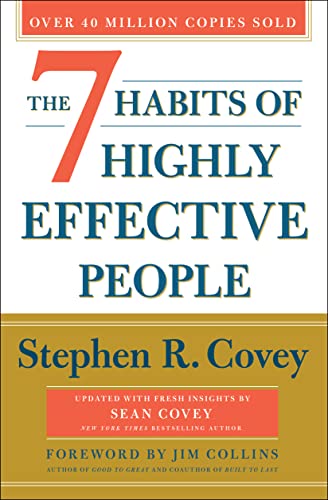
Overview: Steven Covey’s classic is built around personal effectiveness, priorities, and character-based leadership. For entrepreneurs, those ideas matter because business problems often become people problems, and people problems often start with habits, priorities, and judgment.
Why it stands out: Some books teach entrepreneurs how to grow faster. This one teaches them how to become more effective. That is a different and more durable goal. Its value lies in how it connects personal discipline with leadership behavior, which is why it continues to be useful long after trendier business books fade.
Strengths:
- Strong foundation in effectiveness and prioritization
- Useful for leadership, self-management, and decision-making
- Enduring framework that applies well to business ownership
Best for: Entrepreneurs who want a foundational book on effectiveness, leadership, and priorities.
Potential limitations: The style is more reflective than tactical, so readers wanting quick business hacks may prefer a more operational title.
View price, available formats, and reader reviews.
Buy Back Your Time: Get Unstuck, Reclaim Your Freedom, and Build Your Empire

Overview: This book focuses on one of the most overlooked problems in entrepreneurship: founders become trapped in the business they built. Buy Back Your Time addresses leverage, delegation, and the practical challenge of creating more freedom without stalling growth.
Why it stands out: The strongest reason to include it is its attention to the founder’s bottleneck. Many business books talk about growth, but fewer address what happens when the entrepreneur becomes the limiting factor. That makes this a useful recommendation for readers who are already busy, stretched thin, or trying to move from operator to owner.
Strengths:
- Focused on delegation and founder leverage
- Helps readers think about time as a business asset
- Relevant to entrepreneurs who want more scalability and less overload
Best for: Entrepreneurs who need to reclaim time, delegate better, and build a business that does not depend on every task running through them.
Potential limitations: Readers at the very beginning of their entrepreneurial journey may not yet feel the problems this book is designed to solve.
View price, available formats, and reader reviews.
Who This List Is Best For
This list is best for aspiring founders, small-business owners, solo entrepreneurs, and leaders who want books that improve how they think and operate. It is also useful for readers who want more than startup inspiration. If you are looking for books that help with money, strategy, habits, leadership, scaling, or ownership decisions, these recommendations give you a solid range without wasting your time on weaker matches.
Final Thoughts
If your main challenge is strategy, start with Your Next Five Moves. If cash flow is the issue, Profit First is the most immediately practical choice. If your problem is follow-through, Atomic Habits is the best place to begin. For leadership and purpose, Start with Why offers a different kind of value. And if you want a broader foundation, The 7 Habits of Highly Effective People remains one of the most durable options on the list.
For entrepreneurs who are already successful but overloaded, Buy Back Your Time addresses a common next-stage problem. For readers exploring a different path into ownership, Buy Then Build provides a strong alternative to the usual startup mindset. Together, these are the books that most naturally earn a place in a serious list of the best books for entrepreneurs.
FAQ
Which book is best for beginner entrepreneurs?
The 7 Habits of Highly Effective People and Atomic Habits are both strong starting points because they help with the personal discipline and decision-making that new entrepreneurs often need before anything else.
Which book is best for business strategy?
Your Next Five Moves is the clearest strategy-focused recommendation on this list. It is especially useful once you already have a business and need to think more several steps ahead.
Which book is best for managing business money?
Profit First is the best fit if your main concern is cash flow, profitability, or separating business spending from owner take-home money.
Which book is best if I am overwhelmed and short on time?
Buy Back Your Time is the most relevant choice for entrepreneurs who are overloaded and need to create leverage through delegation and better business design.
Can I learn entrepreneurship just by reading these books?
Books can help you think more clearly and avoid common mistakes, but entrepreneurship also requires practice, feedback, and repetition. The best use of these books is as decision-making tools, not substitutes for action.
Which book offers the best long-term value?
The 7 Habits of Highly Effective People offers especially strong long-term value because its lessons on priorities, effectiveness, and leadership apply across many stages of business ownership.




