
Strengthening thinking skills is rarely about finding one magical book. More often, it means choosing the right kind of book for the skill you want to build. Some readers need help with logic and deductive reasoning. Others want a clearer grasp of how biases shape judgment. Still others are looking for structured practice that can be used at home, in a classroom, or alongside self-study. The books below were selected for those different needs, with an emphasis on clarity, usefulness, and lasting value.
Quick Answer
For most readers, Thinking, Fast and Slow is the best starting point because it gives the clearest foundation for thinking skills. Think Again is a strong next choice when you want a more practical or applied approach, while Thinking in Systems adds a different perspective for readers who want to go deeper.
Comparison Table
| Book | Best For | Why It Stands Out |
|---|---|---|
| Thinking, Fast and Slow | Readers who want a book specifically about fast and slow modes of judgment. | It earns a place on this list because it addresses fast and slow modes of judgment directly and adds a distinct perspective alongside the other recommendations. |
| Think Again | Readers who want a book specifically about intellectual flexibility and rethinking. | It earns a place on this list because it addresses intellectual flexibility and rethinking directly and adds a distinct perspective alongside the other recommendations. |
| Thinking in Systems | Readers who want a book specifically about systems thinking and feedback loops. | It earns a place on this list because it addresses systems thinking and feedback loops directly and adds a distinct perspective alongside the other recommendations. |
| The Fifth Discipline | Leaders and professionals facing complex problems that cannot be solved by isolated fixes. | It is a better adult problem-solving recommendation than a children’s logic workbook because it addresses complex systems and collective learning. |
| Superforecasting | Readers who solve strategic problems where the available information is incomplete or changing. | It replaces a generic confidence book with a research-based method for thinking through uncertain, multi-factor problems. |
| The Righteous Mind | Problem solvers who work across teams, stakeholders, or competing values. | It adds a useful human-systems perspective to problem solving, especially when the obstacle is disagreement rather than a lack of technical skill. |
| The Gifts of Imperfection | Adults working through self-judgment, transitions, or a desire for more intentional growth. | It is a more appropriate adult-development recommendation than children’s developmental stories because it addresses identity and growth across adult life. |
| The Pyramid Principle | Professionals who need to analyze ambiguous problems and communicate decisions clearly. | It directly improves complex problem solving by helping readers clarify the logic of a problem before presenting a solution. |
| Ultralearning: Master Hard Skills, Outsmart the Competition, and Accelerate Your Career | Independent learners who want to use notes as part of a demanding skill-building plan. | It gives note-takers a reason to connect every page of notes to a learning task, feedback loop, or project outcome. |
| Make It Stick: The Science of Successful Learning | Readers who want notes to lead to better recall, exams, or real-world performance. | It is a strong fit for note-taking because it helps readers decide which notes deserve review and how to turn them into durable understanding rather than a larger archive. |
How We Chose These Recommendations
The strongest books for thinking skills do one of three things well. Some teach readers how to understand reasoning, bias, and judgment at a deeper level. Others provide structured exercises that build logical habits gradually. A few are especially useful for younger readers because they make thinking practice concrete and age-appropriate.
We favored books that are clear, established, and genuinely useful for learning how to think more carefully. That means balancing classic cognitive science, practical systems thinking, and workbook-style practice for different ages. The result is a list with meaningful choices rather than a pile of near-duplicates.
Recommended Books
Thinking, Fast and Slow
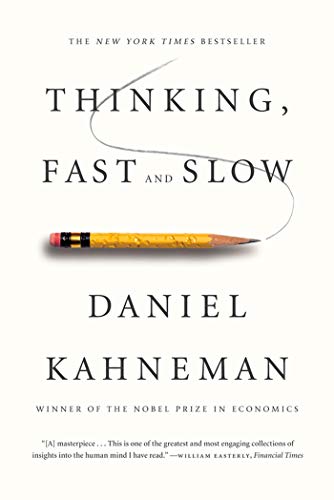
Overview: Thinking, Fast and Slow is a focused resource for fast and slow modes of judgment. It gives readers a concrete way to understand the topic and apply the ideas in real situations.
Why it stands out: It earns a place on this list because it addresses fast and slow modes of judgment directly and adds a distinct perspective alongside the other recommendations.
Strengths:
- Clear explanation of the core ideas
- Useful examples or practical takeaways
- Easy to compare with the other books on this list
Best for: Readers who want a book specifically about fast and slow modes of judgment.
Potential limitations: The examples and level of detail may fit some readers better than others, so it works best as part of a focused reading plan.
View price, available formats, and reader reviews.
Think Again

Overview: Think Again is a focused resource for intellectual flexibility and rethinking. It gives readers a concrete way to understand the topic and apply the ideas in real situations.
Why it stands out: It earns a place on this list because it addresses intellectual flexibility and rethinking directly and adds a distinct perspective alongside the other recommendations.
Strengths:
- Clear explanation of the core ideas
- Useful examples or practical takeaways
- Easy to compare with the other books on this list
Best for: Readers who want a book specifically about intellectual flexibility and rethinking.
Potential limitations: The examples and level of detail may fit some readers better than others, so it works best as part of a focused reading plan.
View price, available formats, and reader reviews.
Thinking in Systems

Overview: Thinking in Systems is a focused resource for systems thinking and feedback loops. It gives readers a concrete way to understand the topic and apply the ideas in real situations.
Why it stands out: It earns a place on this list because it addresses systems thinking and feedback loops directly and adds a distinct perspective alongside the other recommendations.
Strengths:
- Clear explanation of the core ideas
- Useful examples or practical takeaways
- Easy to compare with the other books on this list
Best for: Readers who want a book specifically about systems thinking and feedback loops.
Potential limitations: The examples and level of detail may fit some readers better than others, so it works best as part of a focused reading plan.
View price, available formats, and reader reviews.
The Fifth Discipline
Overview: Peter Senge explains how systems thinking, shared vision, and team learning help organizations solve problems and adapt over time.
Why it stands out: It is a better adult problem-solving recommendation than a children’s logic workbook because it addresses complex systems and collective learning.
Strengths:
- Systems-thinking framework
- Useful for organizations and teams
- Links learning with long-term change
Best for: Leaders and professionals facing complex problems that cannot be solved by isolated fixes.
Potential limitations: The concepts are demanding and require application to a real organizational context.
View price, available formats, and reader reviews.
Superforecasting
Overview: Philip Tetlock and Dan Gardner examine how disciplined probability, evidence gathering, and updating beliefs can improve judgment under uncertainty.
Why it stands out: It replaces a generic confidence book with a research-based method for thinking through uncertain, multi-factor problems.
Strengths:
- Evidence-based approach to judgment
- Teaches probabilistic updating
- Useful for decisions under uncertainty
Best for: Readers who solve strategic problems where the available information is incomplete or changing.
Potential limitations: Forecasting methods take practice and do not remove uncertainty from decisions.
View price, available formats, and reader reviews.
The Righteous Mind
Overview: Jonathan Haidt examines the intuitions and moral frameworks that shape how people reason, disagree, and cooperate.
Why it stands out: It adds a useful human-systems perspective to problem solving, especially when the obstacle is disagreement rather than a lack of technical skill.
Strengths:
- Explains moral disagreement
- Useful for group decisions
- Connects psychology with social reasoning
Best for: Problem solvers who work across teams, stakeholders, or competing values.
Potential limitations: It is more about moral psychology than step-by-step project troubleshooting.
View price, available formats, and reader reviews.
The Gifts of Imperfection

Overview: Brené Brown examines the habits and beliefs that support wholehearted living, including self-compassion, authenticity, and resilience.
Why it stands out: It is a more appropriate adult-development recommendation than children’s developmental stories because it addresses identity and growth across adult life.
Strengths:
- Accessible discussion of self-acceptance
- Useful reflection prompts
- Connects growth with emotional resilience
Best for: Adults working through self-judgment, transitions, or a desire for more intentional growth.
Potential limitations: It is reflective and personal rather than a textbook on lifespan development.
View price, available formats, and reader reviews.
The Pyramid Principle
Overview: Barbara Minto shows how to structure reasoning and communication so that conclusions, evidence, and recommendations are easy to follow.
Why it stands out: It directly improves complex problem solving by helping readers clarify the logic of a problem before presenting a solution.
Strengths:
- Practical structure for analytical thinking
- Useful for consulting and business writing
- Improves clarity of recommendations
Best for: Professionals who need to analyze ambiguous problems and communicate decisions clearly.
Potential limitations: It focuses on reasoning and communication, not on a particular technical domain.
View price, available formats, and reader reviews.
Ultralearning: Master Hard Skills, Outsmart the Competition, and Accelerate Your Career

Overview: Scott Young describes an aggressive but structured approach to self-directed learning, including direct practice, retrieval, feedback, and experimentation.
Why it stands out: It gives note-takers a reason to connect every page of notes to a learning task, feedback loop, or project outcome.
Strengths:
- Practical self-directed learning framework
- Strong emphasis on direct practice
- Works across technical and creative skills
Best for: Independent learners who want to use notes as part of a demanding skill-building plan.
Potential limitations: The pace and intensity may be unrealistic for readers with limited time.
View price, available formats, and reader reviews.
Make It Stick: The Science of Successful Learning

Overview: Peter C. Brown, Henry Roediger, and Mark McDaniel explain why rereading feels productive but often produces weak long-term memory. The book turns research on retrieval, spacing, and varied practice into a practical approach to learning.
Why it stands out: It is a strong fit for note-taking because it helps readers decide which notes deserve review and how to turn them into durable understanding rather than a larger archive.
Strengths:
- Grounded in learning science
- Useful for students and working professionals
- Connects note-taking with review and application
Best for: Readers who want notes to lead to better recall, exams, or real-world performance.
Potential limitations: It focuses more on learning and retention than on a specific note-taking app or format.
View price, available formats, and reader reviews.
Who This List Is Best For
This list is a strong fit for:
- Complete beginners who want a readable introduction to reasoning and judgment
- Students who need structured logic and critical thinking practice
- Parents and homeschoolers looking for age-appropriate thinking-skills workbooks
- Professionals and managers who want to make better decisions and rethink assumptions
- Lifelong learners interested in systems, bias, and practical reasoning
Final Thoughts
The strongest choice depends on what you need from a book about thinking skills. Start with Thinking, Fast and Slow if you want the clearest foundation, move to Think Again when you want a more practical framework, and use Thinking in Systems when you want to broaden your perspective. The comparison table above is designed to make that choice easier without treating one book as the right answer for every reader.
FAQ
Which book should I read first?
Start with Thinking, Fast and Slow if you want the clearest introduction to thinking skills. It is the most useful foundation before choosing a narrower or more advanced recommendation.
Which recommendation is the most practical?
Think Again is a strong practical choice because it translates the topic into ideas or exercises that can be used immediately. If your needs are more specialized, compare the Best For column in the table.
Can I use these books for self-study?
Yes. Read one book at a time, take notes on the ideas that fit your situation, and apply one or two practices before moving on. For mental-health or clinical concerns, books should support—not replace—professional care.
How should I choose between the recommendations?
Choose based on your current goal, experience level, and preferred format. A practical guide may be best when you need action now, while a broader or more research-oriented book may be better when you want context and long-term understanding.
Do I need to read every book on the list?
No. One well-matched book, followed by deliberate application, is usually more useful than collecting several books without using what they teach.




