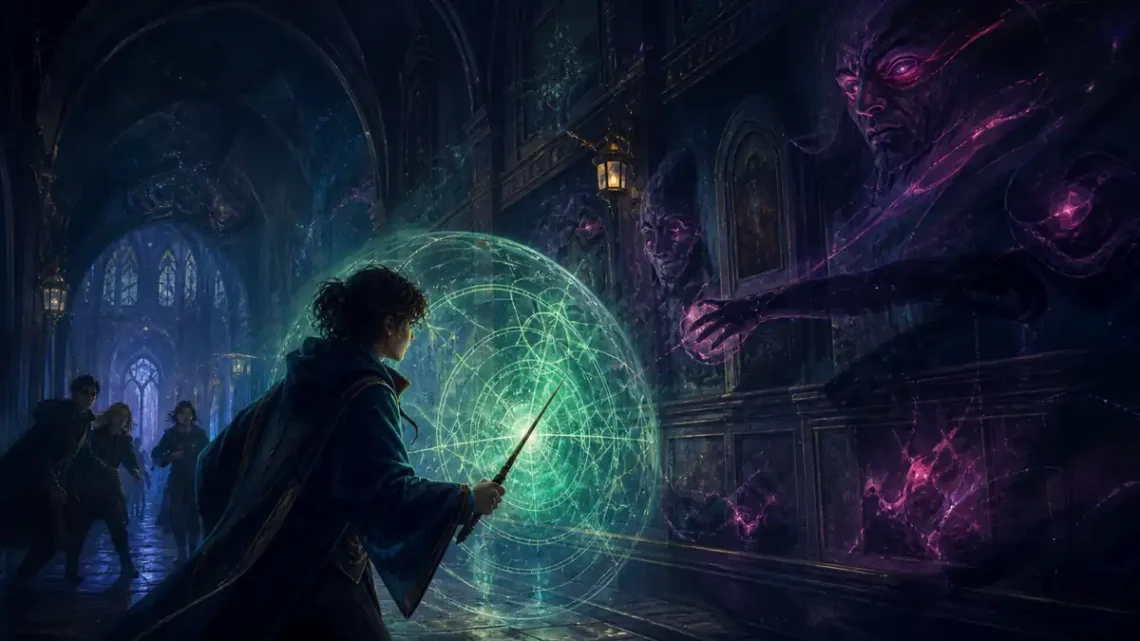
A Deadly Education takes the magical-school fantasy and removes its safety net. The Scholomance is not a picturesque place where students discover talent between lessons. It is a fortress built to protect young wizards from monsters, with corridors, alliances, food, and social rules that can kill as easily as any spell. El Higgins survives through suspicion, preparation, and a refusal to become the weapon other people expect. Readers comparing books like A Deadly Education will find that the most useful match depends on which part of the seed book created the strongest attachment: its voice, argument, setting, characters, problem, or promise of change.
The strongest books like A Deadly Education need more than a school of magic. They should share at least two or three major qualities: a dangerous educational institution, a protagonist learning to survive inside unequal rules, monsters or catastrophic magic, sharp social observation, morally complicated power, and relationships built under pressure. The recommendations below include direct sequels, dark universities, competitive magical societies, and coming-of-age fantasies with real consequences.
School Is a Monster When the Curriculum Is Survival
Read The Last Graduate and The Golden Enclaves for the direct continuation. Ninth House and The Magicians offer darker higher education; The Atlas Six turns magical study into competition; and Carry On, The Iron Trial, The Name of the Wind, and Sabriel bring romance, younger adventure, academic ambition, or necromantic danger into the same broad reading territory.
At-a-Glance Comparison
| Book | Best for | Major qualities shared with A Deadly Education |
|---|---|---|
| The Last Graduate | Readers who want the direct continuation and a more dangerous final year | Deadly magical school, monsters, alliances, social inequality, strategic survival, friendship, romance, and a protagonist changing what survival can mean |
| The Golden Enclaves | Readers who want the trilogy’s political and magical consequences | Dangerous magic, enclaves, social hierarchy, monsters, hidden history, institutional power, and repairing a world built on unequal safety |
| Ninth House | Readers who want adult secret societies, occult power, and a damaged outsider | Elite university, secret magical societies, class privilege, trauma, occult rituals, institutional protection, and an outsider learning the rules from below |
| The Magicians | Readers who want a disillusioned university of magic | Magical education, elite institution, ambition, social exclusion, dangerous power, friendship, escapism, and the disappointment of getting what one wants |
| The Atlas Six | Readers who want a competitive magical society and morally uncertain scholars | Secret magical society, elite selection, competition, ambition, dangerous knowledge, interpersonal manipulation, and power distributed through exclusion |
| Carry On | Readers who want a romantic magical-school rivalry with humor | Magical school, chosen-one expectations, rivalry, romance, prophecy, monsters, friendship, and questioning the story that institutions tell about heroes |
| The Iron Trial | Readers who want a younger magical school with secrets and tests | Magical academy, reluctant student, dangerous training, friendship, hidden identity, ancient enemy, and adults who know more than they say |
| The Name of the Wind | Readers who want a gifted student, magical learning, and a self-made legend | Magical university, gifted outsider, tuition and scarcity, music, rivalry, hidden identity, pride, and learning shaped by personal ambition |
| Sabriel | Readers who want a young heroine learning dangerous magic outside an ordinary school | Female coming-of-age, necromantic magic, mentor inheritance, monsters, duty, friendship, world-threatening power, and a heroine learning to control a dangerous role |
What Makes a Strong Deadly Education Companion?
Each choice needed a real connection to the seed’s specific pleasure: education as danger, a protagonist navigating social power, a magic system that can hurt its user, and an institution that protects some people while exposing others. I considered age range, tone, pacing, romance, setting, and the degree to which the protagonist is funny, frightened, strategic, or morally compromised.
The 9 Recommended Books
The Last Graduate
Overview: El Higgins enters her final year at the Scholomance with a plan that could protect far more students than the enclaves expect. The danger increases as alliances, maleficaria, and the politics of the school become impossible to separate.
Why it belongs on this list: The shared qualities are deadly magical school, monsters, alliances, social inequality, strategic survival, friendship, romance, and a protagonist changing what survival can mean. The Last Graduate offers a neighboring reading experience through its characters, setting, tone, pacing, and treatment of consequence. The match is strongest for readers who want the direct continuation and a more dangerous final year, although its emotional register and narrative structure may be quieter, stranger, or more expansive than the seed.
Reading experience: This is the essential next read because it expands the seed’s survival logic into collective action. El remains sharp, funny, and suspicious, but the question shifts from “How do I live?” to “What do I owe people who were never given a fair chance?”
Best for: Readers who want the direct continuation and a more dangerous final year.
Keep in mind: Fast, tense, and emotionally richer, with larger stakes, stronger relationships, and the same dangerous-school atmosphere.
What to notice: In The Last Graduate, deadly magical school, monsters, alliances, social inequality, strategic survival, friendship, romance, and a protagonist changing what survival can mean are part of the story’s emotional architecture. Notice how the characters move through the setting, how quickly the plot reveals its information, and whether the book offers closure or leaves room for unease. Those choices explain why it belongs on this list more clearly than a surface genre label would.
View available editions and reader reviews.
The Golden Enclaves
Overview: El leaves the Scholomance and discovers that the enclaves outside it are built on a history of sacrifice, extraction, and magical violence. Her efforts to repair the damage take her through unfamiliar communities and older forms of power.
Why it belongs on this list: The shared qualities are dangerous magic, enclaves, social hierarchy, monsters, hidden history, institutional power, and repairing a world built on unequal safety. The Golden Enclaves offers a neighboring reading experience through its characters, setting, tone, pacing, and treatment of consequence. The match is strongest for readers who want the trilogy’s political and magical consequences, although its emotional register and narrative structure may be quieter, stranger, or more expansive than the seed.
Reading experience: The book widens the seed’s critique of institutions. What looked like a school problem becomes a question about the world that school protects, giving the trilogy a more political and historical conclusion.
Best for: Readers who want the trilogy’s political and magical consequences.
Keep in mind: More expansive and world-building heavy, with travel, political history, magical repair, and a broader emotional register.
What to notice: Readers may begin The Golden Enclaves for dangerous magic, enclaves, social hierarchy, monsters, hidden history, institutional power, and repairing a world built on unequal safety, then stay for the way the book complicates that attraction. The most revealing moments are often not the loudest ones: a change in loyalty, a detail of place, a silence between characters, or a choice that alters the meaning of an earlier scene. Those details give this recommendation a life beyond the seed title.
View available editions and reader reviews.
Ninth House
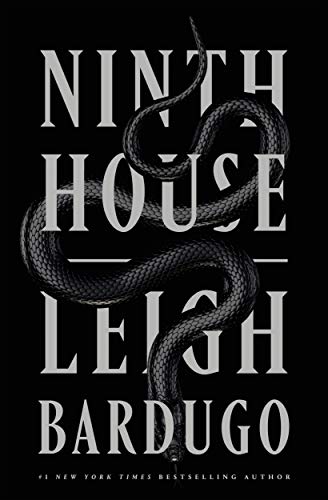
Overview: Alex Stern is given a place at Yale because she can see ghosts and other people cannot. Her work with the secret societies exposes a culture of inherited privilege, violence, and magic hidden behind academic prestige.
Why it belongs on this list: The shared qualities are elite university, secret magical societies, class privilege, trauma, occult rituals, institutional protection, and an outsider learning the rules from below. Ninth House offers a neighboring reading experience through its characters, setting, tone, pacing, and treatment of consequence. The match is strongest for readers who want adult secret societies, occult power, and a damaged outsider, although its emotional register and narrative structure may be quieter, stranger, or more expansive than the seed.
Reading experience: The connection is the institution that teaches, protects, and harms according to social access. Bardugo is darker and more adult, with trauma and investigation replacing El’s fast survival humor, but both make magical education inseparable from hierarchy.
Best for: Readers who want adult secret societies, occult power, and a damaged outsider.
Keep in mind: Gothic, slow-building, and atmospheric, with alternating timelines, occult violence, and a damaged adult protagonist.
What to notice: The strongest connection between Ninth House and the seed is found in elite university, secret magical societies, class privilege, trauma, occult rituals, institutional protection, and an outsider learning the rules from below, but the reading experience is deliberately different. Its tone, narrative distance, and treatment of consequence create another route into the same broad pleasure. Readers should let the book establish its own rhythm before judging it against the original.
View available editions and reader reviews.
The Magicians

Overview: Quentin Coldwater enters a secret magical college and discovers that the world he imagined from books is academically competitive, emotionally difficult, and connected to a more dangerous realm.
Why it belongs on this list: The shared qualities are magical education, elite institution, ambition, social exclusion, dangerous power, friendship, escapism, and the disappointment of getting what one wants. The Magicians offers a neighboring reading experience through its characters, setting, tone, pacing, and treatment of consequence. The match is strongest for readers who want a disillusioned university of magic, although its emotional register and narrative structure may be quieter, stranger, or more expansive than the seed.
Reading experience: This is a strong companion for readers who want the school setting but are interested in what happens when magic does not make people better. Grossman is more literary and disillusioned, while Novik is more propulsive and survival-driven.
Best for: Readers who want a disillusioned university of magic.
Keep in mind: Adult, reflective, and often bleak, with university life, escapist fantasy, addiction, and moral consequences.
What to notice: Choose The Magicians when the reader wants readers who want a disillusioned university of magic but is open to a different tone and pace. Its shared qualities create a bridge to the seed, while its characters, setting, and structure make the journey distinct. The contrast can be as satisfying as the resemblance, especially for readers who want a familiar tension presented through new social or emotional circumstances.
View available editions and reader reviews.
The Atlas Six

Overview: Six talented magicians are invited to join a secret society and are told that only five will remain. Their study, alliances, rivalries, and ethical decisions become part of the selection process.
Why it belongs on this list: The shared qualities are secret magical society, elite selection, competition, ambition, dangerous knowledge, interpersonal manipulation, and power distributed through exclusion. The Atlas Six offers a neighboring reading experience through its characters, setting, tone, pacing, and treatment of consequence. The match is strongest for readers who want a competitive magical society and morally uncertain scholars, although its emotional register and narrative structure may be quieter, stranger, or more expansive than the seed.
Reading experience: The book shares the seed’s pleasure in treating magical education as social strategy. It is more ensemble-based and less survival-comic, with the danger coming from competition, secrecy, and the possibility that knowledge itself has a cost.
Best for: Readers who want a competitive magical society and morally uncertain scholars.
Keep in mind: Atmospheric, ensemble-driven, and morally ambiguous, with slower relationship dynamics and an emphasis on secrets.
What to notice: Choose The Atlas Six when the reader wants readers who want a competitive magical society and morally uncertain scholars but is open to a different tone and pace. Its shared qualities create a bridge to the seed, while its characters, setting, and structure make the journey distinct. The contrast can be as satisfying as the resemblance, especially for readers who want a familiar tension presented through new social or emotional circumstances.
View available editions and reader reviews.
Carry On

Overview: Simon Snow is supposed to be the greatest chosen one of his generation, but he is also a chaotic student who cannot control his magic. His rivalry and unwanted connection with Baz complicate the school’s official story.
Why it belongs on this list: The shared qualities are magical school, chosen-one expectations, rivalry, romance, prophecy, monsters, friendship, and questioning the story that institutions tell about heroes. Carry On offers a neighboring reading experience through its characters, setting, tone, pacing, and treatment of consequence. The match is strongest for readers who want a romantic magical-school rivalry with humor, although its emotional register and narrative structure may be quieter, stranger, or more expansive than the seed.
Reading experience: The book shares a school, prophecy, magical danger, and a protagonist who resists the identity assigned to him. It is more romantic, playful, and genre-aware than A Deadly Education, with humor carrying much of the emotional tension.
Best for: Readers who want a romantic magical-school rivalry with humor.
Keep in mind: Fast, romantic, and self-aware, with alternating perspectives, school adventure, and a more hopeful tone.
What to notice: Choose Carry On when the reader wants readers who want a romantic magical-school rivalry with humor but is open to a different tone and pace. Its shared qualities create a bridge to the seed, while its characters, setting, and structure make the journey distinct. The contrast can be as satisfying as the resemblance, especially for readers who want a familiar tension presented through new social or emotional circumstances.
View available editions and reader reviews.
The Iron Trial

Overview: Callum Hunt is determined to fail the entrance trials for the Magisterium, but his unusual abilities place him inside the school anyway. Training, friendship, and a hidden history gradually change what he thinks he knows about his family and the enemy.
Why it belongs on this list: The shared qualities are magical academy, reluctant student, dangerous training, friendship, hidden identity, ancient enemy, and adults who know more than they say. The Iron Trial offers a neighboring reading experience through its characters, setting, tone, pacing, and treatment of consequence. The match is strongest for readers who want a younger magical school with secrets and tests, although its emotional register and narrative structure may be quieter, stranger, or more expansive than the seed.
Reading experience: This is the accessible younger companion. It shares the school-as-danger structure and a protagonist who is not allowed to simply accept the official story, but its tone is more adventurous and its social world less relentlessly adult.
Best for: Readers who want a younger magical school with secrets and tests.
Keep in mind: Fast, accessible, and quest-driven, with classroom training, friendship, and a strong mystery around identity.
What to notice: Readers may begin The Iron Trial for magical academy, reluctant student, dangerous training, friendship, hidden identity, ancient enemy, and adults who know more than they say, then stay for the way the book complicates that attraction. The most revealing moments are often not the loudest ones: a change in loyalty, a detail of place, a silence between characters, or a choice that alters the meaning of an earlier scene. Those details give this recommendation a life beyond the seed title.
View available editions and reader reviews.
The Name of the Wind

Overview: Kvothe recounts his childhood, the loss of his family, and his difficult path into the University. His hunger for knowledge and recognition is matched by poverty, rivalry, and the danger of constructing a legend around himself.
Why it belongs on this list: The shared qualities are magical university, gifted outsider, tuition and scarcity, music, rivalry, hidden identity, pride, and learning shaped by personal ambition. The Name of the Wind offers a neighboring reading experience through its characters, setting, tone, pacing, and treatment of consequence. The match is strongest for readers who want a gifted student, magical learning, and a self-made legend, although its emotional register and narrative structure may be quieter, stranger, or more expansive than the seed.
Reading experience: The connection is the student who must turn intelligence into survival inside a competitive institution. Rothfuss is more digressive and lyrical, with less immediate monster danger but a strong focus on class, reputation, and the costs of ambition.
Best for: Readers who want a gifted student, magical learning, and a self-made legend.
Keep in mind: Rich, voice-driven, and expansive, with music, school rivalry, layered storytelling, and a slower pace.
What to notice: What matters most in The Name of the Wind is the way magical university, gifted outsider, tuition and scarcity, music, rivalry, hidden identity, pride, and learning shaped by personal ambition shapes the characters’ lives and the world around them. The resemblance to the seed is not limited to a premise. Pay attention to voice, pacing, setting, and the small choices that reveal how this book imagines danger, loyalty, or belonging.
View available editions and reader reviews.
Sabriel

Overview: Sabriel leaves a boarding school to find her missing father and take up the bells and sword of an Abhorsen, a guardian who sends the dead back beyond the world. Her education is practical, frightening, and tied to a responsibility she cannot refuse.
Why it belongs on this list: The shared qualities are female coming-of-age, necromantic magic, mentor inheritance, monsters, duty, friendship, world-threatening power, and a heroine learning to control a dangerous role. Sabriel offers a neighboring reading experience through its characters, setting, tone, pacing, and treatment of consequence. The match is strongest for readers who want a young heroine learning dangerous magic outside an ordinary school, although its emotional register and narrative structure may be quieter, stranger, or more expansive than the seed.
Reading experience: The setting is not a magical school, but it shares the seed’s pleasure in a young woman who must learn a lethal system while navigating inherited expectations and unequal knowledge. The tone is more mythic and quest-driven, with a strong sense of landscape and ritual.
Best for: Readers who want a young heroine learning dangerous magic outside an ordinary school.
Keep in mind: Atmospheric, adventurous, and darker than its age range suggests, with necromancy, death, and a capable young heroine.
What to notice: In Sabriel, female coming-of-age, necromantic magic, mentor inheritance, monsters, duty, friendship, world-threatening power, and a heroine learning to control a dangerous role are part of the story’s emotional architecture. Notice how the characters move through the setting, how quickly the plot reveals its information, and whether the book offers closure or leaves room for unease. Those choices explain why it belongs on this list more clearly than a surface genre label would.
View available editions and reader reviews.
Choose by School, Monsters, Secret Societies, or Magical Apprenticeship
Start with The Last Graduate or The Golden Enclaves for the Scholomance’s continuing consequences. Choose Ninth House or The Atlas Six for adult secret societies and morally uncertain institutions. The Magicians is the most disillusioned university story; Carry On the most romantic; The Iron Trial the most accessible younger school fantasy; and The Name of the Wind or Sabriel for ambitious learning outside a conventional school.
Who This List Is Best For
This list is for young-adult and adult fantasy readers who enjoy dangerous education, monsters, social strategy, dark humor, friendship under pressure, and protagonists who cannot rely on destiny to keep them safe. Expect death, body horror, violence, trauma, exploitation, and complicated relationships. The titles differ sharply in romance, age range, and how much hope their institutions permit.
FAQ
What is the closest book to A Deadly Education?
The Last Graduate and The Golden Enclaves are the direct continuations. Outside the Scholomance, The Magicians is the closest for a dangerous and disillusioned magical education, while Ninth House is the darker adult secret-society option.
Which books have dangerous magical schools?
The Last Graduate, The Golden Enclaves, The Magicians, The Atlas Six, Carry On, and The Iron Trial all place education or magical training at the center, but the danger ranges from monsters and rival students to institutional manipulation.
Which recommendation has the strongest dark-academic atmosphere?
Ninth House and The Atlas Six offer the strongest adult secret-society and academic atmosphere. The Magicians is more disillusioned and emotionally expansive, while the Scholomance books are sharper and more survival-focused.
Which book has the best romance?
Carry On makes romance and rivalry central, though its magical-school structure is more playful and genre-aware. The Last Graduate develops a relationship under the same practical pressure as the seed.
Are these books suitable for younger readers?
The Iron Trial is the most accessible younger choice, though it includes danger and betrayal. Carry On and The Name of the Wind are older-teen or adult in tone, while Ninth House, The Magicians, and the Scholomance books contain darker material.
The Best Magic Schools Teach Who Gets to Be Safe
A Deadly Education is memorable because danger is distributed unequally. Some students arrive with alliances, resources, and powerful enclaves; others must build every advantage from scraps. The companion books keep that social dimension alive. Whether the threat is a monster, a secret society, a curriculum, or a family legacy, the best next read asks who is protected by the institution and who is expected to survive it alone.